
By David Hornung, Co-Founder & Principal Designer, D&J Concepts
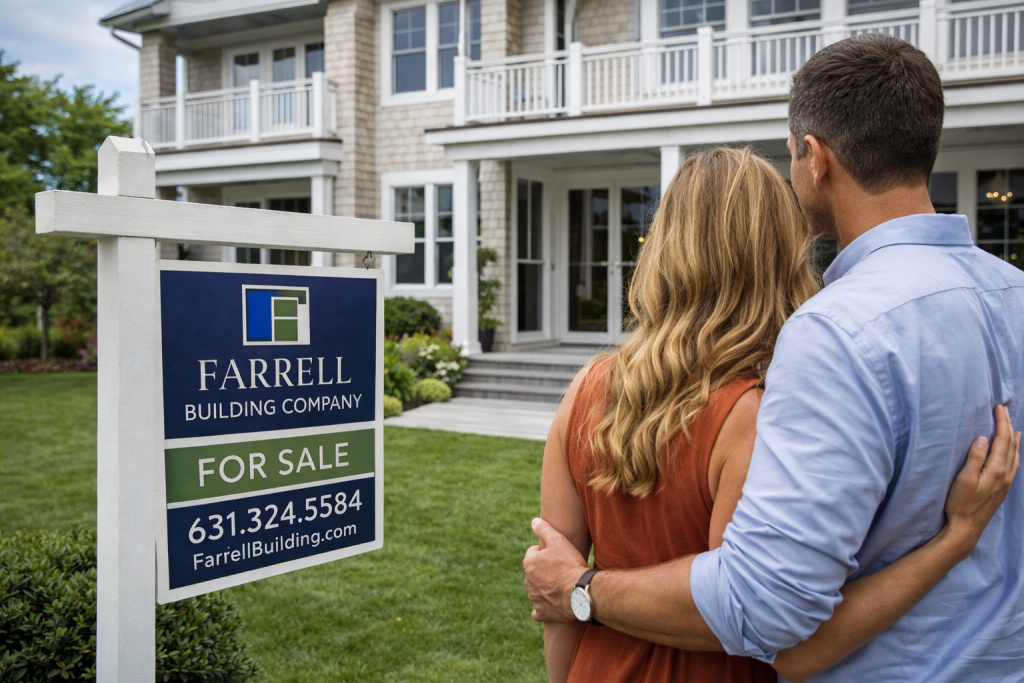
The Farrell Building partnership gave D&J Concepts something no other Hamptons renovation experience could: a controlled experiment. Multiple residential units shared the same building, the same timeline, and the same budget parameters. As a result, the variables that normally confuse renovation analysis were held constant. What varied was the design approach, the client relationship, and the decision-making patterns that predict whether a Hamptons renovation produces satisfaction or regret.
Over the course of the Farrell Building projects, D&J Concepts identified patterns that have since informed every residential engagement the firm undertakes. These patterns are not theoretical. They emerged from direct observation of how real clients, spending real money, make the decisions that determine whether their renovation succeeds.
Pattern One: Early Decisions Compound
Notably, the most consequential Hamptons renovation decisions occur in the first 20 percent of the timeline. That is also when clients feel least qualified to make them. Layout configuration, mechanical routing, and structural modifications happen before any visible design work begins. Consequently, these early decisions constrain every subsequent choice. A kitchen positioned to maximize the builder’s efficiency rather than the homeowner’s workflow produces a room that no amount of beautiful cabinetry can redeem.
Farrell Building buyers who engaged D&J Concepts before framing began achieved measurably better outcomes. Specifically, pre-framing clients could adjust wall positions, window locations, and room proportions based on design intent. By contrast, post-framing clients received excellent interior design within fixed spatial parameters that sometimes compromised the ideal result.
McKinsey’s construction industry research confirms this pattern across markets. Design decisions made during the planning phase produce 20 to 25 percent cost savings compared to equivalent decisions made during construction. The Farrell Building experience validated this finding at the individual unit level, where early engagement consistently produced better rooms at lower total cost.
Pattern Two: The Specification Gap
Clients understand what they want to feel in a room. However, they do not always understand what materials, dimensions, and configurations produce those feelings. This gap between desired experience and technical specification is where Hamptons renovation projects fail most frequently. For example, a client who says “I want a warm kitchen” may mean warm lighting, warm wood tones, warm color palette, or all three. Meanwhile, a contractor who hears “warm kitchen” makes assumptions that may not align with the client’s actual intention.
The Visual Clarity Method exists to close this specification gap. Magazine-quality renderings show the client their room as it will appear when complete, translating emotional desires into concrete visual reality before construction commits those desires to permanent form. Farrell Building buyers who reviewed and approved Visual Clarity renderings before construction generated zero change orders on approved design elements. Buyers working from verbal descriptions and material samples generated an average of three to five change orders per unit, each adding cost and timeline to the project.
D&J Concepts now requires Visual Clarity approval before any construction begins on any Hamptons renovation. After all, the Farrell Building taught the firm that this discipline is not optional when misunderstanding costs more than visualization. At luxury price points, that threshold is crossed on every project.
Pattern Three: Material Selection Fatigue
A luxury Hamptons renovation requires roughly 200 to 400 individual material and product selections. Tile, stone, hardware, fixtures, cabinetry, paint colors, flooring, countertops, and appliances each demand decisions. For a full-home renovation, these compound into the thousands. Farrell Building buyers who attempted to participate in every selection experienced decision fatigue by the third month of the process, producing increasingly arbitrary choices that degraded the overall design coherence.
D&J Concepts learned to structure the selection process in tiers. Tier one selections, approximately 20 decisions, define the project’s design direction. Primary stone, primary wood, primary metal finish, and major fixture styles establish the visual language. Because every subsequent choice must serve that language, these decisions require full client engagement. Tier two selections, approximately 50 decisions, refine the direction within established parameters. These benefit from client review but not necessarily client initiation. Tier three selections, the remaining 130 to 330 decisions, are executed by the design team within the framework that tiers one and two establish.
This structured approach, developed from Farrell Building observation and refined over subsequent projects, protects clients from the fatigue that produces regret. Bain & Company’s consumer decision research demonstrates that reducing choice complexity increases satisfaction with the final selection. Luxury Hamptons renovation clients who trust their designer to execute within an approved framework report higher satisfaction than clients who insist on approving every individual decision.
Pattern Four: Timeline Realism
Every Farrell Building buyer initially expected their Hamptons renovation to finish faster than it did. Importantly, this is not a contractor problem. Instead, it is a Hamptons market condition. The construction labor pool on the East End is finite and seasonal. In particular, skilled tradespeople are fully committed from April through November. Availability improves modestly during winter months. A renovation that a Manhattan contractor could complete in six months requires eight to twelve months in the Hamptons. Labor competition, permit processing times, and seasonal logistics all extend the timeline.
D&J Concepts now provides every client with a timeline that includes specific Hamptons market adjustments. These cover permit processing at the relevant building department and seasonal labor availability windows. Additionally, the timeline accounts for material delivery logistics on narrow residential roads and inspection delays during peak summer months.
Elle Decor has noted the Hamptons’ unique construction timeline challenges, observing that the most celebrated East End interiors typically require 18 to 36 months from initial design engagement to final styling. Clients who accept this timeline from the beginning make better decisions throughout the process because they are not compressing choices to meet unrealistic deadlines.
Pattern Five: The Post-Completion Revelation
The most surprising Farrell Building pattern emerged after construction. Buyers who had been most resistant during the process reported the highest satisfaction six months after move-in. They had challenged material selections, questioned furniture choices, and debated layout decisions. Yet their resistance had not been obstruction. Rather, it had been engagement. The collaborative tension between client preference and designer expertise produced rooms reflecting both perspectives. Consistently, those rooms outperformed spaces where the client had deferred entirely to the designer or ignored the designer entirely.
This finding shaped D&J Concepts’ client relationship model fundamentally. The firm now actively encourages client challenge during the design phase, recognizing that productive disagreement during planning prevents destructive disappointment after completion. A Hamptons renovation succeeds not when the designer wins or the client wins but when the design process generates a result that neither party would have achieved independently.
The Farrell Building projects ended years ago. The patterns they revealed continue informing every engagement D&J Concepts undertakes. In luxury Hamptons renovation, financial stakes are measured in millions. Emotional stakes are measured in the daily experience of home. Understanding these patterns separates firms that deliver satisfaction from firms that deliver rooms.
Start Your Design Conversation
D&J Concepts brings 25 years of luxury residential design experience to every project. The Method of Visual Clarity ensures your vision is resolved before construction begins. Contact Social Life Magazine for features, advertising, or partnership inquiries. Visit polohamptons.com for event tickets and sponsorship opportunities.
Subscribe to Social Life Magazine for ongoing design intelligence. Join our email list for exclusive content. Support independent Hamptons journalism with a $5 contribution.
Read more: Before You Break Ground: Visual Clarity for $5M+ and What a $3M-5M Hamptons Renovation Costs.
David Hornung co-founded D&J Concepts in 2001 after training under Interior Design Hall of Fame inductee Steve Chase in Los Angeles. From Southampton headquarters, D&J serves clients across the Hamptons, Manhattan, Palm Beach, and Southern California. A member of the Society of Design Administration, Hornung brings 25 years of luxury residential design experience to every project. Discover the Visual Clarity Method at dandjconcepts.com.
Author

Written by
Recent Posts

It Girls of the Early 2000s: The Women Who Ruled It All
What Austin Dermatologists Know About Achieving Healthy Skin
Best Organic Green Coffee Bean Sources in 2026 for Home Roasting
How Can Gas Fireplaces Elevate Urban Living in Utah
Stand Out in the City with Professional Poster Printing in NYC
Categories
- 2025 Social Life Events
- Access to Digital + Physical Magazine
- Art
- Articles
- Beauty & Skincare
- Beauty & Wellness
- Business Strategy
- Celebrities
- Celebrities|The Chronicles
- Chronicles
- Design History
- Design History|Design Trends
- Design History|Hamptons
- Design Process
- Design Process|Luxury Living
- Design Trends
- Design Trends|Hamptons
- Event Photos
- Events
- Family
- Fashion
- Fashion & Style
- Featured
- Food & Beverage
- Food, Spirits, Wine
- Hamptons
- Hamptons Celebrities
- Hamptons Design
- Hamptons Design|Design Process
- Hamptons Design|Luxury Living
- Hamptons|Luxury Living
- Health
- Health & Beauty
- Home & Design
- Home & Living
- Lifestyle
- Luxury Home Design|Design Process
- Luxury Home Design|Design Trends
- Luxury Home Design|Hamptons Design
- Luxury Home Design|Interior Design
- Luxury Lifestyle
- Luxury Living
- Luxury Living|Design Process
- Luxury Living|Hamptons
- Luxury Living|Hamptons Design
- Press
- Profiles
- Real Estate
- Technology
- The Chronicles
- Travel
- Trending
- Uncategorized
- Weddings
- Wellness