

Breast awareness today is no longer about fear — it is about understanding responsibility, longevity, and the full range of options available to women.
In his original feature, The Forever Breast: Dr. Newman’s Revolutionary Take on Natural, Permanent Beauty published in Gurus Magazine, Dr. Michael K. Newman introduced readers to a new approach to breast surgery centered on safety, personalization, and long-term biological compatibility. That article established the foundation for what would later become a broader movement toward natural, patient-centered reconstruction and augmentation.
That philosophy was later explored further in The Surgeon Redefining Breast Reconstruction, featured on Women Feature, where the conversation expanded to include emotional restoration, long-term safety, and the evolving role of biologically compatible procedures in modern medicine.

Today, those ideas continue to shape the way patients and physicians approach breast decisions — not as a single moment in time, but as an ongoing commitment to education, safety, and informed choice.
“Awareness doesn’t mean discouragement,” Newman says. “It means understanding what breast implants can do, what they can’t do, and what responsibility comes with having them.”
Understanding the Reality of Breast Implants
One of the most common misconceptions Dr. Newman encounters in his practice is the belief that breast implants are permanent.
“They’re not,” he says plainly. “Implants have a lifespan. They require monitoring. And eventually, they need to be replaced or removed.”
That reality is often overlooked during early consultations, particularly when patients are focused on immediate results rather than long-term maintenance.
“People hear what they want to hear,” he explains. “Studies show patients retain only about half of what’s said during a doctor’s visit. That’s not anyone’s fault. It’s human nature.”

Monitoring plays a critical role in long-term implant safety — especially for silicone implants, which can rupture without visible symptoms.
“That’s probably the single most important message,” Newman says. “If you have silicone implants, you need to be monitoring them.”
For silicone implants, imaging such as MRI screenings is recommended every three to five years. Saline implants, while easier to detect if ruptured, still have a finite lifespan and eventually require replacement.
“There isn’t an absolute rule about when to replace breast implants or how long they will last,” Dr. Newman says. “Many factors affect implant lifespan on an individual level, including activity level, scar tissue, and breast shape. Many surgeons recommend leaving breast implants in until they break. However, I recommend replacing breast implants every 10 to 20 years in order to replace them before they break. It is best to have a conversation with your surgeon about what they recommend, which can be tailored to your lifestyle and budget.”
That long-term relationship between patient and physician is what transforms awareness into responsible care.
Why Modern Awareness Means Knowing Your Options
While implants remain an effective and widely used solution, today’s patients are increasingly interested in alternatives that support long-term wellness.
As detailed in his earlier coverage introducing the Forever Breast concept in Gurus Magazine, Dr. Newman’s approach reflects a growing shift toward using a patient’s own tissue rather than synthetic materials — a method designed to reduce long-term maintenance and improve biological compatibility.
“Many of my patients came to me after surviving breast cancer with concerns about implants,” he explains.
“They were worried about placing anything foreign into a body that had already been through so much. That’s what motivated me to give them a safer, more natural solution.”
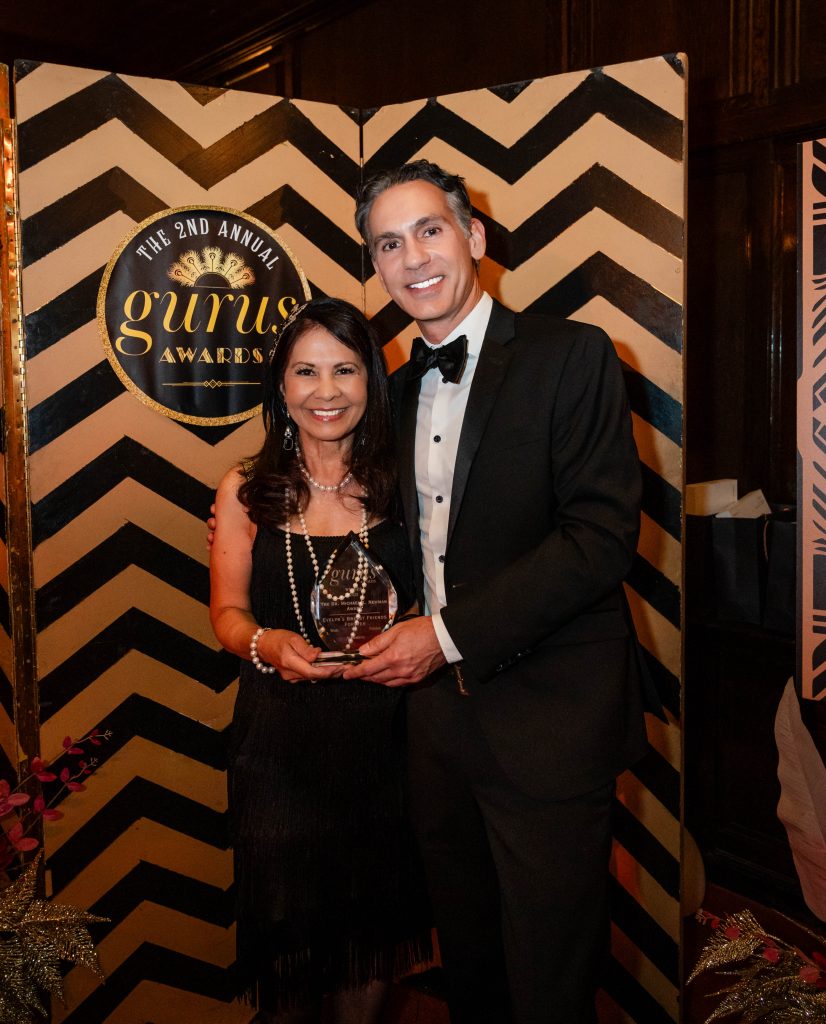
That motivation led to the continued refinement of fat-based breast reconstruction and augmentation — an approach that prioritizes permanence and natural integration with the body.
“When we use the body’s own tissue, specifically fat,” Dr. Newman explains, “that tissue lasts forever.”
Unlike implants, fat-transfer procedures do not require routine replacement or device monitoring.
“Implants have expiration dates. Fat doesn’t,” Dr. Newman says.
“Once it heals, it becomes part of you. That’s why we call it the Forever Breast — because it grows, ages, and changes naturally with your body over time.”
For many patients — particularly breast cancer survivors — this option represents more than a surgical technique. It represents peace of mind.
“Their cancer may be gone, but their health is still their greatest concern,” he says.
“Using their own tissue eliminates the risk of complications and maintenance associated with implants. It’s not just reconstruction — it’s peace of mind.”
From Cosmetic Enhancement to Long-Term Wellness
The aesthetics industry itself is evolving. Procedures that once focused solely on appearance are now being evaluated through a broader lens of health and longevity.
“Plastic surgery got a bad rap in the 90s and 2000s,” Dr. Newman says.
“It was overdone. Think oversized implants, unnatural shapes. Today, the aesthetic is changing. People want to look like the best version of themselves, not someone else.”
Patients today approach breast surgery decisions more thoughtfully than ever before — asking questions about long-term outcomes, safety, and compatibility with their bodies.

This shift reflects a broader movement in medicine — one that prioritizes sustainability, personalization, and responsible innovation.
“It’s fun to customize,” Dr. Newman says.
“Every patient is a unique puzzle. We get to pick out the right pieces for the most beautiful, natural results.”
The Emotional Side of Breast Decisions
Breast surgery decisions often carry emotional weight — particularly for women recovering from breast cancer.
For many survivors, reconstruction represents more than physical healing. It marks the beginning of emotional restoration.
“After the trauma of breast cancer, patients don’t just want reconstruction — they want restoration,” Dr. Newman explains.
“They want to feel whole again. The Forever Breast allows them to rebuild with their own tissue, which helps both the body and emotions heal together.”
Patients frequently share the same sentiment.
“The most common thing women tell me is, ‘I just want to feel like myself again.’ With the Forever Breast, that becomes possible in a way that honors their strength and their journey.”
That emotional component underscores the importance of providing options — not pressure.
“When survivors see their results, the emotion in the room is overwhelming,” he shares.
“It’s not vanity. It’s healing. It’s reclaiming what cancer tried to take.”
A Smarter Approach to Breast Decisions
Modern breast awareness is not tied to a single month or campaign. It is an ongoing process grounded in education, communication, and thoughtful decision-making.

Patients benefit most when they approach breast decisions deliberately — asking questions, seeking clarification, and maintaining open communication with their physicians.
That process may include:
- Scheduling an initial consultation focused on education
- Seeking second opinions when appropriate
- Researching options thoroughly
- Maintaining long-term follow-up with a trusted physician
When patients understand their options, the result is confidence — not confusion.
“Awareness is about choice,” Newman says. “And choice only exists when you understand all your options.”
Where to Learn More
For women seeking credible, research-based information about breast implants, breast reconstruction, and breast health, Dr. Newman recommends the following trusted resources:
Access to reliable information remains one of the most important steps in making safe, informed decisions — and in understanding the full range of options available in modern breast care.
Written by: Sari Cohen
Author

Written by
Recent Posts

AI for personal finance: where PennyGuard fits

How to Pick a Homecoming Dress for Your Body Type (and Feel Amazing in It)

World Cup Injury Attorney for Vancouver Events
What a 3-Carat Engagement Ring Actually Costs in 2026: The Real Numbers
The Skincare Habits That Make a Real Difference Over Time
Categories
- Art
- Articles
- Business of Luxury
- Celebrities
- Culture
- Entertainment
- Events
- Faces of Summer 2026
- Fashion
- Fashion & Style
- Featured
- Finance
- Food, Spirits, Wine
- Hamptons
- Hamptons Celebrities
- Health
- Health & Beauty
- Lifestyle
- Luxury Lifestyle
- Press
- Profiles
- Real Estate
- Technology
- The Chronicles
- Travel
- Uncategorized
- Weddings