

Dune and Timothée Chalamet Built the Blockbuster You Wear Like a Watch
The 2020s invented a new category of film. Not the action blockbuster. Not the indie darling. Something stranger. The movie that is too beautiful to argue with. Dune: Part Two crossed $715 million worldwide not because audiences loved the story of Paul Atreides. Most of them could not summarize the plot after walking out of the theater. They loved the feeling of the story. The atmosphere. The overwhelming visual authority made disagreement feel like bad taste.

Furthermore, this is the insight that makes the Dune franchise the defining cinematic object of the decade. Denis Villeneuve did not make a great science fiction film. He made a luxury product that happens to be projected on a screen. The distinction matters enormously. A great story demands your intellect. A luxury product demands your admiration. Dune and Timothée Chalamet delivered the second while audiences believed they were receiving the first.
Consequently, the prestige blockbuster now functions exactly like a $40 million Hamptons estate that nobody lives in full-time. It exists to be admired, not inhabited. You do not experience it. You acquire the experience of it — the IMAX ticket, the opinion, the reference point for future conversations about cinema. The film itself is almost secondary to its role as a signifier of taste.
The $715 Million Proof That Atmosphere Beats Story
Here is what Dune: Part Two actually proved when it opened to $82.5 million in March 2024, doubling its predecessor’s debut. Forty-eight percent of those domestic ticket sales came from premium large-format screens — IMAX, Dolby Cinema, the works. Additionally, some theaters reported sold-out 3:15 AM showtimes on 70mm film. People were not buying movie tickets. They were buying access to a visual experience that their televisions could not replicate.
The economics tell the real story. Legendary and Warner Bros. spent $190 million to produce the film and roughly $100 million more to promote it globally. The net profit landed at $184.3 million. Those numbers are impressive. They are also instructive. Notably, forty-one percent of opening weekend audiences told pollsters they came for the cast — not the source material, not the director, not Frank Herbert’s 1965 novel. They came because Timothée Chalamet and Zendaya were on the poster.

This is the prestige blockbuster equation reduced to its essentials. Beautiful people plus overwhelming visuals plus intellectual respectability equals a product that affluent audiences can consume without guilt. Meanwhile, the story does its job by providing the thinnest possible justification for two hours and forty-six minutes of architectural grandeur.
Timothée Chalamet: The First Movie Star Built on Fashion Logic
Chalamet is the franchise’s most fascinating component because his stardom operates on entirely different mechanics than any leading man before him. He does not do his own stunts. He does his own outfits. His cultural function is to prove that a certain kind of beautiful, thin, artistic masculinity can anchor a $700 million franchise. Whether this represents genuine progress or simply a rotation in which type of man Hollywood monetizes is the question his career keeps deferring.
Consider the trajectory. A Hell’s Kitchen upbringing. Call Me by Your Name at twenty-one. Then Dune — a franchise bet that required him to carry a visual spectacle without the physical toolkit that previous franchise leads relied on. He is not Tom Cruise doing his own helicopter stunts. He is not Chris Hemsworth lifting a hammer. Chalamet carries Dune by being gazed at, which makes him the first male movie star whose primary function mirrors what Hollywood has historically demanded of its women.
Then came the Bob Dylan gamble. A Complete Unknown opened Christmas 2024 and earned him his second Oscar nomination. He spent five years learning to sing, play guitar, and play harmonica for the role. The ambition ceiling keeps rising. Simultaneously, his press tour for the film — College GameDay appearances, podcast spots, a livestream of himself dancing — revealed something the Dune films never did. Behind the aesthetic object, there is a strategist.
Florence Pugh: The Actress Who Keeps Saying the Quiet Part Loud

Pugh is doing something unusual in the Dune universe and beyond. She is building a career on refusal. Refusal to conform to body expectations. A flat rejection of the modesty about her talent. An unwillingness to pretend that the prestige-to-franchise pipeline is not a compromise. Every public statement arrives slightly too honest, which in an industry built on curated vulnerability makes her seem either brave or reckless, depending on which publicist you ask.
Her Princess Irulan in Dune: Part Two was a contained performance inside an enormous spectacle — a woman whose power is political rather than physical, watching from the margins while men destroy things. The role demanded restraint. Pugh delivered it, then turned around and insisted on doing her own stunt jump from the top of Merdeka 118 for Thunderbolts* in 2025. Marvel initially refused on insurance grounds. She fought until Kevin Feige relented.
Additionally, Pugh’s career architecture reveals the dual-track strategy that defines smart actors in the 2020s. Franchise work pays the bills. Prestige work builds the legacy. We Live in Time with Andrew Garfield, East of Eden for Netflix, Avengers: Doomsday and Dune: Part Three both arriving December 2026. She is everywhere. More importantly, she is everywhere on her own terms, which is the part that nobody talks about honestly because the industry prefers its actresses grateful.
Austin Butler: The Method Actor in a Post-Method World

Butler’s Elvis transformation was so complete that the interesting question is no longer whether he can act. It is whether total disappearance into a role is a viable career strategy when the market increasingly rewards actors who are “themselves” across every platform. He became Elvis so thoroughly that he temporarily lost his own speaking voice. In the 2020s attention economy, losing your identity is the opposite of personal branding.
His Feyd-Rautha in Dune: Part Two extended this approach into science fiction territory — a psychopathic Harkonnen heir played with a Nordic accent and reptilian precision. The performance earned him a category of recognition that previous franchise villains rarely achieve. However, the more telling data point came in August 2025 with Caught Stealing, Darren Aronofsky’s crime thriller set in 1990s New York.
For the first time in his adult career, Butler played an essentially normal person. No accent. No transformation. Just a bartender caught in a bad situation. The film grossed only $32 million against a $40 million budget, yet critics recognized something crucial. Butler had finally figured out how to weaponize his natural charisma instead of hiding behind it. Consequently, his upcoming slate — Enemies opposite Jeremy Allen White, a Lance Armstrong biopic for Edward Berger — suggests a career entering its most confident phase. In just five years, he has worked with Luhrmann, Villeneuve, Aronofsky, and Ari Aster. The director collection alone is a kind of wealth.
Rebecca Ferguson: The Strategic Advantage of Not Being the Lead

Ferguson is the answer to a question nobody asks loudly enough. Can a woman be a franchise anchor without being a franchise face? She has been essential to both Mission: Impossible and Dune without ever carrying the burden — or the scrutiny — of being “the star” of either. Her career is a masterclass in the economics of supporting roles.
Consider the math. Higher artistic value per minute of screen time. Lower public exposure, which means longer shelf life. None of the tabloid machinery that grinds down leading ladies by their mid-thirties. Ferguson built this model deliberately, starting from a Swedish soap opera and arriving at two of the decade’s most profitable franchises without ever having to pretend she wanted to be on a magazine cover.
Lady Jessica in Dune is the perfect vehicle for this strategy. The character operates from the shadows, wielding influence through speech, ritual, and political manipulation rather than combat. It mirrors Ferguson’s actual career positioning — maximum impact, minimum visibility, and the kind of durability that comes from never being overexposed. In a decade obsessed with personal branding, her anti-brand is arguably the smartest play in the room.
The Prestige Blockbuster as Luxury Real Estate

Villeneuve’s Dune films function as the cinematic equivalent of properties that exist primarily as investment vehicles. Nobody lives in them full-time. Everyone admires them from the road. The $715 million worldwide gross of Part Two and the franchise’s five Oscar nominations (including Best Picture) create a kind of cultural escrow — value that appreciates simply by existing in the right category.
This is why Dune: Part Three, scheduled for December 2026, matters beyond its box office potential. It will test whether the prestige blockbuster model can sustain itself across a trilogy, or whether the formula — beautiful people, overwhelming visuals, intellectual permission structure — contains the seeds of its own exhaustion. Moreover, the source material, Herbert’s Dune Messiah, is darker, stranger, and considerably less friendly to the casual viewer. Villeneuve has called it his final Dune film. The farewell tour of a format he invented.
Notably, every other studio is now trying to reverse-engineer the Villeneuve formula. Prestige directors attached to franchise IP. Beautiful casts marketed through fashion channels rather than action clips. IMAX as a luxury experience rather than a screen size. The Dune and Timothée Chalamet model has become the industry’s aspiration — which, historically, is exactly the moment an aspiration starts collapsing under the weight of its imitators.
The Verdict: Beautiful, Empty, and Exactly What We Ordered
The honest accounting of the Dune franchise goes like this. Villeneuve made the most visually stunning films of the decade. Chalamet became a new species of movie star. Pugh, Butler, and Ferguson each used the franchise to advance career strategies that had nothing to do with sandworms. The audience showed up, paid the IMAX premium, and left feeling like they had participated in something important.

Whether they actually did is a different question entirely. The prestige blockbuster sells importance the way a luxury brand sells identity — through association, not substance. You are not buying the bag. You are buying what the bag says about you. Dune and Timothée Chalamet perfected this transaction for cinema, and the $715 million receipt suggests that nobody minds the arrangement.
The most honest thing about the prestige blockbuster era is that it makes no effort to hide what it is. Spectacle that flatters the audience’s intelligence without actually engaging it. Art-house aesthetics at blockbuster scale. The movie equivalent of that East End estate you drive past on Meadow Lane — impossibly beautiful, strategically empty, and worth exactly what someone is willing to pay.
Related Reading
- Timothée Chalamet Net Worth: The Fashion-Logic Movie Star
- Florence Pugh Net Worth: Building a Career on Refusal
- Austin Butler Net Worth: The Method Actor vs. the Algorithm
- Rebecca Ferguson Net Worth: The Anti-Brand Strategy
- Barbenheimer and the Weekend America Pretended Movies Still Work Like That
There is a particular kind of person who reads an article like this and does not just absorb the information — they see the angles. The positioning. The gap between what the industry says it values and what it actually rewards. If you are that person, you are already operating in the same water we swim in at Social Life Magazine. You just might not have realized we were in the same pool.
If your brand, your business, or your personal story belongs in front of the audience that summers between Westhampton and Montauk — and winters on the Upper East Side — an editorial feature in Social Life is not advertising. It is a strategic placement. Reach out to our editorial team here and let us build something worth reading.
For brands and entrepreneurs seeking elevated visibility with guaranteed placement, our Paid Feature program offers a direct path into the hands of our readership — 25,000 copies per summer issue, distributed to the boutiques, estates, and private clubs where decisions get made. Submit a Paid Feature here.
Our email list reaches 82,000 readers
They do not need to Google what a family office is. If you want your name, your brand, or your event in front of that audience, join the list.
Every summer, Polo Hamptons brings together the kind of crowd that turns a weekend afternoon into a three-year business relationship. If you have not been, you are missing the field where the real networking happens — with a polo match as the backdrop.
A print subscription to Social Life Magazine means the issue arrives before the conversation starts. Five summer issues. Two off-season editions. The paper stock alone tells you this is not a newsletter. Subscribe here.
If this article gave you something — a new angle, a sharper read on the culture, a line you will use at dinner — consider a $5 contribution to keep independent luxury journalism alive. Not because we need it. Because you value what we do. Donate here.
Author

Written by
Recent Posts
7 Mindful Meal Prep Tips for Stop Food Waste Day

Rebecca Ferguson Net Worth: The Advantage of Not Being the Lead
What Makes a Dinner Party Truly Unforgettable (Hint: It’s Not the Food)
Tips for Managing Grease and Oil in Everyday Dishwashing
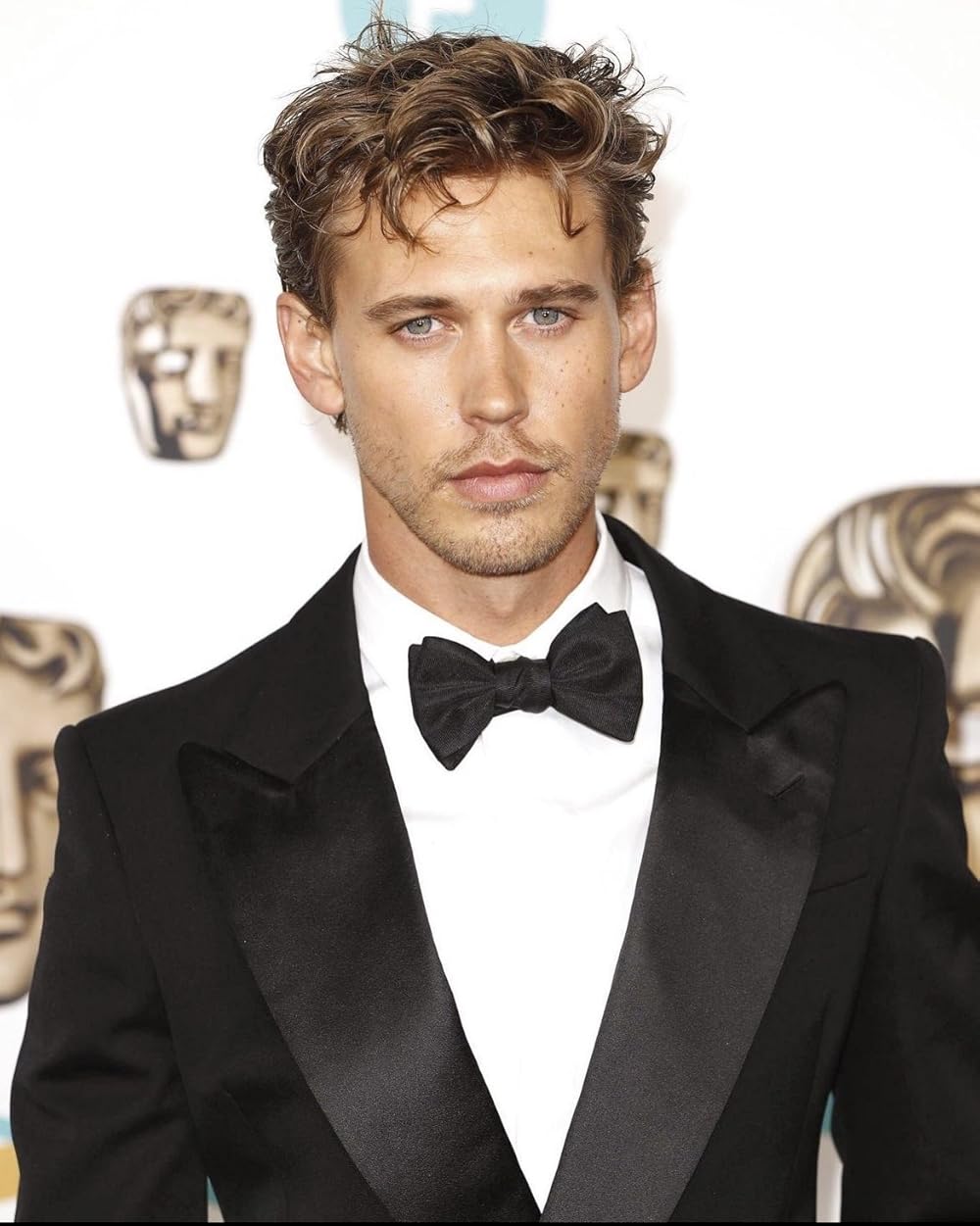
Austin Butler Net Worth: The Method Actor in a Post-Method World
Categories
- Art
- Articles
- Beauty & Skincare
- Celebrities
- Celebrities|Entertainment
- Celebrities|Television
- Celebrities|The Chronicles
- celebrities|the-archive
- Chronicles
- Entertainment|Culture
- Event Photos
- Events
- Fashion
- Fashion & Style
- Featured
- Food & Beverage
- Food, Spirits, Wine
- Hamptons
- Hamptons Celebrities
- Hamptons Celebrities|Celebrities|The Chronicles
- Health
- Health & Beauty
- Lifestyle
- Luxury Lifestyle
- Movies
- Press
- Profiles
- Real Estate
- Technology
- The Chronicles
- Travel
- Uncategorized
- Weddings