
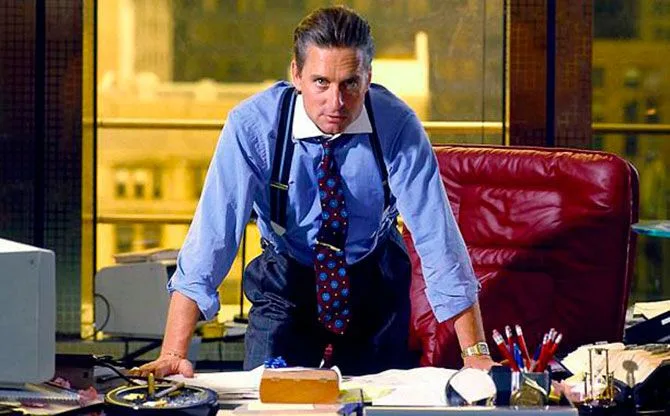
Subsequently, somewhere between Gordon Gekko’s slicked-back hair and Jordan Belfort’s Quaalude crawl to the Lamborghini, Hollywood did something no economics textbook ever could. It made the financial system feel like something. Not a spreadsheet. Not a policy debate. Meanwhile, a living, breathing organism that chews people up, spits out millionaires, and never once apologizes for the wreckage.
Six films define this canon. Indeed, each one was pulled directly from the headlines, built on the bones of real scandals, real fortunes, and real people who either broke the system or got broken by it. The fiction was never really fiction. That’s the part nobody wants to admit.
Wall Street (1987): The Sermon That Became Scripture
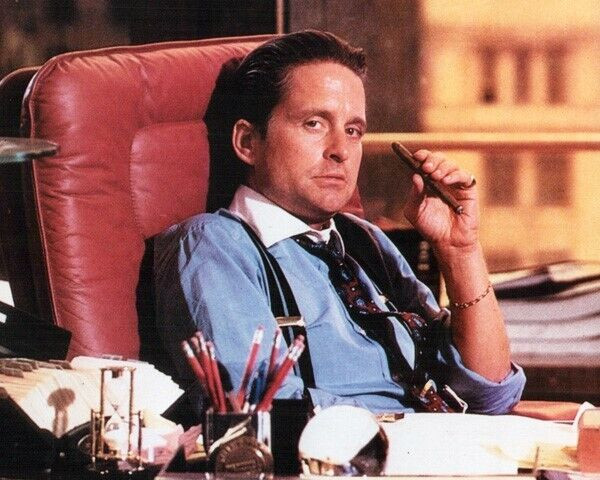
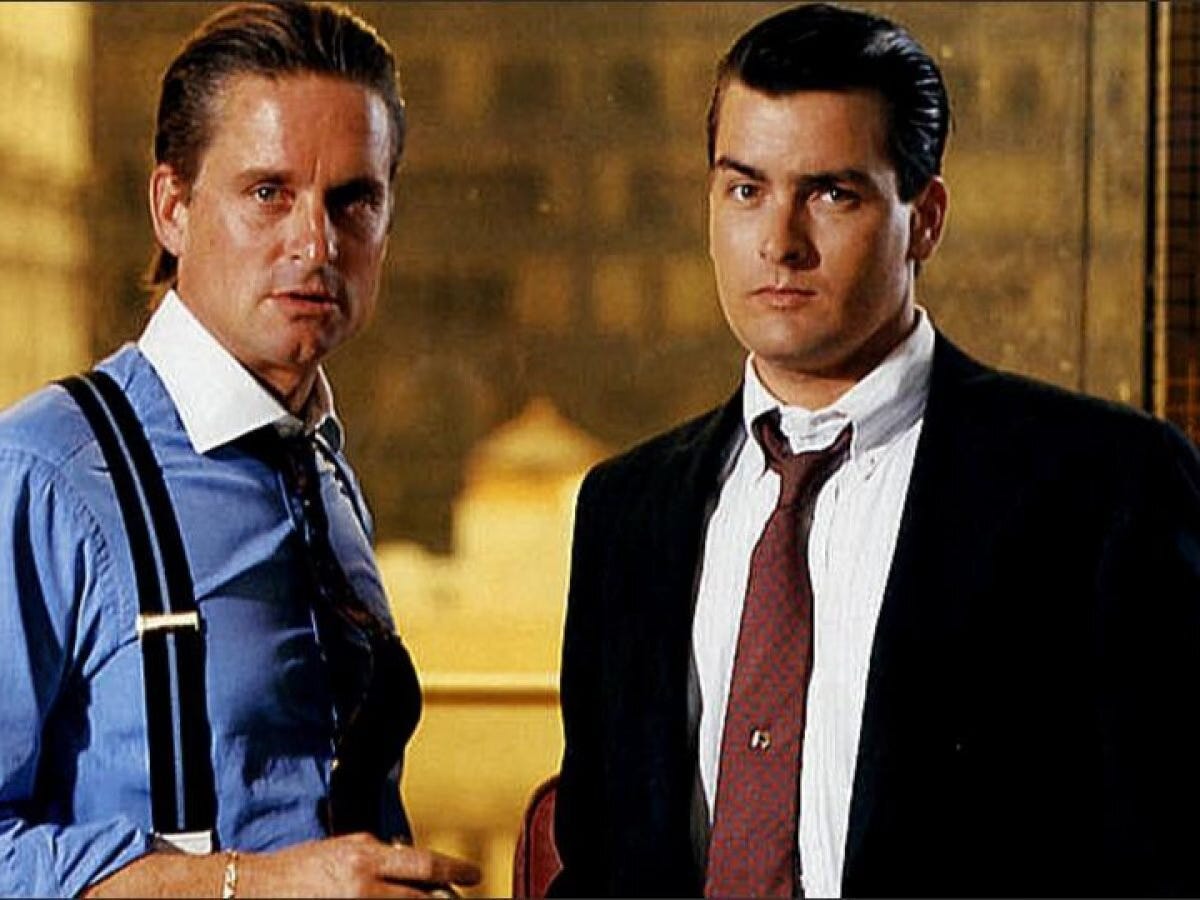
Oliver Stone didn’t invent Gordon Gekko. He assembled him from spare parts. Ultimately, the character was a composite of Ivan Boesky, the arbitrageur who built a $200 million fortune on insider tips before cooperating with the feds and paying a $100 million fine. By contrast, carl Icahn, the corporate raider whose hostile takeover speeches Gekko’s shareholder address was modeled on. In particular, michael Milken, Drexel Burnham Lambert’s junk bond king who financed the decade’s leveraged buyout frenzy. Asher Edelman, the investor and art collector. Specifically, and Stone himself, whose father Lou was a stockbroker during the Depression and to whom the film is dedicated.
As a result, the most famous line in cinema history about capitalism came directly from a real speech. Similarly, in May 1986, Boesky stood before the graduating class at UC Berkeley’s Haas School of Business and told them that greed was healthy, that they could be greedy and still feel good about themselves. Despite this, seven months later he was charged with insider trading. In turn, stone heard the speech, rewrote it for Douglas, and created a villain so magnetic that Wall Street firms reported a surge in job applications after the film opened. Regardless, boesky cooperated with prosecutors, wore a wire, and helped take down Milken. Milken served nearly two years. The era ended. The mythology didn’t.
Still, Read the full Wall Street (1987) deep dive →
Boiler Room (2000): The Audition Tape for a Crime That Hadn’t Been Filmed Yet
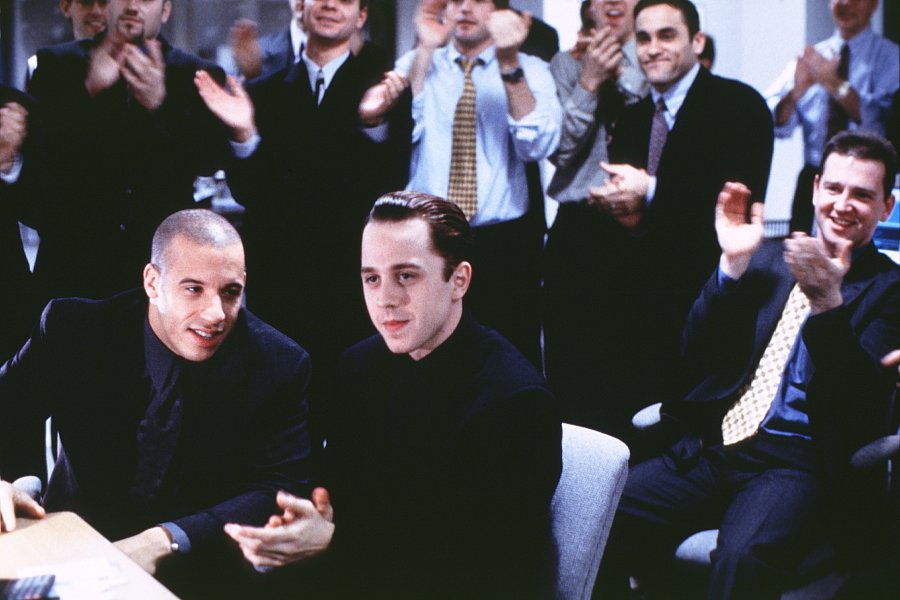
Even so, director Ben Younger wrote the script after walking into an actual boiler room on Long Island for what he thought was a job interview. That said, a friend who drove a new sports car told him you work there for a year, make your million, and go to the Bahamas. Additionally, younger spent the next two years interviewing brokers at pump-and-dump shops, and what he found became J.T. Furthermore, marlin — a fictional brokerage named to sound like J.P. Moreover, morgan, running the exact scheme that Jordan Belfort had perfected at Stratton Oakmont in Lake Success, Long Island.
Stratton Oakmont was the real engine behind both Boiler Room and the film that would follow thirteen years later. Belfort co-founded Stratton as a franchise of Stratton Securities, then bought out the original founder and turned it into a machine that defrauded investors through pump-and-dump penny stock schemes. Brokers would cold-call targets, build artificial demand in worthless or expired company shares, then dump their own positions once prices peaked. Investors lost everything. FINRA barred Stratton Oakmont in 1996. Belfort faced arrest in 1998 and sentenced to four years, serving 22 months. The firm stole a total of $200 million. The Tom Everett Scott character in Boiler Room — Michael Brantley, the mealy-mouthed boss who skulks in and out of scenes — is Belfort before Scorsese got hold of him.
Read the full Boiler Room deep dive →
Wall Street: Money Never Sleeps (2010): The Sequel Nobody Asked For About the Crisis Everyone Lived Through
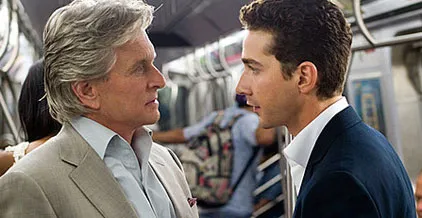
Stone brought Gekko back from prison just in time for the 2008 collapse, but the real story of the sequel is the real story it tried and mostly failed to dramatize. The film’s villain, Bretton James (Josh Brolin), was widely understood as a stand-in for the executives at the banks that survived by moving first while competitors died. The firm that collapses in the film — Keller Zabel — maps loosely onto Bear Stearns, which imploded in March 2008 when its two hedge funds backed by subprime mortgages failed. JPMorgan Chase acquired Bear for $2 a share in a deal brokered by the Federal Reserve, a number so insultingly low it was later raised to $10.
The problem with the sequel is that real life had already told a better version. Dick Fuld of Lehman Brothers, John Thain of Merrill Lynch, Hank Paulson at Treasury, Tim Geithner at the New York Fed — the actual cast of characters was more dramatic than anything Stone could script. Michael Douglas himself was repeatedly confused with Gekko at public appearances. At one press conference, a reporter asked him whether Gordon Gekko bore responsibility for the crisis. Douglas had to remind the room that his name was not Gordon and it was a character he’d played twenty years earlier.
Read the full Wall Street: Money Never Sleeps deep dive →
Margin Call (2011): The Night the Music Stopped
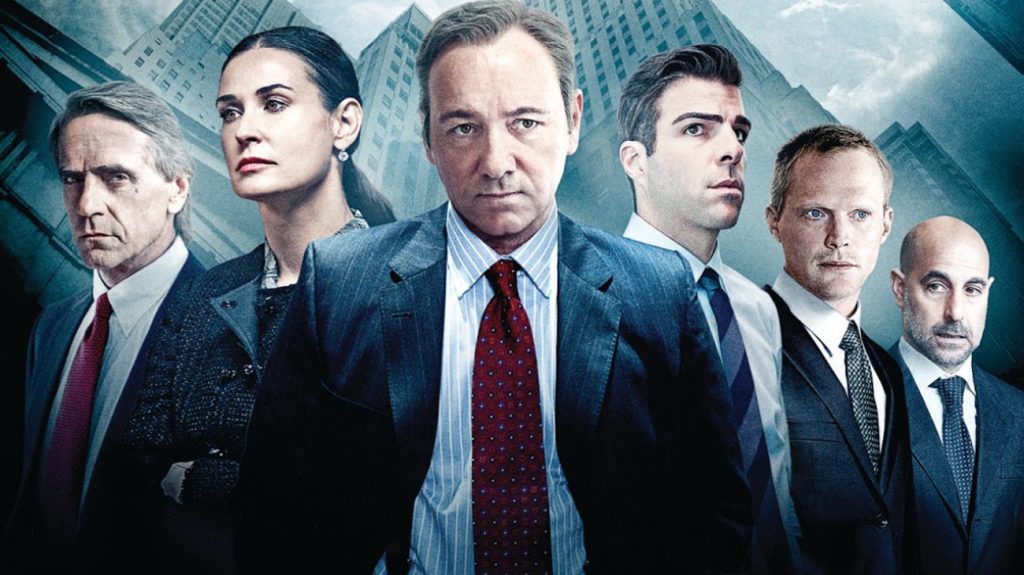
J.C. Chandor wrote the script in the days immediately following Lehman Brothers’ bankruptcy filing — the largest in American history at $639 billion. His father had worked at Merrill Lynch, and Chandor grew up surrounded by the culture the film dissects with surgical precision. The unnamed investment bank in the film is a deliberate composite. Goldman Sachs moved early to hedge and reduce its position in mortgage-backed securities at the urging of two employees, which mirrors CEO John Tuld’s obsession with being first out the door. Lehman moved second and ceased to exist.
The character names tell the story. John Tuld is a mashup of John Thain, who ran Merrill Lynch through its fire sale to Bank of America, and Dick Fuld, Lehman’s CEO who was later identified as a primary instigator of the crisis. Demi Moore’s character Sarah Robertson — the chief risk officer who warned leadership but was dismissed and then scapegoated — parallels Madelyn Antoncic, Lehman’s actual chief risk officer, who wrote in a New York Times op-ed that she had alerted leadership about their risk exposure and been ignored. She also maps onto Erin Callan, Lehman’s CFO, who earned a promotion in 2007, found herself defending the company’s position against short sellers by 2008, and left the industry entirely by 2009.
When the Financial Times took two anonymous bankers to a screening, one of them noted that the dress code in the film was distinctly Lehman 2008 — slightly more formal than other banks at the time. The details were that precise.
Read the full Margin Call deep dive →
The Wolf of Wall Street (2013): The Autobiography They Shouldn’t Have Let Him Write
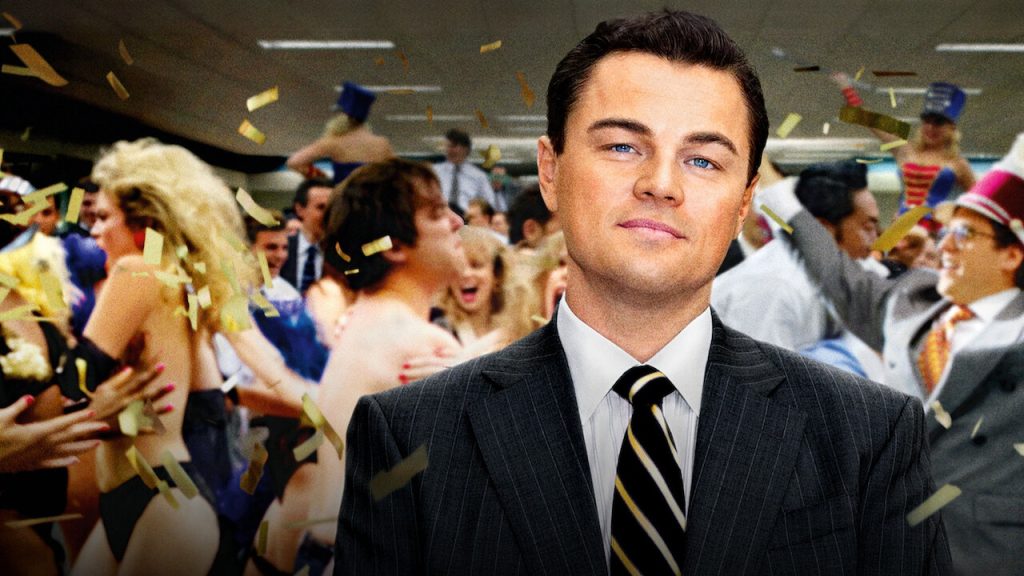
Unlike the other films in this canon, Wolf of Wall Street is not inspired by a real story. It is the real story, adapted directly from Jordan Belfort’s memoir of the same name, which he wrote while serving time at the Taft Correctional Institution in California. His cellmate reportedly encouraged him to put it all down. Scorsese and screenwriter Terence Winter (The Sopranos, Boardwalk Empire) turned it into a three-hour dopamine binge that grossed $392 million worldwide.
Belfort grew up in Bayside, Queens, the son of two accountants. He started selling Italian ices on the beach and briefly tried dental school before his first day on Wall Street at L.F. Rothschild, where his mentor Mark Hanna (played by Matthew McConaughey in the film’s most quoted scene) taught him the first rule of the business: keep the client on the phone, keep them invested, and never let them cash out. When Black Monday wiped out Rothschild, Belfort landed at a small Long Island boiler room and realized he could sell penny stocks to working-class investors using the same high-pressure techniques Hanna had used on millionaires. He founded Stratton Oakmont in 1989.
At its peak, Stratton employed over 1,000 brokers and controlled IPOs that generated hundreds of millions. Belfort’s personal spending included a 167-foot yacht (originally built for Coco Chanel in 1961, renamed the Nadine after his second wife), which sank off Sardinia after he insisted on sailing into a storm. He was ordered to pay $110 million in restitution to the 1,513 clients he defrauded. As of 2013, roughly $10 million had been recovered.
Read the full Wolf of Wall Street deep dive →
The Big Short (2015): The Outsiders Who Were Right and Hated For It
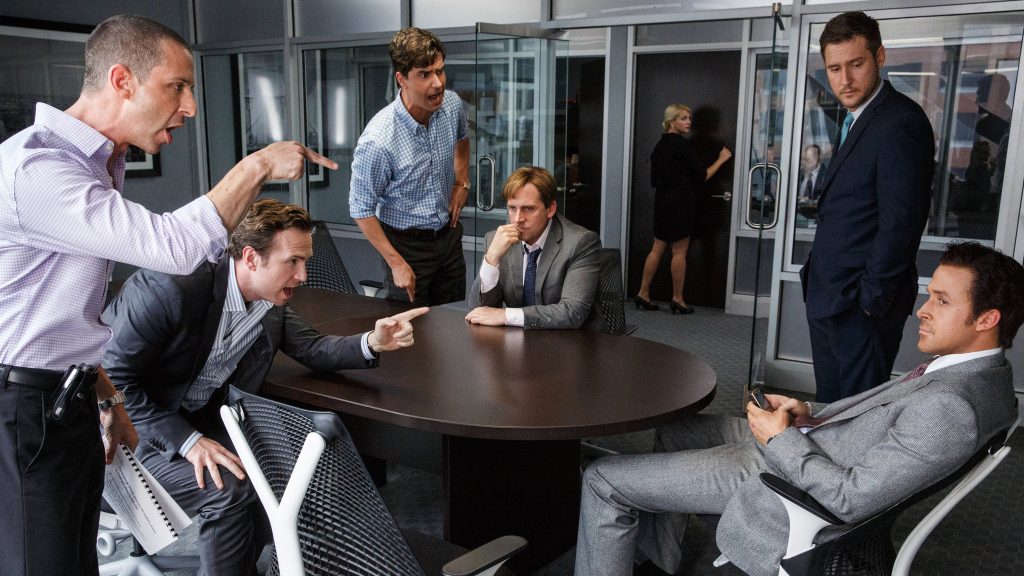
Adam McKay’s adaptation of Michael Lewis’s book is the most factually grounded film in the canon, and the one that names (almost) everyone. Christian Bale plays the real Dr. Michael Burry, a former neurosurgeon who left his residency at Stanford after falling asleep standing up during a surgery. He founded Scion Capital and in 2005 became one of the first investors to recognize that the subprime mortgage market took shape on loans that would default en masse. He created credit default swaps — essentially insurance policies that would pay out when mortgage bonds failed — and bought over a billion dollars’ worth. His investors threatened to pull out. He locked them in. When the market collapsed, Scion’s investors earned a 489% return. Burry personally made $100 million.
Steve Carell’s Mark Baum is Steve Eisman, the hedge fund manager at FrontPoint Partners who bet against the housing market after Greg Lippmann, a Deutsche Bank trader, walked into his office in early 2006 with a proposal. Lippmann had essentially copied Burry’s idea and presented it as his own. The logic was spending $2 million to potentially make $100 million. Eisman’s fund reportedly doubled from $700 million to $1.5 billion. Lippmann himself took home $47 million. Cornwall Capital — the garage-startup hedge fund run by Charlie Ledley and Jamie Mai, who began with $110,000 — bet against the highest-rated tranches of CDOs, swaps that cost them about $1 million and sold for $80 million in a single day.
The film’s most devastating detail is its last title card: as of 2015, banks had begun selling CDOs again under a new name. Bespoke Tranche Opportunity. Same instrument. Better branding.
Read the full Big Short deep dive →
What These Films Actually Built
Together, these six films form a single continuous argument about American capitalism that spans three decades, from the insider trading scandals of the 1980s through the penny stock boiler rooms of the 1990s to the mortgage-backed securities catastrophe of 2008. The real people behind these stories — Boesky, Milken, Icahn, Belfort, Burry, Eisman, Fuld, Thain — are not fictional archetypes. They are the actual architecture of the system. The films didn’t invent the mythology of Wall Street. They documented it. And then the mythology recruited a new generation anyway.
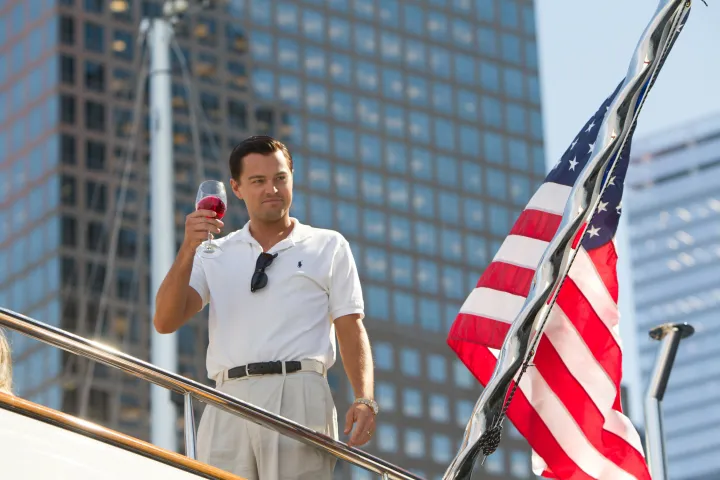
The cumulative box office across these six films exceeds $850 million. The cultural impact is incalculable. Every crypto founder who quotes Belfort, every MBA student who references Gekko without irony, every retail trader who watched The Big Short and opened a brokerage account the next morning — they are all living inside the world these films built. The question none of the films can answer, because none of them were designed to, is whether the audience ever learns the lesson. The evidence, across forty years and six films and several trillion dollars in losses, suggests they do not.
If you’ve ever watched one of these films and felt the pull — the part of you that wanted to be in that room, making that trade, wearing that watch — then you already understand why Social Life Magazine exists. We cover the world where these stories aren’t fiction. They’re Tuesday. Reach out to our editorial team to be featured.
Want to position your brand inside the culture that shaped how America thinks about wealth? Submit a Paid Feature and let our editors build something worth reading.
Join 82,000+ subscribers who get our take on luxury, culture, and the Hamptons scene before anyone else. Subscribe to our email list.
The Turning Point
Experience the intersection of sport, style, and status at Polo Hamptons — Bridgehampton’s premier luxury polo event, now in its seventh year with BMW as title sponsor.
Never miss a print issue. Subscribe to Social Life Magazine and get five summer issues delivered from Memorial Day to Labor Day.
Love what we do? Support Social Life Magazine and help us keep covering the culture that matters.
Author

Written by
Recent Posts
Using One Card Tarot to Reset a Stressful Day
Wall Street (1987) True Story: How Gordon Gekko Became America’s Most Dangerous Role Model
The Wall Street Movies That Rewired How America Thinks About Money
The Essential Guide to Hiring and Becoming a Personal Assistant
5 Chic Host Gifts for a Hamptons Weekend
Categories
- Art
- Articles
- Beauty & Skincare
- Celebrities
- Celebrities|The Chronicles
- Chronicles
- Entertainment|Culture
- Event Photos
- Events
- Fashion
- Fashion & Style
- Featured
- Food & Beverage
- Food, Spirits, Wine
- Hamptons
- Hamptons Celebrities
- Hamptons Celebrities|Celebrities|The Chronicles
- Health
- Health & Beauty
- Lifestyle
- Luxury Lifestyle
- Movies|Culture
- Movies|Hamptons Lifestyle
- Press
- Profiles
- Real Estate
- Technology
- The Chronicles
- Travel
- Uncategorized
- Weddings