
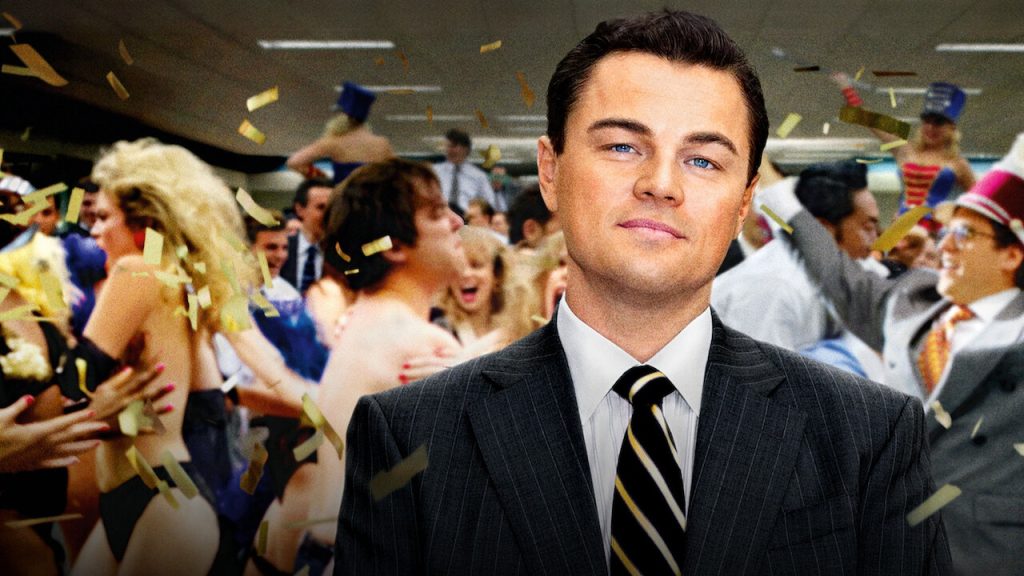
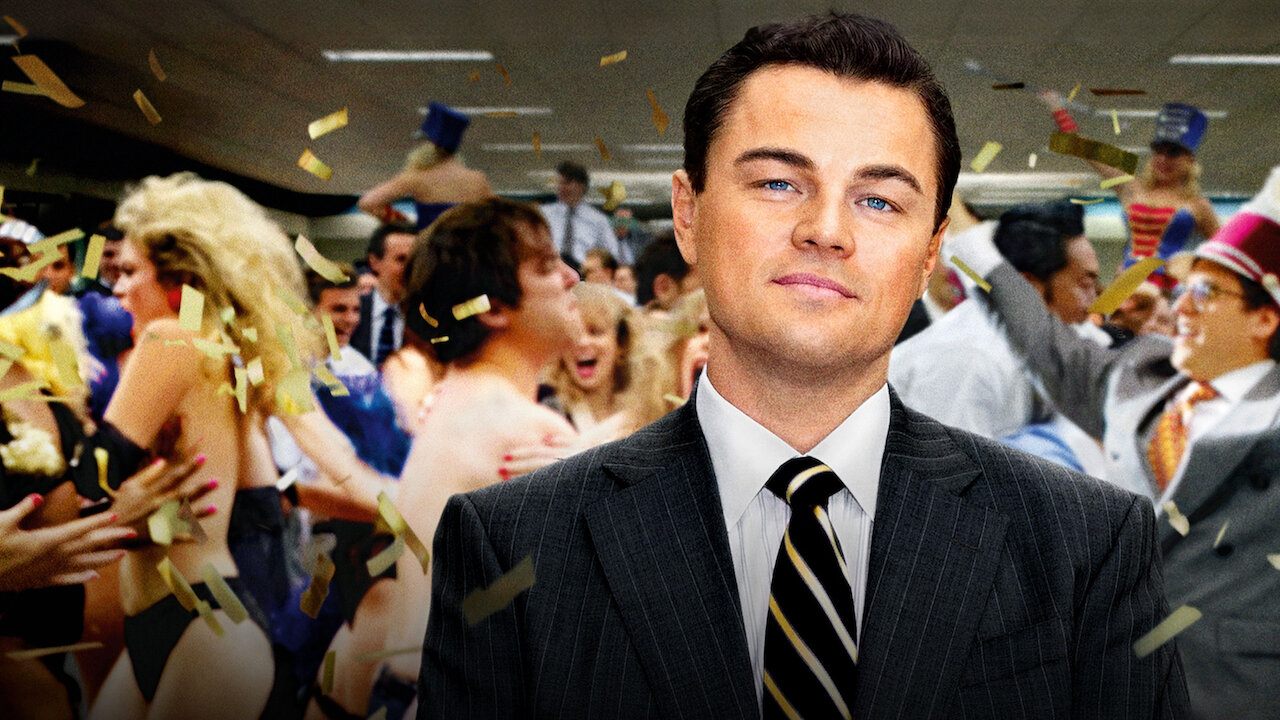
The real Jordan Belfort didn’t need a screenwriter. He needed a probation officer. That said, martin Scorsese’s 2013 film turned the former penny stock king into a three-hour cinematic event, but the actual story behind The Wolf of Wall Street is stranger, uglier, and more instructive than anything Leonardo DiCaprio performed on screen. The fraud was real. The yacht sinking was real. Despite this, the 1,513 victims were real. Additionally, and the fact that Belfort emerged from federal prison to become a motivational speaker charging $30,000 per appearance is the kind of ending that no fiction writer would dare pitch, because no audience would believe it.
Furthermore, this is the full story of The Wolf of Wall Street — the real people, the real deals, the real damage, and why a movie about a man who stole $200 million from working-class investors became the most celebrated finance film of the decade.
The Real Stratton Oakmont: A Boiler Room in Lake Success
Stratton Oakmont was not on Wall Street. Moreover, it operated out of a low-slung office building in Lake Success, Long Island — a deliberate choice that kept the firm outside the immediate regulatory gaze of Manhattan. Consequently, jordan Belfort co-founded it as a franchise of Stratton Securities in 1989, then bought out the original owner and rebuilt the operation in his own image. The business model was straightforward and illegal. However, brokers would cold-call potential investors — usually middle-class Americans with modest savings — and pitch them on penny stocks: shares in tiny, often nonexistent companies trading for cents on the dollar. Nevertheless, once enough investors bought in, the stock price would rise artificially. Notably, Stratton’s principals would then sell their own holdings at the inflated price, pocketing the spread. When the selling stopped, the stock collapsed. Investors lost everything. The brokers kept their commissions.
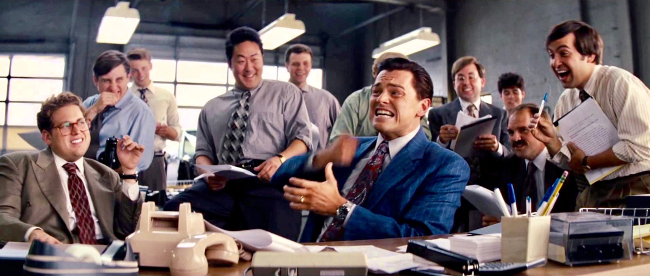
In fact, at its peak, Stratton employed over 1,000 brokers working the phones in shifts. Subsequently, the office culture was deliberately modeled on a fraternity hazing ritual crossed with a trading floor. Meanwhile, new hires were subjected to humiliation, rewarded with drugs and cash, and conditioned to view clients as marks. Indeed, federal prosecutors later estimated the firm stole a total of $200 million from investors. FINRA barred Stratton Oakmont from operating in 1996. Ultimately, by then, Belfort had already moved on to laundering the proceeds through Swiss bank accounts and shell companies.
Jordan Belfort: The Bronx Kid Who Sold Italian Ices
By contrast, Belfort was born on July 9, 1962, in the Bronx to two accountants, Max and Leah Belfort. The family was Jewish, middle-class, and unremarkable in every way that would later matter. Young Jordan showed early signs of the hustle that would define his career. As a teenager, he and a childhood friend sold Italian ices on the beaches of Long Island, reportedly earning $20,000 in a single summer. He briefly enrolled in dental school at the University of Maryland, but quit on the first day after a professor told the class that the era of dentists becoming rich was over. The story is almost certainly embellished, but it captures something essential about Belfort’s psychology: he was always looking for the fastest route to the most money, and any obstacle was an invitation to find a different door.
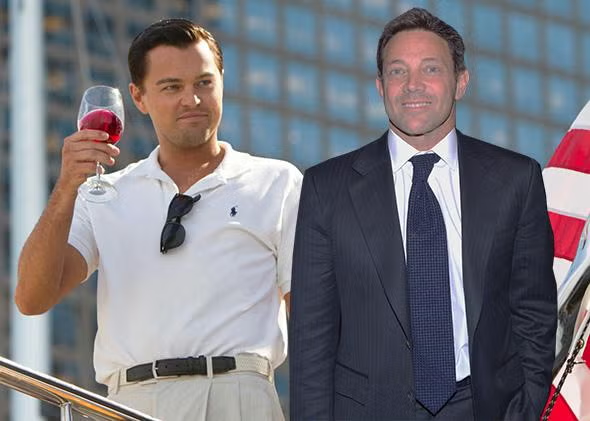
His first real Wall Street job was at L.F. Rothschild, where he met a senior broker named Mark Hanna. In Scorsese’s film, Matthew McConaughey plays Hanna in a single lunch scene that became the most quoted sequence in the movie — the chest-thumping, the cocaine philosophy, the casual revelation that the entire industry runs on keeping clients invested while skimming fees. McConaughey’s net worth origin story traces a career built on moments exactly like this one: small roles that became cultural lodestones. The real Hanna reportedly did espouse similar views about the brokerage business, though with less percussion. When Black Monday hit on October 19, 1987, L.F. Rothschild collapsed. Belfort was out of a job on his first day as a licensed broker.
The Cast: How Scorsese Assembled the Perfect Crew
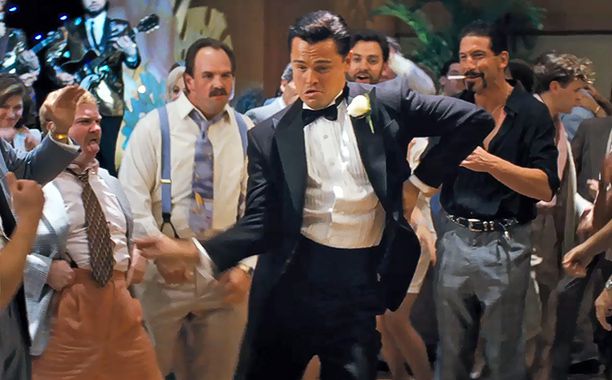
Leonardo DiCaprio had been trying to make the film for nearly a decade. He optioned Belfort’s memoir shortly after its 2007 publication and brought it to multiple studios before Paramount committed. DiCaprio’s performance as Belfort earned him a Golden Globe and his fifth Academy Award nomination, though the Oscar would not come until The Revenant two years later. His portrayal was not sympathetic by design. Scorsese and screenwriter Terence Winter (The Sopranos, Boardwalk Empire) deliberately refused to provide a moral counterweight. The audience was meant to enjoy the ride and then reckon with what that enjoyment said about them.
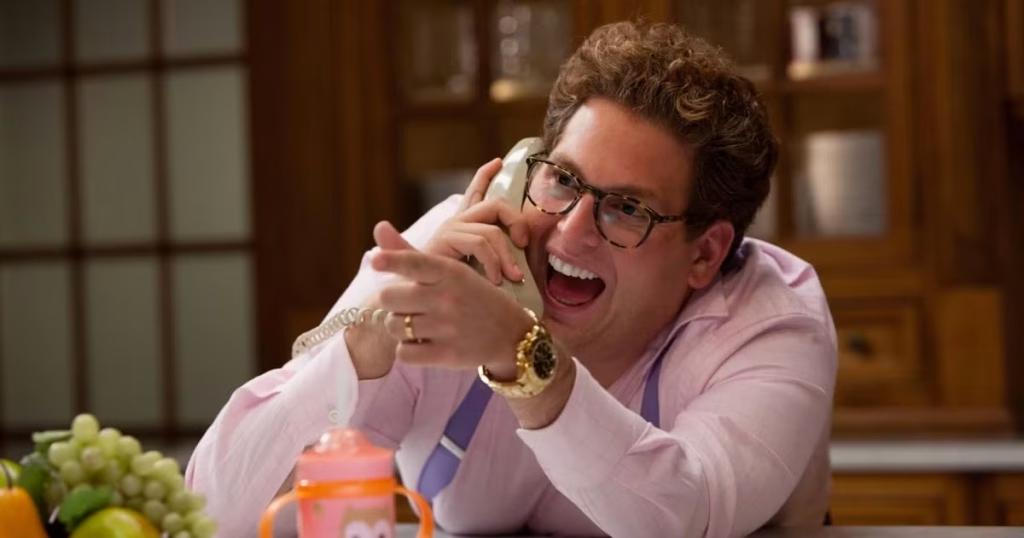
Jonah Hill took a pay cut to $60,000 — SAG minimum for a seven-month shoot — to play Donnie Azoff, a fictionalized version of Belfort’s real partner Danny Porush. Hill’s commitment to the role included gaining weight and wearing prosthetic teeth. The performance earned him his second Academy Award nomination and repositioned his career permanently from comedy to dramatic legitimacy. Porush himself objected to the portrayal and threatened legal action, though no suit was filed.

Margot Robbie was 22 years old and virtually unknown when she landed the role as Naomi Lapaglia, based on Belfort’s second wife Nadine Caridi. Robbie has said she improvised the slap she gave DiCaprio during their first major scene together because the scripted version felt insufficient. Scorsese kept it. The role launched a career that would produce an $80 million fortune and a production company, LuckyChap Entertainment, that would go on to produce the $1.4 billion Barbie.
The Money: How $200 Million Disappeared
Subsequently, the mechanics of Stratton Oakmont’s fraud were simple in concept and devastating in execution. Belfort and his inner circle would acquire large positions in penny stocks before the firm’s brokers began pitching them to retail investors. As hundreds of brokers worked the phones simultaneously, demand would spike, driving up the price. Once the stock hit a target level, the principals would dump their shares. The price would crater. Investors who had been told they were getting in on the ground floor of the next big thing were left holding worthless paper.
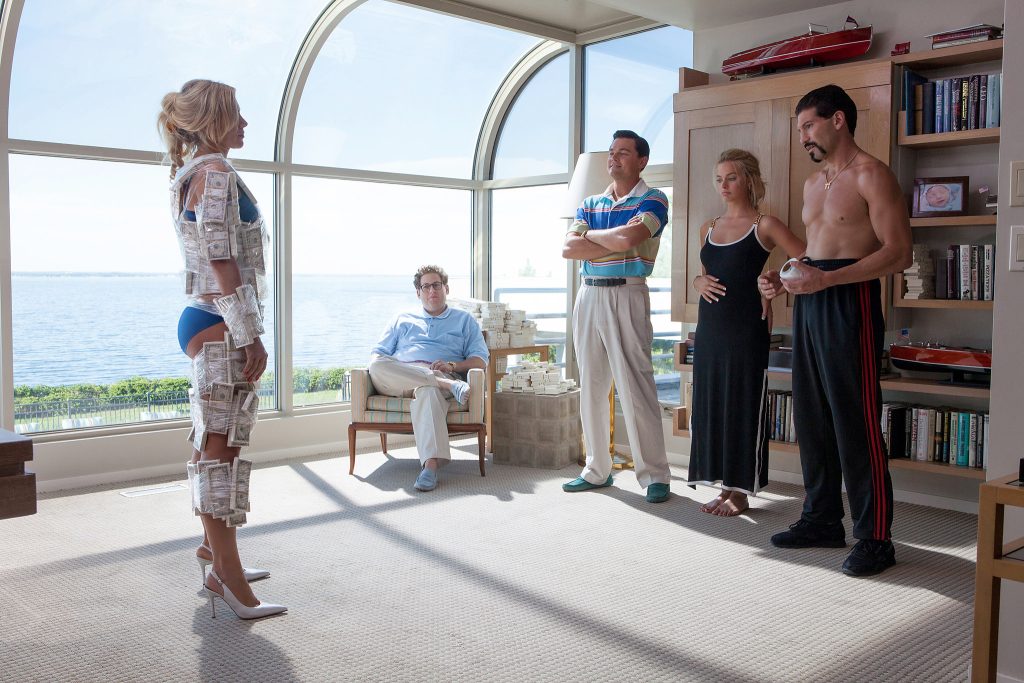
The scale was staggering. At its height, Stratton was clearing $50 million a month in commissions alone. Belfort’s personal spending became legendary: the 167-foot yacht originally built for Coco Chanel in 1961 and renamed the Nadine, which sank off the coast of Sardinia after he insisted on sailing into a storm against his captain’s advice. A helicopter that crashed on the front lawn of his Old Brookville estate while Belfort was high on Quaaludes. Parties where dwarfs were literally tossed at velcro targets for entertainment. The excess was not a byproduct of the fraud. It was the point. Belfort understood intuitively that visible, outrageous wealth was itself a sales tool. Prospects who visited the office and saw 25-year-olds driving Ferraris were easier to close. The lifestyle was the pitch deck.
The Fall: FBI, Wire Taps, and 22 Months at Club Fed
Meanwhile, the FBI began investigating Stratton Oakmont in the early 1990s. Agent Gregory Coleman, who would later discuss the case on multiple podcasts and in media interviews, spent years building the case through wiretaps, cooperating witnesses, and financial forensics. Belfort faced arrest in 1998 and charged with securities fraud and money laundering. The case was prosecuted by the U.S. Attorney’s Office for the Eastern District of New York.
Belfort cooperated. He wore a wire. He testified against his own partners and associates, including Danny Porush, who received a sentence to 39 months. Belfort received a four-year sentence as part of his plea agreement and served 22 months at Taft Correctional Institution in California — a minimum-security facility so comfortable it was known as Club Fed. His cellmate, comedian Tommy Chong (of Cheech & Chong), reportedly encouraged him to write about his experiences. The memoir that resulted became the basis for Scorsese’s film. Belfort was also ordered to pay $110.4 million in restitution to the 1,513 clients he defrauded. As of 2013, when the film arrived, approximately $10 million had been recovered — less than nine cents on the dollar.
The Movie vs. Reality: What Scorsese Changed and What He Didn’t
Terence Winter’s screenplay is remarkably faithful to Belfort’s memoir, which itself is remarkably faithful to the known facts of the case. The film’s most controversial choice was tonal, not factual. Scorsese refused to moralize. There is no victim montage. No scene where Belfort confronts the human cost of his fraud. No FBI agent given a heroic arc. The film ends with Belfort teaching a sales seminar in New Zealand, asking the audience to sell him a pen. The camera turns to the seminar attendees — real people, not actors — who stare at him with the same desperate hunger his brokers once displayed. In turn, the implication is that nothing has been learned. The cycle continues.
Christina McDowell, the daughter of one of Belfort’s real-life associates who was also defrauded in the scheme, wrote an open letter to Scorsese, DiCaprio, and Winter upon the film’s release. She pointed out that her family lost everything, that her father went to prison, and that the film’s celebratory tone erased the victims entirely. The letter went viral. Scorsese did not respond publicly. The film grossed $392 million worldwide and earned a nomination for five Academy Awards, including Best Picture and Best Director. The absence of the response was, in its own way, consistent with the film’s thesis.
The Aftermath: Where the Real People Are Now
Jordan Belfort reinvented himself as a motivational speaker and sales trainer. His “Straight Line Persuasion” system — which teaches essentially the same high-pressure techniques he used at Stratton Oakmont, minus the fraud — generates an estimated $4-5 million annually. He was paid $1.045 million for the rights to his memoir. He appeared as a background extra in the film, introducing DiCaprio at the seminar scene near the end. Regardless, he has published additional books, launched a podcast, and maintains an active social media presence. Critics have noted that his post-prison career rests on on the same charisma and sales ability that facilitated the original crime, which is either ironic or completely logical depending on your view of American capitalism.
Danny Porush — renamed Donnie Azoff in the film — served his sentence and returned to business. He later ran a medical supply company that was also accused of fraud, though the charges were ultimately dropped. Nadine Caridi, the model who became Belfort’s second wife, divorced him in 2005 after years of domestic violence fueled by his drug addiction. She has since remarried and holds a doctoral degree in clinical psychology. The yacht named after her sits at the bottom of the Mediterranean.
Why Wolf of Wall Street Still Matters
The film’s cultural legacy is inseparable from its moral ambiguity. Every crypto bro who quotes “sell me this pen” on Twitter, every finance influencer who uses Belfort’s name as aspiration rather than warning, every retail trader who watched the Quaalude scene and laughed without considering the 1,513 people who lost their savings — they are all living proof that the Wall Street movie canon does not function as cautionary tale. It functions as recruitment material. Scorsese knew this. He made the film anyway. The result is the most honest finance film ever made, not because it tells the truth about Wall Street, but because it tells the truth about the audience.
The Hidden Detail
Leonardo DiCaprio’s $300 million fortune was not built on this film alone, but Wolf cemented his status as Hollywood’s most bankable dramatic actor. Margot Robbie’s journey from a Queensland farm to an $80 million empire began in that Brooklyn apartment set. Jonah Hill’s transformation from Superbad to Oscar nominee wrapped up in Stratton Oakmont’s fictional break room. Martin Scorsese, at 71, proved he could still outpace every other American director working. The film made careers. The fraud destroyed them. Still, the gap between those two facts is the entire American story. The same crime Belfort committed was told first in Boiler Room, with redemption. The system that produced him was anatomized in Margin Call and The Big Short. Even so, the character who made it possible — Gordon Gekko — was invented twenty-six years earlier and has not aged a day.
If you’ve ever watched Wolf of Wall Street and felt the pull — the part of you that wanted to be in that room, making that trade, wearing that watch — then you already understand why Social Life Magazine exists. We cover the world where these stories aren’t fiction. They’re Tuesday. Reach out to our editorial team to be featured.
Inside the Decision
Want to position your brand inside the culture that shaped how America thinks about wealth? Submit a Paid Feature and let our editors build something worth reading.
Join 82,000+ subscribers who get our take on luxury, culture, and the Hamptons scene before anyone else. Subscribe to our email list.
The Turning Point
Experience the intersection of sport, style, and status at Polo Hamptons — Bridgehampton’s premier luxury polo event, now in its seventh year with BMW as title sponsor.
Never miss a print issue. Subscribe to Social Life Magazine and get five summer issues delivered from Memorial Day to Labor Day.
Love what we do? Support Social Life Magazine and help us keep covering the culture that matters.
Author

Written by
Recent Posts
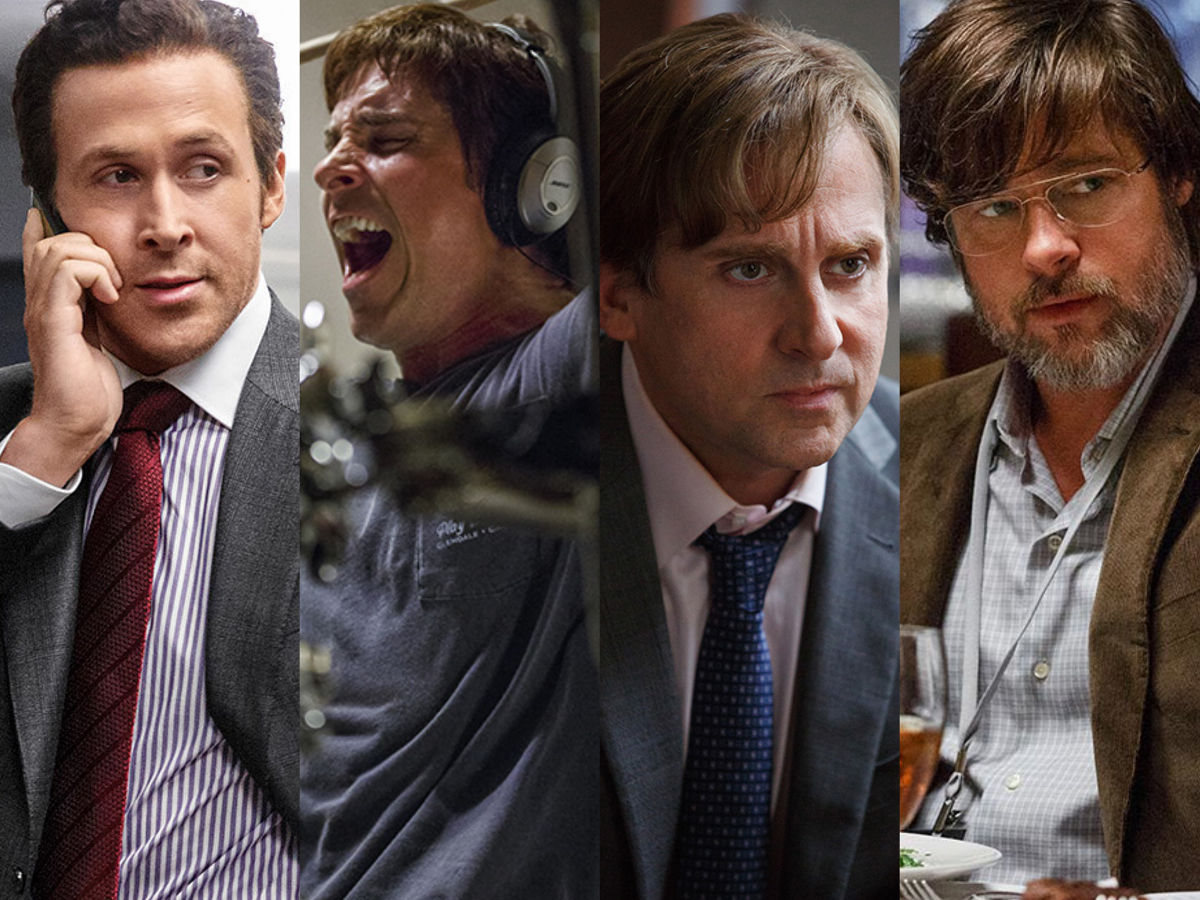
The Big Short True Story: The Outsiders Who Bet Against America and Won
Margin Call True Story: The Night Wall Street Decided to Burn It All Down
Jonah Hill Net Worth: The $60,000 Gamble That Built an $80 Million Empire
Boiler Room: The Long Island Pump-and-Dump Story Hollywood Told Twice
Wolf of Wall Street: How Jordan Belfort Built and Lost a $200 Million Empire of Fraud
Categories
- Art
- Articles
- Beauty & Skincare
- Celebrities
- Celebrities|Movies
- Celebrities|The Chronicles
- Chronicles
- Entertainment|Culture
- Event Photos
- Events
- Fashion
- Fashion & Style
- Featured
- Food & Beverage
- Food, Spirits, Wine
- Hamptons
- Hamptons Celebrities
- Hamptons Celebrities|Celebrities|The Chronicles
- Health
- Health & Beauty
- Lifestyle
- Luxury Lifestyle
- Movies|Culture
- Movies|Hamptons Lifestyle
- Press
- Profiles
- Real Estate
- Technology
- The Chronicles
- Travel
- Uncategorized
- Weddings