
Quick Answer: Celebrity and billionaire real estate in 2026 concentrates in four key markets: the Hamptons (estates from $20M-$150M+), Manhattan penthouses ($30M-$238M), coastal California ($25M-$150M), and Miami/Palm Beach ($20M-$100M+). The most expensive celebrity home transaction of 2025 was Len Blavatnik’s $115 million purchase of Terry Semel’s Further Lane estate in East Hampton.
Record US Home Sale
2025 Hamptons Record
Ultra-Luxury Off-Market
Ultra-Prime Entry
The Four Trophy Markets
Celebrity real estate concentrates in four distinct markets, each serving different lifestyle needs:
| Market | Price Range | Primary Use | Key Buyers |
|---|---|---|---|
| The Hamptons | $10M-$150M+ | Summer retreat | Finance, media, entertainment |
| Manhattan Penthouses | $20M-$238M | Primary/pied-à-terre | Global billionaires, celebrities |
| Coastal California | $25M-$150M | Primary residence | Entertainment, tech |
| Miami/Palm Beach | $20M-$100M+ | Winter retreat/primary | Finance, new money, international |
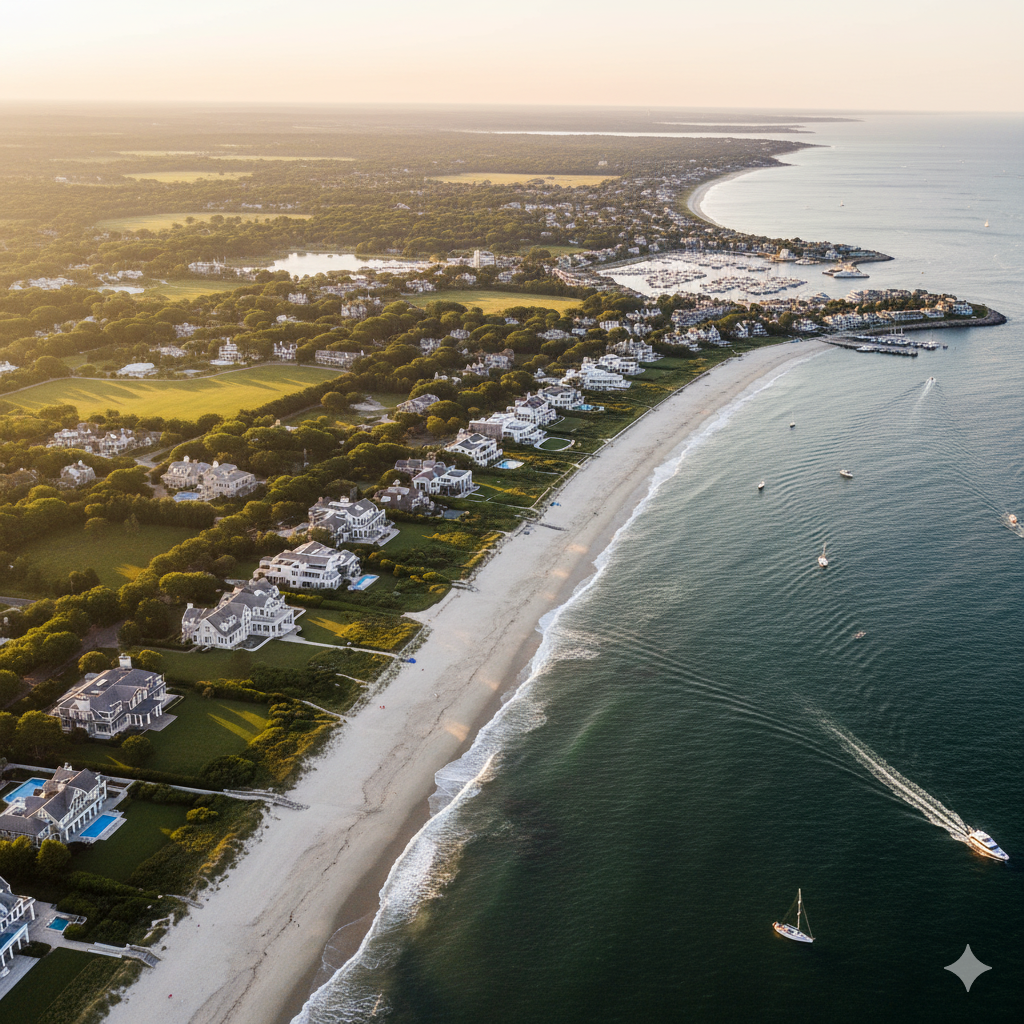
The Hamptons: America’s Premier Summer Colony
📍 The Hamptons at a Glance
Location: Eastern Long Island, NY (90 miles from Manhattan)
Season: Memorial Day to Labor Day (peak)
Entry Point: $3M (modest); $20M+ (celebrity tier); $50M+ (billionaire tier)
Record Sale: $147M (Barry Rosenstein, Further Lane, 2014)
The Hamptons remain the definitive summer destination for America’s financial and entertainment elite. Within its villages and hamlets, distinct micro-markets serve different wealth tiers:
Billionaire Addresses
- Meadow Lane, Southampton: “Billionaires Row” — Ken Griffin, Leon Black, David Koch’s widow
- Further Lane, East Hampton: Highest transaction prices; Barry Rosenstein, Len Blavatnik
- Gin Lane, Southampton: Historic oceanfront; La Dune sold for $88.5M at auction
Celebrity Favorites
- Georgica Pond, East Hampton: Beyoncé & Jay-Z ($25M), Steven Spielberg, Martha Stewart
- Lily Pond Lane, East Hampton: Entertainment industry concentration
- Sagaponack: Drew Barrymore, Ina Garten, Kelly Ripa
For complete coverage, see our Celebrity Hamptons Homes guide and Most Expensive Houses in the Hamptons.
Manhattan: The Global Billionaire Destination
📍 Manhattan Ultra-Luxury
Key Areas: Billionaires’ Row (57th St), Tribeca, Upper East Side
Entry Point: $10M (luxury); $30M+ (ultra-prime); $100M+ (trophy)
Record Sale: $238M (Ken Griffin, 220 Central Park South)
Manhattan’s supertall luxury towers have created a new category of ultra-premium real estate, with prices per square foot exceeding $10,000 in trophy buildings.
Billionaires’ Row
The stretch of 57th Street between Park Avenue and Columbus Circle now hosts the world’s most expensive residential addresses:
| Building | Record Sale | Notable Residents |
|---|---|---|
| 220 Central Park South | $238M (Griffin) | Ken Griffin, Sting |
| One57 | $100.5M | Michael Dell, Bill Ackman |
| 432 Park Avenue | $87.7M | Saudi royal family, Jennifer Lopez |
| Central Park Tower | $100M+ (asking) | Various international buyers |
See our complete guide to Celebrity NYC Penthouses.
Coastal California: Entertainment’s Home Base
📍 LA Luxury Markets
Key Areas: Bel Air, Beverly Hills, Malibu, Montecito
Entry Point: $15M (luxury); $50M+ (ultra-prime)
Record Sale: $165M (Marc Andreessen, Malibu)
Los Angeles luxury real estate serves entertainment industry professionals who need proximity to studios while maintaining privacy impossible in Manhattan.
The Platinum Triangle
- Bel Air: Tech billionaires, entertainment moguls; “The One” listed at $500M
- Beverly Hills: Traditional celebrity enclave; historic estates
- Holmby Hills: Playboy Mansion, Spelling Manor
Malibu: Beach Meets Privacy
- Carbon Beach (“Billionaire’s Beach”): David Geffen, Larry Ellison, Eli Broad
- Point Dume: More space, slightly lower prices
- Serra Retreat: Gated community favored by A-list
Montecito: The New Celebrity Enclave
Once a quiet Santa Barbara suburb, Montecito has become Hollywood’s preferred escape:
- Oprah Winfrey: “The Promised Land” — 70+ acres, estimated $100M+ value
- Ellen DeGeneres: Serial buyer/seller, now relocated to UK
- Prince Harry & Meghan Markle: $14.7M estate
- Katy Perry & Orlando Bloom: Multiple properties
For oceanfront estates across all markets, see Billionaire Beach Houses.
Miami & Palm Beach: The New Money Magnet
📍 South Florida Luxury
Key Areas: Palm Beach, Miami Beach, Fisher Island, Indian Creek
5-Year Price Growth: +117% (Palm Beach)
Draw: No state income tax, weather, new construction
South Florida has transformed from winter retreat to year-round destination, driven by tax migration from New York and California:
Palm Beach
- The Estate Section: Old money, hedge fund managers
- North End: Newer construction, tech wealth
- Notable Residents: Ken Griffin (multiple properties), Stephen Schwarzman
Miami
- Indian Creek Island: “Billionaire Bunker” — Jared Kushner, Tom Brady, Jeff Bezos
- Fisher Island: Private island, most exclusive zip code
- Faena District: New ultra-luxury development
Record-Breaking Transactions
| Year | Property | Price | Buyer |
|---|---|---|---|
| 2019 | 220 Central Park South, NYC | $238M | Ken Griffin |
| 2014 | Further Lane compound, East Hampton | $147M | Barry Rosenstein |
| 2025 | 408 Further Lane, East Hampton | $115M | Len Blavatnik |
| 2023 | Jule Pond Drive, Southampton | $105M | Undisclosed (Ford estate) |
| 2022 | Carbon Beach, Malibu | $165M | Marc Andreessen |
The Off-Market Reality
Approximately 70% of ultra-luxury transactions ($50M+) occur off-market. This creates a shadow inventory visible only to family offices, private banks, and elite brokerages.
Why sellers prefer off-market: Discretion, avoiding “stale listing” perception, controlling narrative
Why buyers prefer off-market: Exclusive access, reduced competition, privacy
Celebrity Real Estate Patterns
Analyzing hundreds of celebrity transactions reveals distinct patterns:
By Industry
- Finance: Hamptons + Palm Beach + Manhattan pied-à-terre
- Entertainment: LA primary + Hamptons summer + NYC pied-à-terre
- Tech: Bay Area + Hawaii or Aspen + emerging markets
- Sports: Team city + Miami + low-tax states
By Net Worth Tier
| Net Worth | Typical Portfolio | Annual Real Estate Spend |
|---|---|---|
| $50-100M | 2-3 properties | $2-5M maintenance |
| $100-500M | 3-5 properties | $5-15M maintenance + acquisitions |
| $500M-1B | 5-10 properties | $15-30M+ all-in |
| $1B+ | 10+ properties globally | $50M+ including staff/security |
Get Inside Access to Celebrity Real Estate
Subscribe to Social Life Magazine for exclusive coverage of Hamptons transactions, celebrity home tours, and insider perspectives on the ultra-luxury market.
Spoke Articles in This Hub
- Celebrity Hamptons Homes: Who Lives Where and What They Paid
- The Most Expensive Houses in the Hamptons
- Celebrity NYC Penthouses: Manhattan’s Most Exclusive Addresses
- Billionaire Beach Houses: Coastal Estates of the Ultra-Wealthy
Related Coverage
- Billionaire Style: How the Ultra-Wealthy Live
- Hamptons Power Players: The Definitive Guide
- Celebrity Net Worth Guide 2026
Frequently Asked Questions
Where do most celebrities buy homes?
Most celebrities maintain a primary residence in Los Angeles (Bel Air, Beverly Hills, Malibu, or Montecito) with secondary homes in the Hamptons, Manhattan, and/or Miami. The specific combination depends on industry: entertainment favors LA, finance favors NYC/Hamptons, and tech increasingly favors Miami for tax benefits.
What is the most expensive celebrity home?
The most expensive home purchase by a single buyer is Ken Griffin’s $238 million penthouse at 220 Central Park South in Manhattan. Griffin, founder of Citadel, also owns extensive properties in Palm Beach, Chicago, and London, with a combined real estate portfolio exceeding $1 billion.
Why do celebrities buy in the Hamptons?
The Hamptons offers proximity to New York City (90 miles), established social infrastructure (charity galas, polo, beach clubs), peer community (other celebrities and billionaires), and relative privacy compared to LA. The summer season creates a concentrated social calendar that facilitates networking and entertainment.
How much do celebrities spend on real estate?
Celebrity real estate purchases typically range from $10-50 million per property, with ultra-wealthy individuals ($500M+ net worth) maintaining portfolios of 5-10+ properties valued collectively at $100-500 million. Annual maintenance, staff, and security costs can exceed $5-15 million for extensive portfolios.
Connect With Social Life Magazine
Feature Article Ideas / Advertising / Brand Partnership Inquiries
→ Contact Social Life Magazine
Polo Hamptons Tickets, Cabanas & Brand Sponsorships
→ Polo Hamptons
Join Our Email List
→ Subscribe Here
Social Life Magazine Print Subscription
→ Get Your Subscription
Support Our Work
→ Donate $5 via PayPal
Author

Written by
Recent Posts
What an Auto Accident Lawyer Can Recover After a Serious Wreck
What Ginger and Turmeric Shots Do for Your Body When Taken Daily
What Should You Know About Getting a Cold Sore Prescription Online?
Porch Enclosures That Let Outdoor Living Last Longer
What Your E1 Visa Lawyer Verifies in Substantial Trade Records
Categories
- Art
- Articles
- Business of Luxury
- Celebrities
- Culture
- Entertainment
- Events
- Faces of Summer 2026
- Fashion
- Fashion & Style
- Featured
- Finance
- Food, Spirits, Wine
- Hamptons
- Hamptons Celebrities
- Health
- Health & Beauty
- Lifestyle
- Luxury Lifestyle
- Press
- Profiles
- Real Estate
- Technology
- The Chronicles
- Travel
- Uncategorized
- Weddings