
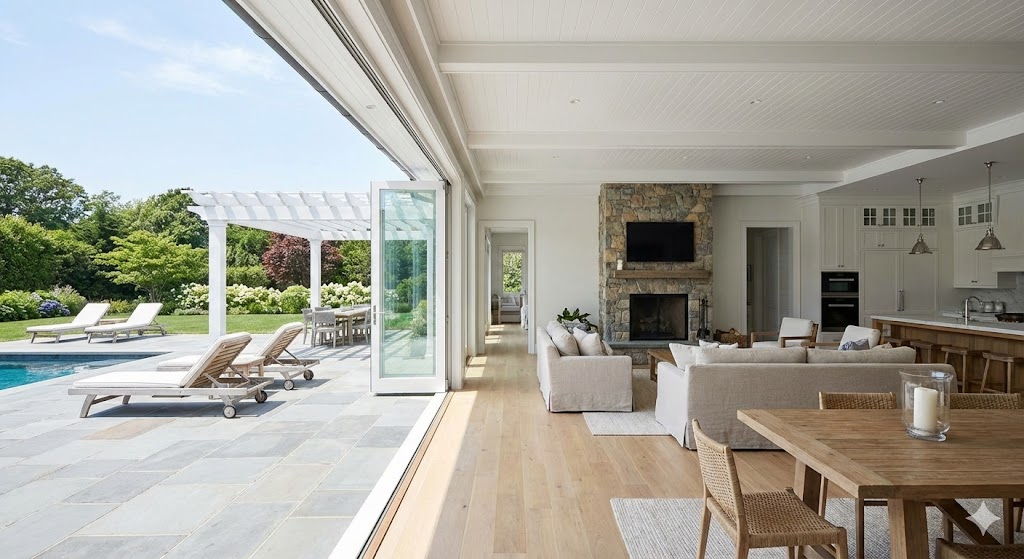
The greatest Hamptons estates share one quality that separates memorable properties from merely expensive ones. Indoor-outdoor flow transforms houses into experiences. It makes 10,000 square feet feel like infinite space.
This design philosophy has become essential to Hamptons estate design at the highest level. Buyers now expect seamless transitions between interior rooms and outdoor living areas. They want porches that function as living rooms, patios that serve as dining rooms, and pool houses that rival primary residences.
Understanding indoor-outdoor flow requires examining why it matters, how to achieve it, and what common mistakes undermine its power.
Why Indoor-Outdoor Flow Defines Luxury Today
The Hamptons exist as a destination precisely because of their outdoor appeal. Beaches, farmland, and ocean air draw Manhattan’s most successful residents eastward each summer. Any estate that fails to celebrate this outdoor character misses the essential point.
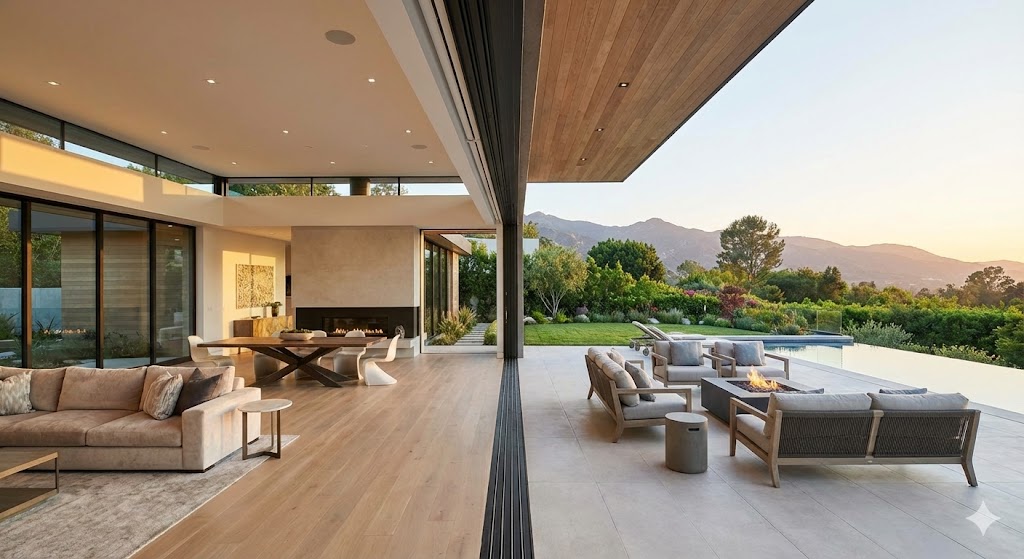
Boston Consulting Group research on luxury real estate identifies outdoor living space as the fastest-growing priority among high-net-worth buyers. This trend accelerated dramatically post-2020 when outdoor entertaining became both preference and necessity.
Yet indoor-outdoor flow involves more than adding a patio door. True flow creates experiential continuity. Stepping outside should feel like entering another room rather than exiting the house. The materials, the sight lines, the furniture quality, and even the lighting must maintain consistent sophistication.
When achieved correctly, indoor-outdoor flow multiplies perceived living space. A 6,000 square foot house with excellent flow feels larger than an 8,000 square foot home with poor outdoor integration. This perception directly impacts property value and buyer enthusiasm.
The Five Elements of Seamless Transition Design
Successful indoor-outdoor flow depends on five interconnected elements that must work harmoniously.
Material continuity creates the foundation. When interior flooring materials extend outdoors with weather-appropriate variations, the eye reads spaces as unified. This might mean interior white oak transitioning to complementary teak decking. The colors and textures rhyme without copying.
Sight line management determines how spaces reveal themselves. The best designs create framed views that draw occupants outward. Through careful window and door placement, exterior focal points become interior design elements. A mature oak tree or ocean horizon becomes artwork.
Furniture scale and style must carry through transitions. Nothing breaks flow faster than dramatic quality drops between interior and exterior furnishings. If the living room features custom upholstery, the terrace requires equally considered pieces. Financial Times’ How to Spend It regularly features outdoor furniture collections that match indoor luxury standards.
Lighting design extends atmosphere beyond walls. Outdoor spaces need lighting that creates evening ambiance rivaling interior rooms. This means layered fixtures, pathway illumination, and architectural lighting that showcases landscape elements.
Climate control enables year-round usability. Heated terraces, retractable enclosures, and strategic wind screening extend outdoor seasons dramatically. Hamptons buyers increasingly expect outdoor spaces functional from April through November.
Architecture That Enables Flow
Some architectural decisions facilitate indoor-outdoor flow while others obstruct it permanently. Understanding these factors helps whether designing new construction or renovating existing estates.
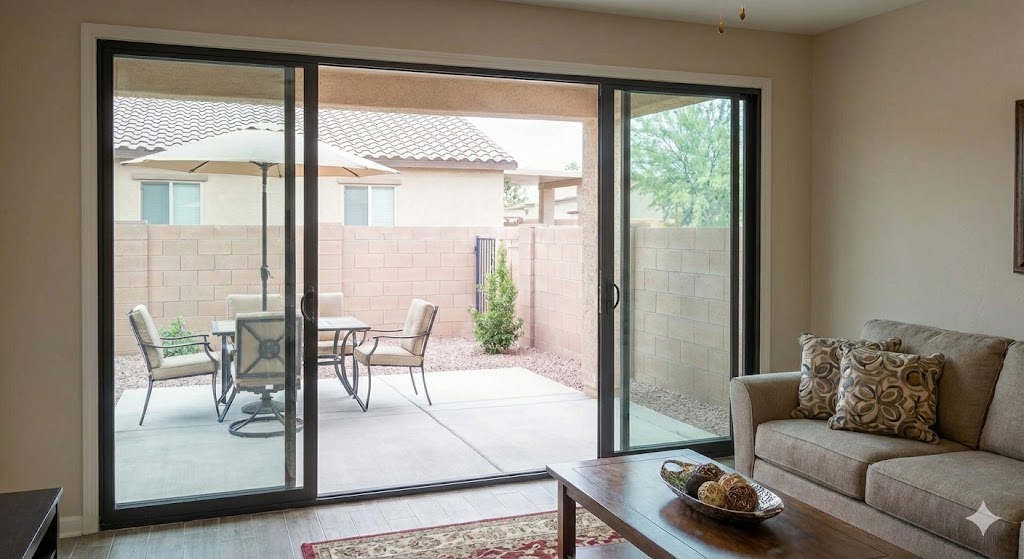
Door systems make enormous differences. Traditional slider doors limit opening widths and create visual barriers. Modern folding door systems or pocket doors disappear entirely, eliminating the boundary between inside and outside. A 20-foot opening transforms spatial experience completely.
Ceiling heights should remain consistent across transitions. When interior ceiling heights drop significantly at exterior walls, the psychological effect creates compression. Matching ceiling planes outside maintains the open feeling.
Covered outdoor areas bridge the comfort gap. Pergolas, loggias, and covered patios create intermediary zones that ease transition. These semi-outdoor spaces allow furniture that approaches interior quality while providing weather protection.
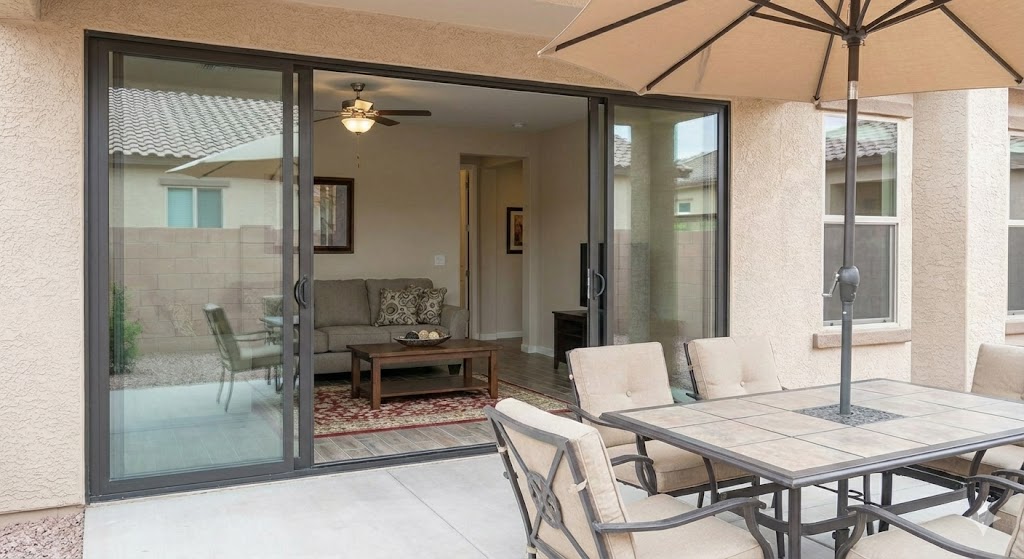
Level changes require careful management. Every step between inside and outside creates friction in the flow. Where possible, floor levels should match exactly, with flush thresholds that wheelchair users could navigate.
Landscape Architecture as Interior Design Extension
True indoor-outdoor flow extends beyond architecture into landscape design. The grounds become additional rooms requiring equal design attention.
Garden rooms create outdoor destinations that function like interior spaces. A hedge-enclosed dining garden, a sculpture courtyard, or a fire pit lounge each serves specific purposes with defined boundaries.
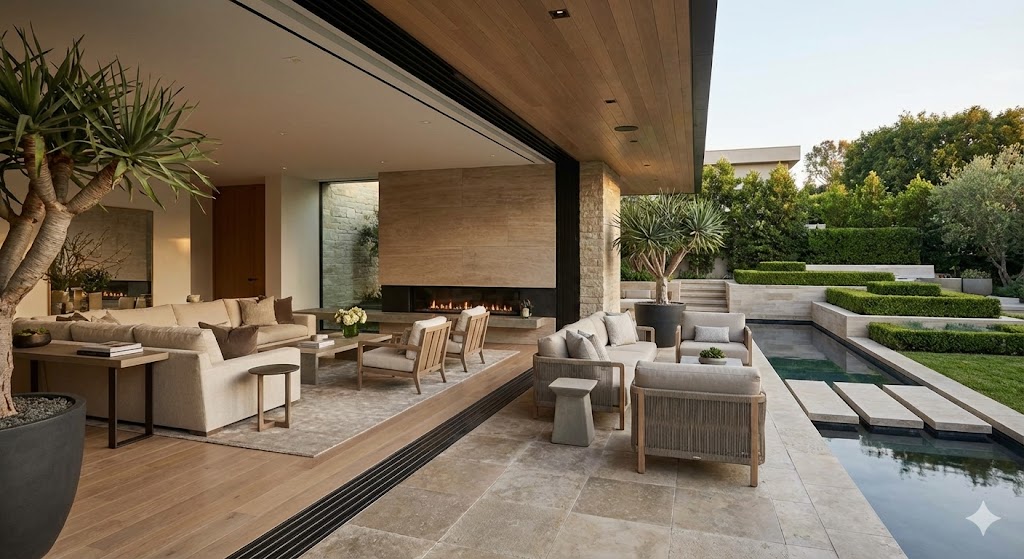
Planting palettes should complement interior color schemes. If the house features warm neutrals and blues, the landscape might emphasize silver-green foliage and blue hydrangeas. This chromatic continuity connects all spaces visually.
Hardscape materials deserve the same consideration as interior finishes. Bluestone patios, brick pathways, and gravel courts each communicate different characters. The choices should align with architectural style and interior finish quality.
At D&J Concepts, our integrated approach proves essential here. Having interior design and landscape architecture under one roof ensures seamless coordination. Projects where separate firms handle inside and outside often show visible disconnection.
Common Indoor-Outdoor Flow Mistakes
Experience across dozens of Hamptons estates reveals predictable failure patterns.
Outdoor furniture afterthought syndrome affects many properties. Homeowners invest heavily in interior furnishings, then place budget outdoor pieces on beautiful terraces. The quality mismatch destroys the flow perception instantly.
Ignoring the transition threshold creates another problem. Where exterior doors meet outdoor surfaces, details matter enormously. Bulky frames, visible tracks, or abrupt material changes all signal boundary rather than continuity.
Lighting failures emerge particularly at evening. A beautifully lit interior viewed against a dark exterior creates mirror effect in windows. The outside disappears, breaking the connection entirely. Outdoor lighting must balance with interior levels.
Scale mismatches between indoor and outdoor furniture confuse spatial reading. If interior seating accommodates eight comfortably, but outdoor seating handles only four, the flow suggests limitation rather than expansion.
Case Study: Bridgehampton Estate Transformation
A recent Bridgehampton project illustrates indoor-outdoor flow principles in practice. The existing 8,500 square foot home featured beautiful interiors but treated outdoor spaces as afterthoughts.
Our renovation focused on three key interventions. First, we replaced traditional French doors with a 30-foot folding glass system opening the great room to the pool terrace. The barrier disappeared.
Second, we redesigned the terrace with covered and uncovered zones, creating distinct outdoor rooms for dining, lounging, and poolside relaxation. Each zone received furniture comparable to interior spaces in quality and intention.
Third, our landscape team installed structured gardens extending the design vocabulary outward. Formal hedging created the garden room structure. Perennial plantings added seasonal color coordinating with interior accents.
The result transformed how the family uses their property. Summer days now flow naturally from kitchen to outdoor dining to pool to garden. Evening entertaining expands seamlessly across inside and outside zones. The property feels larger and more complete than its square footage suggests.
Investment Considerations for Indoor-Outdoor Flow
Achieving excellent indoor-outdoor flow requires upfront investment that delivers substantial return.
Door system upgrades range from $50,000 to $150,000 depending on width and specifications. The transformation in daily experience and resale value typically justifies this investment within three years of ownership.
Outdoor furniture at appropriate quality levels costs approximately 60-80% of equivalent interior pieces. Expecting to furnish a 1,000 square foot terrace for the same budget as a 1,000 square foot interior room leads to disappointing compromises.
Landscape architecture fees and installation costs vary widely based on project scope. Well-designed outdoor rooms typically require $75,000 to $200,000 investment for comprehensive implementations on estate-scale properties.
Maximizing Your Property’s Indoor-Outdoor Potential
Every Hamptons property has untapped indoor-outdoor flow potential. The key involves identifying where barriers exist and implementing strategic interventions.
Start by observing your current patterns. Where do you naturally want to move outdoors? What prevents that movement from feeling seamless? Where do quality levels drop as you exit interior spaces?
These observations reveal priority improvements. Sometimes a door replacement transforms experience. Other times, comprehensive terrace redesign proves necessary. Often, outdoor furniture upgrades deliver the highest impact for investment.
For personalized assessment of your property’s indoor-outdoor potential, reach out to Social Life Magazine for design consultation connections. Browse Hamptons Landscape Architecture Excellence for additional inspiration.
David Hornung leads D&J Concepts, the Hamptons’ premier integrated design-build studio. With offices in Southampton, Manhattan, Palm Beach, and Southern California, D&J brings comprehensive interior and landscape expertise to exceptional properties. Visit dandjconcepts.com for portfolio examples.
Author

Written by
Recent Posts

Breaking Bad Cast Net Worth. $130 Million Cooked in Five Seasons of Perfect Television

Cailee Spaeny Net Worth — From Springfield, Missouri to A24 and Alien in Three Years Flat

Wagner Moura Net Worth — He Learned Spanish to Play Escobar. Then He Learned English to Take Hollywood.

Robert Eggers Net Worth — He Made a $3.5 Million Film in Puritan English and Hollywood Listened

Brie Larson Net Worth — A $6 Million Indie Film Won Her an Oscar. Marvel Paid Her the Rest.
Categories
- Art
- Articles
- Beauty & Skincare
- Celebrities
- Celebrities|Movies
- Celebrities|The Chronicles
- Chronicles
- Entertainment|Culture
- Event Photos
- Events
- Fashion
- Fashion & Style
- Featured
- Food & Beverage
- Food, Spirits, Wine
- Hamptons
- Hamptons Celebrities
- Hamptons Celebrities|Celebrities|The Chronicles
- Health
- Health & Beauty
- Lifestyle
- Luxury Lifestyle
- Movies|Culture
- Movies|Hamptons Lifestyle
- Press
- Profiles
- Real Estate
- Technology
- The Chronicles
- Travel
- TV
- Uncategorized
- Weddings