
Every decade brings new interior design trends that promise timelessness but deliver dated rooms within years. Meanwhile, certain properties maintain freshness across generations. The difference lies in modern transitional design.
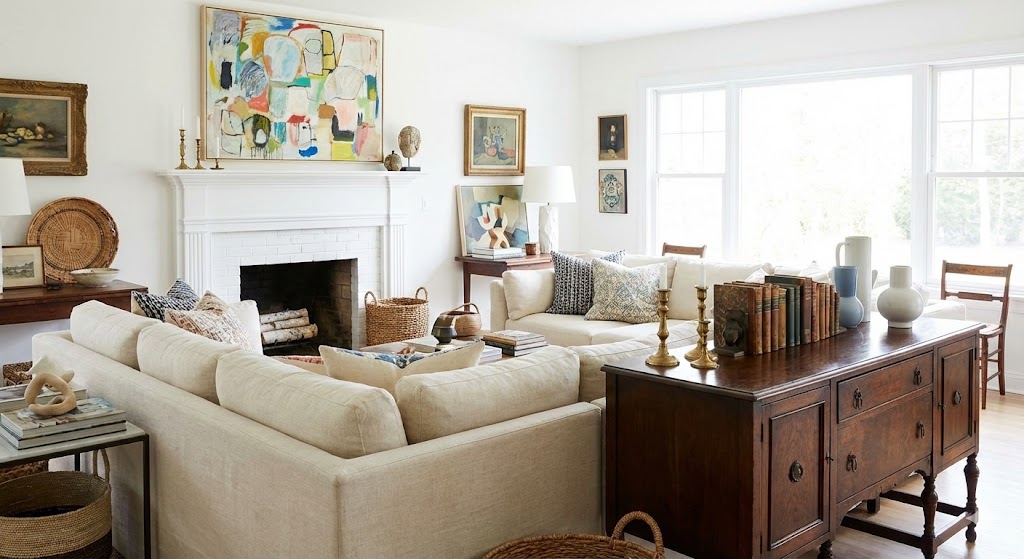
This approach forms the signature style I’ve developed over two decades of Hamptons projects. Modern transitional design incorporates antiques and modern elements for an unexpected edge. It creates rooms that photograph beautifully today and will still feel relevant in twenty years.
Understanding this philosophy helps homeowners make design decisions that build lasting value rather than chase fleeting fashions.
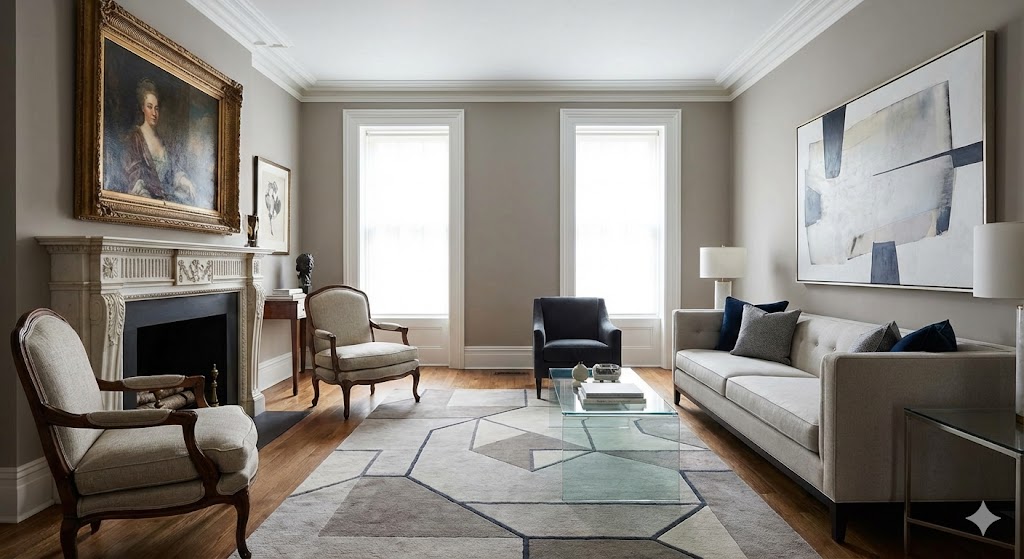
Modern transitional design occupies the sophisticated space between traditional and contemporary extremes. Pure traditional rooms can feel museum-like and impractical. Pure contemporary spaces often lack warmth and history. Transitional design captures the best qualities of each while avoiding their weaknesses.
The “modern” qualifier distinguishes this approach from generic transitional styling. We actively embrace contemporary art, current textiles, and present-day functionality. Rooms must work for actual modern life with its technology requirements, casual entertaining patterns, and relaxed dress codes.
Yet modern transitional design refuses to abandon historical depth. Antique pieces anchor rooms in continuity. Vintage objects add patina that new items cannot replicate. Classical proportions inform spatial planning even when materials and furnishings feel current.
Business of Fashion’s analysis of luxury interiors confirms that heritage-contemporary fusion defines current high-end residential markets. Buyers seek spaces that communicate both established taste and current awareness.
The Tension That Creates Interest
Compelling interiors require visual tension. Rooms where everything matches feel flat and uninteresting. Tension generates engagement that draws occupants deeper into spaces.
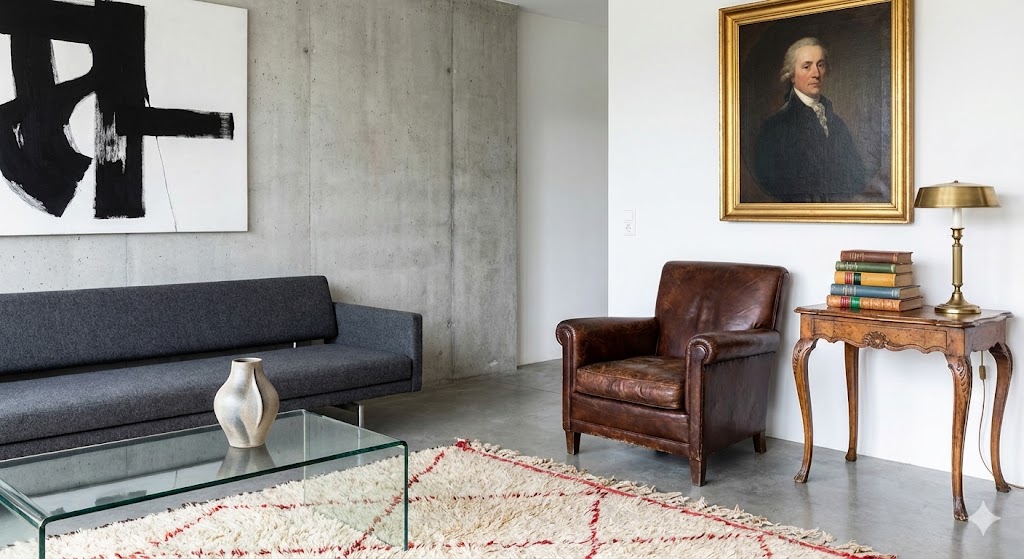
Modern transitional design creates productive tension through deliberate juxtaposition. A Georgian antique console table might support a contemporary ceramic lamp. An abstract expressionist painting hangs above a Victorian fireplace. Chrome-framed dining chairs surround a rustic French farmhouse table.
Each juxtaposition must feel intentional rather than accidental. The elements need just enough connection—shared colors, complementary proportions, or conceptual relationship—to read as curated rather than chaotic.
This approach reflects how sophisticated people actually live. They’ve inherited grandmother’s silver but also appreciate emerging artists. They own antique rugs collected during travels and contemporary seating appropriate for modern entertaining. Modern transitional design honors this reality.
Implementing Modern Transitional Principles
Successful modern transitional design follows several implementable principles.
The 70/30 rule provides useful guidance. Approximately 70% of a room’s furnishings should share a general era or feeling, while 30% provides deliberate contrast. This ratio maintains cohesion while ensuring interest.
Anchor pieces establish each room’s foundational character. In traditional-leaning transitional rooms, the anchor might be an antique dining table or a vintage chandelier. Contemporary-leaning spaces might anchor on a minimalist sectional or abstract sculpture. Everything else responds to this anchor.
Color palettes unify disparate elements. When pieces span centuries, consistent color application creates harmony. A blue ceramic collected in Morocco, a blue stripe on contemporary pillows, and blue spines on vintage books all connect visually despite different origins.
Scale relationships matter enormously. Modern transitional rooms mix scales intentionally, pairing substantial antique case pieces with delicate contemporary accent tables. This variety creates rhythm without chaos.
Sourcing Modern Transitional Elements
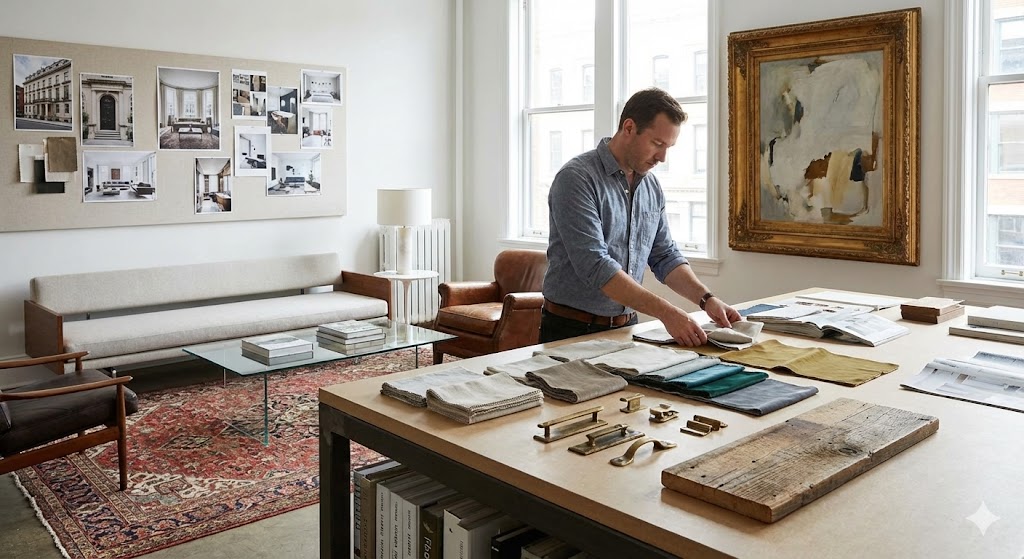
Building a modern transitional interior requires diverse sourcing beyond traditional furniture showrooms.
Antique dealers remain essential partners. Developing relationships with reputable dealers who understand your aesthetic preferences yields first access to appropriate pieces. In the Hamptons, several established dealers specialize in inventory suitable for modern transitional applications.
Contemporary galleries and design shops provide the modern side of the equation. Architectural Digest’s annual guide highlights retail destinations across design categories. Building relationships with gallery owners often enables custom commissions.
Auction houses offer both antique and contemporary acquisition opportunities. Learning to navigate auction catalogues and bidding processes expands sourcing options significantly.
Travel provides unique finding opportunities. Objects acquired abroad carry stories that manufactured items cannot match. A textile from a Marrakech souk, a ceramic from a Italian workshop, or a painting from a Paris gallery each adds irreplaceable authenticity.
Room-by-Room Modern Transitional Applications
Different rooms present distinct modern transitional opportunities.
Living rooms offer the most visible modern transitional platform. Here, the fundamental conversation between periods plays out most dramatically. The sofa typically reads contemporary for comfort and scale, while accent chairs might introduce historical character. Case goods—consoles, coffee tables, side tables—provide opportunities for antique integration.
Dining rooms accommodate dramatic period mixing particularly well. The formal nature of dining spaces welcomes historical pieces that might feel excessive elsewhere. Antique tables surrounded by contemporary seating creates elegant tension. Vintage lighting fixtures above modern tableware continues the dialogue.
Bedrooms benefit from subtler transitional approaches. These private spaces should prioritize comfort while incorporating historical warmth. Antique nightstands, vintage mirrors, or inherited textiles add character without overwhelming the restful atmosphere.
Kitchens present unique challenges. Modern functionality requirements dominate, but transitional elements prevent sterility. Antique cutting boards, vintage pottery, and collected copper cookware humanize contemporary cabinetry and appliances.
Common Modern Transitional Mistakes
Pattern recognition from extensive project experience reveals frequent mistakes.
Over-matching destroys transitional energy. When every element shares the same finish, period, or style, rooms lose the tension that creates interest. Embracing intentional discord separates sophisticated design from catalog conformity.
Ignoring proportion relationships produces uncomfortable spaces. A delicate antique escritoire lost against a massive contemporary sectional fails visually. Pieces must relate proportionally even when periods differ dramatically.
Authenticity lapses undermine credibility. Reproduction antiques rarely succeed in modern transitional applications. Their lack of genuine patina registers subconsciously as false. Better to feature fewer authentic pieces than many reproductions.
Trendy contemporary choices date quickly. Modern transitional design depends on contemporary elements aging well alongside genuine antiques. Selecting currently fashionable but likely transient pieces defeats the approach’s purpose.
Building Modern Transitional Collections Over Time
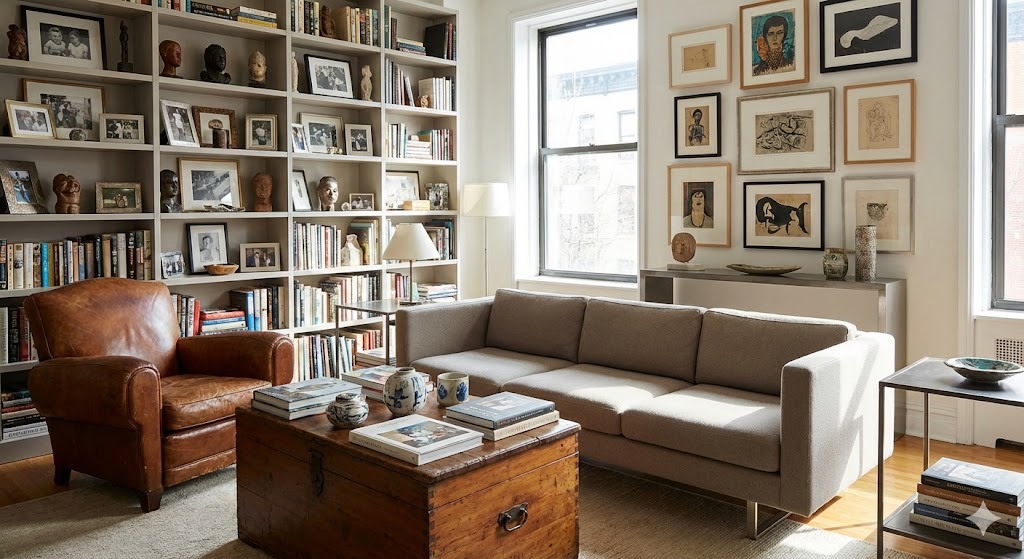
The most compelling modern transitional interiors develop gradually rather than arriving fully formed.
Begin with quality anchor pieces you genuinely love. These foundational items—perhaps an exceptional antique, a significant artwork, or a commissioned contemporary piece—establish the collection’s character.
Add thoughtfully over time. Living with spaces reveals what’s needed. Rushing to fill every surface prevents the discovery process that yields truly personal results.
Edit ruthlessly. Collections improve through subtraction as much as addition. Removing pieces that no longer serve the overall vision creates space for better acquisitions.
Document provenance for significant pieces. Future generations will appreciate knowing an object’s history. This information also proves valuable for estate planning and insurance purposes.
Modern Transitional Design and Property Value
Beyond personal satisfaction, modern transitional design delivers measurable financial benefits.
Properties featuring quality antiques mixed with contemporary elements consistently outperform both purely traditional and purely contemporary comparables. McKinsey’s luxury real estate analysis indicates that sophisticated interiors influence purchase decisions significantly.
Specifically, quality antiques hold and appreciate in value. Unlike manufactured furniture that depreciates immediately, antique pieces often increase in worth. Properties containing valuable antiques offer buyers tangible assets beyond real estate.
Moreover, modern transitional design signals sophisticated ownership. Buyers recognize that previous owners possessed discernment and resources. This perception favorably influences their price expectations and negotiation positions.
Your Modern Transitional Journey
Developing modern transitional interiors represents an ongoing journey rather than a destination. The process of curation, collection, and refinement provides its own rewards beyond the resulting spaces.
Starting points vary based on current situations. Those beginning with empty spaces should focus first on anchor acquisitions. Those inheriting traditional furnishings might emphasize contemporary additions. Those with dated contemporary interiors should seek antique injections.
For guidance on your modern transitional design evolution, contact Social Life Magazine for design professional introductions. Explore additional approaches in Collected Interiors: The Art of Hamptons Curation.
David Hornung is CEO of D&J Concepts, Southampton-based designers known for their modern transitional signature style. With satellite offices in NYC, Palm Beach, and Southern California, D&J serves discerning clients seeking timeless interiors. Learn more at dandjconcepts.com.
Author

Written by
Recent Posts

Aaron Paul Net Worth — His Character Was Supposed to Die in Season One. Instead He Made $30 Million.

Bryan Cranston Net Worth. He Played a Sitcom Dad for Seven Years. Then He Became the Most Dangerous Man on Television.

Breaking Bad Cast Net Worth. $130 Million Cooked in Five Seasons of Perfect Television

Cailee Spaeny Net Worth — From Springfield, Missouri to A24 and Alien in Three Years Flat

Wagner Moura Net Worth — He Learned Spanish to Play Escobar. Then He Learned English to Take Hollywood.
Categories
- Art
- Articles
- Beauty & Skincare
- Celebrities
- Celebrities|Movies
- Celebrities|The Chronicles
- Chronicles
- Entertainment|Culture
- Event Photos
- Events
- Fashion
- Fashion & Style
- Featured
- Food & Beverage
- Food, Spirits, Wine
- Hamptons
- Hamptons Celebrities
- Hamptons Celebrities|Celebrities|The Chronicles
- Health
- Health & Beauty
- Lifestyle
- Luxury Lifestyle
- Movies|Culture
- Movies|Hamptons Lifestyle
- Press
- Profiles
- Real Estate
- Technology
- The Chronicles
- Travel
- TV
- Uncategorized
- Weddings