
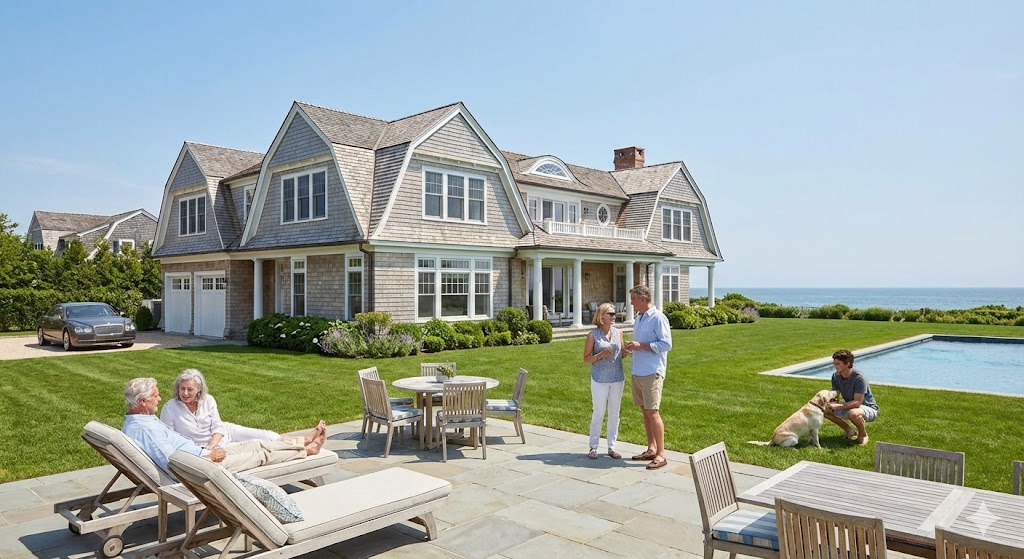
Families increasingly seek Hamptons properties accommodating multiple generations simultaneously. Parents want proximity to grandchildren. Adult children value estate access without forfeiting privacy. Staff require appropriate housing. Multi-generational Hamptons living has become the dominant family real estate strategy.
Accessory dwelling units—ADUs—solve these needs elegantly. These secondary structures provide independent living quarters while maintaining estate unity. Understanding ADU design opportunities and requirements helps families create functional multi-generational compounds.
The Multi-Generational Shift
Several factors drive increased multi-generational Hamptons demand.
Demographic patterns concentrate wealth among older generations while housing costs constrain younger ones. Parents possess resources enabling estate-scale ownership. Adult children appreciate access they couldn’t otherwise afford independently.
Extended family bonding opportunities become precious as lives disperse geographically. Hamptons estates that accommodate multiple households enable reunion experiences impossible when families scatter to hotels.
Aging in place considerations influence planning. ADUs configured for elder living enable parents to remain on family properties as needs evolve. The alternative—institutional care or main residence modification—appeals less to most families.
Boston Consulting Group research on wealth transfer identifies real estate as the primary intergenerational asset. Hamptons properties capable of multi-generational use maximize this legacy.
ADU Configurations for Hamptons Estates
ADUs take various forms depending on property characteristics and family needs.
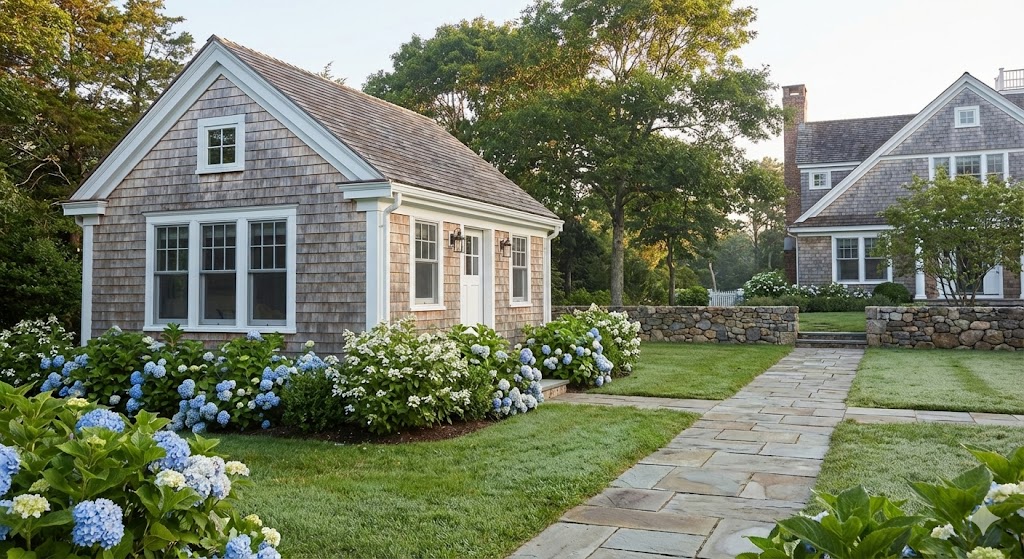
Guest cottages represent the traditional approach. Separate structures containing complete living quarters—bedrooms, bathrooms, kitchens, and living spaces—provide full independence. Guests or family members occupy these units for extended periods without imposing on main residence routines.
Staff quarters serve estates with permanent employee presence. Housekeepers, caretakers, and property managers require appropriate housing. Well-designed staff ADUs retain quality personnel by providing comfortable accommodations.
Pool houses with residential components combine amenity and housing functions. Adding bedroom suites to pool houses creates dual-purpose structures serving both entertaining and accommodation needs.
Converted existing structures utilize already-present buildings. Garages, barns, and outbuildings sometimes convert to ADU use more economically than new construction.
Regulatory Considerations
Hamptons jurisdictions regulate ADU construction with varying requirements. Understanding local regulations prevents costly mistakes.
Zoning districts determine what’s permissible. Some areas allow ADUs by right while others require special permits or prohibit them entirely. Research specific property zoning before assuming ADU feasibility.
Size limitations often apply. Many jurisdictions cap ADU square footage relative to primary structures or in absolute terms. Understanding these limits early shapes design approaches.
Setback requirements affect placement options. ADUs must typically respect the same setback distances as primary structures, constraining location choices on smaller properties.
Rental restrictions sometimes apply. Some jurisdictions prohibit ADU rentals or limit occupancy to family members. These restrictions affect investment calculations for those considering rental income.
Professional guidance proves essential. Navigating Hamptons permitting requires experienced representation. Our firm maintains relationships with permitting consultants who expedite approvals.
Design Principles for ADU Excellence
Beyond regulatory compliance, design quality determines ADU success.
Architectural relationship to main residence matters. ADUs should share vocabulary with primary structures—roof forms, window proportions, materials—while maintaining appropriate scale differences. They appear as family members rather than strangers on the property.
Complete functionality enables extended occupation. True ADU living requires full kitchens, adequate storage, and comfortable spatial proportions. Token gestures toward functionality frustrate occupants.
Privacy deserves careful attention. Entry approaches, window placement, and outdoor space allocation should provide ADU occupants genuine separation from main residence activity. Adjacent decks overlooking each other undermine the privacy premise.
Accessibility features anticipate future needs. Wide doorways, level thresholds, and adaptable bathrooms accommodate aging occupants. Building these features initially costs less than retrofit.
Interior Design for ADU Living
ADU interiors require specific design approaches distinct from main residence strategies.
Spatial efficiency maximizes limited square footage. Every inch must perform productively. Built-in furnishings, multipurpose rooms, and clever storage solutions prevent cramped feelings despite compact dimensions.
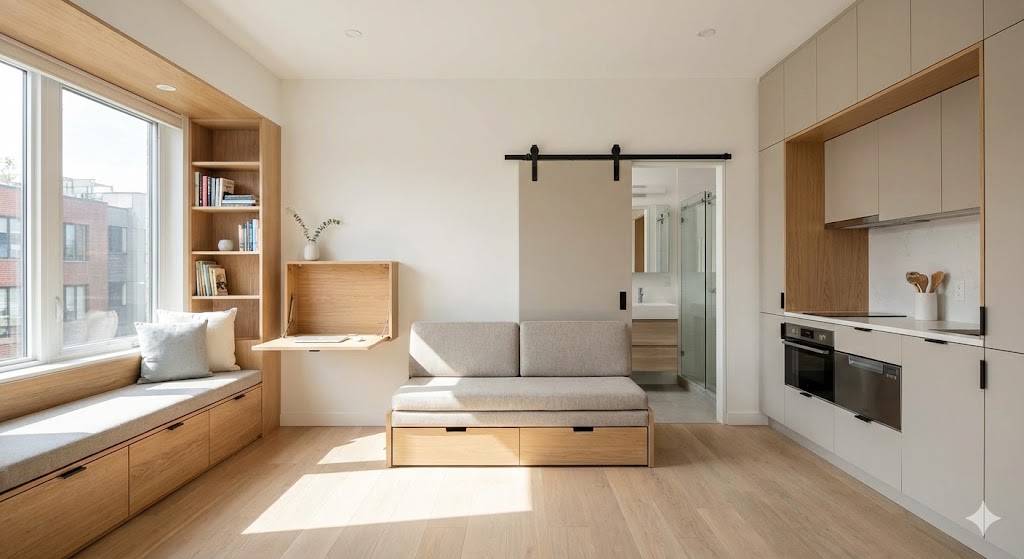
Quality expectations should match main residence standards. ADU finishes often tempt cost reduction. However, visible quality gaps between structures communicate hierarchy inappropriately. Family members or valued staff deserve comparable environments.
Self-sufficiency characterizes successful ADU design. Occupants shouldn’t require main residence facilities for daily routines. Complete laundry facilities, adequate kitchen capability, and appropriate HVAC systems enable independence.
Financial Times’ How to Spend It regularly features compact luxury design demonstrating that smaller spaces needn’t sacrifice sophistication.
Landscape Integration
ADUs exist within larger landscape contexts requiring thoughtful integration.
Separation strategies create appropriate distances. Plantings, fences, and grade changes establish visual and acoustic boundaries between structures. Complete isolation isn’t necessary; comfortable separation suffices.
Circulation design determines movement patterns. How do ADU occupants access parking, the main residence, and property amenities? Pathway design should serve these patterns logically.
Outdoor space allocation provides ADU-specific territories. Even small private patios or gardens give occupants personal outdoor environments distinct from shared property areas.
Service access requires consideration. Utility connections, trash collection, and delivery access for ADUs need planning alongside main residence services.
Construction Approaches
Building ADUs involves several possible approaches with different implications.
Ground-up construction provides maximum design flexibility. New structures can optimize for intended uses without existing-building constraints. Quality control throughout construction ensures long-term performance.
Renovation of existing structures often reduces costs. Converting serviceable buildings may require less investment than new construction while utilizing already-approved structures.
Prefabricated solutions offer speed advantages. Quality modular construction delivers completed ADUs faster than site-built alternatives. Some prefab options achieve finish levels suitable for luxury contexts.
Regardless of approach, integration with main residence systems often makes sense. Shared utilities, central heating plants, and common infrastructure can serve both structures efficiently.
Investment Analysis
ADU investments require honest financial assessment.
Construction costs typically range from $400 to $700 per square foot for quality Hamptons ADUs with appropriate finishes. A comfortable 800 square foot guest cottage might require $320,000-$560,000 investment.
Property value impact generally exceeds construction cost. ADU-equipped properties command premiums from buyers seeking multi-generational capability. This appreciation often exceeds original investment substantially.
Rental income potential exists where regulations permit. ADUs renting at market rates during unoccupied periods generate returns offsetting ownership costs. Summer rentals particularly capitalize on Hamptons demand.
Operating costs add ongoing expense. Utilities, maintenance, and insurance for ADUs increase total property operating budgets. These costs deserve inclusion in financial planning.
Family Dynamics Considerations
Beyond physical design, successful multi-generational arrangements require thoughtful family planning.
Usage protocols prevent conflict. Clarifying who occupies ADUs when, how booking works for extended family, and who bears operating costs establishes expectations before disputes arise.
Privacy boundaries deserve explicit discussion. What invitations to main residence events does ADU occupancy imply? What access do main residence occupants have to ADU spaces?
Long-term planning addresses eventual transitions. Who inherits ADUs when parents pass? How do ownership and usage rights transfer across generations?
These conversations may feel uncomfortable but prevent more difficult conflicts later.
The D&J Concepts Approach
Our integrated design-build capability serves ADU projects exceptionally well.
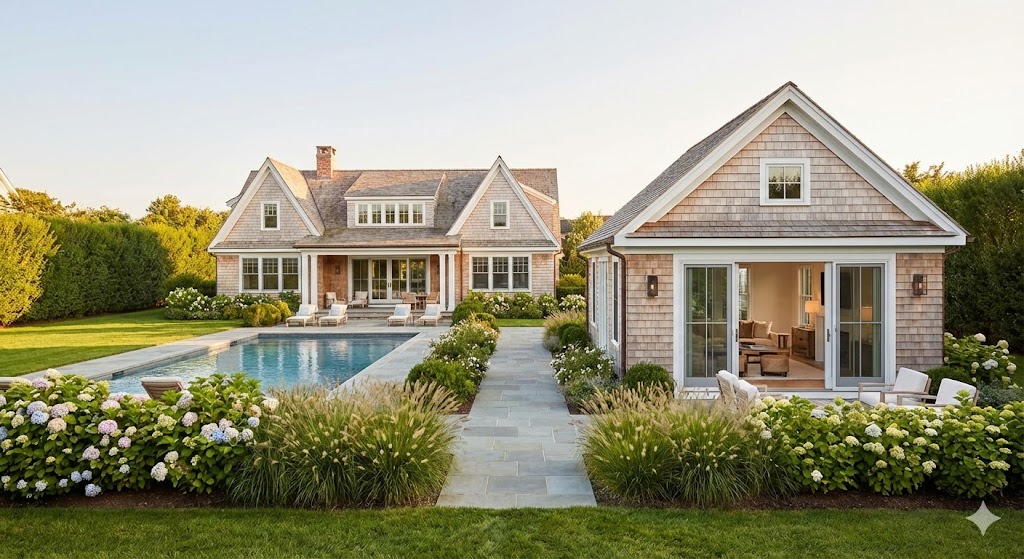
We design ADUs as estate components rather than isolated structures. The same team designing main residences handles ADU architecture, ensuring seamless integration.
Interior design extends across all structures consistently. Furniture, finishes, and furnishings share vocabulary while respecting each structure’s distinct character.
Landscape architecture encompasses entire properties. ADU settings connect appropriately to broader landscape organization.
Construction management coordinates all elements. Single-source responsibility eliminates the coordination failures that plague projects with multiple independent contractors.
Beginning Your ADU Project
ADU projects begin with honest assessment of needs and possibilities.
Family conversations clarify requirements. Who will use the ADU and for what purposes? What living standards must it meet? How will it integrate with overall property use?
Site analysis reveals opportunities. Where can an ADU locate appropriately? What existing structures might convert? What regulatory constraints apply?
Budget development enables realistic planning. Understanding investment requirements early prevents disappointment when designs exceed resources.
For comprehensive ADU design consultation, contact Social Life Magazine for professional connections. Explore related approaches in Estate Planning Through Property Design.
David Hornung directs D&J Concepts, offering complete design-build services from Southampton headquarters. The firm’s expertise spans interior design, landscape architecture, and construction for Hamptons properties of exceptional quality. Visit dandjconcepts.com for portfolio examples.
Author

Written by
Recent Posts

Breaking Bad Cast Net Worth. $130 Million Cooked in Five Seasons of Perfect Television

Cailee Spaeny Net Worth — From Springfield, Missouri to A24 and Alien in Three Years Flat

Wagner Moura Net Worth — He Learned Spanish to Play Escobar. Then He Learned English to Take Hollywood.

Robert Eggers Net Worth — He Made a $3.5 Million Film in Puritan English and Hollywood Listened

Brie Larson Net Worth — A $6 Million Indie Film Won Her an Oscar. Marvel Paid Her the Rest.
Categories
- Art
- Articles
- Beauty & Skincare
- Celebrities
- Celebrities|Movies
- Celebrities|The Chronicles
- Chronicles
- Entertainment|Culture
- Event Photos
- Events
- Fashion
- Fashion & Style
- Featured
- Food & Beverage
- Food, Spirits, Wine
- Hamptons
- Hamptons Celebrities
- Hamptons Celebrities|Celebrities|The Chronicles
- Health
- Health & Beauty
- Lifestyle
- Luxury Lifestyle
- Movies|Culture
- Movies|Hamptons Lifestyle
- Press
- Profiles
- Real Estate
- Technology
- The Chronicles
- Travel
- TV
- Uncategorized
- Weddings