

Family offices deployed $218 billion into real estate during 2023, with the Hamptons commanding premium attention from discerning investors. Moreover, these sophisticated wealth managers increasingly pursue wholesale real estate opportunities that bypass traditional retail channels. The strategy delivers off-market access to premier properties before they reach public listings.
Furthermore, institutional players recognize the Hamptons market’s unique resilience during economic uncertainty. Properties here maintain value while offering privacy and exclusivity that ultra-high-net-worth families demand. Additionally, wholesale transactions eliminate bidding wars and reduce acquisition costs by 15-30% compared to retail purchases.
The Mechanics Behind Wholesale Real Estate Transactions
Wholesale real estate operates through direct relationships between sellers and qualified buyers. Research from McKinsey shows private market transactions outperform public offerings by substantial margins. These deals never enter MLS systems or public databases.

Direct Seller Negotiations Create Value
Family offices leverage established networks to identify motivated sellers before properties hit the market. However, this approach requires deep local knowledge and trusted intermediaries. Sellers often accept lower prices in exchange for speed, certainty, and discretion.
Meanwhile, traditional listings involve multiple showings, lengthy negotiations, and uncertain closing timelines. Wholesale buyers present cash offers with flexible terms that appeal to estate executors and divorce settlements. Therefore, both parties benefit from streamlined transactions that close within 30-45 days.
Transaction Costs Drop Significantly
Broker commissions typically consume 5-6% of purchase prices in retail transactions. Additionally, staging, photography, and marketing expenses add another 2-3% to total costs. Wholesale deals eliminate these expenditures entirely through direct negotiations.
Furthermore, families avoid bidding wars that inflate prices above rational valuations. Bain research demonstrates how competitive pressure drives prices 20% above intrinsic value. Consequently, wholesale acquisitions preserve capital for value-add improvements and portfolio diversification.
Privacy Protection Matters to Principals
Public listings expose buyer identities and financial capabilities to competitors and media scrutiny. However, wholesale transactions maintain complete confidentiality throughout the acquisition process. Title transfers occur through LLC structures that shield beneficial ownership from public records.
Moreover, family offices prize discretion as much as financial returns when deploying capital. European families particularly value privacy protections unavailable in their home jurisdictions. Therefore, the Hamptons wholesale market serves both investment and lifestyle objectives simultaneously.
Why the Hamptons Market Attracts Institutional Capital
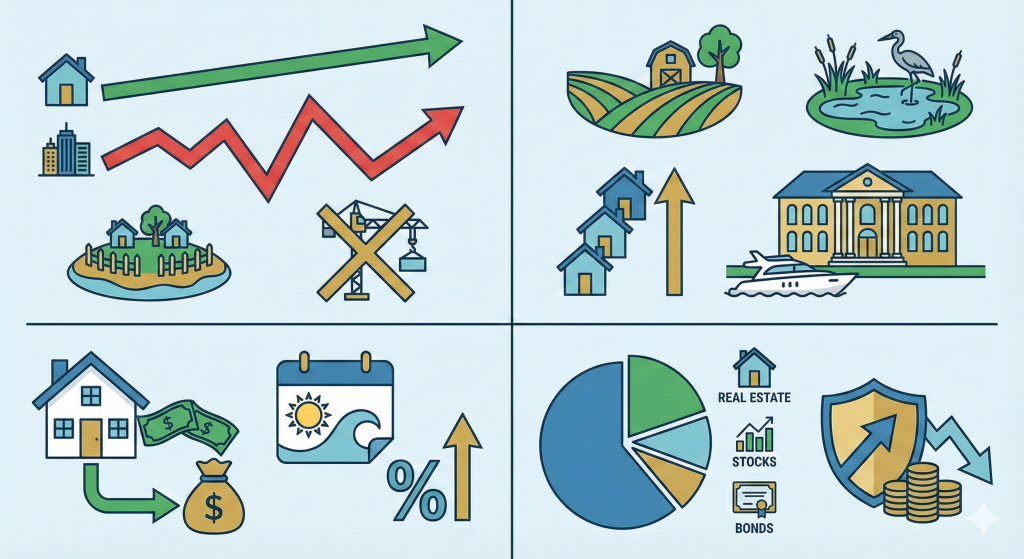
The East End real estate market demonstrates remarkable stability compared to Manhattan or Miami alternatives. Properties here appreciate steadily without the boom-bust volatility plaguing other luxury destinations. Additionally, limited developable land creates natural supply constraints that support long-term values.
Supply Constraints Drive Long-Term Appreciation
Agricultural preservation districts and environmental regulations restrict new construction across prime Hamptons locations. Consequently, inventory scarcity maintains pricing power even during economic downturns. Harvard Business Review analysis highlights scarcity as the primary driver of luxury asset performance.
Meanwhile, population growth among ultra-high-net-worth individuals continues accelerating globally. These families seek second homes in established enclaves with cultural amenities and social infrastructure. Furthermore, the Hamptons offers unmatched proximity to New York financial centers while maintaining resort-quality environments.
Rental Income Provides Portfolio Stability
Summer rental demand generates substantial cash flow that offsets carrying costs for investment properties. Weekly rentals command $50,000-$200,000 depending on location and amenities during peak season. Therefore, properties deliver 4-6% annual yields before appreciation.
However, many family offices pursue pure appreciation plays without rental income considerations. These buyers focus exclusively on land value and future development potential. Additionally, avoiding rental operations eliminates management complexity and maintains property conditions for personal use.
Portfolio Diversification Benefits
Real estate allocations provide uncorrelated returns compared to public equities and fixed income holdings. Deloitte research shows family offices target 20-30% real estate exposure across diversified portfolios. Moreover, tangible assets offer inflation protection that financial instruments cannot replicate.
Furthermore, the Hamptons market operates independently from broader residential trends affecting secondary markets. Properties here attract international buyers insulated from U.S. economic cycles. Consequently, values demonstrate resilience during recessions that impact other luxury segments.
Structuring Wholesale Deals for Maximum Advantage
Sophisticated buyers structure acquisitions to optimize tax efficiency and asset protection simultaneously. However, transaction architecture requires specialized legal and accounting expertise. Family offices employ dedicated teams to evaluate and execute complex deals.
Entity Selection and Ownership Layers
Delaware LLCs owned by offshore trusts provide maximum liability protection and estate planning flexibility. Additionally, these structures minimize state income taxes on rental income and capital gains. Boston Consulting Group analysis demonstrates how proper structuring increases after-tax returns by 200-300 basis points annually.
Moreover, multi-tier ownership arrangements facilitate fractional transfers to next-generation family members. Estate tax exemptions allow significant wealth transfers without triggering gift taxes. Therefore, real estate holdings serve both current income and dynastic wealth preservation objectives.
Financing Strategies and Capital Efficiency
While family offices typically deploy cash for acquisitions, strategic leverage amplifies portfolio returns. Private banks offer attractive terms secured by diversified portfolios rather than individual properties. Consequently, borrowers access capital at 150-200 basis points above SOFR rates.
Meanwhile, all-cash purchases strengthen negotiating positions with motivated sellers who prioritize certainty. Buyers eliminate appraisal and financing contingencies that create transaction risks. Furthermore, cash acquisitions close faster and reduce due diligence requirements for both parties.
Due Diligence and Risk Mitigation
Wholesale transactions require accelerated due diligence timelines compared to traditional purchases. However, thorough investigations protect buyers from hidden liabilities and title defects. Environmental assessments, survey confirmations, and zoning analyses identify potential issues before closing.
Additionally, title insurance policies protect against undisclosed liens and ownership disputes. These protections prove essential for properties passing through estate settlements or divorce proceedings. Therefore, experienced legal counsel guides principals through compressed transaction schedules without sacrificing critical protections.
Building Relationships That Generate Deal Flow
Consistent access to wholesale opportunities requires cultivated relationships across multiple stakeholder groups. Moreover, family offices invest years developing trust with attorneys, accountants, and property managers. These intermediaries direct off-market opportunities to preferred buyers who close transactions reliably.

Estate Attorneys and Executors
Probate situations create motivated sellers who prioritize speed over maximum proceeds. Furthermore, executors face fiduciary duties to settle estates promptly and distribute assets to beneficiaries. Family offices maintain relationships with trusts and estates attorneys who represent high-net-worth clients.
However, these relationships develop slowly through consistent communication and demonstrated reliability. Principals who close deals as promised earn referrals for future opportunities. PwC research shows relationship-based deal sourcing outperforms competitive bidding processes by 400 basis points.
Local Property Managers
Property managers hear about potential sales before owners engage listing agents. Additionally, they understand property conditions, maintenance histories, and neighborhood dynamics. These insights help buyers identify value-add opportunities and avoid problematic acquisitions.
Meanwhile, managers appreciate buyers who streamline transitions and retain their services post-closing. Therefore, smart family offices cultivate these relationships through respectful communication and fair treatment. Consequently, managers steer premium opportunities toward trusted buyers rather than unknown market participants.
Professional Networks and Social Connections
Country clubs, charitable boards, and cultural institutions facilitate introductions among Hamptons property owners. However, these relationships require genuine engagement rather than transactional networking. Family office principals who integrate into local communities gain access to exclusive opportunities.
Moreover, social connections provide market intelligence unavailable through formal channels. Owners discuss potential sales informally months before engaging advisors. Furthermore, personal relationships create comfort levels that facilitate negotiations and expedite closings.
Future Outlook for Wholesale Opportunities
Demographic trends suggest increasing wholesale deal flow as baby boomer owners age and downsize. Additionally, rising interest rates motivate some owners to liquidate before potential market corrections. Family offices positioned with capital and relationships will capture premium opportunities.
Generational Wealth Transfers
The largest intergenerational wealth transfer in history unfolds as baby boomers pass assets to next generations. However, many heirs prefer liquidity over property ownership and maintenance responsibilities. Consequently, estate sales will accelerate throughout the coming decade.
Moreover, younger generations maintain different lifestyle priorities than their parents. They pursue experiences over possessions and prefer urban environments to seasonal beach communities. Therefore, family offices buying wholesale today position themselves ahead of this demographic wave.
Market Cycle Positioning
Rising interest rates pressure overleveraged owners who purchased at market peaks. Additionally, property taxes and insurance costs increase annually, straining cash flows. These factors create motivated sellers willing to accept wholesale pricing for quick exits.
Meanwhile, well-capitalized family offices exploit market dislocations to acquire premier assets at discounts. McKinsey analysis demonstrates how counter-cyclical investing generates superior long-term returns. Furthermore, patient capital allows buyers to weather short-term volatility while capturing appreciation.
Continued International Demand
European and Asian families increasingly diversify wealth into U.S. real estate for political and economic stability. However, these buyers require local expertise and trusted intermediaries to navigate unfamiliar markets. Family offices with established Hamptons presence attract capital from international partners seeking access.
Additionally, currency fluctuations create advantageous entry points for foreign buyers with dollar exposure. Therefore, the wholesale real estate market continues attracting sophisticated global capital seeking privacy, returns, and portfolio diversification. Consequently, principals who master these strategies position themselves for sustained competitive advantages across market cycles while building generational wealth through disciplined acquisition approaches.
Author

Written by
Recent Posts

Breaking Bad Cast Net Worth. $130 Million Cooked in Five Seasons of Perfect Television

Cailee Spaeny Net Worth — From Springfield, Missouri to A24 and Alien in Three Years Flat

Wagner Moura Net Worth — He Learned Spanish to Play Escobar. Then He Learned English to Take Hollywood.

Robert Eggers Net Worth — He Made a $3.5 Million Film in Puritan English and Hollywood Listened

Brie Larson Net Worth — A $6 Million Indie Film Won Her an Oscar. Marvel Paid Her the Rest.
Categories
- Art
- Articles
- Beauty & Skincare
- Celebrities
- Celebrities|Movies
- Celebrities|The Chronicles
- Chronicles
- Entertainment|Culture
- Event Photos
- Events
- Fashion
- Fashion & Style
- Featured
- Food & Beverage
- Food, Spirits, Wine
- Hamptons
- Hamptons Celebrities
- Hamptons Celebrities|Celebrities|The Chronicles
- Health
- Health & Beauty
- Lifestyle
- Luxury Lifestyle
- Movies|Culture
- Movies|Hamptons Lifestyle
- Press
- Profiles
- Real Estate
- Technology
- The Chronicles
- Travel
- TV
- Uncategorized
- Weddings