
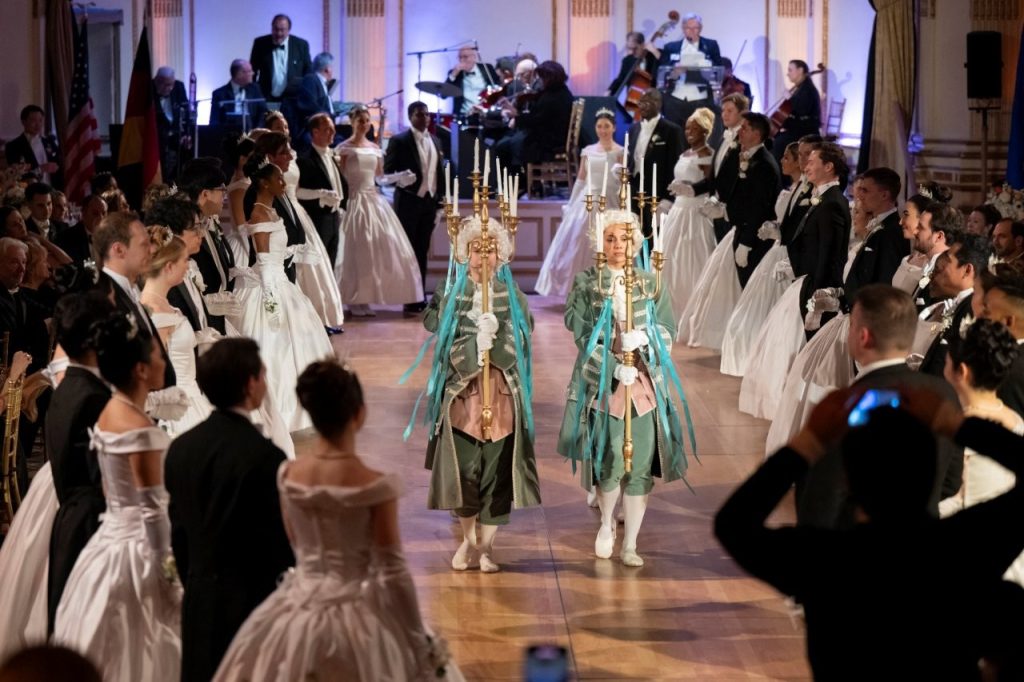
In today’s hyper-digital world, a time-honored New York City tradition quietly brings together young volunteers to learn an old-world ballroom dance, the Quadrille, and perform it at the charity gala Quadrille Ball on February 6, 2027, at The Plaza.
It is a reminder that New York still makes space for offline discovery, for meeting people through a shared passion for philanthropy, curiosity, and openness.
All of this is made possible by the German-American Scholarship Association (GSA), which has orchestrated the Quadrille Ball since 1961 to raise funds for its scholarship programs supporting outstanding students and PhD candidates on both sides of the Atlantic. The Quadrille performance by the young volunteers is the highlight of the Ball.
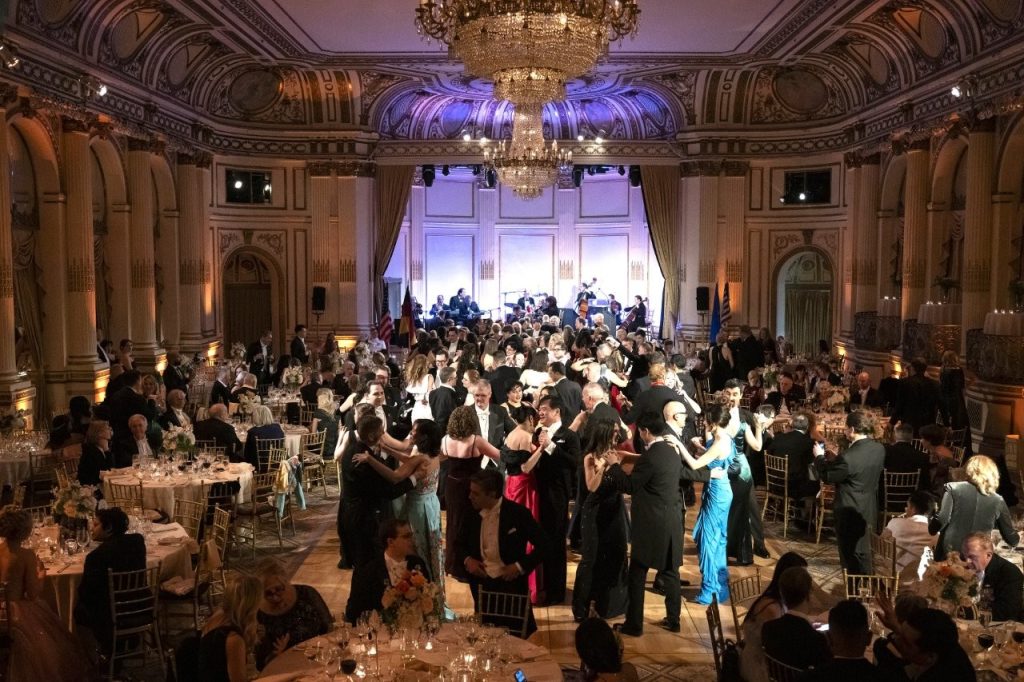 The Association’s 66th season begins in October, with rehearsals leading up to the annual Quadrille Ball at The Plaza on February 6, 2027. The white-tie event blends history and modernity: white-tie tradition meets a new generation finding belonging in an unlikely place. This cultural continuity, in an era obsessed with virtual connection, makes the tradition newly relevant. It is not simply about dancing. It is about how people choose to gather, learn, and celebrate something larger than themselves.
Each fall, dozens of young New Yorkers, artists, engineers, teachers, finance professionals, lawyers, marketing experts, and recent college graduates, meet weekly to master the five-part choreography together. In the process, they form friendships, communities, and connections that rarely happen in today’s fast-moving, tech-focused world, but often last for decades.
That has been true since 1961, when the Quadrille Ball was inaugurated, reviving a long tradition of German balls in New York.
What to Expect
Beyond its impressive legacy and white-tie ambience, the Quadrille Ball offers an elegant setting and a warm, welcoming atmosphere that has consistently delighted and enchanted guests from New York, across the country, and around the world. Guests are treated to a champagne reception, a three-course dinner, dancing to a live orchestra, the Quadrille performance, an enticing silent auction, and, at midnight, the renowned “Küka-Club,” featuring a midnight buffet, open bar, live music, and dancing until 2 a.m.
The Dance, and What It Signifies
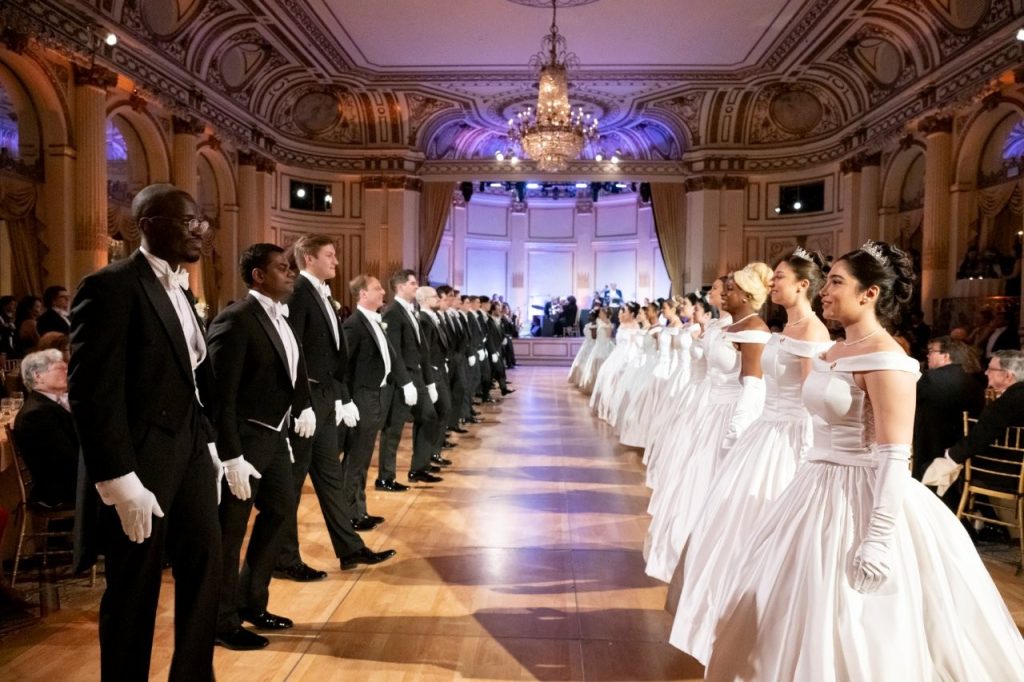 The Quadrille is a historic French ballroom dance performed in unity and harmony. The organizers of the first Ball chose the dance deliberately, seeking a signature moment that reflected a mission built around young people.
The Young People Who Carry It Forward
Each autumn, a new group of dedicated volunteers begins weekly rehearsals on the Upper East Side. Applicants are young professionals between the ages of 21 and 35. No prior dance experience is required, and after every Tuesday rehearsal, the group gathers to get to know one another and build deeper connections. By February, a group of strangers has become a well-rehearsed cohort of friends.
Many return the following season to teach the new volunteers and continue supporting the charity for years to come.
Twenty-Five Scholars Each Year
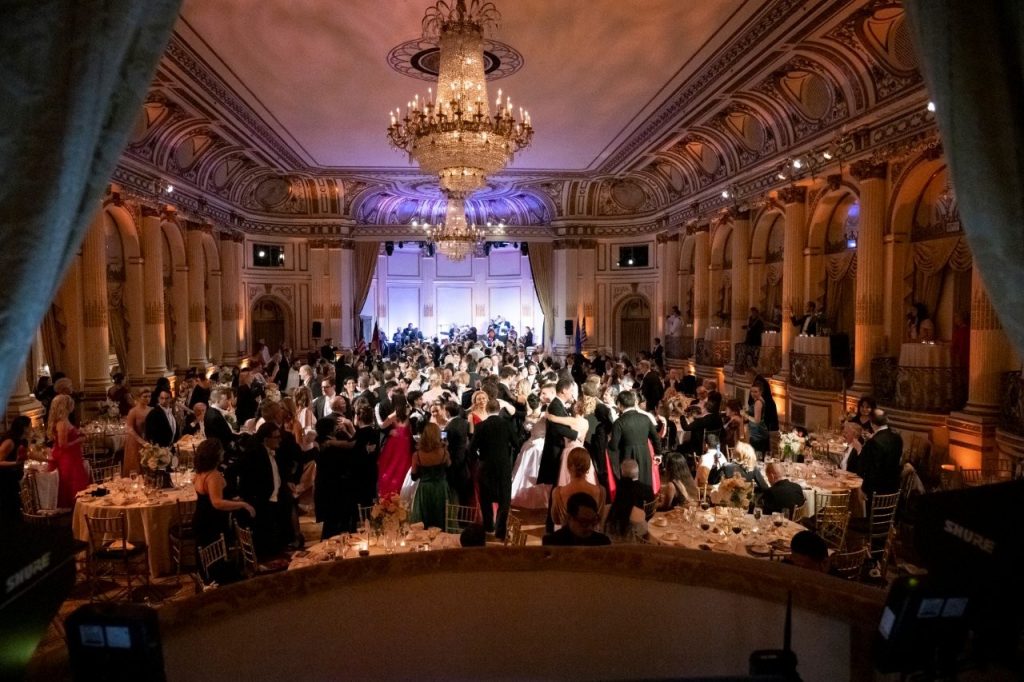 The dance performance plays an important role in the GSA’s fundraising efforts. The Scholarship Programs are funded exclusively through revenue from the Quadrille Ball. Every dollar raised at The Plaza in February leaves New York during the summer and fall in the form of stipends supporting students as they cross the Atlantic.
Columbia University was the first beneficiary, receiving support for students studying in Germany. In 1964, the Institute of International Education joined, administering GSA-funded Fulbright scholarships for U.S. graduate students conducting research in Germany and German scholars conducting research in the United States. Since then, the exchange has continued in both directions.
In a recent academic year, the Association funded 25 stipends and fellowships at universities in the United States and Germany, spanning the natural and social sciences as well as the humanities, including computer science, international relations, environmental science, and medical research.
Among the recipients was a doctoral candidate from Johns Hopkins University in Baltimore, researching at Ludwig-Maximilians-Universität in Munich how to improve statistical analysis strategies. A doctoral candidate from Drexel University in Philadelphia worked on immune cells central to the healing process with advisors at the Medical University of Hanover. A University of Chicago doctoral candidate pursued research spanning philosophy and literary studies at the University of Leipzig.
Ten Columbia University German Department undergraduate students attended summer courses in German language and culture at Freie Universität Berlin. Three German instructors from universities and high schools were funded for advanced professional development at Heidelberg University, selected in collaboration with the American Association of Teachers of German. Five graduate students from Ukraine studying in the United States received support, as did five German Fulbright scholars continuing their research in the United States after completing their funded year.
The Association and Its Stewards
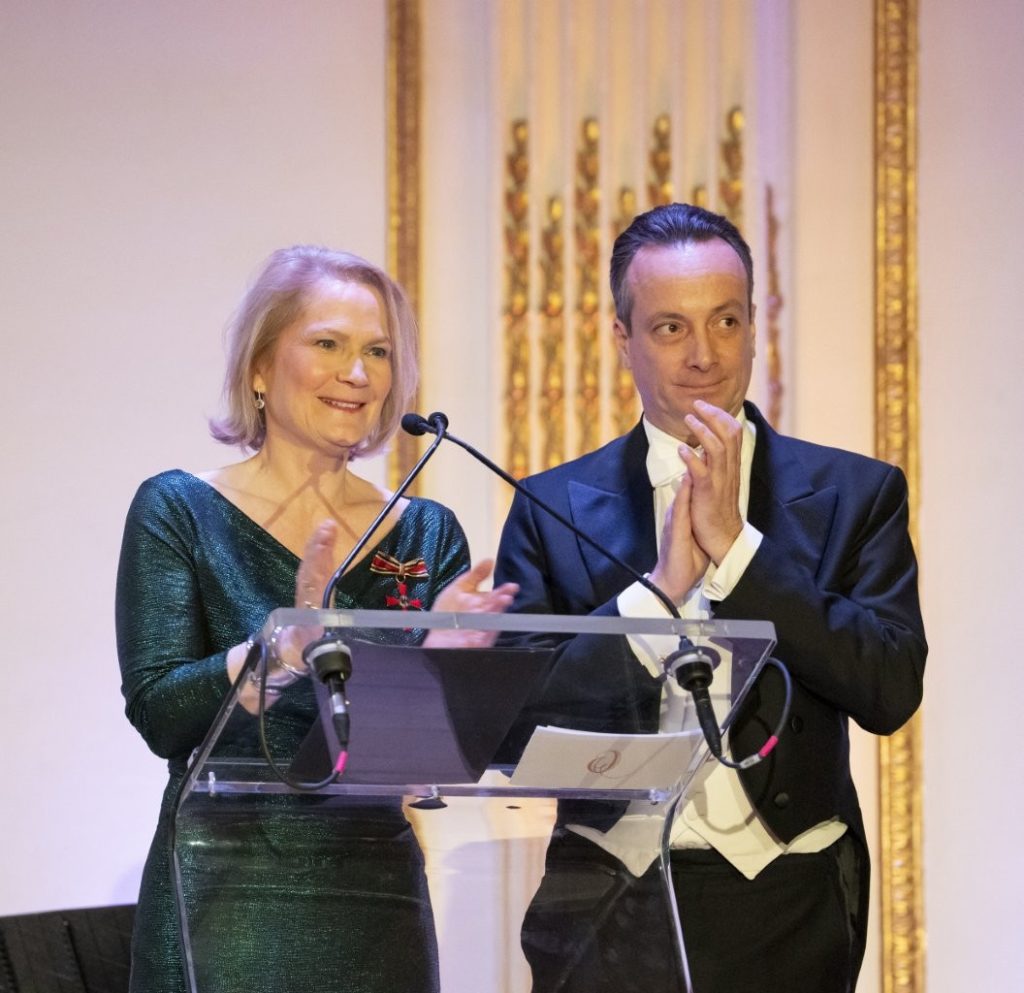
The Quadrille Ball is the fundraising engine of the German-American Scholarship Association, a 501(c)(3) founded in 1908 under its former name, the Germanistic Society of America. Since 1961, its fellowship programs have supported close to 800 outstanding students and teachers.
Recipients are chosen in cooperation with the Institute of International Education, the German American Fulbright Commission, Columbia University, and Heidelberg University. Those partnerships lend the awards considerable weight on a scholar’s record.
Two facts deserve particular emphasis. All assets of the scholarship fund are raised through the annual Quadrille Ball. And the Ball is organized entirely by volunteers, so that contributions from sponsors, advertisers, and guests directly benefit the scholarship fund.
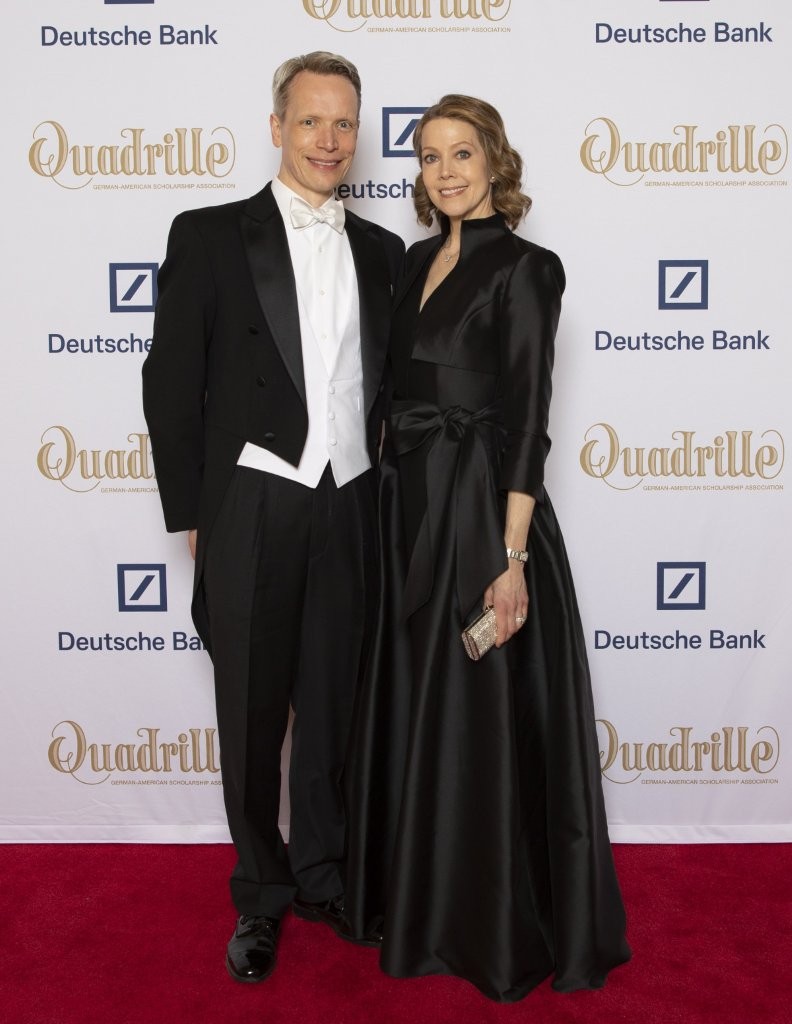
Leadership rests with Irmintraud Jost, President of the German-American Scholarship Association, and Jean-Baptiste Kresser, Treasurer and Ball Committee Chair, with Heide Herz as Honorary Chair. The 2026 Guest of Honor was Paul Maley, CEO of Deutsche Bank Trust Company Americas. Deutsche Bank and the Max Kade Foundation are among the principal sponsors, while the German Consulate General in New York lists the evening among the city’s most enduring philanthropic traditions.
Ways to Take Part
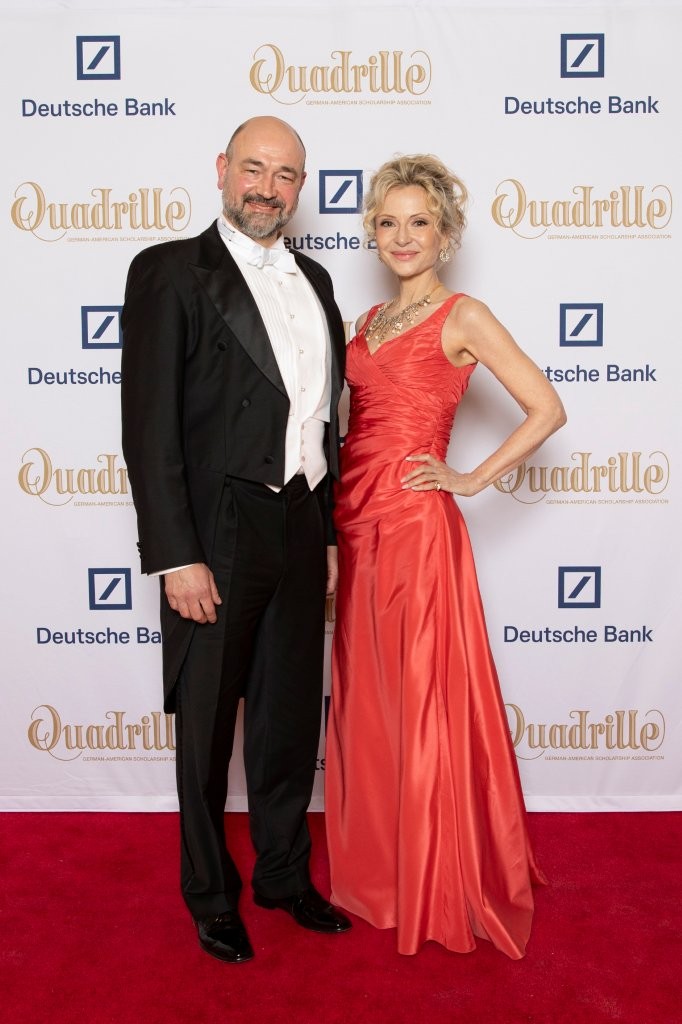
The Quadrille Ball is more open than its white-tie photographs might suggest, welcoming first-time guests as warmly as those who have attended for decades.
Attend. Tickets to the Ball are sold directly through the Association at quadrilleball.org.
Dance Performance. Applications to perform as a dancer are available online and are open to professionals aged 21 to 35 who can commit to Tuesday evenings. Prospective dancers are invited to a reception in October to meet the Ball Committee and see the dance demonstrated.
Sponsorships. Gold ($6,000) includes two tickets, a private VIP reception, preferred seating, and journal recognition. Diamond ($15,000) offers all Gold benefits, plus six tickets and step-and-repeat placement. Platinum ($20,000) includes ten tickets plus the above-mentioned benefits. A full scholarship named after the sponsor is $25,000 and funds a year of research abroad for a doctoral candidate, with the full amount issued as the award.
Advertise. Journal pages range from $650 for a quarter page to $3,000 for the back cover, with step-and-repeat logo placement available for $5,000.
Give in Kind. Silent auction lots and gift-bag contributions, the latter requiring 330 units, place a brand directly in the hands of the room.
Where the Conversation Continues
The 66th Annual Quadrille Ball takes place on February 6, 2027, at The Plaza. Tickets, dancer applications, sponsorship levels, and journal advertising are all available at quadrilleball.org, with the Ball Committee reachable at [email protected].
Commitments received before the autumn deadline are listed in the formal engraved invitation, which remains one of the few forms of recognition that still arrives by mail.
Author

Written by
Recent Posts
Unlocking the Berkshires
Dalia Forman Design

Alberto Luzzi
How to Pick a Homecoming Dress for Your Body Type and Feel Amazing in It
How to Prepare a Home for Sale When Major Repairs Are Not Affordable
Categories
- Art
- Articles
- Business of Luxury
- Celebrities
- Culture
- Entertainment
- Events
- Faces of Summer 2026
- Fashion
- Fashion & Style
- Featured
- Finance
- Food, Spirits, Wine
- Hamptons
- Hamptons Celebrities
- Health
- Health & Beauty
- Lifestyle
- Luxury Lifestyle
- Press
- Profiles
- Real Estate
- Technology
- The Chronicles
- Travel
- Uncategorized
- Weddings