
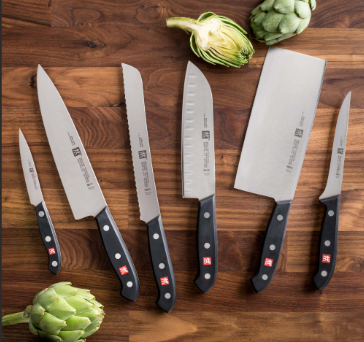
Daniel Boulud’s sous chef travels with exactly one personal item in his knife roll. Not a santoku. Not a paring knife. A 30-year-old Zwilling Pro 8-inch chef’s knife, its handle worn smooth from 50,000 hours of prep. When asked why he doesn’t upgrade, he laughs. “Upgrade to what?”
That response captures something essential about Zwilling. In a kitchen landscape cluttered with influencer-endorsed gadgets and crowdfunded innovations, this German blade maker represents an increasingly rare proposition: proven excellence that renders innovation unnecessary. The company has been forging knives in Solingen since 1731. Therefore, when you grip a Zwilling handle, you’re holding nearly three centuries of accumulated wisdom about what a blade should be.
For Hamptons hosts navigating summer’s relentless entertaining calendar, Zwilling offers something beyond cutting performance. It signals membership in a tribe that values craft over convenience, heritage over hype. Moreover, it’s the kind of detail that discerning guests notice without being told to notice.
The Solingen Legacy: Where German Knives Became Legend
Solingen sits in Germany’s North Rhine-Westphalia region, and locals have been grinding blades there since medieval times. The city earned its “City of Blades” designation honestly. By the 17th century, Solingen cutlers had developed a reputation for steel quality that attracted buyers from across Europe. Consequently, when Peter Henckels registered the Zwilling twins trademark in 1731, he was formalizing an existing tradition of excellence.
That twin symbol matters more than most logos. It represents the company’s founding principle: two figures standing together, suggesting balance, precision, and partnership between maker and user. The mark has remained essentially unchanged for 293 years. Meanwhile, the forging process has evolved only enough to incorporate metallurgical advances while preserving the hand-finishing techniques that define Solingen craftsmanship.
The 40-Step Forging Process
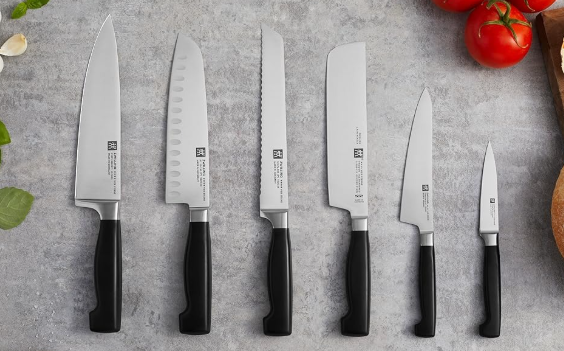
Each Zwilling blade passes through approximately 40 individual production steps. The process begins with high-carbon stainless steel, then moves through precision forging that creates the blade’s distinctive bolster. Subsequently, ice-hardening through Zwilling’s proprietary FRIODUR process takes the steel to extreme cold temperatures, fundamentally altering its molecular structure for superior edge retention.
This isn’t marketing language dressed up as engineering. The FRIODUR treatment genuinely differentiates Zwilling from competitors who skip this step. As a result, the blade achieves a Rockwell hardness that balances sharpness with resilience. Too hard, and the edge chips. Too soft, and it dulls within weeks. Zwilling’s sweet spot means a properly maintained knife holds its edge through months of serious kitchen work.
German Steel vs. Japanese Precision
The German-versus-Japanese knife debate generates passionate opinions among kitchen professionals. Japanese blades typically feature harder steel and sharper angles, excelling at precise cuts but demanding more careful handling. German knives like Zwilling offer a different philosophy altogether.
Zwilling’s approach prioritizes versatility and durability. The slightly softer steel permits a more forgiving edge that won’t chip if you accidentally hit a bone or cutting board corner. Additionally, the heavier blade weight provides momentum for tasks like breaking down chickens or crushing garlic. For home cooks juggling multiple dinner party courses simultaneously, this robustness matters more than laser-thin precision.
The Craft Behind the Cut: What Separates Zwilling from Pretenders
Professional chefs identify a Zwilling by feel before seeing the logo. The weight distribution, the balance point just forward of the bolster, the way the handle fills the palm without demanding attention. These details emerge from centuries of refinement rather than focus-group optimization.
Thomas Keller, whose Napa Valley kitchen has been featured in Architectural Digest, famously maintains that the right knife becomes an extension of the hand. Zwilling’s ergonomic research supports this philosophy. The company studies how professional cooks grip knives during extended prep sessions, then engineers handles that reduce fatigue without sacrificing control.
The One Good Knife Philosophy
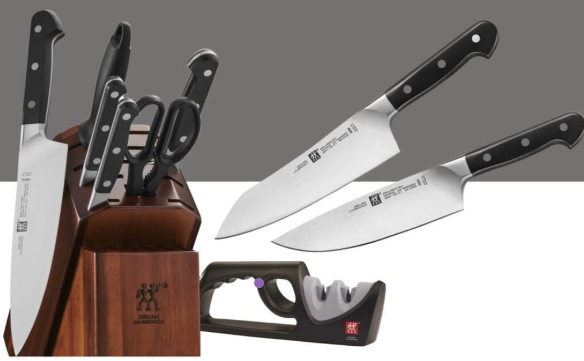
Kitchen stores push comprehensive knife sets because they generate higher margins. Professionals know better. Most serious cooking requires exactly one exceptional chef’s knife, supplemented by a paring knife for detail work and perhaps a serrated blade for bread. Everything else is optional.
Zwilling’s 8-inch Pro chef’s knife embodies this minimalist approach. It rocks through herbs, slices proteins, and dices vegetables with equal competence. Furthermore, its full tang construction means the steel runs through the entire handle, providing balance that shorter-tang competitors cannot match. One knife, countless applications, decades of reliable service.
Why Chefs Pack Their Own
Restaurant kitchens typically provide house knives for line cooks. Yet walk into any serious establishment and you’ll see chefs reaching for personal rolls. This isn’t ego. It’s practical recognition that a familiar blade eliminates variables during high-pressure service.
Zwilling’s consistency across units makes it particularly popular among traveling culinary professionals. A Pro purchased in Munich performs identically to one bought in Manhattan. This standardization, often overlooked by consumers focused on artisanal uniqueness, represents genuine value for anyone who cooks seriously across multiple locations.
The Culture of Craft: What Your Knife Block Reveals
Kitchen equipment functions as social shorthand among people who care about food. The host serving Costco rotisserie chicken on mismatched plates signals different priorities than one who brines their own bird and plates on ceramics from Heath. Similarly, knife selection communicates taste level to guests who understand the language.
Zwilling occupies an interesting position in this hierarchy. It’s accessible enough that ownership alone doesn’t signal insider status. However, a well-maintained Zwilling with years of visible use tells a different story than a pristine set clearly purchased for appearance. The patina of actual cooking elevates the object from mere purchase to credential.
The Professional Endorsement Effect
Unlike influencer-driven brands that pay for endorsements, Zwilling’s professional adoption happened organically. Culinary school kitchens stock them because they survive student abuse while teaching proper technique. Restaurant supply stores carry them because chefs actually request them. This bottom-up credibility cannot be manufactured through marketing spend.
The same approach that defines Hamptons wine culture applies here: genuine appreciation over label-chasing. Serious collectors know their producers; serious cooks know their blade makers. Zwilling’s reputation rests on performance witnessed firsthand rather than promises made in advertisements.
The Hamptons Kitchen Context: Summer Entertaining Demands
Hamptons summer hosting presents unique culinary challenges. House guests expect elevated meals. Fresh seafood from local markets demands confident butchering. Vegetable prep for multiple courses requires stamina. Moreover, the chef is typically also the host, meaning efficiency directly impacts enjoyment of one’s own gathering.
Zwilling’s durability matters here more than in urban apartments with daily cooking. The summer house knife faces intensive seasonal use followed by months of dormancy. Lesser blades might corrode or dull during storage. A properly maintained Zwilling emerges from its block each June ready for another season of lobster breakdowns and tomato slicing.
Investment for the Second Home
Outfitting a vacation property presents the temptation to cut corners on kitchen equipment. After all, usage is limited to weekends and holidays. This logic misses the point entirely. Entertaining in the Hamptons often exceeds primary residence hosting in both frequency and formality during peak season.
A quality knife actually matters more in the second home context. Guests notice when the host struggles with dull blades during dinner prep. The momentary savings from purchasing inferior equipment translates to years of compromised performance and subtle embarrassment. Additionally, investing in proper tools for the beach house signals that one takes hospitality seriously regardless of location.
The Fish and Vegetable Reality
Hamptons proximity to quality seafood means filleting skills matter. Zwilling’s flexible boning knives handle whole fish with precision that serrated alternatives cannot match. Meanwhile, farm stand abundance creates vegetable prep volumes that would exhaust lesser equipment.
Consider the reality of August entertaining: tomatoes by the case for gazpacho, corn for salads, zucchini for everything. This volume work separates aspirational home cooks from actual hosts. The right knife transforms drudgery into pleasure, or at least efficiency. Consequently, guests experience beautifully executed dishes rather than witnessing their host’s growing fatigue.
The Investment Calculation: Why Quality Costs Less
Zwilling’s flagship 8-inch Pro chef’s knife retails around $150. Compared to budget alternatives at $30, the sticker shock feels significant. Run the numbers differently, though, and the economics reverse entirely.
A properly maintained Zwilling lasts 20-30 years of regular use. The budget knife dulls within months and typically gets replaced every 2-3 years. Over a decade, that $30 option actually costs more than the Zwilling while delivering inferior performance throughout. Furthermore, the frustration of cooking with inadequate tools carries its own price in burned meals and diminished enjoyment.
Maintenance as Relationship
Quality knives demand attention. Honing before each use, occasional professional sharpening, proper storage on a magnetic strip or in a block. This maintenance ritual builds the relationship between cook and tool that transforms equipment into partnership.
Zwilling supports this relationship through authorized service centers and sharpening guides. The company’s investment in aftercare reflects confidence in longevity. They expect these knives to require maintenance because they expect them to remain in active service for generations. Many Zwilling owners eventually pass their knives to children who’ve grown up watching parents cook with them.
The Heirloom Proposition
Modern consumerism rarely involves thinking generationally about kitchen equipment. Zwilling’s heritage invites this perspective. A knife forged in Solingen today using processes refined over three centuries will, with care, outlast its original owner.
This longevity transforms the purchase from consumption to curation. Much like the antique collecting approach we’ve explored elsewhere, choosing Zwilling means adding an object of genuine craft to one’s life rather than simply acquiring a kitchen tool. The knife block becomes a modest legacy rather than eventual landfill contribution.
The Verdict: Heritage That Earns Its Place
Zwilling’s 293-year history could easily become mere marketing leverage, heritage invoked without substance. Instead, the company continues earning its reputation through knives that perform exactly as promised. The Solingen workshops still produce blades that professionals trust and home cooks grow to love.
For Hamptons hosts navigating another summer of elevated expectations, Zwilling represents something increasingly valuable: certainty. The knife will cut. The edge will hold. The balance will feel right. In kitchens cluttered with gadgets promising revolution, sometimes the revolutionary choice is a blade unchanged because improvement proved unnecessary.
That sous chef’s 30-year-old Zwilling keeps performing because Zwilling keeps deserving loyalty. Three centuries of blade-making suggest another three centuries of the same. For anyone serious about their kitchen, that’s heritage worth holding.
Related Articles
- The Hamptons Kitchen: Essential Tools for Serious Summer Entertaining
- North Fork Farm-to-Table: A Guide to Local Sourcing for Hamptons Hosts
- Luxury Kitchen Design: The Trends Defining Hamptons Renovations
For features on lifestyle, entertaining, and the art of Hamptons living, contact us at sociallifemagazine.com/contact. Join us at Polo Hamptons for the season’s most anticipated gatherings. Subscribe to our print edition or join our email list for insider access to Hamptons culture.
Author

Written by
Recent Posts
Behind the Scenes of Weddings Involving Long-Distance Relationships
Why Karaoke Is the Ultimate Entertainment Choice for a Hen Party
Easy Recipes That Feed A Crowd Without The Stress
The Influence Of Social Media On Interior Style Trends
Where Can You Find the Best Made-to-Measure Bespoke Suits in NYC
Categories
- Art
- Articles
- Beauty & Skincare
- Celebrities
- Celebrities|Movies
- Celebrities|The Chronicles
- Chronicles
- Entertainment|Culture
- Event Photos
- Events
- Fashion
- Fashion & Style
- Featured
- Food & Beverage
- Food, Spirits, Wine
- Hamptons
- Hamptons Celebrities
- Hamptons Celebrities|Celebrities|The Chronicles
- Health
- Health & Beauty
- Lifestyle
- Luxury Lifestyle
- Movies|Culture
- Movies|Hamptons Lifestyle
- Press
- Profiles
- Real Estate
- Technology
- The Chronicles
- Travel
- Uncategorized
- Weddings