
Protecting aging parents while preserving their independence requires four tiny changes to interior design, daily routines, wearable technology, and family support networks. For families balancing beautiful homes and demanding schedules, thoughtful caregiving has become an essential element of modern luxury living.
By seamlessly integrating these discreet adjustments, adult children can ensure loved ones remain safe without disrupting the carefully curated lifestyle they have intentionally built.
There is a particular kind of care that the most intentional families have always understood. It shows up in a well-chosen reading lamp by a parent’s favorite chair or in the deliberate way a kitchen is arranged so everything familiar is exactly where it belongs.
For families navigating the quiet complexities of cognitive decline, finding Tranquil’s GPS tracker for elderly loved ones can provide essential peace of mind. The question is rarely whether to act, but how to act in a way that honors everyone involved.
1. Reimagine Safety Design as Interior Intention
There is a version of home safety that arrives from a medical supply catalog, featuring institutional grab bars in utilitarian chrome and adhesive warning stickers on every corner.
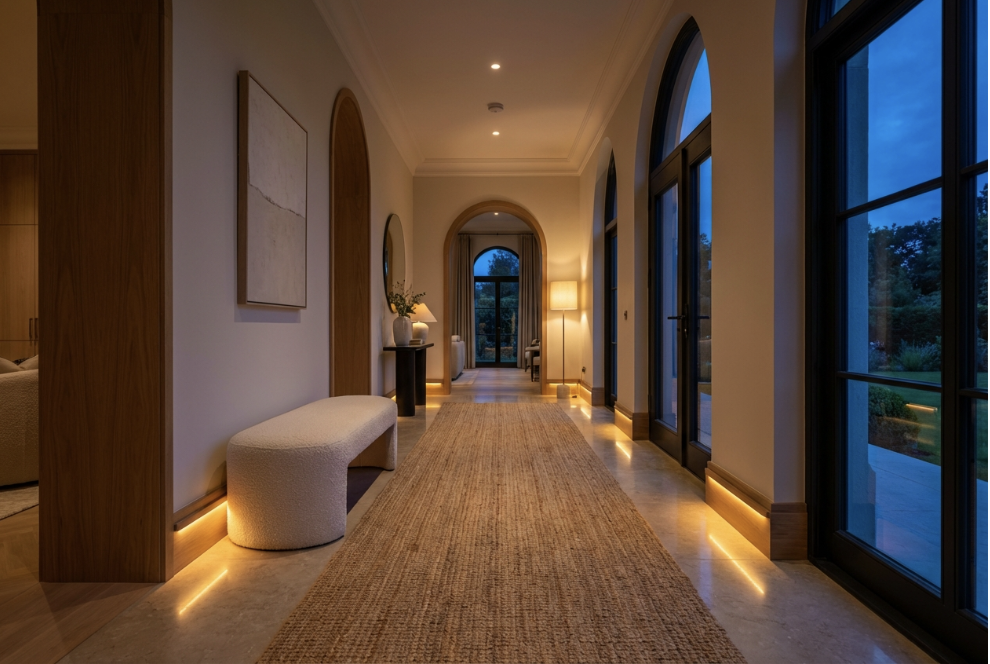
Then, there is a much more refined approach. The most thoughtful strategy for aging in place begins with an eye for design. The same sensibility that selected the hand-knotted runner in the hall can extend to how the home supports a parent’s independence.
Consider what already exists and what small adjustments can elevate both form and function to prevent common household accidents. Data show that millions of older adults reported falling during a single year, highlighting the need for subtle environmental interventions.
Motion-activated lighting along staircases provides a gentle evening atmosphere while reliably guiding anyone moving through the home at night. Natural-fiber area rugs with non-slip backing can replace synthetic alternatives to instantly remove low-level tripping hazards.
An upholstered bench positioned near the front door serves simultaneously as a beautiful design moment and a subtle stability aid. Research from cognitive aging studies consistently highlights that familiar spatial arrangements reduce disorientation.
When the path from the bedroom to the kitchen remains predictably clear, the home itself becomes a sanctuary of safety built into beauty.
| Key Insight: Interior safety doesn’t have to look clinical. By choosing motion-activated lighting and non-slip natural fibers, you maintain the home’s aesthetic while significantly reducing fall risks for aging parents. |
2. Build Graceful Routines That Anchor the Day
If the home is the container, routine is the rhythm that fills it. For seniors navigating age-related cognitive changes, a predictable daily structure is not a clinical imposition but rather a genuine gift.
Neurological research demonstrates that consistent daily rhythms reduce anxiety, minimize confusion, and support a greater sense of personal control. When the morning begins at the same time and an afternoon walk follows a familiar path, the day carries a calming internal logic.
The key to these routines is in the framing, so they feel like a life rather than a strict schedule. Morning light and a cup of tea by the window are simply how the day begins, not a behavioral intervention.
Co-designing these rhythms with a loved one preserves their dignity and agency, allowing them to move through their schedule with ease.
Practically, a beautiful framed weekly card on the breakfast table can hold the day’s structure thoughtfully. For an adult daughter splitting her weeks between a Manhattan apartment and a Hamptons home, coordinating care requires bridging geography.
Checking in between meetings or arranging Thursday visits with a trusted neighbor via a shared family calendar keeps the rhythm alive across the distance.
| Pro Tip: Frame routines as lifestyle choices rather than medical requirements. A consistent morning tea by the window preserves dignity while providing the neurological stability needed to reduce daily anxiety. |
3. Choose Wearable Tech for the Wrist
For years, the prevailing assumption was that a device serious enough to provide real protection would inevitably look bulky, clinical, and conspicuous. That assumption no longer holds true for modern families seeking discreet solutions.
Thoughtful caregivers are now discovering a growing category of stylish wearable safety technology that prioritizes aesthetics alongside function. These new designs approach protection by considering what a person actually deserves to wear at a dinner table or during a morning walk.
Design is a functional consideration, as a safety device that goes unworn provides no safety at all. For families managing a loved one’s tendency to move beyond familiar boundaries, location-aware wearables are invaluable.
The Alzheimer’s Association notes that many individuals living with dementia will wander repeatedly, making reliable monitoring essential. The finest options offer real-time location tracking, home-exit alerts that notify family members when a safe zone is crossed, and waterproof construction for bathing.
A sophisticated tracking device with a Scandinavian-inspired sensibility, featuring leather straps and stainless-steel faces, looks like a classic timepiece rather than a medical monitor. Devices like these quietly provide continuous reassurance through real-time location updates, home-exit beacon alarms, and automatic SOS calling capabilities.
By combining extended battery life with elegant design, caregivers can find solutions that do not require daily charging or cause embarrassment. The result is an intentional balance of senior independence at home and caregiver peace of mind, held together gracefully on the wrist.
| Warning/Important: A safety device only works if it is worn. Avoid bulky, clinical-looking monitors that cause self-consciousness; instead, choose elegant, waterproof wearables that your loved one will feel proud to wear daily. |
4. Build a Responsive Family Support System
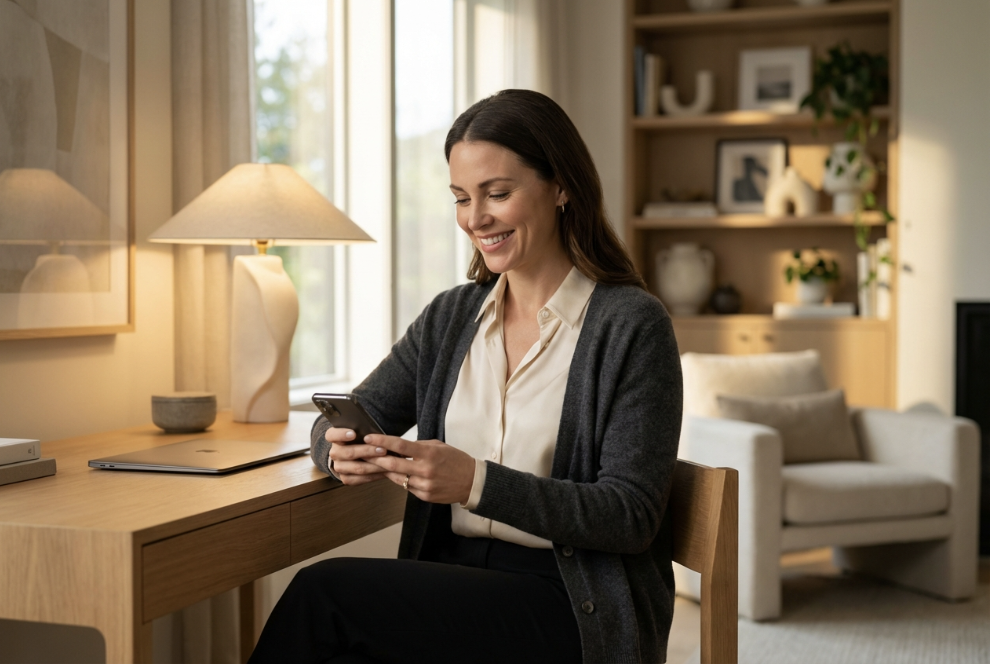
No single person carries the weight of caregiving alone for long. The most effective safety net for an aging parent is a quiet, coordinated network of people who each know their role.
This is simply the reality of modern family life, where careers do not pause and adult children often live at a distance. A devoted caregiver managing an estate or traveling frequently can still build a support system that functions seamlessly.
A well-designed care circle is small and specific. It might include two family members with defined responsibilities, a trusted neighbor, and a set of shared digital tools.
Technology plays a vital connective role here to keep everyone informed without feeling overwhelmed. Emergency contact escalation systems ensure that if one family member misses a gentle alert, the next is notified automatically.
Every gap in care is covered by deliberate design rather than by chance. What makes this coordination work is the shared conviction that a loved one’s senior safety at home deserves the most careful attention possible.
Organized thoughtfully and collaboratively, this layered structure ensures the network holds firm over time. It ultimately transforms caregiving from a logistical challenge into a seamless expression of love.
The Bottom Line
There is something clarifying about recognizing that the most beautifully designed home or carefully structured schedule carries no more meaning than the people it surrounds. The four adjustments explored here form a way of living that holds an aging parent safely.
These subtle changes do not ask them to surrender the independence they have earned over a lifetime. True luxury has always included thoughtful care that blends into the background of everyday life.
The best solutions preserve freedom while quietly supporting safety, allowing a parent to move through their days with absolute confidence. This approach ensures that a caregiver can finally exhale and find true peace of mind.
Begin with one small change this week, starting wherever feels most natural for your family’s routine. You will soon experience the profound relief and connection that comes from practicing intentional, dignified care.
| Author Profile: Tranquil is the leading manufacturer and retailer of high-end GPS locator watches for elderly individuals and those with dementia. |
Author

Written by
Recent Posts
4 Practical Tips for Estate Equipment Uptime
4 Proven Art Moves for Hamptons Entries
4 Proven Sleep Touches for Hamptons Homes
4 Surprising Secrets Behind Rosé Purity
4 Polished Ideas for Stylish Outdoor Gatherings
Categories
- Art
- Articles
- Beauty & Skincare
- Celebrities
- Celebrities|The Chronicles
- Chronicles
- Entertainment|Culture
- Event Photos
- Events
- Fashion
- Fashion & Style
- Featured
- Food & Beverage
- Food, Spirits, Wine
- Hamptons
- Hamptons Celebrities
- Hamptons Celebrities|Celebrities|The Chronicles
- Health
- Health & Beauty
- Lifestyle
- Luxury Lifestyle
- Press
- Profiles
- Real Estate
- Technology
- The Chronicles
- Travel
- Uncategorized
- Weddings