
The AI writing tools have completely changed how writers work and in 2026, they do a lot more than just generate text.
Bloggers, freelance writers, and copywriters are now using AI writing assistants to research topics, build outlines, draft articles, rewrite sections, and polish content before it goes live. But not every tool fits every workflow. Some are built for drafting, others for editing, paraphrasing, or long-form content creation.
This guide reviews seven of the best AI writing tools in 2026, what they do well, where they fall short, and which type of writer each one actually serves best.
How We Review the Best AI Writing Tools for Writers
Each tool was evaluated across five practical criteria:
- Writing quality: Is the output readable and worth editing, not rewriting entirely?
- Research and drafting support: Can it take a writer from blank page to working draft?
- Editing and paraphrasing ability:Does it refine content without losing the original meaning?
- Ease of use: Can a writer pick it up without a steep learning curve?
- Workflow fit for writers : Does it slot naturally into how writers actually work?
The goal wasn’t to find the most feature-heavy tools. It was to find the ones that genuinely serve writers.
7 Best AI Writing Tools for Writers in 2026
1. TeraBox AI
Pricing: Free tier available
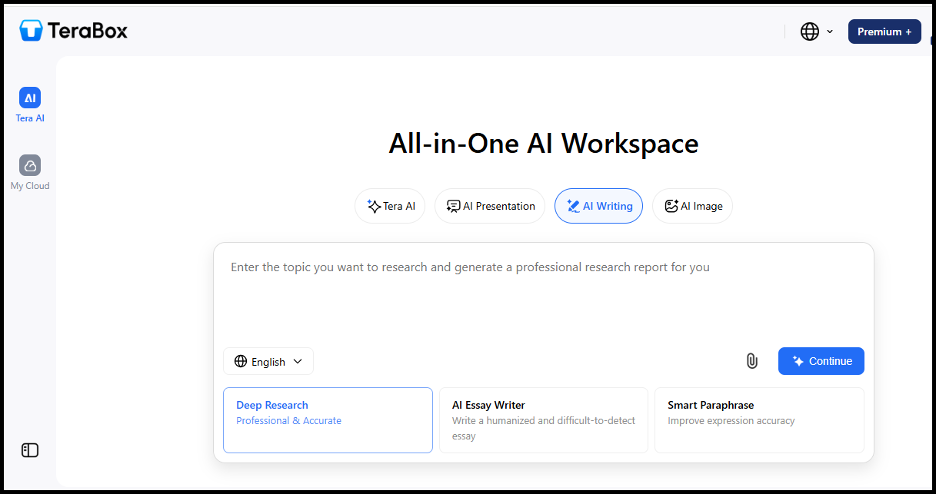
Most writers are quietly running three or four tools at once, one for research, one for drafting, another for rewriting. TeraBox AI stands out among the best AI writing tools because it brings all of that into one place, and honestly, it delivers.
The Deep Research feature earns its spot immediately. Drop in a topic, it builds a structured outline and before anything gets generated, you get to review and adjust it. That pause saves a lot of cleanup time afterward. The AI Essay Writer works the same way, outline first, then draft. You control word count and language before generation, and the result is editable. The Smart Paraphrase feature is reliable too, rewriting without gutting the original meaning. If the first version misses, you regenerate.
The one honest limitation: research outputs need fact-checking before going anywhere near a live piece. But that’s true of every AI writing assistant on this list.
Who it’s best for: Freelance writers, bloggers, and content writers who want a connected research-to-draft workflow without managing multiple subscriptions.
2. ChatGPT
Pricing: Free plan available; paid plans vary by plan and region
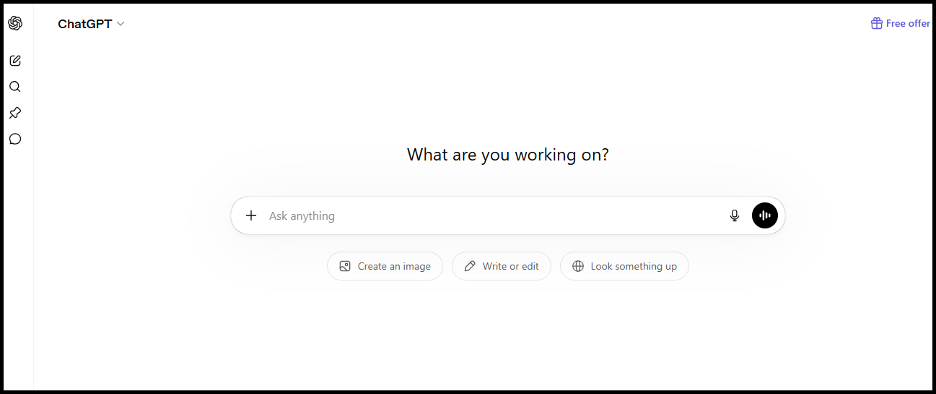
When it comes to versatility, ChatGPT is still one of the most capable AI writing assistants available. Blog posts, email copy, outlines, content angles. It handles a wide range of writing tasks without needing a specific template or workflow.
Writing quality is strong when the prompting is clear. Writers with a defined tone, format, and audience tend to get solid results quickly. Without that direction, the back-and-forth can take longer than expected. As a free AI writer it’s hard to beat for flexibility but you bring the intent, it brings the execution.
Who it’s best for: Writers comfortable directing an AI writing helper who need flexibility across different content formats.
3. Grammarly
Pricing: Free plan available; paid plans vary by plan and region
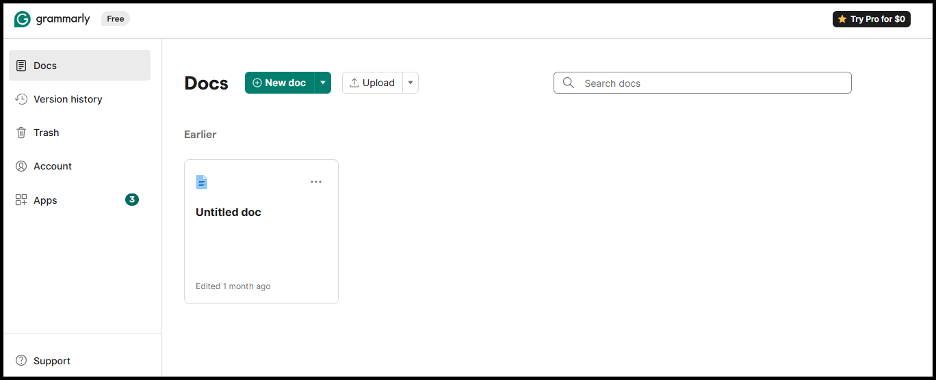
Grammarly isn’t where you start. It’s where you finish. After staring at a draft too long, it’s easy to miss awkward phrasing, tone mismatches, or sentences that don’t quite land. That’s exactly where this AI writing tool earns its place.
Suggestions go beyond grammar, flagging clarity and engagement issues a basic spell-checker would miss. It lives inside Google Docs, Gmail, and most browsers without friction. The limitation is straightforward. It only works on content you’ve already written. But as an AI writing assistant for editing and polishing, it does that job consistently.
Who it’s best for: Bloggers and content writers who want a reliable editing pass before publishing.
4. QuillBot
Pricing: Free plan available; paid plans vary by plan and region
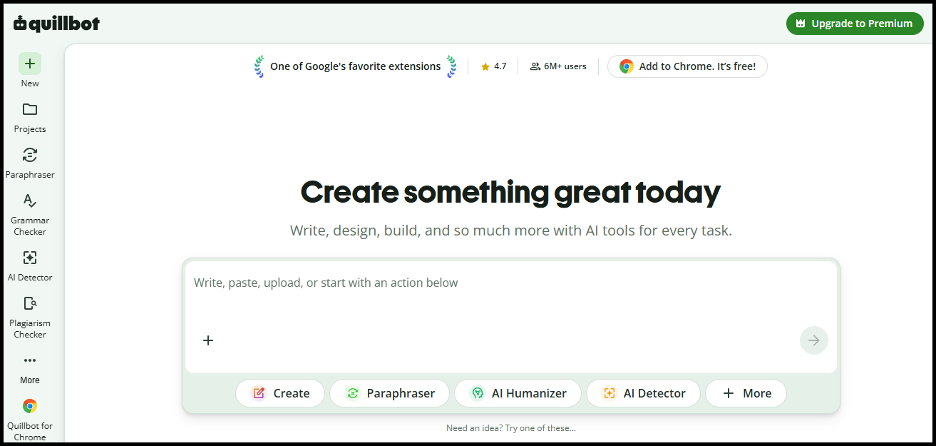
QuillBot has a very specific job and it does it well. Old blog post getting a refresh, copy being adapted for a different audience, a section that needs to sound less robotic. This AI writing tool handles it without turning the original into something unrecognizable.
The rewrite modes, standard, fluency, formal, creative, academic give real control over tone. Switching between fluency and formal produces noticeably different outputs without losing core meaning. Where it falls short is length and complexity, the summarizer can oversimplify dense material and it won’t build anything new from scratch.
Who it’s best for: Content writers and copywriters who regularly rework or simplify existing material.
5. Jasper
Pricing: Free plan available; paid plans vary by plan and region
Jasper is built for content teams producing high volumes of work. As an AI writing tool for marketing, the brand voice training is its standout feature, keeping outputs consistent across campaigns without constant manual correction.
The price point is higher than most AI writing assistants on this list, and much of its value sits in team-based features an individual writer simply won’t use. If you’re building content at scale for a brand, it makes sense. Working independently, there are more cost-effective options.
Who it’s best for: Copywriters and content marketing teams who need volume and brand consistency across multiple campaigns.
6. Copy.ai
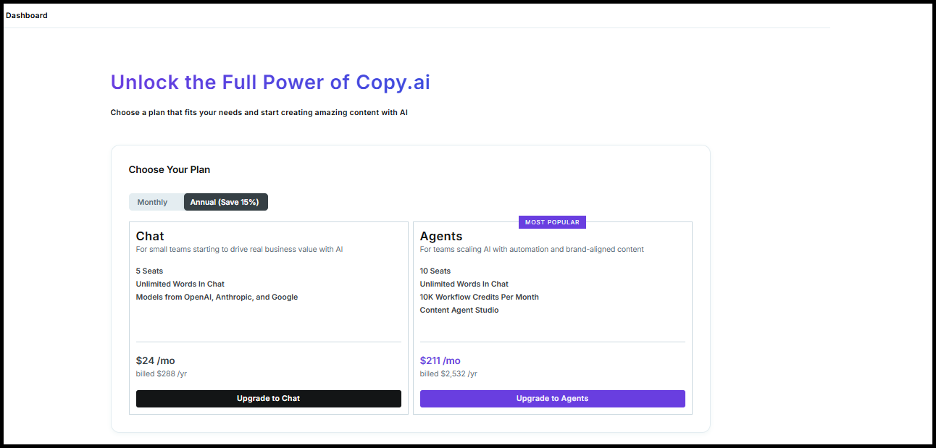
Copy.ai moves fast, and for the right type of content, that speed is genuinely useful. Product descriptions, email subject lines, social media captions. It generates these quickly, and the outputs usually need only light editing before they’re usable. As a free AI writer for short-form work, the clean and simple interface means there’s almost no learning curve to get started.
Writing quality is decent for short pieces.The drafts feel natural enough and rarely need full rewrites. Workflow-wise though, it doesn’t travel well into long-form territory. Past a certain length, outputs get repetitive and lose structure. It’s also not a research or drafting tool for full articles.
Who it’s best for: Freelance writers and small business owners who need quick first drafts for short-form content formats.
7. Jenni AI
Pricing: Free plan available; paid plans vary by plan and region
Jenni AI is built for writers producing research-heavy content who need citations handled properly as they write. The inline citation suggestions are the standout feature as you draft, it surfaces relevant references that fit the context, removing a significant chunk of manual work. Zotero integration makes reference management cleaner too.
Outside that context, it starts to feel limiting. The interface doesn’t adapt well to blog formats or commercial copy. But for long-form research writing, it handles that specific workflow better than most general-purpose AI writing tools.
Who it’s best for: Research-based writers and academics who need citation-integrated drafting support.
Best AI Writing Tools Compared: Which One Fits Your Writing Workflow?
| Tool | Best For | Research | Paraphrasing | Long-Form | Free Tier |
| TeraBox AI Writing | Full writing workflow | Deep Research | Smart Paraphrase | Essay Writer | ✅
|
| ChatGPT | Flexible writing tasks | ⚠️ Limited | ✅ | ✅ | ✅ |
| Grammarly | Editing and polishing | ❌ | ⚠️ | ❌ | ✅ |
| QuillBot | Paraphrasing | ❌ | ✅ | ❌ | ✅ |
| Jasper | Marketing copy at scale | ❌ | ⚠️ | ✅ | ❌ |
| Copy.ai | Short-form copy | ❌ | ⚠️ | ⚠️ | ✅ |
| Jenni AI | Academic writing | ⚠️ | ⚠️ | ✅ | ✅ |
Quick Recommendations based on writing need:
- Research, drafting, and rewriting in one place → TeraBox AI Writing
- Flexible writing support → ChatGPT
- Editing and proofreading → Grammarly
- Content rewriting → QuillBot
- Marketing content → Jasper
- Short-form copy → ai
- Academic writing → Jenni AI
Limitations to Consider Before Using AI Writing Tools
Even the best AI writing tools have limits. AI-generated content should always be fact-checked, edited for accuracy, and refined to match your audience before publication
FAQs
What is the best AI writing tool for writers in 2026?
The best choice depends on the workflow. Each tools serve different writing needs
Can AI writing tools help with blog writing?
Yes. Most modern AI writing tools can generate blog outlines, introductions, drafts, and content ideas.
Which AI writing tool is best for paraphrasing? QuillBot and TeraBox Smart Paraphrase are strong options for rewriting and improving clarity
Can AI writing tools help with research and outlines?
Yes. Research-focused platforms such as TeraBox Deep Research and ChatGPT can assist with information gathering and outline creation
Conclusion
The best AI writing tool depends on where writers need the most support. For writers who often move between research, drafting, and rewriting, a tool that combines these steps in one workflow may be more convenient. However, no AI writing assistant should replace human judgment, fact-checking, and final editing before publication.
If your writing process often starts with research and ends with rewriting or polishing, you can test TeraBox AI Writing to see whether its connected workflow fits the way you create content.
Author

Written by
Recent Posts
Unlocking the Berkshires

Dalia Forman Design

Alberto Luzzi
How to Pick a Homecoming Dress for Your Body Type and Feel Amazing in It
How to Prepare a Home for Sale When Major Repairs Are Not Affordable
Categories
- Art
- Articles
- Business of Luxury
- Celebrities
- Culture
- Entertainment
- Events
- Faces of Summer 2026
- Fashion
- Fashion & Style
- Featured
- Finance
- Food, Spirits, Wine
- Hamptons
- Hamptons Celebrities
- Health
- Health & Beauty
- Lifestyle
- Luxury Lifestyle
- Press
- Profiles
- Real Estate
- Technology
- The Chronicles
- Travel
- Uncategorized
- Weddings