
What the 90s Taught Us About Fame
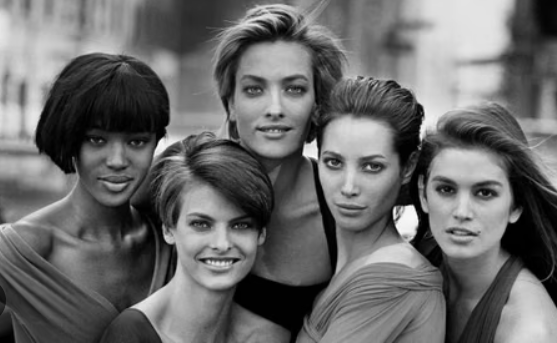
The 90s supermodels didn’t just walk runways — they redefined what fame could mean in the modern era. In January 1990, British Vogue published a cover that made that clear to everyone. Five women — Naomi Campbell, Cindy Crawford, Christy Turlington, Linda Evangelista, and Tatjana Patitz — shot in black and white by Peter Lindbergh,staring down the lens with the collective authority of people who understood exactly what they were worth. The issue was titled “Supermodel Story.” It was the most accurate headline the magazine ever ran. Within months, George Michael cast the same five women in the video for “Freedom! ’90”, and the supermodel became the defining celebrity category of a decade. Not an actress. Not a musician. Just a model — a face, a name, a presence so enormous it required no further explanation. Just a face, a name, and a presence so enormous it required no further explanation.
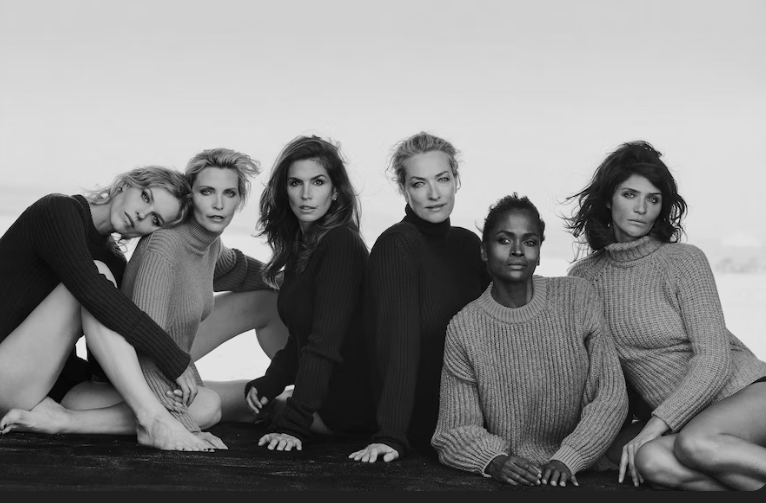
Ultimately, it lasted about fifteen years. Then it was over. The question that Social Life Magazine’s Golden Decade series spends the next twelve articles answering is: what happened in those fifteen years, who built something that lasted, who lost everything, and what the pattern tells us about fame, business, and the specific economics of beauty in the last era before the internet flattened the hierarchy forever.
Indeed, the answer is more interesting — and more instructive — than the conventional narrative of glamour and excess suggests.
What Made the 90s Supermodels Possible
The supermodel was not an accident. She was the product of a specific set of cultural and economic conditions that aligned briefly in the late 1980s and early 1990s and then dissolved almost as quickly as they had formed. Understanding those conditions explains both why the era produced such extraordinary fame and why that fame proved so difficult to sustain.
Specifically, three forces converged simultaneously. First, fashion became mass entertainment. For most of the twentieth century, the industry operated as a closed circuit: designers, editors, buyers, a small aristocracy of taste. However, the 1980s blew this circuit open. MTV launched in 1981 and needed visual content. Fashion advertising budgets exploded alongside the decade’s financial boom. Glossy magazines reached mass circulation. Consequently, the runway was not a trade event; it was a cultural spectacle, and the women walking it were celebrities, whether or not anyone had planned for that outcome.
Second, the pre-Internet media landscape concentrated attention in ways that are now structurally impossible to replicate. In 1993, if you were on the cover of American Vogue, you were seen by essentially everyone who consumed aspirational culture in America. There was no algorithm fragmenting that audience into ten thousand micro-niches. There was no Instagram democratizing access to beautiful faces and dissolving the scarcity premium. As a result, a single cover, a single campaign, a single music video appearance could manufacture global recognition overnight. Moreover, the models who benefited from this concentration of attention received a form of cultural capital that the architecture of contemporary media cannot produce at the same scale or speed.
The Business Move Nobody Predicted
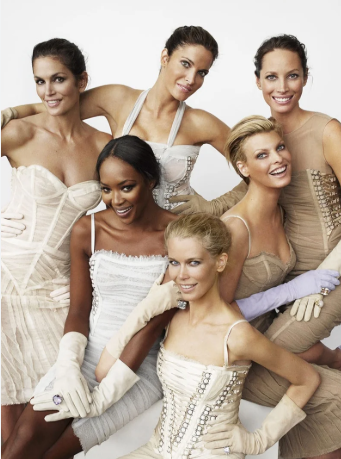
Third — and this is the factor most accounts of the era underweight — the models themselves became business actors in ways their predecessors had not. Linda Evangelista’s famous statement that the top models wouldn’t get out of bed for less than $10,000 a day was not an expression of entitlement. It was a negotiating position from women who had finally understood their own market value and decided to act on it. The “Big Six” — Campbell, Crawford, Turlington, Evangelista, Claudia Schiffer, and Kate Moss — collectively leveraged their visibility into fees, contracts, and eventually business infrastructure that no previous generation of models had attempted. They didn’t just walk the runway. They owned pieces of the machinery that put them there.
That ownership instinct is the variable that separates the 90s supermodels who built lasting legacies from those who disappeared when the cameras moved on. And understanding it requires examining all three categories of what the decade produced.
The Women Who Transcended: Fame Converted to Empire
The 90s produced a cohort of models who understood, early enough to act on it, that their fame had a window and the window was closing. Their responses to that understanding built the template for every subsequent model-to-mogul transition in the industry.
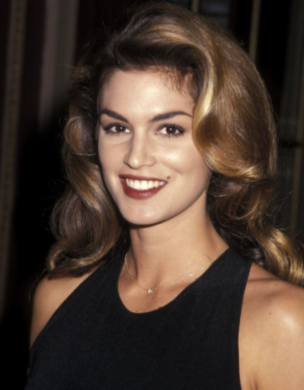
Cindy Crawford did it first and most completely. She was the most commercially recognizable face of the early 1990s — the Pepsi campaigns, the MTV hosting, the Playboy covers, the Revlon contracts. What separates Crawford from women of comparable visibility is that she treated every relationship as an asset to be structured, not a job to be completed. Specifically, she negotiated equity, not just fees. Meaningful Beauty became a skincare brand with genuine consumer loyalty. Kaia Gerber was raised as a second-generation modeling asset while Crawford maintained her own cultural relevance decades past the conventional runway expiration date. Above all, Crawford’s lesson is the one the entire series returns to: fame is a start-up, not a career. The question is always what you’re building with the currency while you still have it.
Campbell: Permanence Through Fearlessness
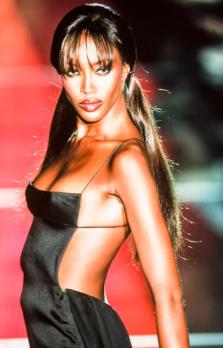
Naomi Campbell chose permanence through fearlessness. Campbell is the only member of the original Big Six who never stopped working at the highest level — still booking Vogue covers at 50+, still commanding runway fees that younger models cannot approach, still present in every room where fashion’s future is being decided. Nevertheless, her method was the opposite of quiet accumulation. She made controversy into currency and presence into brand equity. That appetite for her proved renewable as long as she remained genuinely unpredictable, genuinely powerful, and genuinely herself. You cannot manufacture what she built. But you can learn from the underlying principle: authenticity compounds in ways that performance doesn’t.
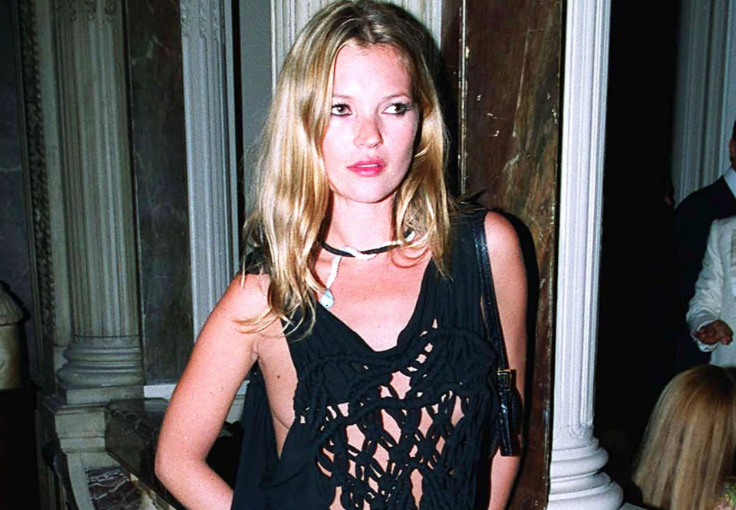
Kate Moss built the most complete second act of the generation. The cocaine scandal that should have ended her career in 2005 instead confirmed her brand positioning — chaos as authenticity, danger as desirability. She launched the Kate Moss Agency, turned her aesthetic into intellectual property, and created a licensing architecture that generates returns independent of her personal appearances. Ultimately, Moss’s insight was precise: own the look, not just the work. Everything else flows from that.
Tyra Banks and Heidi Klum represent a different version of the transcendence play — the media infrastructure model. Both understood before most that the post-runway opportunity was not in products but in platforms. Banks negotiated producer credit on America’s Next Top Model at a time when hosts took salaries and producers took ownership. As a result, that single structural decision transformed her economics permanently. Klum built the same model through Project Runway and has sustained it through 25+ seasons of television that generate returns regardless of her current runway status. Therefore, their lesson is about the difference between renting your visibility and owning the distribution channel for it.
The Women Who Pivoted: Smart Exits on Their Own Terms
Not every 90s supermodels success story produces a billion-dollar brand. The second tier of the Golden Decade covers the models who navigated their exits with intelligence and self-determination — who built lives rather than empires, and whose choices deserve examination on their own terms rather than simply as lesser versions of the transcendence story.

Carolyn Murphy’s 20-year Estée Lauder contract is the clearest example of what alignment over volume produces. However, she did not build an empire. She built one extraordinary, sustained relationship with a single global brand and structured it to generate stable income across decades rather than peak earnings across months. The lesson her career offers is about the difference between maximizing short-term fees and building long-term equity through exclusive, deeply aligned partnerships.
Karen Elson and Gemma Ward: The Rarer Exits
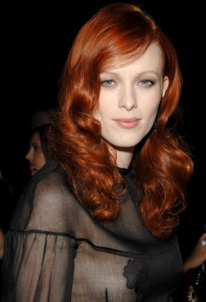
Meanwhile, Karen Elson pivoted in the most unexpected direction — into music, art, and a cult cultural presence that operates entirely outside the fashion economy she came from. After marrying Jack White and releasing albums, she became a figure the fashion industry wants precisely because she no longer needs it. Indeed, her exit illustrates the counterintuitive principle that the models who retained the most fashion credibility are often the ones who diversified their identity most aggressively away from fashion.

Gemma Ward’s disappearing act is the most instructive pivot in the series. She was the dominant face of the mid-2000s — the otherworldly look that defined the Alexander McQueen and Prada campaigns of that era — and she stepped away at the precise moment of her maximum value. Children, travel, and absence followed. She returned selectively, years later, and found that scarcity had transformed her absence into myth. The modeling world had missed her in a way it never misses the faces that stay too long. Consequently, Ward’s lesson is about the economics of rarity: in a world of infinite content, the face that disappears retains a value the face that stays cannot.
The Women Who Lost It: When Beauty Had No Business Behind It
Structural Failure, Not Personal Failure
The cautionary tier of this series is not primarily about drugs, bad decisions, or personal failures — though those elements appear. It is about structural vulnerability: what happens when a person of extraordinary commercial value has no infrastructure protecting their interests, no business architecture converting their visibility into lasting assets, and no one in their corner whose incentives align with their survival.

Gia Carangi invented the supermodel before the word existed. She was the template — the first face known by only one name, the first model whose personality was as commercially valuable as her appearance, the first woman the industry built a mythology around. She was also completely undefended. When her one protector, agent Wilhelmina Cooper, died of cancer in 1980, Gia’s entire structural support collapsed with that single loss. Subsequently, the heroin addiction that consumed her career in the early 1980s was real and devastating. But the addiction was also a symptom of a deeper structural failure: a person of enormous commercial value with no buffer between herself and the people who needed her to keep performing regardless of what it cost her. She died of AIDS in 1986 at 26. Notably, not one person from the fashion world attended her funeral. Read the full Gia Carangi profile here.
Anna Nicole and Jodie: Two Versions of the Same Warning
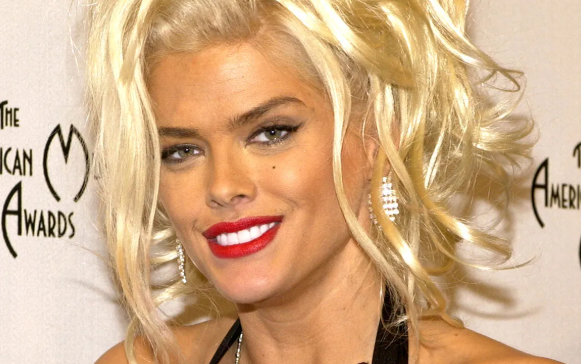
Anna Nicole Smith is the Lily Bart of the tabloid era — Wharton’s doomed heroine transposed into full color, complete with cameras rolling through every stage of the decline. She had the commercial power, the timing, the visibility — replacing Claudia Schiffer in the Guess campaign and earning Playboy’s Playmate of the Year. She was one of the most recognized faces in America. What she never had was a financial manager who wasn’t extracting from her, a legal team working for her interests rather than around them, or a single institutional relationship that prioritized her long-term survival over her short-term spectacle value. She died in 2007 at 39, with eight of the eleven drugs in her system prescribed in someone else’s name. Meanwhile, the industry that had created her moved on years earlier. Read the full Anna Nicole Smith profile here.
Jodie Kidd and the Early 2000s Ensemble
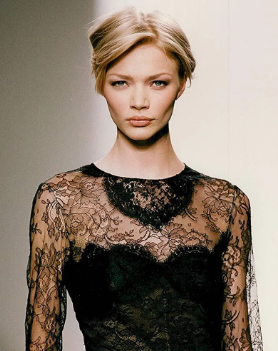
By contrast, Jodie Kidd’s story sits at the intersection of the cautionary and the pivot tiers, which is precisely what makes it worth studying. She was one of the hottest faces in British fashion — 6’2″, aristocratic, walking for Galliano, McQueen, and Chanel simultaneously — and left before the industry could remove her on its own schedule. A second life in motorsports, television, polo, and small-scale entrepreneurship followed, genuinely rich and self-determined. What she didn’t build is the machine — the compounding asset that generates returns independent of her personal involvement. Her pivot is the most admirable exit in the series and the most instructive gap between survival and wealth-building. Read the full Jodie Kidd profile here.
The ensemble cautionary tale belongs to the early 2000s faces who peaked and vanished without building anything: Carmen Kass, Maggie Rizer, Bridget Hall, and Estella Warren. Between them, they represent every available failure mode — intelligence pointed elsewhere, infrastructure stolen by someone trusted, commercial appeal paired with a preference for privacy, and a pivot into the wrong adjacent market. Nonetheless, none of them built the machine. All of them had the raw material to do so. The information they needed was available — it simply was not offered. It simply was not offered, because the industry had no incentive to offer it. Read the full ensemble profile here.
What Instagram Killed — And What It Built Instead
The Golden Decade ended not with a single event but with a gradual erosion of the conditions that had made it possible. Fashion magazines began replacing models with Hollywood celebrities on their covers in the late 1990s — a signal that the scarcity premium on a famous face was migrating toward a different kind of fame. Designers, reportedly irritated by the fees and attitudes of the Big Six, deliberately fragmented the market, booking multiple new faces per season rather than anchoring shows to known names. And then, in the mid-2000s, social media arrived and demolished the entire architecture at once.
What Instagram Built to Replace It
Specifically, Instagram democratized the beautiful face. Before it, a Vogue cover reached everyone who consumed aspirational culture through a single controlled channel. After it, a beautiful face could reach millions through a phone, a ring light, and a consistent aesthetic — and a beautiful face attached to a personal brand could monetize that reach directly without the magazine, the agency, or the designer as intermediary. As a result, the scarcity premium that had made the 90s supermodel possible evaporated. There was no longer a finite number of faces the culture could accommodate. There were millions, and they were all accessible, and none of them commanded the attention monopoly that Cindy Crawford or Naomi Campbell had held.
What Instagram built instead was a different kind of model career — one where the face is also the distribution channel, the content creator, and the brand owner simultaneously. The Hadids, Kendall Jenner, and Kaia Gerber operate in this new architecture. Their fame is broader in some ways than their predecessors’ and shallower in others — more people see their faces, but fewer people experience them as genuine cultural events. Furthermore, that mystique Peter Lindbergh’s 1990 Vogue cover created is structurally unavailable now — modern internet is simply incompatible with that kind of scarcity.
The 90s Supermodels: What the Series Is Really About
The Golden Decade series is twelve articles about models. It is also, underneath that, twelve articles about a single question: what do you build when you have a window of visibility, and what happens to the people who don’t build anything before the window closes?
Three Outcomes — and What Separates Them
The women who transcended understood that the cover was a start-up, not a finish line. Those who pivoted understood that survival requires recognizing when the system’s terms are no longer compatible. And those who lost understood — too late, or not at all — that beauty without business is just temporary income.
The Full Record — and Where to Find It
Examining those conversion mechanics — how beauty becomes business, how fame becomes equity, how a face becomes a company — is the work of Social Life Magazine’s broader coverage of builder-class supermodel net worth, quiet wealth and strategic silence, and the five-stage framework for converting beauty into lasting net worth. The Golden Decade profiles are the narrative, while the existing series is the analysis. Together, they constitute the most complete examination of what the supermodel era actually produced — and what it left undone.
The women in these profiles were not simply beautiful. They were, for a specific window of time, among the most commercially valuable human beings on earth — operating inside what McKinsey has since identified as one of the most concentrated periods of luxury brand value creation in the twentieth century. What they did with that value — and what was done to them — is the story the fashion industry has never told about itself. Social Life Magazine is telling it now.
Explore the full Golden Decade series:
The Transcenders: Five Supermodels Who Used the 90s as a Launchpad — Crawford, Campbell, Moss, Banks, Klum
The Smart Pivoters: The Supermodels Who Exited on Their Own Terms — Murphy, Elson, Ward, Wek
The Cautionary Tales: Gia Carangi | Anna Nicole Smith | Jodie Kidd | Beauty Without Business: The Faces That Vanished
Social Life Magazine has covered Hamptons luxury lifestyle for 23 years. Distributed to 25,000 readers from Westhampton to Montauk each summer issue. Subscribe, advertise, or partner with us here. Polo Hamptons events and sponsorships at polohamptons.com.
Author

Written by
Recent Posts
Breaking Bad Cast Net Worth. $130 Million Cooked in Five Seasons of Perfect Television

Cailee Spaeny Net Worth — From Springfield, Missouri to A24 and Alien in Three Years Flat

Wagner Moura Net Worth — He Learned Spanish to Play Escobar. Then He Learned English to Take Hollywood.

Robert Eggers Net Worth — He Made a $3.5 Million Film in Puritan English and Hollywood Listened
Brie Larson Net Worth — A $6 Million Indie Film Won Her an Oscar. Marvel Paid Her the Rest.
Categories
- Art
- Articles
- Beauty & Skincare
- Celebrities
- Celebrities|Movies
- Celebrities|The Chronicles
- Chronicles
- Entertainment|Culture
- Event Photos
- Events
- Fashion
- Fashion & Style
- Featured
- Food & Beverage
- Food, Spirits, Wine
- Hamptons
- Hamptons Celebrities
- Hamptons Celebrities|Celebrities|The Chronicles
- Health
- Health & Beauty
- Lifestyle
- Luxury Lifestyle
- Movies|Culture
- Movies|Hamptons Lifestyle
- Press
- Profiles
- Real Estate
- Technology
- The Chronicles
- Travel
- TV
- Uncategorized
- Weddings