
Fashion has a scheduling problem no other consumer category quite matches. Drops land every few weeks, samples arrive late, the shoot happens once, and the resulting images have to stretch across an entire season of social content. Meanwhile the platforms driving discovery have moved decisively to motion — and to volume.
A brand publishing three polished films a season now competes against accounts posting daily. Something in that arrangement had to break, and for most independent labels it was the content calendar rather than the production standard.
The Archive Nobody Is Using
Walk into almost any apparel brand’s asset library and you’ll find thousands of high-quality photographs sitting idle. Campaign stills, e-commerce flats, backstage frames, editorial outtakes that never ran. These were expensive to produce and are used perhaps twice before being archived.
That dormant archive is the single most underrated asset in fashion marketing, because it’s already on-brand, already approved, already featuring the correct garments on the correct bodies. The reason it goes unused is simply that stills don’t perform where the audience now is.
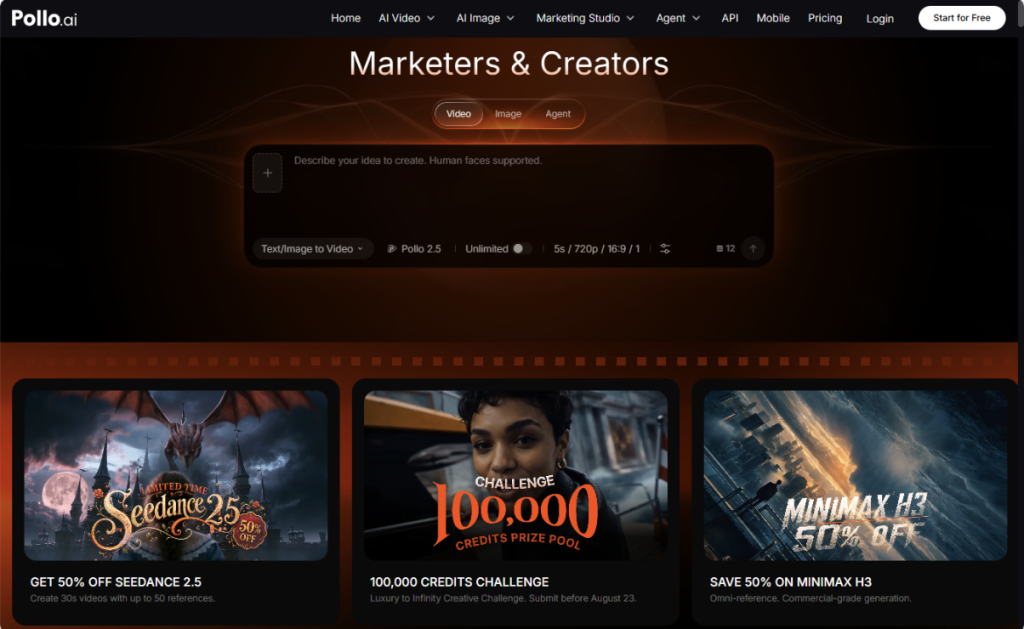
This is where the current generation of tooling earns attention. Pollo AI’s AI Video Generator handles image-driven animation alongside text-based creation, video restyling and reference-guided sequences within a single environment, which means an existing lookbook frame can become a moving clip without reshooting anything — fabric catching a breeze, a slow camera drift across a shoulder line, a subtle parallax that gives a flat image depth. For a label with two hundred archived campaign shots, that converts a sunk cost into a quarter of publishable material.
Why Motion Changes Perception of Garments
There’s a merchandising argument here separate from the algorithmic one. Clothing is a material product, and material behaviour is invisible in photographs. Drape, weight, movement, how a hem falls when someone turns — these are exactly the attributes that drive both purchase confidence and return rates.
Static imagery forces the customer to guess. Motion answers the question. Brands that have shifted product detail pages toward video consistently report the same pattern: fewer size-and-fit queries, fewer returns attributable to “not what I expected.”
The commercial implication is that video isn’t only a top-of-funnel discovery format in apparel. It’s a conversion and retention tool, which makes the production bottleneck considerably more expensive than most teams have calculated.
The Cadence Problem for Independent Labels
Large houses solve output with retained studios. Independent labels — the majority of the market — work in a completely different rhythm: a founder, a small team, one photographer engaged twice a year.
Under that model, the six weeks between drops are content deserts. Engagement decays, the algorithm deprioritises the account, and the next launch reaches a smaller audience than the last. Many promising labels lose momentum not through weak design but through gaps in publishing.
Filling those gaps has traditionally meant either reposting user content or producing filler. Neither builds a coherent brand world, which in fashion is most of what marketing is for.
Where Standardised Output Belongs Instead
Not every apparel video is creative work. Wholesale line sheets, retail staff training, seasonal buying briefings, warehouse process updates, recruitment for store roles — this material needs to be correct and consistent rather than beautiful.
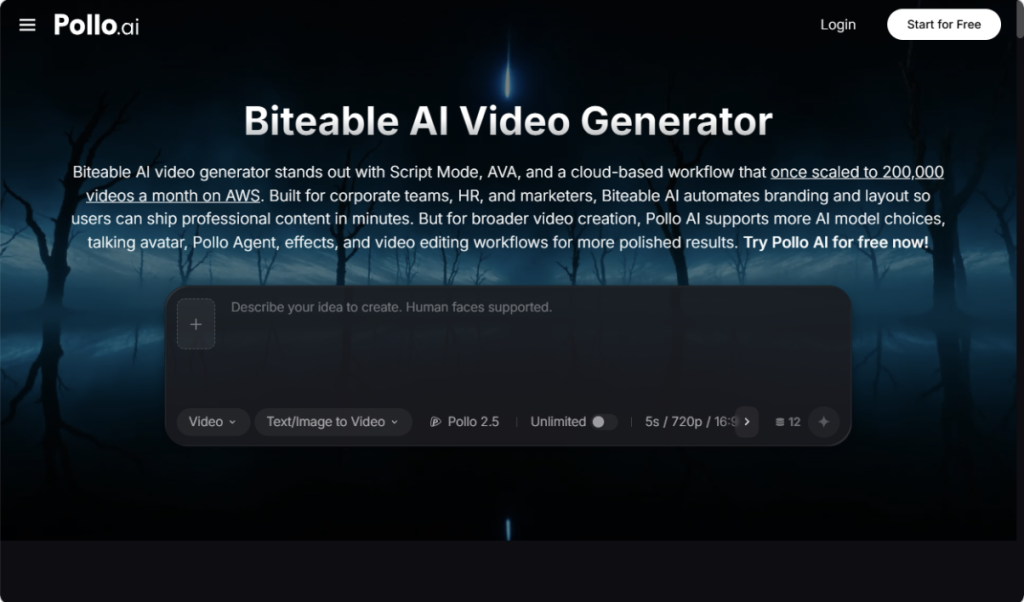
Biteable handles that category and sits alongside Pollo AI as a different kind of instrument. Its AI assistant can build a fully branded video from typed input or a supplied web page, drawing on a catalogue of more than twenty-four thousand animation elements and over fifty AI voice options in multiple languages, with automatic layout control keeping every output visually aligned to brand rules. Interactive buttons can be embedded in the frame, which is useful when a wholesale video needs to lead a buyer straight to an order form.
For brands running multi-market retail operations, the multilingual narration alone removes a recurring translation cost. Creative storytelling goes one route; operational communication goes another.
Turning a Season’s Photo Archive Into a Month of Video
Sort the Archive by Motion Potential, Not by Beauty
Go through the existing library and mark images where something could plausibly move — hair, fabric, a scarf, a coat hem, background elements. A tightly cropped flat lay animates poorly. A three-quarter shot with loose fabric animates beautifully. Twenty well-chosen frames will outperform a hundred selected on aesthetics alone.
Apply Restrained Motion, Not Dramatic Motion
The instinct is to push movement as far as the tool allows. Resist it. In apparel, exaggerated animation distorts garment shape, which undermines the exact trust you’re trying to build. A slow push, a gentle sway, three or four seconds of drift — that’s enough to convert a still into a scroll-stopping clip while keeping the silhouette honest.
Build One Recurring On-Screen Presence
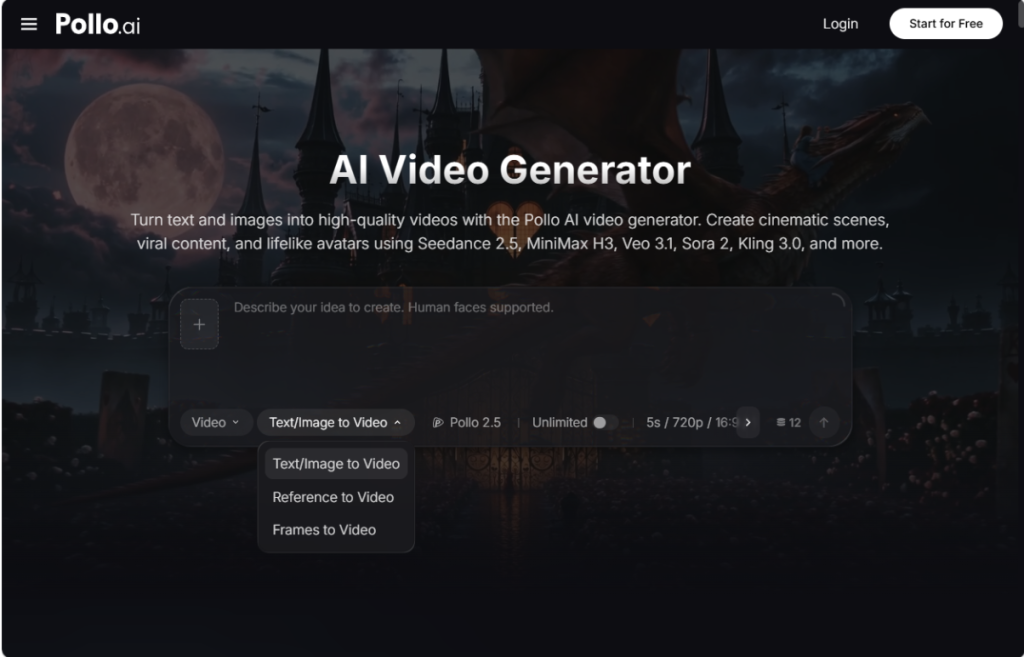
For anything spoken — styling notes, fabric explainers, drop announcements — a consistent presenter carries better than rotating formats. Working within Pollo AI’s AI Video Generator, avatar sequences running up to two minutes with natural expression and gesture give small teams a repeatable face for that content without booking talent for every update, which matters when the same explainer needs reissuing each season.
Cut Once, Export by Placement
Decide destinations before generating rather than cropping afterwards. Vertical for reels and in-app discovery, square for feed and marketplace tiles, wide for site headers and in-store screens. Keep the garment centred with generous margin so reframing never clips a sleeve or a hemline. When the deliverable is really a wholesale briefing or a store-team training clip, route that job to Biteable and reserve creative generation for customer-facing work.
Where the Real Limit Sits Now
Removing the production barrier doesn’t make a collection desirable. Fashion remains a taste business, and a well-animated bad garment is still a bad garment.
What changes is who gets to maintain a visible presence between drops. That advantage previously belonged to whoever could fund continuous production, which quietly filtered out a great many strong independent designers. Whether a label uses Biteable for its operational communications or image animation for editorial output, consistency of presence is now a discipline question rather than a budget one.
Two cautions are worth carrying. Never animate a garment into behaving in a way the real fabric cannot, because the returns data will find you. And avoid the generic — feeds are filling with interchangeable generated fashion content, and in a category built on distinctiveness, looking like everyone else is the only unforgivable outcome.
The archive was always valuable. It just needed a way to move.
Author

Written by
Recent Posts
How to Measure Whether a Hair Loss Treatment Is Working
Is Online Psychiatry Covered by Insurance? What to Know Before Booking
Four Habits of Quietly Successful Entrepreneurs

The Most Common Preventable Health Concerns Doctors See Today
What Affects a Rideshare Injury Settlement?
Categories
- Art
- Articles
- Business of Luxury
- Celebrities
- Culture
- Entertainment
- Events
- Faces of Summer 2026
- Fashion
- Fashion & Style
- Featured
- Finance
- Food, Spirits, Wine
- Hamptons
- Hamptons Celebrities
- Health
- Health & Beauty
- Lifestyle
- Luxury Lifestyle
- Press
- Profiles
- Real Estate
- Technology
- The Chronicles
- Travel
- Uncategorized
- Weddings