
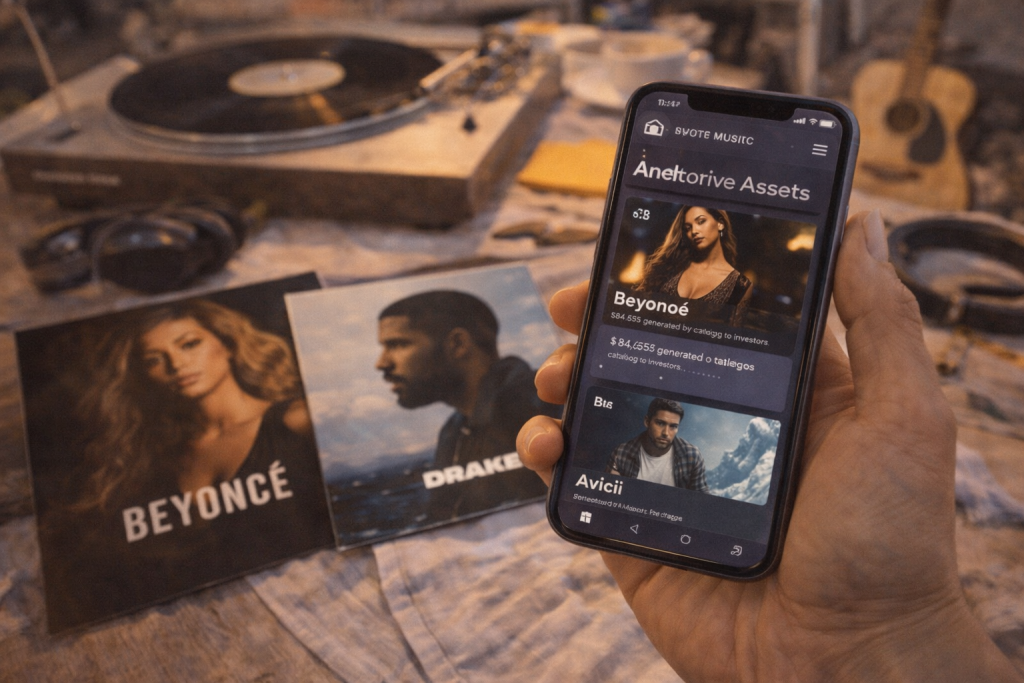
Music as asset class has traditionally belonged to record labels, publishing houses, and the occasional celebrity investor willing to spend hundreds of millions on catalog acquisitions. Then ANote Music arrived, turning royalty investing into something anyone can access. The Luxembourg-based platform has distributed over €1 million in royalties to investors since launching in August 2020, with average historical returns exceeding 10%.
Founded in 2018 by Marzio F. Schena, Matteo Cernuschi, and Grégoire Mathonet, ANote operates like a stock exchange for music rights. Users buy shares in catalogs ranging from established hits to emerging artists, earning proportional royalties whenever those songs generate income. The platform has processed over €12 million in trades and serves a growing community of over 20,000 investors.
How Music Royalty Investing Actually Works
Music generates royalties through multiple streams: streaming plays, radio airplay, sync licensing for film and television, live performances, and mechanical reproduction. These revenues flow to rights holders continuously. By purchasing shares in a catalog, investors gain contractual right to a portion of future royalty income generated by the underlying intellectual property.
ANote conducts thorough due diligence before listing any catalog, evaluating historical royalty data, contracts, and future earning potential. Only assets passing rigorous financial and legal review reach the platform. The minimum three-year earnings contracts provide investment predictability while longer catalog relationships have proven sustainable.
The platform operates two markets. In the primary market, music rights holders auction portions of their catalogs to investors through Dutch auction format. In the secondary market, investors buy and sell shares with each other, establishing prices through supply and demand. This liquidity distinguishes ANote from traditional music investments, which typically lock capital for extended periods.
The Numbers Behind the Model
ANote reports 10.59% gross average IRR achieved by investors from August 2020 through November 2025, based on weighted average across all catalogs including both royalty income and price performance. This assumes full reinvestment of royalties into available catalogs at each distribution. Nearly 90% of investors on the platform have proven profitable.
In 2024 alone, the platform processed over 117,000 transactions including trading and royalty payouts. Royalty distributions have averaged one payout every five days over the past 12 months, with 174 total distributions completed since launch. The company expects to distribute over €600,000 in royalties during 2024, representing 70% increase from 2023.
Trading volumes on the secondary market exceeded €3 million in 2024 alone, with €6.7 million total secondary market transactions since launch. This liquidity allows investors to exit positions when needed rather than waiting years for contract expiration.
The Catalogs You Can Actually Own
ANote’s listed catalogs include songs performed by global icons like The Kinks, Beyoncé, The Who, Backstreet Boys, Justin Bieber, Britney Spears, Drake, and Avicii. These aren’t master recordings themselves but shares in the royalty streams generated when songs play.
The platform has expanded into K-Pop and J-Pop through songwriter Andreas Öberg’s catalog, tapping into Asian music markets with distinctive fan engagement patterns. Ever Ever Music, a German independent record label, has listed portions of its catalog through both auction and direct listing mechanisms.
Lithuanian HQ’s Kaan Pars catalog addition extended partnerships into new geographic markets. Each catalog brings different risk-return profiles based on song age, artist activity, genre trends, and licensing potential. Diversification across multiple catalogs reduces exposure to any single artist’s career trajectory.
Institutional Interest and Product Evolution
ANote has raised over €3.3 million in funding, including investment from Algorand Ventures and ACME Innovation, plus backing through Luxembourg’s Ministry of Economy via the Young Innovative Enterprise Grant through Luxinnovation.
The company launched Music Royalties Enhanced Strategy Certificates (MRESC) to meet growing demand from family offices and institutional investors. These certificates, working similarly to Bowie Bonds, provide structured products for investments of €125,000 or more, offering streamlined service for professional investors seeking music exposure without direct platform trading.
The Backstage Pass loyalty program rewards investor activity with exclusive offers and premium perks, activating for accounts with €200 or more invested. Mobile apps for iOS and Android enable portfolio management from phones, matching accessibility standards of traditional investment platforms.
Why Music as Alternative Asset Class
Music royalties have historically shown low correlation with traditional financial markets. People stream favorite songs regardless of stock market performance, interest rate changes, or political uncertainty. This uncorrelated return stream provides portfolio diversification that stocks and bonds cannot offer.
According to the latest IFPI global music report, streaming revenues have surpassed $20 billion, continuing multi-year growth trends. The structural shift from album purchases to streaming creates predictable, recurring revenue streams for rights holders. Unlike physical product sales with inventory risk, streaming payments arrive continuously.
For Hamptons residents with sophisticated portfolios seeking alternative assets beyond real estate and private equity, music royalties offer legitimate diversification. The emotional connection to beloved songs adds engagement dimension that most alternative investments lack.
Risks and Considerations
Music royalty investing carries real risks. Song popularity can decline as tastes change. Artist scandals can reduce streaming and licensing opportunities. Platform risk exists as ANote remains a relatively young company. Regulatory environments across countries where music generates royalties can shift.
ANote is not regulated by Luxembourg’s financial sector regulator (CSSF) because royalty interests are not considered financial instruments under MiFID. The Investor Protection Programme monitors liquidity and price volatility, providing alerts before trades could lead to historically low or negative returns.
Liquidity depends on secondary market activity. While trading has grown consistently, a specific catalog may lack buyers at desired prices during any given period. The platform cannot guarantee trade execution at chosen prices.
Getting Started with Music Investment
Registration is free, with all users gaining access to catalog information, financial history, and background research. The platform accepts funding via credit card, bank transfer, or cryptocurrency. Funds held in personal e-wallets are segregated from ANote’s assets through Mangopay, ensuring clear ownership and traceability.
Distribution fees of 5% apply to shares bought in primary auctions and 8% for secondary market purchases, capped at 0.5% of catalog market capitalization per distribution. These fees represent the primary revenue model, aligning ANote’s incentives with royalty generation rather than trading volume.
The referral program rewards community growth, with both referrer and new investor earning bonuses upon investment. For those preferring guidance, customer support teams assist with everything from account setup to trade execution.
Explore alternative asset opportunities through Social Life Magazine. Connect with investment professionals at Polo Hamptons. Subscribe to our print edition for wealth management content, join our email list for weekly updates, or support independent journalism with a $5 contribution.
Related: Kalshi: The Prediction Market Legalizing Bets on Everything | Embedded Finance: The Invisible Banking Revolution
Author

Written by
Recent Posts
Behind the Scenes of Weddings Involving Long-Distance Relationships
Why Karaoke Is the Ultimate Entertainment Choice for a Hen Party
Easy Recipes That Feed A Crowd Without The Stress
The Influence Of Social Media On Interior Style Trends
Where Can You Find the Best Made-to-Measure Bespoke Suits in NYC
Categories
- Art
- Articles
- Beauty & Skincare
- Celebrities
- Celebrities|Movies
- Celebrities|The Chronicles
- Chronicles
- Entertainment|Culture
- Event Photos
- Events
- Fashion
- Fashion & Style
- Featured
- Food & Beverage
- Food, Spirits, Wine
- Hamptons
- Hamptons Celebrities
- Hamptons Celebrities|Celebrities|The Chronicles
- Health
- Health & Beauty
- Lifestyle
- Luxury Lifestyle
- Movies|Culture
- Movies|Hamptons Lifestyle
- Press
- Profiles
- Real Estate
- Technology
- The Chronicles
- Travel
- Uncategorized
- Weddings