
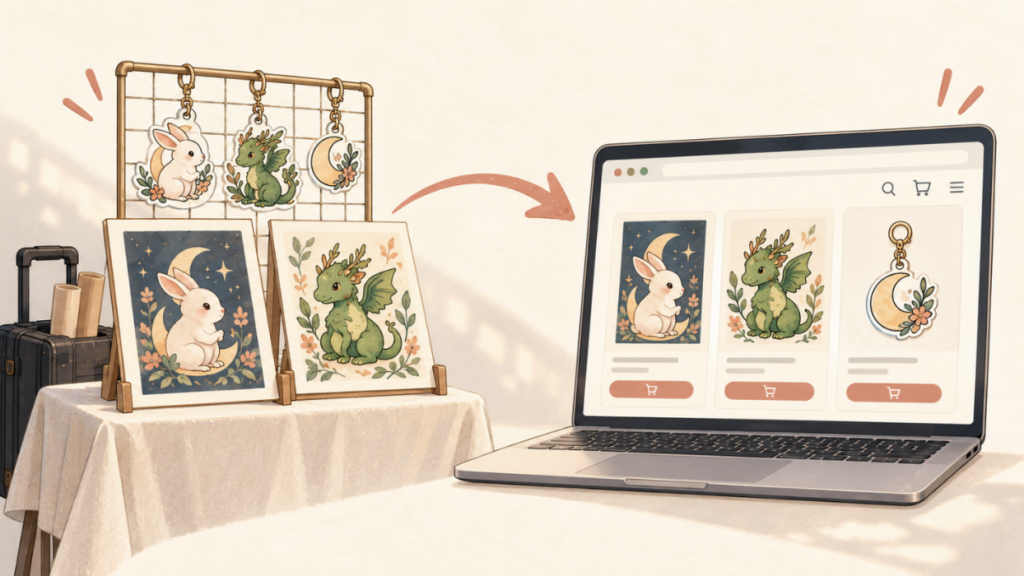
The display comes down, the last print goes into its sleeve, and your feet are begging for a break. Artist alley might be over. But what about the visitor who photographed your table, promised to return, then got swallowed by the autograph queue?
Your online store gives that unfinished conversation somewhere to go. The trick is making the jump from “I loved your booth!” to “Found it!” as easy as possible.
Give Your Convention Table an Online Address
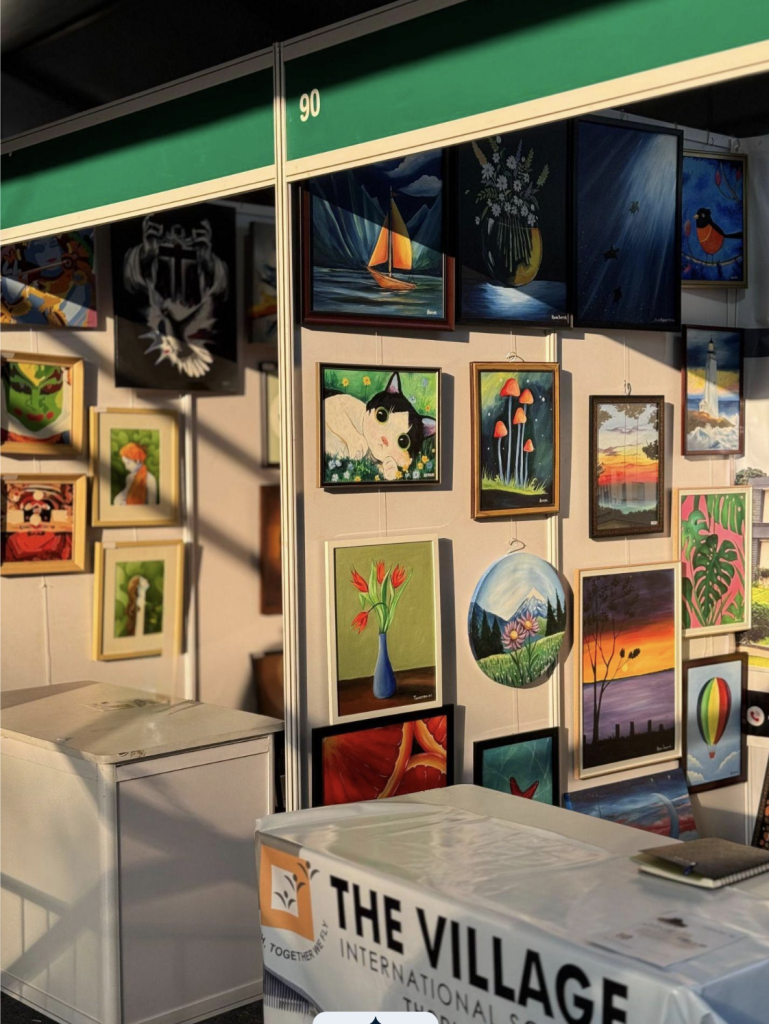
Start with a destination that looks familiar. Use the same artist name, avatar, colors, and character artwork people saw at your table. A visitor should recognize your shop before reading your bio.
If you want to sell without packing each order yourself, artiststore provides storefront setup and print-on-demand fulfillment, including production, packaging, and shipping. That gives you a way to offer your merchandise without buying stock for those orders upfront.
Already holding leftover convention stock? Keep a clear distinction between items you ship yourself and products made after purchase. Customers need to know which they are ordering, especially when buying gifts.
Help Convention Visitors Find Their Favorites
Remember that shopper who snapped a photo of your display? Make it easy for them to find the same designs online. Create a clearly named convention collection where your storefront supports it, and feature the products visitors saw at your table.
Link directly to that collection in your social bio and a pinned event recap. For your next convention, add a QR code to your table signage and takeaway cards so shoppers can revisit those designs later. Test the code on your phone before printing.
- Important note: Keep the collection link working after the event. Someone unpacking their convention haul next weekend should still be able to find their favorites.
Let Your Booth Help Choose the Lineup
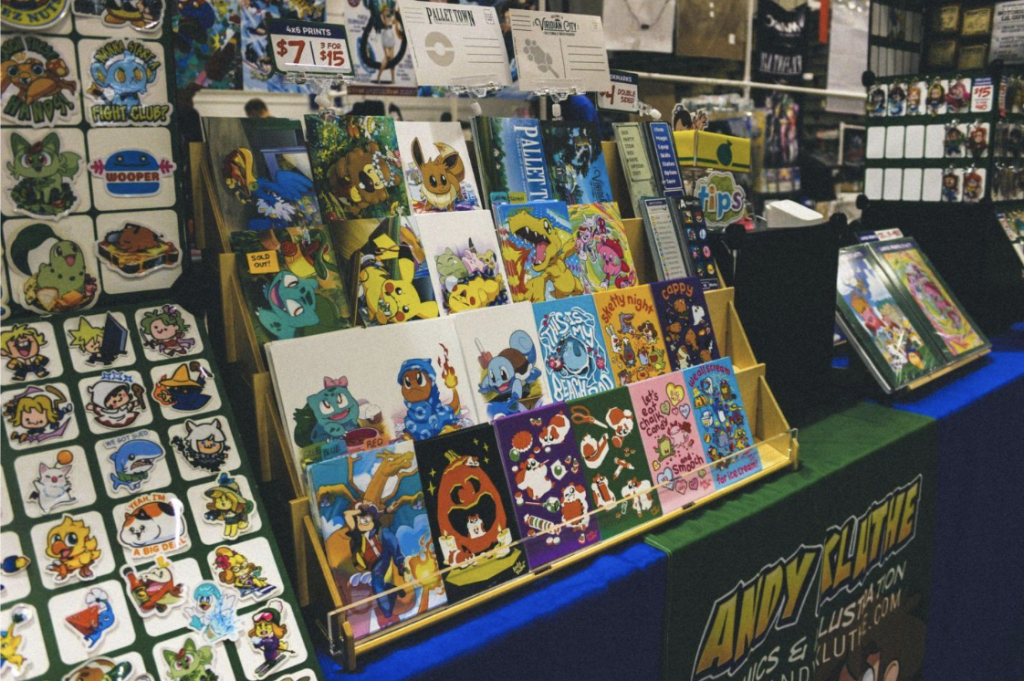
You do not need to upload every sketch you have ever finished. Start with products people bought, asked about, or returned to see.
| What happened at your table | What to try online |
| One character sold out early | Give that character a prominent listing |
| Visitors asked for a different format | Poll them before developing it |
| Shoppers bought two designs together | Show those designs alongside each other |
| A detailed print attracted questions | Add close-ups and explain its details |
Think of the person who loved your sleepy dragon charm but wanted a sticker for their sketchbook—that is a specific idea worth testing. Start with the sticker and see how it sells before expanding the collection.
Make Listings Do the Work You Did in Person
At your booth, shoppers could hold a keychain, compare sizes, and ask whether a print came framed. Online, your listing needs to answer those questions through clear images and key details.
Make sure each listing covers:
- Dimensions and materials: Give actual measurements and confirmed product specifications.
- Design options: Explain which character, color, or variation the buyer is selecting.
- What is included: Clarify quantities, hardware, and whether display props are excluded.
- Dispatch expectations: Distinguish ready-to-ship stock from made-to-order products.
- Delivery information: Explain shipping charges and where customers can find applicable estimates.
Ordering a sample can help you assess the finish and photograph the item yourself. Check each product’s current artwork requirements before uploading; one file may need adjustments for different formats.
Follow Up While the Table Is Still Familiar

Your first post after the convention does not need a dramatic sales pitch. Remind people where they met you, show the display they remember, and point them toward the collection.
“Met my sleepy dragon at the weekend? The little night owl has an online home now.”
Pair that kind of caption with a recognizable product image. Mention genuine restocks or availability changes, but skip invented countdowns. If something was advertised as convention-exclusive, honor that promise; offer a clearly different online edition if appropriate.
For later posts, rotate between a product close-up, the story behind a character, and a practical answer to a shopper’s question. Give people another reason to look each time.
Learn What Happens After the Click
A busy booth does not tell you everything about online buying. Review the store analytics available to you and compare them with your convention notes.
Are visitors reaching the collection but overlooking a popular character? Try a clearer thumbnail or product name. Are people repeatedly asking about delivery? Make that information easier to find.
Check the mobile shopping experience yourself, too. Open your link, select a variation, and review the shipping information. Fix confusing steps before sending more visitors there.
Final Thoughts
Your next sale does not have to wait for your next table. A recognizable store, useful listings, and thoughtful follow-up give convention visitors a way back to the work they liked.
Start with a focused collection and improve it through real questions and purchases. The booth may be packed away, but your next customer should never have to wait for the next convention.
Author

Written by
Recent Posts
How to Pick a Homecoming Dress for Your Body Type and Feel Amazing in It
How to Prepare a Home for Sale When Major Repairs Are Not Affordable
From Everyday Comfort to Personal Style: My SHEIN Slipper Habit
5 Best Mitsubishi Heat Pump Companies in Seattle
Tech Gadgets as Modern Corporate Gifts: Useful Ideas for Employees and Clients
Categories
- Art
- Articles
- Business of Luxury
- Celebrities
- Culture
- Entertainment
- Events
- Faces of Summer 2026
- Fashion
- Fashion & Style
- Featured
- Finance
- Food, Spirits, Wine
- Hamptons
- Hamptons Celebrities
- Health
- Health & Beauty
- Lifestyle
- Luxury Lifestyle
- Press
- Profiles
- Real Estate
- Technology
- The Chronicles
- Travel
- Uncategorized
- Weddings