
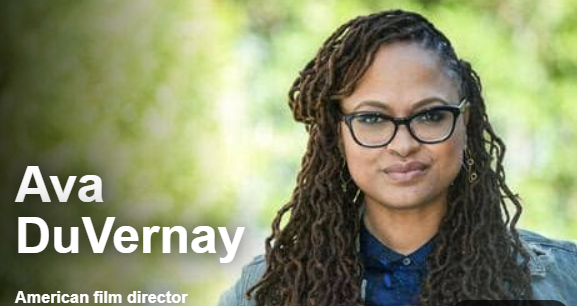
The year was 2008, and Ava DuVernay sat in a Hollywood screening room watching a movie she would never make. She was thirty-five years old, a successful film publicist who had spent fourteen years selling other people’s dreams. The director on screen was white, male, and mediocre. Yet he had something she didn’t: access. That night, driving back to her apartment in Compton, she made a decision. If the industry wouldn’t open the door, she would build her own entrance.
Today, Ava DuVernay’s net worth stands at an estimated $40 million, accumulated through a career that redefined what independent filmmaking could accomplish. She became the first Black woman to direct a film nominated for Best Picture at the Academy Awards. However, her more radical achievement was constructing an entirely parallel system, Array Alliance, that now distributes films Hollywood would never touch. The gate is still guarded. She just doesn’t need it anymore.

The Wound: Compton’s Invisible Daughter
Ava Marie DuVernay was born in Long Beach, California, on August 24, 1972. Her parents divorced when she was young, and her mother moved the family to Compton, a city that white America knew only through gangsta rap lyrics and evening news shootings. The reality was more complicated. Compton was working-class Black families raising children, neighborhood churches holding communities together, and ambitions that grew despite every statistic suggesting they shouldn’t.
The Education of an Outsider
Her mother and stepfather sacrificed to send Ava to predominantly white schools outside the neighborhood. Consequently, she grew up code-switching between two worlds. In Compton, she was the girl who talked “white” and read too many books. At school in Westchester, she was the Black girl from the dangerous neighborhood. Neither place felt like home.
UCLA accepted her, and she studied African American studies and English literature. The education gave her frameworks for understanding systemic exclusion. She learned how narratives shape perception, how media constructs reality, and how the people controlling images control everything else. Meanwhile, she watched Hollywood ignore stories like hers while celebrating the same white perspectives recycled endlessly.
The Marketing Years
After graduation, she couldn’t break into directing. The industry’s gatekeepers weren’t interested in a Black woman from Compton with ideas. Instead, she built a successful publicity firm, DVA Media + Marketing, representing films like Collateral, Dreamgirls, and Invictus. For fourteen years, she marketed movies she wished she could make, learning every mechanism of the industry that excluded her.
Those years weren’t wasted. She watched how distribution deals got made, studied which films reached audiences and why, and observed the invisible currents of power that determined whose stories got told. Subsequently, when she finally made her move, she knew exactly which systems to circumvent.
The Chip: The Publicist’s Revenge
In 2008, at thirty-five, Ava DuVernay directed her first feature film. This Is the Life was a documentary about the Los Angeles hip-hop scene of the 1990s, specifically the Good Life Cafe open mic nights that launched artists like Common and The Pharcyde. She funded it herself, distributed it herself, and controlled everything.
Building AFFRM
The experience revealed something crucial: traditional distribution ignored films by and about people of color. Theater chains wouldn’t book them. Studios wouldn’t market them. The pipeline that connected filmmakers to audiences had been designed to exclude certain perspectives. Rather than beg for inclusion, she decided to build an alternative.
In 2010, she founded the African-American Film Festival Releasing Movement (AFFRM), later renamed Array Alliance. The organization would distribute independent films by people of color and women, handling theatrical releases, digital distribution, and marketing. The first film Array released was her own Middle of Nowhere in 2012. It won her the Best Director award at Sundance, making her the first Black woman to receive that honor.
From Sundance to Selma
Middle of Nowhere caught Hollywood’s attention. Suddenly, the publicist from Compton had a Sundance prize and critical respect. When Brad Pitt’s Plan B Entertainment needed a director for Selma, a film about Martin Luther King Jr. and the 1965 voting rights marches, Ava’s name surfaced. She took a studio film and made it feel like an act of witness.
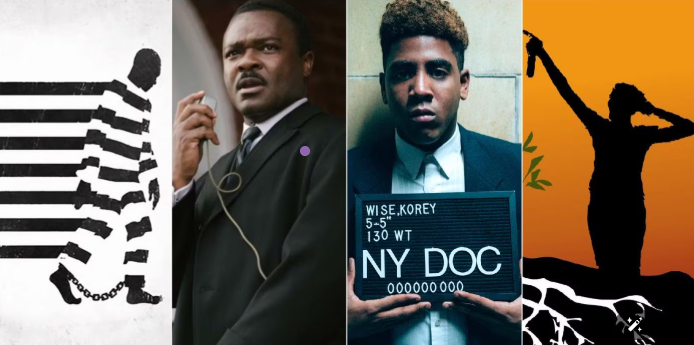
Selma grossed $67 million worldwide against a $20 million budget. The Academy nominated it for Best Picture, making Ava the first Black female director to have a film considered for the industry’s top honor. However, she was controversially snubbed for Best Director. The oversight confirmed what she already knew: the system would never fully welcome her. She kept building her own.
The Rise: $40 Million From Distribution Disruption
The years following Selma established Ava DuVernay as both a commercial filmmaker and an institutional force. A Wrinkle in Time in 2018 made her the first Black woman to direct a live-action film with a budget over $100 million. The film underperformed at the box office, but the significance remained. Disney had trusted $100 million to someone Hollywood had ignored for decades.
The Netflix Empire
Netflix became her most important partner. 13th, her 2016 documentary about mass incarceration, earned an Oscar nomination and became required viewing in high schools across America. When They See Us, her 2019 miniseries about the Central Park Five, won multiple Emmy Awards and prompted renewed attention to wrongful convictions. Each project expanded her audience while deepening her critique of American injustice.
Financial details of Netflix deals remain private, but industry analysts estimate that her overall deal represents significant eight-figure compensation. Combined with Array’s growing distribution revenue and her production company Forward Movement’s development slate, the accumulation toward $40 million becomes clear.
Array Alliance: The Parallel System
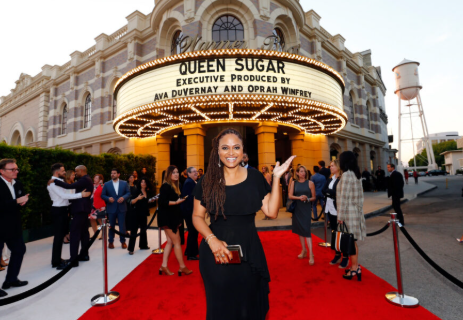
Meanwhile, Array Alliance continued expanding. The organization now operates Array Releasing, which has distributed films like Lingua Franca and I Will Make You Mine. It runs Array Creative Campus, a 20,000-square-foot facility in Los Angeles providing production resources to independent filmmakers. The Array 101 workshop trains emerging creators in the business of filmmaking.
The empire isn’t just about Ava DuVernay’s wealth. It’s about constructing infrastructure that will outlast her career. Every Array release proves that audiences exist for stories Hollywood ignores. Every workshop graduate enters the industry with knowledge the establishment traditionally hoards. The publicist who couldn’t get a meeting now runs a machine that makes meetings irrelevant.
The Tell: Still the Outsider
Despite the awards, the Netflix deals, and the Disney budget, Ava DuVernay maintains the posture of an outsider fighting for access. Her social media presence consistently advocates for underrepresented filmmakers. She uses her platform to amplify voices that lack her reach. The chip that drove her from publicity to directing hasn’t disappeared. It’s just pointed outward now.
The Compton Foundation
Her philanthropy focuses on the city that shaped her. She has donated to Compton schools, sponsored community programs, and consistently referenced her hometown in interviews. The girl who grew up code-switching between worlds hasn’t forgotten where she started. Indeed, her success seems to sharpen her memory rather than soften it.
“I’m always going to be from Compton,” she told interviewers. The statement functions as both fact and philosophy. Wherever her career takes her, whatever fortune she accumulates, the perspective formed in those streets remains her foundation. The $40 million net worth is a tool for building systems, not a destination for personal comfort.
The Array Connection: Geography of Independence
The Array Creative Campus sits in the Historic Filipinotown neighborhood of Los Angeles, a deliberate choice. The area isn’t Beverly Hills or Santa Monica. It’s a diverse, working-class community that reflects the filmmakers Array aims to support. The 20,000-square-foot complex includes screening rooms, editing bays, and production offices available to independent creators.
The Business Model of Liberation
Array’s distribution model bypasses traditional theatrical release patterns. Films go directly to audiences through targeted marketing and strategic digital release. The approach doesn’t compete with Marvel tentpoles. Instead, it serves the underserved, finding audiences that traditional distributors write off as unmarketable.
At $40 million, Ava DuVernay could retire to a comfortable life. Instead, she keeps expanding Array, developing new projects, and mentoring filmmakers who look like the younger version of herself. The wealth enables independence. Independence enables institution-building. The publicist from Compton is constructing a legacy that will distribute films long after she’s gone.
The Paradox of the Gate Burner
Ava DuVernay spent fourteen years selling Hollywood’s products before realizing Hollywood would never sell hers. The wound of exclusion became the fuel for revolution. She didn’t beg for entry. She built a parallel system that renders traditional gatekeeping irrelevant.
Her net worth in 2025 reflects both commercial success and strategic vision. The Netflix deals pay well. The Disney budgets establish credibility. Yet Array Alliance represents something more valuable than personal wealth: proof that infrastructure can be built outside traditional power structures.
The woman who couldn’t get a meeting now takes meetings with whoever she wants. The filmmaker Hollywood ignored now defines what independent cinema can accomplish. At fifty-two, Ava DuVernay has $40 million, an Oscar nomination, and an organization distributing the kinds of films she wished existed when she was watching mediocre white directors get opportunities she deserved. The gate still exists. She just doesn’t need to use it.
Related Articles
- Spike Lee Net Worth 2025: The Fort Greene Boy Who Bought the Block
- Jordan Peele Net Worth 2025: From Key & Peele Sketches to Horror Empire
- Greta Gerwig Net Worth 2025: Sacramento Girl to Billion-Dollar Director
For features, partnerships, and advertising inquiries, visit sociallifemagazine.com/contact. Experience luxury lifestyle events at polohamptons.com. Subscribe to our print edition or support independent journalism with a $5 donation.
Author

Written by
Recent Posts
The Skincare Habits That Make a Real Difference Over Time
Hamptons-Ready Beauty: Polished Makeup for Long Summer Days
Is Now a Good Time to Sell a Home in NJ?

The Hidden Work Behind a Seamless Hotel Weekend
Choosing Scratching Furniture for a British Shorthair
Categories
- Art
- Articles
- Business of Luxury
- Celebrities
- Culture
- Entertainment
- Events
- Faces of Summer 2026
- Fashion
- Fashion & Style
- Featured
- Finance
- Food, Spirits, Wine
- Hamptons
- Hamptons Celebrities
- Health
- Health & Beauty
- Lifestyle
- Luxury Lifestyle
- Press
- Profiles
- Real Estate
- Technology
- The Chronicles
- Travel
- Uncategorized
- Weddings