
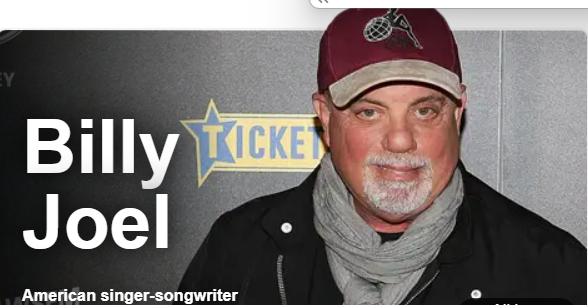
Billy Joel Hamptons: The Real Estate Strategy Nobody Is Talking About
As a teenager, Billy Joel used to dredge oysters in Oyster Bay Harbor for cash. He would look across the water from his boat and see the Gold Coast mansions — the brick ones, the ones with private beaches and hedgerows and helipads — and understand, with the specific clarity of someone who has nothing, exactly what he was looking at. Years later, he bought one of those mansions. He named it MiddleSea, after the first piano note he ever learned, and spent two decades turning it into a 26-acre compound worth $49 million. The kid on the oyster boat cursed the rich. The man who replaced him became them.
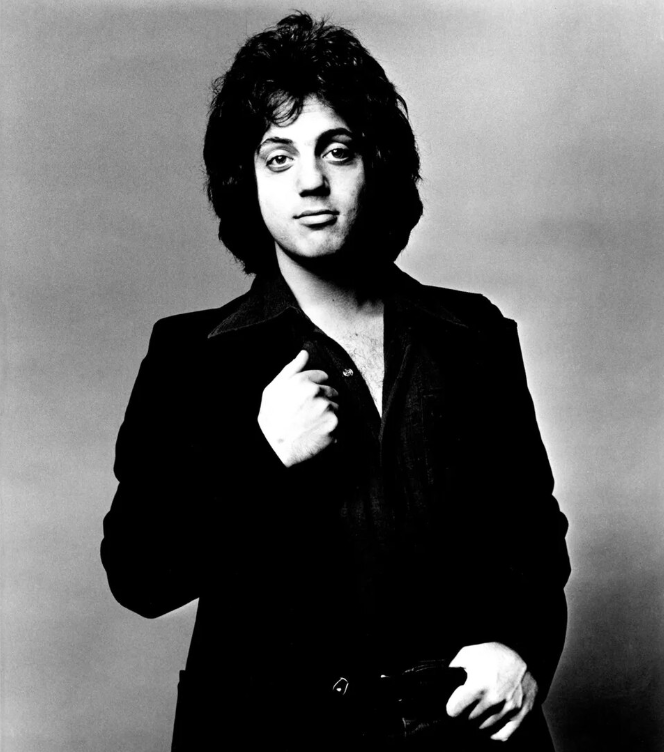
That origin is the key to understanding the Billy Joel Hamptons real estate story — not just what he owns, but why he owns it in the specific configurations he does, and what it tells you about how old-money thinking actually works compared to celebrity-money thinking.
For the complete picture of how Joel built his $250 million fortune, see our deep dive on Billy Joel’s net worth. This piece is about something more specific: the Hamptons and Long Island as a financial system — and why Joel has been playing it better than almost any musician alive.
What Billy Joel Actually Owns on the East End
The portfolio has three distinct layers, assembled across two decades. Each one tells a different part of the same story.
| Property | Location | Acquired | Purchase Price | Status (2025) |
|---|---|---|---|---|
| Further Lane Estate | Amagansett (East Hampton) | Early 1990s | Undisclosed | Sold to Seinfeld 2000 — $32M record |
| Bay Street Home | Sag Harbor Village | 2002 | $1.85M | Active — never listed |
| MiddleSea Estate | Centre Island, Oyster Bay | 2002 | $22.5M | Partially sold 2025 ($8.5M parcel); remainder listed $39.9M |
| East Hampton Horse Farm | Wainscott, East Hampton | 2023 | $10.7M | Active — family residence |
The Sag Harbor home anchors the cluster. Joel bought the Bay Street property — two historic structures dating to the 1700s, formerly a working bait shop — for $1.85 million in 2002, a number conspicuously modest for a musician with his catalog and his timing. He spent years navigating local architectural boards to renovate and connect the buildings. The result is a four-bedroom home with an elevator and a piano room on the ground floor. Buoys hang off the side. His neighbors include fishermen, not film producers, and that is not an accident.
In the same year, he closed on MiddleSea at Centre Island — the 26-acre waterfront fortress that would become both his most visible asset and his most complicated management project. Two significant Hamptons purchases in a single calendar year, at opposite ends of the status spectrum. One trophy. One anchor. Joel understood from the beginning that these were different instruments.
The East Hampton horse farm arrived two decades later. Purchased in late 2023 for $10.7 million on Wainscott Stone Road, five acres with a fully irrigated Grand Prix dressage field, a sand ring, stables, and a lily pond. His neighbors in that particular zip code include Beyoncé, Jay-Z, Alec Baldwin, and Gwyneth Paltrow. Joel didn’t buy into their world — they all happened to buy into his.
The Alexis Factor: Why the Horse Farm Is Not What It Looks Like
Most coverage of the East Hampton acquisition treats it as a celebrity upgrade — the Piano Man adding acreage to an already formidable portfolio. That reading misses what is actually happening.
Before she met Joel at a Huntington restaurant in 2009, Alexis Roderick was a senior risk manager at Morgan Stanley Smith Barney in Garden City, covering wealth management clients. She had a Stony Brook degree in political science, economics, and Latin American studies. Plus she knew how to read a balance sheet. She also started riding horses at age six and has competed seriously ever since — including at the Hampton Classic Horse Show, returning to competition just weeks after giving birth to their first daughter in 2015. She is a certified member of the United States Equestrian Federation. Their daughters Della Rose and Remy Anne are already following her into the sport.
The East Hampton property was not a celebrity purchase. It was infrastructure built for a family whose actual daily life involves horses. The Grand Prix dressage field is regulation size with irrigation because Alexis trains and competes at that level. The 12-stall barn with groom quarters and a tack room is not decorative — it is functional at a serious competition standard. A source at the time of purchase told the New York Post directly: “He just wants to keep making his wife happy. This purchase was all about her.”
When a man worth $250 million builds Grand Prix equestrian infrastructure on five East Hampton acres, he is not signaling wealth. He is building a life his children will grow up in and eventually inherit. That distinction — between signaling and building — is precisely the gap between celebrity money and generational money. Joel crossed that gap somewhere around his fourth marriage and his first daughter. The horse farm is the physical evidence.
The Seinfeld Trade: What Everyone Gets Wrong
In 2000, Joel sold his oceanfront estate on Further Lane in Amagansett to Jerry Seinfeld for $32 million — a record Hamptons price at the time. Every coverage of this transaction frames it as Joel cashing out brilliantly at the peak. The more interesting story starts the morning after the sale closed.
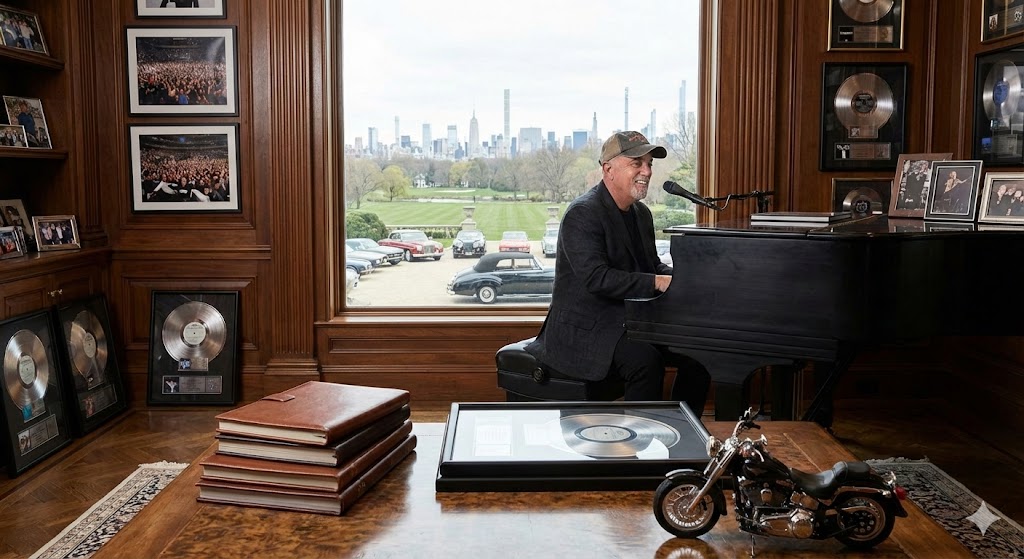
He did not reinvest the $32 million into a comparable oceanfront statement property. That is what celebrities do — they trade one trophy for a bigger one. Instead, Joel took the capital and split it between the Sag Harbor bait shop at $1.85 million and the MiddleSea compound at $22.5 million. One village asset with zero status baggage. One waterfront fortress positioned on the North Shore, away from the Southampton-East Hampton celebrity circuit entirely. Neither one the obvious move for a man who had just set a sales record.
As documented in our celebrity Hamptons home sales history, Seinfeld went on to add a private baseball diamond to the Further Lane estate. Joel went on to build a real estate system spanning three markets and four decades. The difference between a trophy and a strategy is visible only in the decades that follow the transaction.
Worth noting: Joel’s appetite for building durable assets rather than liquid ones was sharpened by a hard lesson. In the late 1980s, he discovered his former manager Frank Weber had stolen approximately $30 million from him over the course of their working relationship — a figure that represented a substantial portion of everything Joel had earned to that point. The subsequent litigation took years. The lesson was visceral and permanent: paper wealth and trusted relationships can disappear simultaneously. After Weber, physical assets — real estate, catalog ownership, things with deeds and titles — became the foundation of how Joel stored value. The Sag Harbor bait shop makes a different kind of sense once you know that backstory.
MiddleSea: The Estate That Explains the Whole System
MiddleSea is not simply Billy Joel’s most expensive property. It is the clearest window into how he thinks about long-term asset management.
The name is a pun. Middle C is the first note piano students learn. The estate sits between Oyster Bay Harbor and Cold Spring Harbor on Centre Island — literally in the middle of the sea. Joel says he named it the night he bought it. The detail is either sentimental or strategic. With Joel, it is reliably both.
The compound assembled across 26 acres with 2,000 feet of private shoreline. The main house runs 20,000 square feet — five bedrooms, 11 baths, 30-foot ceilings, elevator access throughout, hardwood and marble floors, nautical-inspired detail work throughout. Secondary structures include a Malibu-style beach house, a guesthouse with a two-lane bowling alley, a five-bedroom gatehouse, and a helipad. Property taxes exceed $567,000 per year. Joel has joked publicly that “nobody” will want to buy it. He is not entirely wrong, and he knows it precisely.
In March 2025, Joel sold five of the 26 acres — the guesthouse parcel — as a standalone transaction for $8.5 million, then relisted the remainder at $39.9 million. This is not a distressed seller. This is someone who understands that a $49 million ask in a market of ultra-high-net-worth buyers with annual carrying costs above half a million dollars requires patience, creative structuring, and a willingness to unlock partial liquidity without surrendering the core asset. Selling the parcel separately generated $8.5 million in cash while preserving full optionality on the main house. According to Robb Report’s coverage, the compound is accessible by land, sea, and air — helicopter to Manhattan in under 20 minutes, direct boat access to the Hamptons. Joel installed that infrastructure deliberately. The helipad was not vanity. It was a commute solution for a man who needed to be in two places at once.
Why Sag Harbor, Specifically
The Hamptons has geography the way Manhattan has zip codes. Southampton belongs to old-money finance — Meadow Lane, the Meadow Club, established protocols. East Hampton belongs to entertainment — Georgica Pond, Further Lane, Beyoncé and Spielberg as neighbors. Amagansett is for younger wealth that finds both of those things slightly exhausting. Montauk is where people go when they want to forget they have money entirely.
Sag Harbor operates on entirely different logic. The former whaling village attracts writers, artists, and serious creative-industry principals who want community rather than compound — people who measure summers by the quality of the bookstore and the Saturday farmers market, not by whose hedgerow achieves greater opacity. Christie Brinkley has been a Sag Harbor fixture for years. Julie Andrews is considered a local. Richard Gere owns property nearby. The village pulls people who are done performing.
For buyers considering the East End, this geography matters for reasons that go well beyond aesthetics. As we’ve covered in our overview of celebrities who live in the Hamptons, Sag Harbor real estate has historically shown greater resilience than purely seasonal markets because it maintains genuine year-round demand. The village draws people who want to live there. That distinction between a life and a summer plays out directly in values during corrections: seasonal markets soften, Sag Harbor holds. Joel bought in 2002, held through 2008, held through COVID, has never once listed the Bay Street property. It is the position in his portfolio that requires the least management and generates the most certainty. That is what a financial risk manager’s wife probably helped him understand — and Alexis, before she chose horses full-time, spent eight years in exactly that role at Morgan Stanley.
Sag Harbor ownership also communicates something specific in the social grammar of the East End. East Hampton signals entertainment money. Southampton signals finance. Sag Harbor signals that you have enough that you no longer need to signal anything. For a certain tier of Hamptons buyer — the European family office principal, the quietly exited founder, the person who wants to be seen by the right people without performing for the wrong ones — Sag Harbor is the correct address. That positioning has compounded value in the village’s real estate for two decades. Joel understood it instinctively, long before it became a recognizable pattern in the market.
The Hidden Game: Real Estate as Downstream Catalog
Here is what the real estate coverage consistently misses about Billy Joel. He has never sold his song catalog. In a market where Bruce Springsteen sold his masters for $500 million and Bob Dylan sold his for $300 million, Joel’s refusal to cash out is either stubbornness or a multigenerational strategy, depending on your time horizon. His catalog generates an estimated eight figures annually from streaming, radio, licensing, and sync deals. It is a perpetual cash machine. The real estate is where that cash eventually lands.
The Hamptons properties are not separate from the music business. They are the music business’s downstream output — the form that catalog value takes when it converts into land. According to Billboard, Joel generated $1.2 billion in gross touring revenue across his career. His MSG residency alone — 104 sold-out shows across ten years — grossed $266.7 million. That capital needed a home. Some became motorcycles. Most became Long Island waterfront. The waterfront appreciates. The motorcycles, eventually, went to auction.
Joel spent the first half of his career trying to get out of Hicksville. He spent the second half building something so deeply rooted in Long Island’s specific geography and social fabric that escape became irrelevant. The kid who dredged oysters and stared at the Gold Coast mansions now owns the Gold Coast, a Sag Harbor village anchor, and a Grand Prix equestrian facility in East Hampton — simultaneously, across a 30-mile stretch of the island where he grew up. That is not celebrity real estate. That is a land strategy. It just happens to belong to the man who wrote Piano Man.
For a broader look at how his approach compares to other Hamptons celebrity homeowners, the celebrity net worth Hamptons edition maps the full landscape of who owns what and why it matters.
What It Looks Like From the Marina
This summer, if you are walking Bay Street in Sag Harbor on a Tuesday morning, you might see a man in his mid-seventies getting coffee near the docks. Slightly stocky, watching the boats. Not performing for anyone. The tourists don’t always recognize him without the piano. He is just a guy who has lived here for twenty years, whose daughters ride horses a few miles east, whose wife turned down a Wall Street career to build something with him on Long Island.
The bait shop on Bay Street is still standing. The buoys still hang off the side. The man who bought it doesn’t need anyone to know it’s his. That’s how it works when you finally understand what the game is actually for.
Go Deeper on Billy Joel and Hamptons Real Estate
The full financial story: Billy Joel Net Worth — How a Kid From Hicksville Built $250 Million
Feature your Hamptons property or brand: Contact Social Life Magazine — we connect luxury properties with the audiences that close.
The East End’s premier sporting event: Polo Hamptons — sponsorships, VIP access, and brand activations where the Hamptons actually convenes.
Get the Hamptons insider list: Subscribe to Social Life Magazine — 23 years of the East End, delivered to your door.
Support independent Hamptons journalism: Donate $5
Related Reading
- Billy Joel Net Worth: Inside the $250M Piano Man Fortune
- Celebrity Hamptons Homes: Who Bought What and What They Paid
Author

Written by
Recent Posts
Behind the Scenes of Weddings Involving Long-Distance Relationships
Why Karaoke Is the Ultimate Entertainment Choice for a Hen Party
Easy Recipes That Feed A Crowd Without The Stress
The Influence Of Social Media On Interior Style Trends
Where Can You Find the Best Made-to-Measure Bespoke Suits in NYC
Categories
- Art
- Articles
- Beauty & Skincare
- Celebrities
- Celebrities|Movies
- Celebrities|The Chronicles
- Chronicles
- Entertainment|Culture
- Event Photos
- Events
- Fashion
- Fashion & Style
- Featured
- Food & Beverage
- Food, Spirits, Wine
- Hamptons
- Hamptons Celebrities
- Hamptons Celebrities|Celebrities|The Chronicles
- Health
- Health & Beauty
- Lifestyle
- Luxury Lifestyle
- Movies|Culture
- Movies|Hamptons Lifestyle
- Press
- Profiles
- Real Estate
- Technology
- The Chronicles
- Travel
- Uncategorized
- Weddings