
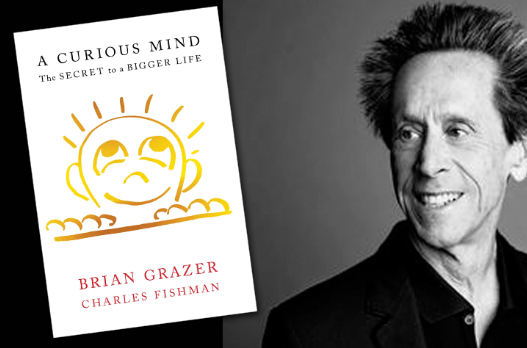
The window was open in his Santa Monica apartment. Brian Grazer, recently graduated from USC with a psychology degree and no clear path forward, overheard three law school graduates bragging about the easiest jobs they’d ever had. One mentioned Warner Brothers. Legal department. Cushy work. Company car. And he’d just quit.
Grazer closed his curtains, opened the window wider, and listened. Then he picked up the phone, called information for Warner Brothers’ number, and talked his way into a job interview that same day. He was hired before sunset. It was the most important eavesdrop in Hollywood history.
The Wound: The Boy Who Couldn’t Read
Brian Thomas Grazer was born July 12, 1951, in Los Angeles to Arlene Becker Grazer and Thomas Grazer, a criminal defense attorney. His father was Catholic, his mother Jewish. They raised him in the San Fernando Valley—Sherman Oaks and Northridge—the unremarkable suburban sprawl that produced a generation of Hollywood strivers.
His parents divorced when he was in high school. The stability he’d known fractured. His closest relationship became his grandmother Sonia, a four-foot-ten woman who told him he was special when nothing else suggested it was true.
The Dyslexia Diagnosis
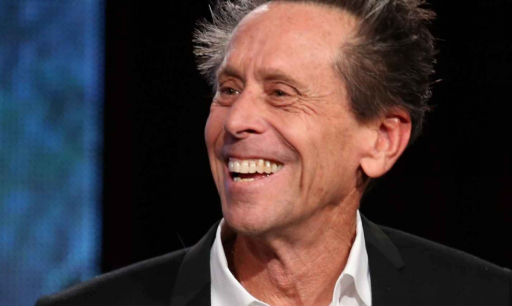
Grazer struggled with dyslexia before anyone knew what to call it. Reading was torture. His report cards showed straight D’s and F’s. He looked at those grades and thought: there’s no evidence I’m going to be that special kid my grandmother thinks I’m going to be.
He couldn’t break her heart by saying so. Instead, he developed workarounds. He read other students’ papers to understand assignments. He argued his grades with teachers, turning each class into a negotiation rather than a test.
The Football Humiliation
He was decent at sports until his friends grew and he didn’t. The day he got cut from junior varsity football in front of the whole team left a searing scar. Years later, that humiliation would fuel the klutzy character in Parenthood and his obsession with making Friday Night Lights.
He found the swim team because it got him out of first period. At his first citywide meet, stuck in the slow outside lane, he discovered that showing up matters more than natural talent. He won a scholarship to USC.
The Chip: The Curiosity Weapon
At USC, Grazer finally figured out how to study. More importantly, he discovered his gift for seeing the big picture in any class and his talent for arguing his way to better grades. A speech professor suggested he drop out of college and attend vocational school. Grazer would call that professor years later, after winning an Oscar, just to remind him.
He attended law school for one year before the eavesdrop changed everything. The law clerk job at Warner Brothers paid him to deliver papers around the studio. Anyone else would have dropped documents with secretaries and left. Grazer insisted on handing papers directly to recipients—and then asking questions.
The Warren Beatty Breakthrough
His standard speech went like this: Hi, my name is Brian Grazer. I work at Warner Brothers Legal Affairs. This is not associated with studio business. I’d love to meet your boss for five minutes. After five minutes I will leave and I won’t make any requests. I will not ask for a job.
Every person said yes. He talked his way past Warren Beatty’s assistants and turned a paper delivery into an hour-long conversation on the couch. He met Barbra Streisand. The author of The Exorcist. Mama Cass. Each encounter taught him something about how Hollywood actually worked.
The Rise: Building Imagine
Warner Brothers eventually realized their mail clerk had turned paper delivery into a personal Hollywood education. He got fired. It didn’t matter. He’d learned enough to produce television pilots at Paramount, where he met Ron Howard—the Happy Days star who wanted to direct.
Their first collaboration was Night Shift in 1982. Then came Splash in 1984, which Grazer co-wrote and produced. The mermaid comedy earned him an Oscar nomination for Best Original Screenplay and launched Tom Hanks’ movie career. It also invented the name “Madison” as a popular choice for baby girls.
The Imagine Era
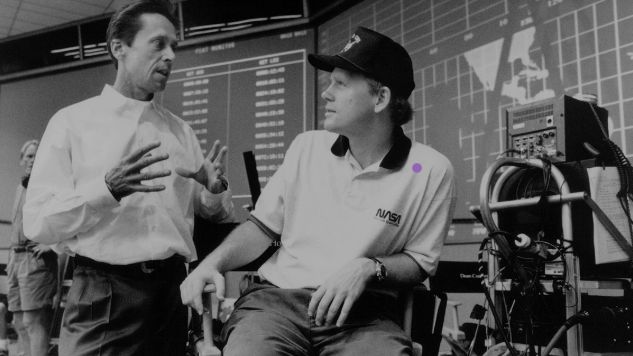
In 1986, Grazer and Howard founded Imagine Entertainment. The partnership has endured for nearly four decades, producing films nominated for 43 Academy Awards and 217 Emmys, grossing over $15 billion worldwide. Apollo 13. A Beautiful Mind. 8 Mile. Frost/Nixon. American Gangster. The Da Vinci Code.
They won Best Picture for A Beautiful Mind in 2002, a film about mathematician John Nash whose brilliant mind was derailed by schizophrenia. Grazer saw himself in Nash—the outsider whose brain worked differently, who had to find his own path to recognition.
The Television Kingdom
Imagine’s television output rivals its film success: 24, Arrested Development, Friday Night Lights, Parenthood, Empire. Each show carries Grazer’s trademark interest in characters overcoming obstacles, leveraging limitations into success.
He published A Curious Mind: The Secret to a Bigger Life in 2015, codifying his approach to curiosity conversations. The New York Times bestseller explained how asking questions and genuinely listening had powered his rise from dyslexic kid to Oscar-winning producer.
The Tell: The Spiky Hair and the Questions
Grazer’s trademark gel-spiked hair has remained unchanged for decades, framing a face that betrays his permanently inquisitive nature and famously short attention span. He admits his brain fires like a popcorn popper. He is openly insecure about needing attention.
At any given time, he juggles at least ten different movies and shows in various stages of production. His days are over-scheduled, hectic, sometimes exasperating for others—but always fun. He still conducts curiosity conversations weekly, meeting people from every field imaginable.
The Location Connection: From Valley to Ocean
Grazer lives in Santa Monica now, worlds away from the San Fernando Valley tract homes of his childhood. He owns property in Hawaii on Sunset Beach, on the Banzai Pipeline on Oahu’s North Shore. His Malibu home overlooks the Pacific.
The $400 million net worth represents something his four-foot-ten grandmother predicted: he became that special person, against all evidence. He overcame reading problems, survived a bumpy academic career, and turned curiosity into the quality that distinguishes him in Hollywood.
The Grandmother’s Prophecy
Grandma Sonia told him curiosity would be his power. She answered his childhood questions comprehensively when other adults would have dismissed them. She gave him confidence to keep asking questions throughout his entire life.
Every movie Grazer makes has a common theme: developing character, discovering flaws and strengths, overcoming emotional injuries to become a full person. It sounds like autobiography. The kid who couldn’t read report cards wrote scripts. The boy cut from football built an empire. The eavesdropper became the conversation.
Related Articles
- The Producers’ Table Net Worth 2025: Inside Hollywood’s $950 Million Power Players
- Jason Blum Net Worth 2025: The Horror King Who Sleeps Beneath the Warhols
- Kathleen Kennedy Net Worth 2025: The Most Powerful Woman in Film
Connect With Social Life Magazine
For features, advertising, and partnership inquiries: sociallifemagazine.com/contact
Polo Hamptons tickets and sponsorships: polohamptons.com
Subscribe to our email newsletter for exclusive content. Order a print subscription and support independent journalism.
Author

Written by
Recent Posts
Best Folding Tables for Community Halls and Function Centres

From the Hamptons to Mykonos for a September Encore
Is Business Class Worth It on a Short-Haul Flight?
Failure to Disclose Finances in Divorce
Columbus Car Accident Attorney: Protecting Your Rights After a Georgia Crash
Categories
- Art
- Articles
- Business of Luxury
- Celebrities
- Culture
- Entertainment
- Events
- Faces of Summer 2026
- Fashion
- Fashion & Style
- Featured
- Finance
- Food, Spirits, Wine
- Hamptons
- Hamptons Celebrities
- Health
- Health & Beauty
- Lifestyle
- Luxury Lifestyle
- Press
- Profiles
- Real Estate
- Technology
- The Chronicles
- Travel
- Uncategorized
- Weddings