

The word stuck in her throat like a stone.
Eight-year-old Carly Simon stood in the rehearsal hall for a neighborhood production of Little Women, watching her older sisters glide through their lines. When her turn came, the consonants simply wouldn’t release. Her jaw locked. Her face flushed. The stammer that would haunt her childhood had announced its arrival, and her sisters showed zero sympathy.
What nobody in that room understood: the girl who couldn’t speak would become one of the most eloquent voices of her generation.
The Wound: Publishing Royalty, Personal Silence
Carly Elisabeth Simon was born on June 25, 1943, into a family where words were literally the business. Her father, Richard L. Simon, had co-founded Simon & Schuster, the publishing giant whose name appeared on book spines across America. Consequently, George Gershwin played piano at their dinner parties. Albert Einstein stopped by for lunch. Jackie Robinson played second base at backyard softball games at their Stamford estate, while Pete Seeger taught music at her kindergarten.
It sounds like a fairy tale. In many ways, it was a nightmare.
Young Carly discovered her father’s professional importance by accident—spotting “Simon & Schuster” on library books and initially assuming it was a bookshop he owned. According to McKinsey’s research on creative dynasties, children born into prominent families often struggle with identity formation separate from parental achievement. For Carly, the struggle manifested physically.
At seven, a teenage family friend sexually abused her. She kept the trauma secret for decades. Then came the stutter at eight—a psychiatric condition that no amount of therapy could cure. Furthermore, she developed dyslexia. Meanwhile, her mother conducted an affair with the young man hired to help care for her younger brother. Her father, edged out of his own company by supposed friends, retreated into depression and classical piano, his health ravaged by arteriosclerosis.
The house that hosted Benny Goodman and the Gershwin brothers became a place of hidden pain. And Carly, the youngest daughter who never felt as pretty or beloved as her older sisters Joey and Lucy, was trapped inside a body that wouldn’t let her speak.
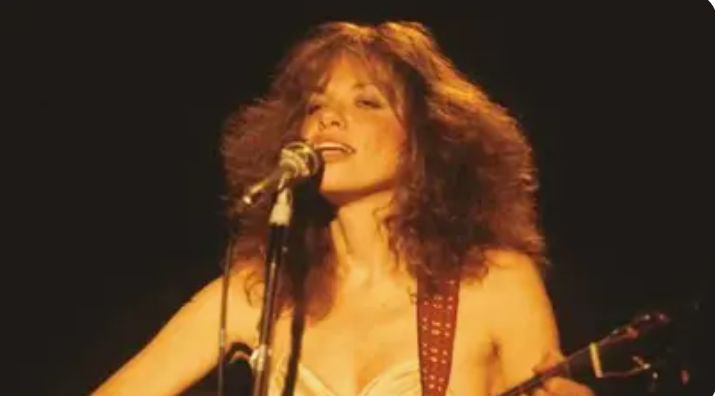
The Chip: Singing What She Couldn’t Say
Her mother made the suggestion that changed everything: if you can’t say it, try singing it.
“I felt so strangulated talking that I did the natural thing, which is to write songs,” Simon later explained, “because I could sing without stammering, as all stammerers can.”
This neurological quirk—that stutterers can often sing flawlessly—became her escape hatch. According to Bain & Company’s research on creativity under constraint, limitations often force innovative solutions. Carly’s stammer didn’t just redirect her toward music; it shaped her writing style. Because she needed five substitute words ready at any moment during conversation, her vocabulary expanded exponentially. The constraint became craft.
By her teens, Carly and sister Lucy had formed the Simon Sisters, securing a contract with Kapp Records in 1963. Their single “Winkin’, Blinkin’ and Nod” became a minor hit. However, when Lucy left to get married, Carly faced the prospect of performing solo—terrifying for someone whose stage fright traced back to that frozen moment in the Little Women rehearsal.
She pushed through anyway. The girl who couldn’t order food in restaurants without assistance would learn to command concert halls. Yet the fear never fully disappeared. Throughout her career, she battled crippling performance anxiety that sometimes required sedation before shows. Nonetheless, she kept stepping onstage.
The Rise: From “Anticipation” to $80 Million
Elektra Records signed her as a solo artist in 1970. Her self-titled debut album arrived in March 1971, featuring “That’s the Way I’ve Always Heard It Should Be”—a meditation on marital disillusionment that reached the Top 10 and earned her the Grammy for Best New Artist. At twenty-seven, the stuttering girl from Riverdale had found her voice.
The second album came just eight months later. “Anticipation” was written in fifteen minutes while waiting for Cat Stevens to pick her up for a date. The title track became a hit and, more lucratively, the soundtrack to a Heinz ketchup commercial that would play for decades.
Then came 1972 and the song that defined her career.
“You’re So Vain” exploded to #1, selling over a million copies and sparking a mystery that has generated headlines for fifty years: who was it about? Simon revealed that the second verse references Warren Beatty, while playfully hinting that other verses describe different men. She once auctioned off the complete answer for charity, with the winner sworn to secrecy. This masterful narrative control ensured the song never stopped being discussed—and never stopped earning royalties.
Carly Simon’s net worth in 2025 stands at approximately $80 million. The fortune flows from multiple streams:
- Publishing royalties exceeding $1 million annually from catalog staples
- “Nobody Does It Better” (1977 James Bond theme) generating consistent sync licensing
- “Let the River Run” making her the first artist to win Grammy, Oscar, and Golden Globe for a self-written, self-performed song
- Two bestselling memoirs including Boys in the Trees
- Five successful children’s books
- Martha’s Vineyard real estate holdings worth approximately $5-8 million
According to Financial Times analysis of music catalog values, legacy artists from the 1970s are seeing unprecedented returns as streaming platforms introduce their catalogs to new generations. Carly’s songs stream millions of times monthly, converting teenage memories into perpetual income.

The Tell: Stage Fright Never Left
Despite five decades of success, Carly Simon largely stopped performing live in the 1980s. The stage fright that began in that Little Women rehearsal never fully released its grip. She has spoken openly about needing sedatives before concerts, about the terror that would grip her before walking onstage.
“My nervous system is on the outside,” her daughter Sally once observed—a description that captures both Carly’s vulnerability and her gift. The same exposed nerve endings that made performing agonizing also made her songwriting devastatingly honest.
In 2022, tragedy compounded when both of her sisters, Joanna and Lucy, died of cancer within a day of each other. Her brother Peter had died of cancer in 2018. She became the sole surviving child of Richard and Andrea Simon—the little girl who stuttered, now carrying the family legacy alone.
“We were each other’s secret shares,” she said in her statement mourning them. The phrase itself reveals her gift: finding exactly the right words for ineffable pain.
The Martha’s Vineyard Sanctuary: Hidden Star Hill
Carly Simon’s 25-acre estate in Tisbury, Massachusetts, tells the story of her life in architecture. It started as James Taylor’s “bachelor hippie shack” when she moved in with him in the early 1970s. After their 1983 divorce, Taylor eventually sold the property back to her. She transformed it into what friends call “Hidden Star Hill”—a labyrinthine compound with eleven decks that has become her year-round home for decades.
“I just love it here,” she has said. “Part of it is because it’s where I came as a child and part of it is serendipity.”
The Vineyard represents something beyond real estate. For someone whose childhood home hosted celebrity chaos while harboring private trauma, the island offers both cultural significance and genuine sanctuary. She can be famous here while being left alone. According to Social Life Magazine’s coverage of celebrity retreats, Martha’s Vineyard attracts artists seeking community without intrusion.
Her property features gardens overflowing with peonies that she’s photographed for a line of silk scarves. The images include lyrics from her songs—turning her private paradise into wearable art. Friends describe dinner parties where she still brings people together, just as her parents once did, but on her own terms.

The Legacy: Words Finally Released
Carly Simon was inducted into the Rock and Roll Hall of Fame in 2022, at age seventy-seven. She did not attend the ceremony—the performance anxiety won that battle. But the recognition confirmed what her catalog already proved: the girl who couldn’t speak had become one of music’s most articulate voices.
Her $80 million fortune matters less than what it represents. A father’s publishing empire had nothing to do with her success; she built this with songs that emerged because speaking was impossible. A stammer that should have silenced her instead forced her toward the one medium where her voice could flow unobstructed.
The sexual abuse, the family dysfunction, the sisters who showed no sympathy when she froze in rehearsal—all of it fed into lyrics that made millions of people feel understood. Her wound became her instrument. Consequently, her silence became her song.
At Hidden Star Hill, surrounded by peonies and decades of memories, Carly Simon has finally found the peace that the stuttering child could never quite grasp. The words come easily now. They’ve been flowing for fifty years, and the world has never stopped listening.
Discover more legendary artists and their stories. Contact our editorial team for features and partnerships. Explore Polo Hamptons for exclusive cultural events. Subscribe to our print edition or support independent arts journalism with a $5 donation.
Related Reading:
Author

Written by
Recent Posts
Red, White & Bordeaux: A Founding Fathers’ Guide to Raising a Glass

Youmetalks Reviews Show Why This Platform Is a Game-Changer for Safety
Creating Behind-the-Scenes Content Without Recording New Footage
The Invisible Essential: How Smart Travelers Stay Connected from the Moment They Land in Japan
The Hamptons Longevity Protocol: How to Stay Sharp Through Late Dinners, Early Tee Times, and Beach Weekends
Categories
- Art
- Articles
- Business of Luxury
- Celebrities
- Entertainment
- Events
- Faces of Summer 2026
- Fashion
- Fashion & Style
- Featured
- Finance
- Food, Spirits, Wine
- Hamptons
- Hamptons Celebrities
- Health
- Health & Beauty
- Lifestyle
- Luxury Lifestyle
- Press
- Profiles
- Real Estate
- Technology
- The Chronicles
- Travel
- Uncategorized
- Weddings