
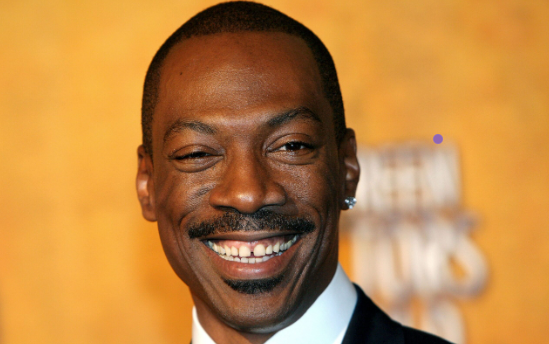
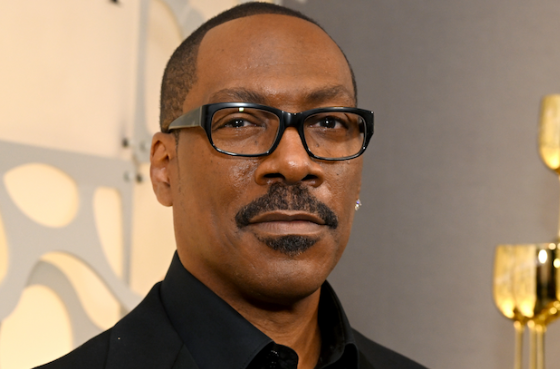
Eddie Murphy was 19 years old when he auditioned for Saturday Night Live. He was 22 when he filmed Delirious. He was 26 when Raw became the highest-grossing stand-up concert film ever made. By the time most comedians are figuring out their second act, Murphy had already built the template that every comedian who came after him was either following or responding to. He did not arrive at the golden age of comedy. He triggered it.
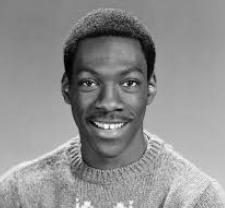
Eddie Murphy’s net worth is estimated at approximately $200 million — accumulated across four decades of stand-up, film, and music that generated a body of work without parallel in the comedy world. The raw financial number is less interesting than what it represents: the commercial validation of a performance style so original and so fully formed at its inception that it looked less like a career in development and more like a natural phenomenon that happened to manifest in a kid from Roosevelt, Long Island.
The Before: Roosevelt, Long Island
Edward Regan Murphy was born April 3, 1961, in Brooklyn, New York, and raised in Roosevelt — a working-class town on Long Island’s South Shore, the same island that produced Jerry Seinfeld, though the two childhoods occupied entirely different circumstances. His father Charles Murphy was a transit police officer and an amateur comedian who performed at local venues. His mother Lillian was a telephone operator. His father was stabbed and killed by a woman he had been dating when Murphy was eight years old.
His mother was hospitalized following a breakdown. Murphy and his brother Charlie were placed in foster care for approximately a year before their mother recovered and reclaimed them. He has described this period without sentimentality — as a fact of his childhood rather than a wound requiring management. The lack of self-pity in his account of these events is consistent with the lack of self-pity in his comedy. Murphy never performed damage. He performed power.
By 15, he was doing impressions at parties and family gatherings. At 17, he was doing stand-up at clubs on Long Island. By 19, he walked into the Saturday Night Live audition as the youngest cast member in the show’s history. As someone who, by every account from the people in the room, was already fully formed.
The Pivot Moment: Constitution Hall, 1983
On August 14, 1983, Eddie Murphy filmed Delirious at Constitution Hall in Washington, D.C., in front of 4,000 people who responded like they were at a rock concert. Nothing before it in stand-up comedy had felt like that. The energy, the physicality, the voices, the characters — Murphy on that stage was operating at a frequency that redefined what stand-up comedy could be as a live event and as a commercial product.
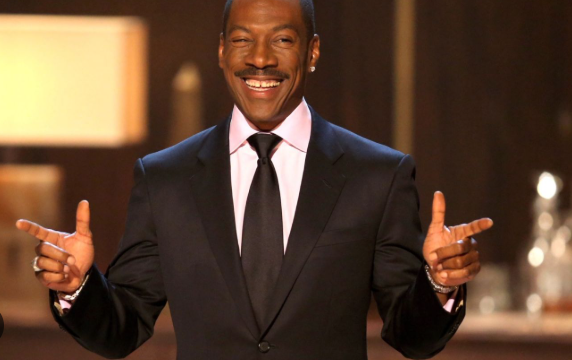
The special aired on HBO and became a cultural landmark. The characters — Aunt Bunny, the drunk party guest, the gay neighbor — were inhabited completely, switched between mid-sentence with a fluency that was technically astonishing. Murphy was not performing jokes. He was performing worlds. The audience did not just laugh. They experienced something that felt more like witnessing than watching.
Raw followed in 1987, filmed at Madison Square Garden. It remains one of the highest-grossing stand-up films in history. Murphy was 26. The record stood for decades. Other comedians filed that number away and understood, privately, that there was a ceiling and that he had found it before any of them had started climbing.
The Climb: From SNL to Beverly Hills
Murphy’s Saturday Night Live tenure from 1980 to 1984 coincided with a period when the show was commercially struggling following the departure of its original cast. Murphy’s presence — his energy, his characters, his sheer magnetism — is credited by multiple accounts with keeping the show viable during those years. Buckwheat. Mister Robinson. Gumby. James Brown’s Celebrity Hot Tub. Characters that are still referenced forty years later by people who were children when they aired.
His film career launched simultaneously and at the same velocity. 48 Hrs. in 1982. Trading Places in 1983. Beverly Hills Cop in 1984, which became the highest-grossing film of that year globally. Forbes has reported that Beverly Hills Cop alone generated over $316 million at the worldwide box office on a $14 million budget — a return ratio that Hollywood has been attempting to replicate ever since with diminishing success.
Coming to America in 1988 demonstrated a different range — romantic, regal, self-aware about its own ambition — and became another global hit. By the time the Seinfeld era formally began in 1989, Murphy was not a comedian who had crossed over into film. He was a film star who happened to have come from stand-up, which is a different kind of power entirely.
The Hamptons Chapter: Long Island’s Favorite Son Returns
Murphy’s connection to Long Island is foundational rather than seasonal. He grew up there. He understands, at a cellular level, the particular texture of Long Island ambition — the proximity to New York, the awareness of how close the center is, the drive that produces people who leave and build something large enough to return to on their own terms.
His presence in the broader Hamptons social world has been consistent across decades — the film premieres, the charity events, the gatherings where the entertainment industry’s most successful figures convene for the summer months. Murphy does not require the Hamptons to validate his status. He is one of the people whose presence validates the room. That distinction is worth noting. The Hamptons dining scene and the broader celebrity landscape that defines the summer social calendar has always had room for people who built what Murphy built.
What Eddie Murphy Built
The filmography: 48 Hrs., Trading Places, Beverly Hills Cop (and two sequels), Coming to America, The Nutty Professor, Bowfinger, Dreamgirls (for which he received a Golden Globe and an Academy Award nomination), Dolemite Is My Name. The stand-up: Delirious and Raw, two of the most commercially successful and culturally consequential stand-up films ever produced. The SNL legacy: a four-year tenure that held the show together during its most precarious period.
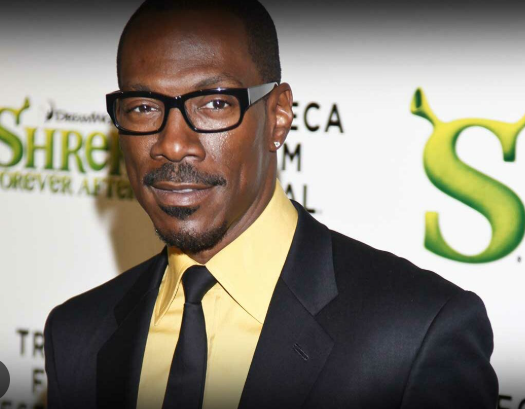
The influence on comedy is harder to quantify and more important. Chris Rock has said it directly and publicly: Eddie Murphy made everything possible. He meant the commercial viability of Black stand-up at the highest level, the template of the character comedian as global film star, the demonstration that a comedian from a working-class background could build a $200 million career without compromising the specificity of his perspective. Murphy never performed for people who were not his people. He performed his people so completely and so brilliantly that everyone else wanted in. That is the hardest trick in the art form.
The Return: 2019 and Everything After
Murphy returned to Saturday Night Live as host in December 2019 — his first appearance since 1984 — to a reception that confirmed what everyone already knew. The room stood before he said a word. His Netflix stand-up special Eddie Murphy: Raw, also in 2019, was his first stand-up special in 33 years. It debuted to the same reception as everything else he has ever released: the immediate recognition that he is operating at a level that most comedians cannot approach on their best night.
He was 58 years old after being away from stand-up for 33 years, he walked back onto a stage. The room responded the way rooms have always responded to Eddie Murphy — which is to say, completely. The template he built in 1983 at Constitution Hall was still running. He had simply been doing other things for a while.
For the full architecture of the golden age he helped define, read: Comedy’s Master Architects: Who Built the Golden Age. For the full celebrity hub, visit SocialLifeMagazine.com.
Editorial features and brand partnerships, contact us at sociallifemagazine.com/contact. For Polo Hamptons tickets and sponsorships, visit polohamptons.com.
Author

Written by
Recent Posts
7 Mindful Meal Prep Tips for Stop Food Waste Day
Rebecca Ferguson Net Worth: The Advantage of Not Being the Lead
What Makes a Dinner Party Truly Unforgettable (Hint: It’s Not the Food)
Tips for Managing Grease and Oil in Everyday Dishwashing
Austin Butler Net Worth: The Method Actor in a Post-Method World
Categories
- Art
- Articles
- Beauty & Skincare
- Celebrities
- Celebrities|Entertainment
- Celebrities|Television
- Celebrities|The Chronicles
- celebrities|the-archive
- Chronicles
- Entertainment|Culture
- Event Photos
- Events
- Fashion
- Fashion & Style
- Featured
- Food & Beverage
- Food, Spirits, Wine
- Hamptons
- Hamptons Celebrities
- Hamptons Celebrities|Celebrities|The Chronicles
- Health
- Health & Beauty
- Lifestyle
- Luxury Lifestyle
- Movies
- Press
- Profiles
- Real Estate
- Technology
- The Chronicles
- Travel
- Uncategorized
- Weddings