
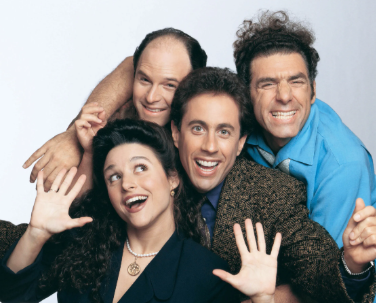
Every golden age needs its architects — not the people who showed up after the building was finished, but the ones who poured the foundation first. They built before anyone knew what was being built. The golden age comedy architects did not arrive during the Seinfeld era. They created the conditions that made it possible. By 1989, when Seinfeld premiered on NBC, each of these five had already changed the art form in ways that could not be undone.
George Carlin had reinvented himself twice. Joan Rivers had broken every barrier that existed for women in stand-up. Eddie Murphy had turned comedy into a stadium sport. Robin Williams had redefined what a human body and mind could do on a stage. Meanwhile, Jerry Seinfeld had quietly built, joke by meticulous joke, the body of work that would anchor the most-watched sitcom in American television history. These five are the golden age comedy architects. What follows is how each one did it.
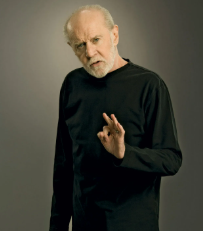
George Carlin: Golden Age Comedy Architect Who Rewrote the Rules Twice
The Before
George Denis Patrick Carlin was born May 12, 1937, in Manhattan’s Morningside Heights neighborhood. His father left when Carlin was two months old. His mother Mary raised him alone and worked in advertising, which meant she understood language as instrument. That lesson transferred completely. Carlin grew up believing that words were tools, that their arrangement determined what people believed. Most people never examined the arrangement at all.
School didn’t hold him. Neither did the Air Force — he was court-martialed three times. Following orders he considered arbitrary never took hold, which turned out to be the most professionally consequential thing about him.
The Pivot Moment
In 1970, Carlin was a successful, clean-cut comedian doing Carson-approved material about airline food and driving. He was drawing solid audiences and going nowhere that mattered. Then he looked at what he was actually doing — performing for audiences who already agreed with him, about things that didn’t matter — and stopped. He grew out his hair, put on jeans, and started over.
The reinvention was total and financially suicidal for about three years. It then became the most influential pivot in stand-up history. No comedian before Carlin had abandoned a working career mid-flight to rebuild from a philosophical foundation. As one of the original golden age comedy architects, he drew the map everyone else followed.
The Golden Age Chapter
Throughout the 1970s, Class Clown and Occupation: Foole established his new voice. The Seven Words You Can’t Say on Television went to the Supreme Court and won a ruling about broadcast decency. During the 1980s and 1990s, his HBO special run produced fourteen specials over three decades — each one sharper than the last. His 1992 Jammin’ in New York and 1996 Back in Town rank among the greatest stand-up performances ever recorded.
He influenced Jerry Seinfeld directly. Seinfeld has described Carlin’s discipline — the obsessive examination of every word, the refusal to leave a sentence standing if a better one existed — as foundational to his own approach. The golden age comedy architect’s architect.
What He Built
Fourteen HBO specials. A Mark Twain Prize for American Humor in 2008, the year he died. A body of work that has not dated by a single sentence — because it was built from first principles rather than current events. Carlin did not make jokes about what was happening. He made arguments about why it kept happening. Those arguments remain in session.
George Carlin died June 22, 2008, at 71, having performed up to the end. For the full profile: George Carlin Net Worth: The Comedian Who Went to the Supreme Court.
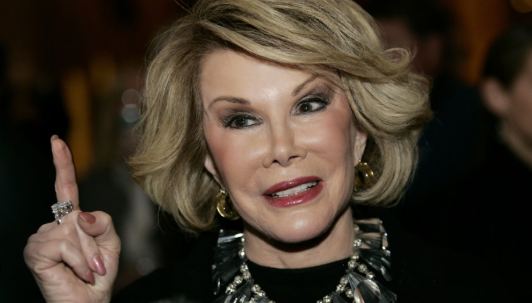
Joan Rivers: Golden Age Comedy Architect Who Outlasted Everything
The Before
Joan Alexandra Molinsky was born June 8, 1933, in Brooklyn, to Russian Jewish immigrant parents who wanted her to marry well and stop being so funny at dinner. She graduated Phi Beta Kappa from Barnard College in 1954. She tried acting, she tried writing, she tried being the person her parents wanted. None of it took. What took was a microphone, a club, and material so precise and so honest that audiences didn’t always know how to respond.
The Pivot Moment
In 1965, Johnny Carson put Joan Rivers on The Tonight Show. At the end of her set, he said on air: “God, you’re funny.” That sentence, from that man, in that era, functioned as a coronation. That sentence set the terms for everything that followed. She would spend the next five decades being undeniably funny, and the industry would spend the same five decades finding reasons to underestimate her.
She became Carson’s permanent guest host. In 1986, she took a Fox deal without informing him, and he never spoke to her again. Her husband Edgar died by suicide in 1987. Fox canceled her show. She was, by every industry metric, finished. She was 54 years old and she went back to work.
The Golden Age Chapter
The Seinfeld era found Rivers not recovering but accelerating. Her touring schedule through the 1990s was relentless — more shows, sharper material, less apologizing than at any previous point in her career. Tragedy had not softened her. It had clarified her. Every female comedian who came through the 1990s and after owes her a specific and acknowledged debt.
Among the golden age comedy architects, Rivers holds a unique position: she was canceled before cancellation was a concept. She came back every time and outlasted every verdict. Her QVC jewelry line became a $1 billion business, according to Forbes. That revenue gave her independence to perform whatever material she wanted — and the 1990s material shows exactly what that independence produced.
What She Built
A fifty-year career built entirely on refusing to stop. The proof of concept for the entire era: that honesty, precision, and the refusal to apologize for the joke would outlast every trend and every cancellation. The last time she performed was ten days before she died.
For the full profile: Joan Rivers Net Worth: Everything Is Available as Material.
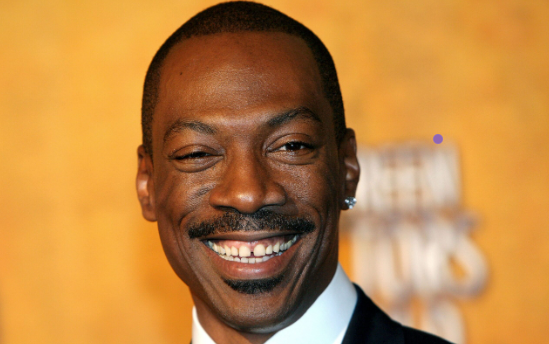
Eddie Murphy: Golden Age Comedy Architect Who Built the Stadium
The Before
Edward Regan Murphy was born April 3, 1961, in Brooklyn and raised in Roosevelt, Long Island. His father was killed when Murphy was eight. His mother was hospitalized. He and his brother were placed in foster care. Murphy started doing stand-up impressions at 15 to make his foster family laugh. Making people laugh was the one thing that was entirely his. By 19, when he auditioned for Saturday Night Live, he had already developed the stage presence and fearlessness that would make him the biggest comedy star on the planet within three years.
The Pivot Moment
In 1983, Eddie Murphy released Delirious — filmed at Constitution Hall in Washington, D.C., in front of 4,000 people who responded like it was a rock concert. Nothing before it had felt like that. Stand-up had been a club art form. Murphy made it a stadium event, and the industry spent the next decade trying to understand what he had done and how. Raw followed in 1987, still the highest-grossing stand-up concert film ever made at the time. Murphy was 26 years old.
The Golden Age Chapter
Beverly Hills Cop, Coming to America, Boomerang, The Nutty Professor — during the Seinfeld era, Murphy operated across stand-up and film simultaneously, at a scale no comedian before him had achieved. His influence on every Black comedian who came through the 1990s was total and direct. Chris Rock has said it plainly: Eddie Murphy made everything possible.
Among the golden age comedy architects, Murphy’s technical achievement has never been replicated — the voices, the characters, the physicality, the ability to inhabit each one completely mid-sentence. Other comedians perform. Murphy inhabited. He returned to stand-up with his 2019 Netflix special, his first in 33 years. The reception confirmed that the room he built in 1983 was still standing.
For the full profile: Eddie Murphy Net Worth: The Long Island Kid Who Triggered the Golden Age.
Robin Williams: The Irreplaceable Golden Age Comedy Architect

The Before
Robin McLaurin Williams was born July 21, 1951, in Chicago, the son of a Ford Motor Company executive. The family moved frequently. He was a shy, lonely child who discovered that making people laugh was the fastest route to belonging. He enrolled at Juilliard in 1973 as one of two students admitted to the advanced program that year. The other was Christopher Reeve. Williams left after two years because, as his teachers told him, there was nothing left Juilliard could teach him. That assessment, delivered at 23, was correct.
The Pivot Moment
In 1978, Williams was cast as Mork in a single episode of Happy Days. The casting call specified that the alien needed to be played by someone who could improvise freely. Williams was the only actor who came in and sat down in the chair rather than on it — he was cast on the spot. Mork & Mindy ran for four seasons. By the time it ended, he was the most recognizable comedian in America. Stand-up, however, was always the real thing.
The Golden Age Chapter
During the Seinfeld era, Williams ran two careers simultaneously at full speed: the film career (Good Morning, Vietnam, Dead Poets Society, Mrs. Doubtfire, Good Will Hunting, an Oscar) and the stand-up, which remained the standard against which every other comedian of the era measured improvisation. No one could do what he did on a stage. The speed, the voices, the associative leaps from one character to the next — it operated at a register genuinely difficult to follow in real time.
Other comedians made you laugh. Williams made you feel like you were present at something that would never happen again. That feeling, it turned out, was accurate. Of all the golden age comedy architects, Williams is the one whose specific gifts cannot be analyzed, only witnessed. He died August 11, 2014. The response looked more like grief than celebrity mourning, because it was.
For the full profile: Robin Williams Net Worth: The Standard Nobody Can Follow.
Jerry Seinfeld: Golden Age Comedy Architect of the Entire Era
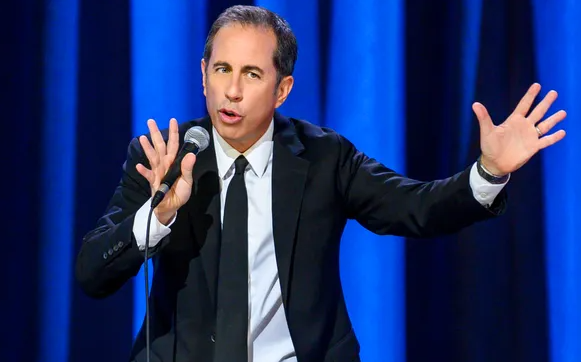
The full origin story — from Massapequa to the most expensive road in East Hampton, from a box of his father’s wartime jokes to a billion-dollar estate on Further Lane — lives in its own dedicated feature. What belongs here is the architectural fact: Seinfeld did not just participate in the golden age of comedy. He defined its terms, set its standards, and then went home to Further Lane every summer to keep writing jokes on a legal pad before breakfast. The work was always the point. Among all the golden age comedy architects, Seinfeld is the one who built the era itself — the grammar, the discipline, the cultural permission to make a show about nothing and mean everything.
Read the full profile: Jerry Seinfeld’s East Hampton Home: Life After a Billion.
The Golden Age Comedy Architects: What Each One Built
- George Carlin — Reinvented himself twice, took a joke to the Supreme Court, got sharper every decade until his last
- Joan Rivers — The original survivor: canceled before cancellation existed, came back every time, performed ten days before she died
- Eddie Murphy — Turned stand-up into a stadium sport at 22 and made everything possible for everyone who followed
- Robin Williams — The irreplaceable original; no one before or since has done what he did at full speed on a live stage
- Jerry Seinfeld — The architect of the era itself: discipline, precision, and a yellow legal pad every morning on Further Lane
These five golden age comedy architects did not arrive during the golden age. They created the conditions that made it golden. For the comedians who came next — who disrupted, detonated, and rewrote the rules from inside the room these five built — read part two: Comedy’s Insurgents: Who Rewrote the Rules. Browse the full celebrity archive for more.
Social Life Magazine has covered the Hamptons and the culture that shapes it for 23 years. For feature inquiries and editorial partnerships, visit sociallifemagazine.com/contact. Meanwhile, for tickets and sponsorships at Polo Hamptons, visit polohamptons.com.
Author

Written by
Recent Posts
7 Mindful Meal Prep Tips for Stop Food Waste Day

Rebecca Ferguson Net Worth: The Advantage of Not Being the Lead
What Makes a Dinner Party Truly Unforgettable (Hint: It’s Not the Food)
Tips for Managing Grease and Oil in Everyday Dishwashing

Austin Butler Net Worth: The Method Actor in a Post-Method World
Categories
- Art
- Articles
- Beauty & Skincare
- Celebrities
- Celebrities|Entertainment
- Celebrities|Television
- Celebrities|The Chronicles
- celebrities|the-archive
- Chronicles
- Entertainment|Culture
- Event Photos
- Events
- Fashion
- Fashion & Style
- Featured
- Food & Beverage
- Food, Spirits, Wine
- Hamptons
- Hamptons Celebrities
- Hamptons Celebrities|Celebrities|The Chronicles
- Health
- Health & Beauty
- Lifestyle
- Luxury Lifestyle
- Movies
- Press
- Profiles
- Real Estate
- Technology
- The Chronicles
- Travel
- Uncategorized
- Weddings