
The Standard Nobody Can Follow
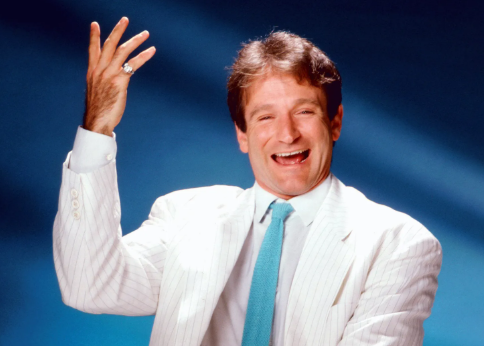
Robin Williams net worth at his 2014 death was approximately $50 million. Two divorces and forty years at maximum output reduced it from its peak. That number is the least interesting thing about him. What he built was not primarily an estate. Robin Williams’ comedy legacy is a body of work in stand-up, film, and live performance that has not been surpassed. By the assessment of nearly everyone who has tried to describe it, it cannot be. He operated at a speed and frequency other comedians could observe but not follow — singular in the precise sense: one of a kind, not reproducible.
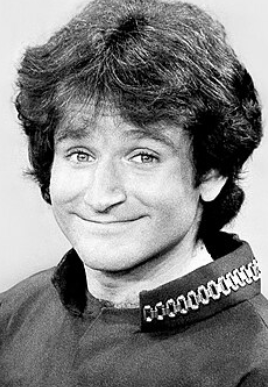
Juilliard sent him home at 23 because his teachers had nothing left to teach. That assessment turned out to be correct. Moreover, it framed everything that followed. The Mork audition, the Good Morning Vietnam Oscar nomination, the Good Will Hunting win, the Genie recording sessions — Williams didn’t accumulate a career. He sustained a force of nature for four decades, and the $50 million is simply what remained when it stopped.
Robin Williams Net Worth Origins: Chicago to Juilliard
Robin McLaurin Williams was born July 21, 1951, in Chicago, Illinois. His father Robert was a senior executive at Ford Motor Company. Frequent relocations — Detroit, Bloomfield Hills, then Marin County, California — meant Williams spent childhood as a perpetual new kid. He learned fast that making people laugh was the quickest route to belonging. By his own account, he was shy to the point of paralysis in social situations without a performance. When an audience appeared, the shyness vanished completely. That pattern held for the rest of his life.
After one year studying political science at Claremont Men’s College, he transferred to a theater program at the College of Marin. Strong enough work there earned him admission to Juilliard’s advanced drama program in 1973. He was one of two students accepted at that level. The other was Christopher Reeve. Their friendship persisted across decades, through Reeve’s 1995 equestrian accident, with Williams quietly covering Reeve’s medical expenses. That fact became public only after both men had died.
Juilliard sent Williams home after two years. Not for poor performance — for the opposite reason. His teachers told him there was nothing left to teach. He was 23. That assessment was correct.
The Pivot: The Alien Who Sat Down
In 1977, Williams was performing stand-up in San Francisco clubs — improvisational, associative, already operating at the speed that would define his career — when he auditioned for a recurring role on Happy Days. The character was Mork, an alien visiting Earth. Casting required an actor who could improvise convincingly as someone who didn’t understand human conventions.
Williams arrived, and when asked to sit down, he sat on top of the chair instead of in it. An alien, he explained, wouldn’t know which way a chair worked. He got the part on the spot. Mork & Mindy premiered in 1978 and became one of the most-watched shows in American television. Four seasons later, Williams was the most recognizable comedian in America before he turned 30.
Television was the entry point. Stand-up was always the real thing.
Robin Williams’ Comedy Legacy: Two Careers at Full Speed
Williams spent the late 1970s and early 1980s running two careers simultaneously at maximum intensity — film and stand-up — while also managing a substance dependency he addressed publicly in later years with characteristic honesty. His 1979 special An Evening with Robin Williams documented what he did on stage and demonstrated, to anyone watching carefully, that something genuinely new had arrived.
The film career accelerated through the 1980s: The World According to Garp (1982), Moscow on the Hudson (1984), Good Morning, Vietnam (1987) earning his first Oscar nomination. Then Dead Poets Society in 1989 proved he could anchor serious drama as convincingly as he filled a comedy stage. According to Forbes, Williams earned over $50 million from film alone during the early 1990s peak. That period covered Awakenings, The Fisher King, Hook, and Aladdin. The Genie recording sessions produced so much improvised material that animators had more footage than the feature could contain.
For the full architecture of the era he helped define, read Comedy’s Master Architects: Who Built the Golden Age and the companion Comedy’s Insurgents hub.
The Hamptons Chapter: Summer at the Center
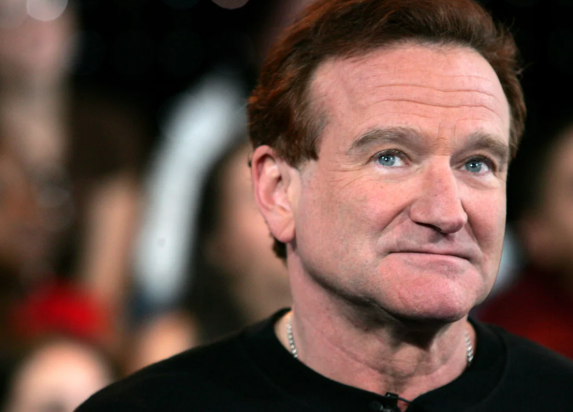
Williams was a consistent fixture in the Hamptons social world during his peak years — benefits, film premieres, summer gatherings where the entertainment industry’s most prominent figures assembled. His presence changed any room he entered. That made him simultaneously the most sought-after guest and, by certain accounts, one of the most exhausting to be near at full performance mode. The social energy he deployed on stage he also deployed at dinner tables and in living rooms. That’s the occupational hazard of someone for whom performance and person are not entirely separate.
The broader Hamptons summer social calendar — documented by Social Life Magazine for 23 years — reflects the presence of his generation at the East End. His connection to the summer circuit remained consistent through his greatest commercial success, tied to charity events and the social infrastructure linking entertainment to the Hamptons each summer.
What Robin Williams Net Worth Doesn’t Capture
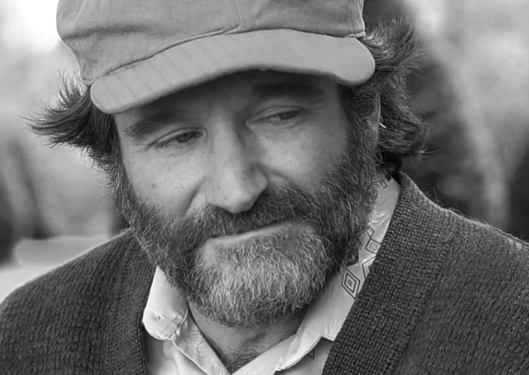
An Oscar for Good Will Hunting (1997). Four Grammy Awards for comedy albums. Two Emmys. A film range — Good Morning Vietnam, Dead Poets Society, Mrs. Doubtfire, Aladdin, The Birdcage, Insomnia, One Hour Photo — that no other comedian of his generation attempted. His 1986 special A Night at the Met and his 2002 Live on Broadway bookend the golden age and remain reference points for improvisational stand-up at maximum execution.
Harvard Business Review has cited Williams’ improvisational method as a model for creative association under pressure. The core skill: connecting disparate ideas at speed and producing something coherent from the collision. Williams did this live, in front of audiences, for forty years. His influence on stand-up is felt most clearly in what other comedians say they cannot do. The speed, the character switches, the associative leaps — described consistently as Williams-specific, belonging to him rather than to the form. Most influences leave a technique. Williams left a standard that functions as a reminder of what is theoretically possible rather than a template to follow. That’s a rarer kind of influence.
August 11, 2014: Robin Williams Net Worth in Full
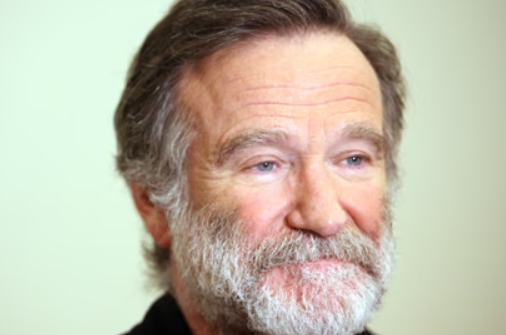
Williams died August 11, 2014, at his home in Paradise Cay, California. He was 63. A Parkinson’s disease diagnosis earlier that year preceded his death. Subsequently, autopsy results revealed Lewy body dementia. The condition hadn’t been identified before his death. His wife Susan said it would have explained the symptoms and anxieties of his final months more completely than the Parkinson’s diagnosis alone.
The public response didn’t follow the normal contours of celebrity mourning. People who had never met him described a personal loss. Comedians who had spent careers working in his shadow or his influence went public with grief that was specific and unguarded. Jerry Seinfeld had known Williams from the New York club circuit in the late 1970s. He spoke about him with the directness reserved for loss that is genuinely irreplaceable rather than ceremonially mourned.
Robin Williams net worth in dollars tells a partial story. The work remains. The standard remains. The specific thing he did — at that speed, with those associations, at that level of commitment to each character — has not been reproduced. It was his. It stays his.
For more from the celebrity archive, visit SocialLifeMagazine.com.
To discuss editorial features and brand partnerships, reach us at sociallifemagazine.com/contact. Meanwhile, for Polo Hamptons tickets and sponsorships, visit polohamptons.com.
Author

Written by
Recent Posts
Cynthia Erivo Net Worth: The Voice That Was Always There
Inside Out 2, Wicked, and the Emotional Blockbuster That Ate 2024
7 Mindful Meal Prep Tips for Stop Food Waste Day
Rebecca Ferguson Net Worth: The Advantage of Not Being the Lead
What Makes a Dinner Party Truly Unforgettable (Hint: It’s Not the Food)
Categories
- Art
- Articles
- Beauty & Skincare
- Celebrities
- Celebrities|Entertainment
- Celebrities|Television
- Celebrities|The Chronicles
- celebrities|the-archive
- Chronicles
- Entertainment|Culture
- Event Photos
- Events
- Fashion
- Fashion & Style
- Featured
- Food & Beverage
- Food, Spirits, Wine
- Hamptons
- Hamptons Celebrities
- Hamptons Celebrities|Celebrities|The Chronicles
- Health
- Health & Beauty
- Lifestyle
- Luxury Lifestyle
- Movies
- Press
- Profiles
- Real Estate
- Technology
- The Chronicles
- Travel
- Uncategorized
- Weddings