

Why Owning Your IP Is the Only Retirement Plan
Taylor Swift became the first musician to reach billionaire status primarily through music—not fragrance lines, not tequila brands, not reality TV. Music. The distinction matters because it reveals the structural decision that separates performers who retire anxious from catalog owners who retire rich.
When Scooter Braun acquired Swift’s master recordings in 2019, she did not negotiate. She rebuilt. The Taylor’s Version re-recordings effectively reconstructed a billion-dollar asset from scratch, creating new masters she owns outright. Her Eras Tour grossed over $2B with Swift personally earning $10–13M per show—because she owns the underlying intellectual property being performed. This is the catalog multiplier in its purest form: IP ownership that appreciates while you sleep, compounds across decades, and survives every industry disruption that destroys performers who only sold their time.
According to McKinsey’s analysis of music industry economics, catalog ownership now accounts for more cumulative wealth among top entertainers than active performance income. The pattern across The Chronicles is absolute: the highest-value celebrity estates are built on owned IP, not accumulated salary. What follows is a breakdown of how the catalog multiplier works, who has executed it best, and why it remains the only retirement plan that actually functions in entertainment.
Five Case Studies in Catalog Wealth
Taylor Swift: $1.6B Through Masters Ownership and Re-Recording
Taylor Swift’s wealth trajectory demonstrates that IP ownership is not merely preferable—it is existential. Her original Big Machine masters, sold without her consent, represented years of creative output generating revenue for other parties. Rather than accepting that loss, Swift executed an unprecedented strategy: re-recording her entire catalog to create new masters she controls completely.

The re-recordings are not artistic vanity. They are IP warfare. Each Taylor’s Version release devalues the original masters while creating a parallel asset Swift owns. Furthermore, the Eras Tour functions as a monetization engine for owned IP rather than a promotional vehicle for label-owned recordings. Swift earns $10–13M per show because every song performed generates value that flows to her catalog, not to Braun or his investors. According to Harvard Business Review’s analysis, Swift’s re-recording strategy has become a template for artists seeking to reclaim catalog value, fundamentally shifting negotiating dynamics across the music industry.
Jerry Seinfeld: $1.1B from 15% Perpetual Syndication
Jerry Seinfeld negotiated 15% of all syndication revenue for a show that aired its final episode in 1998. Twenty-seven years later, Seinfeld still generates an estimated $400M+ annually through syndication and streaming licensing. Fifteen percent of that flows to Seinfeld every year, regardless of whether he performs, produces, or participates in any way.
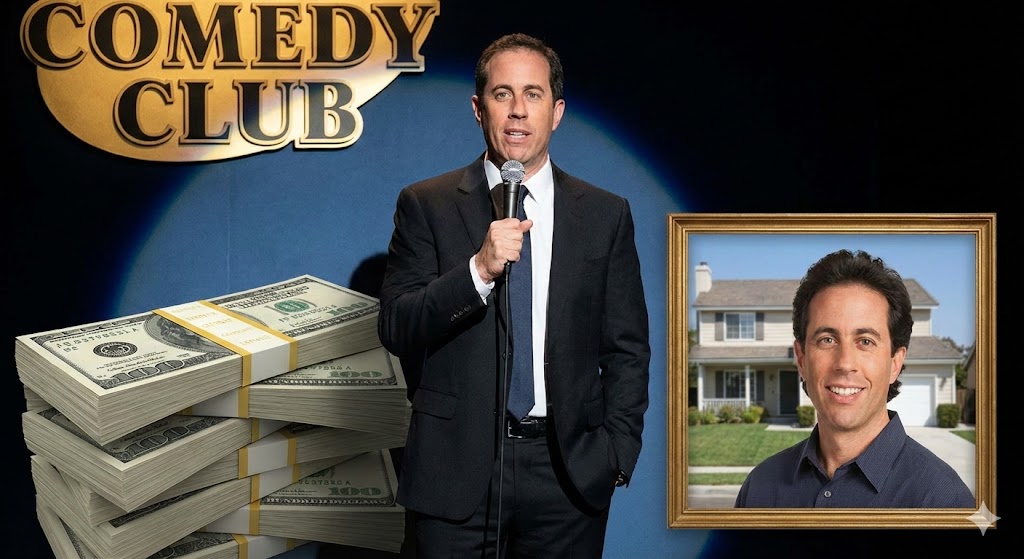
The structural insight here is temporal. Seinfeld understood that his peak earning years as a performer would eventually end, but a backend participation in perpetually valuable IP would continue indefinitely. The show has now generated more wealth for Seinfeld in syndication than it did during its original run. Meanwhile, performers who collected larger upfront salaries but no backend participation saw their earning power collapse when their shows ended. The catalog multiplier does not care about your current relevance. It only cares whether you own the IP that remains relevant.
George Lucas: $5.4B Through IP Ownership and Strategic Exit
George Lucas sold Lucasfilm to Disney for $4B in 2012. The transaction was not a sale of his directorial services or his creative vision. It was a sale of intellectual property—characters, storylines, and universes that generate value across theatrical releases, streaming content, theme parks, merchandise, and licensing deals that Lucas no longer needs to manage.

The Lucas case study reveals the ultimate catalog multiplier outcome: IP so valuable that the exit price exceeds what any performance career could generate. Lucas earned perhaps $100M directing the original Star Wars trilogy. The IP he retained from those films eventually sold for $4B. In other words, the ratio between performance income and IP value was approximately 1:40. According to Bain & Company’s media analysis, this ratio has only expanded as streaming platforms compete for catalog content, making IP ownership more valuable relative to performance fees than at any previous point in entertainment history.
Music Industry Net Worth: Catalog Owners vs. Touring Dependents
The music industry net worth data reveals a stark bifurcation. Artists who own their catalogs build fortunes that compound. Artists who signed away their masters remain dependent on touring revenue that degrades with age, health, and audience attention.

Paul McCartney’s catalog ownership, including Beatles compositions he has reacquired over decades, anchors a $1.2B fortune that appreciates without requiring him to perform. In contrast, artists who sold their masters early—even legends with decades of hits—find themselves touring into their seventies because streaming royalties from owned recordings are the only passive income stream in music. The catalog multiplier creates a retirement. Its absence creates a treadmill. Consequently, the emerging generation of artists, informed by Swift’s re-recording strategy and public advocacy, increasingly refuses to sign deals that forfeit master ownership.
Kanye West: $400M–$2.77B and the IP Dispute Cautionary Tale
Kanye West’s net worth fluctuation demonstrates both the power and the fragility of IP-dependent wealth. At peak, his Yeezy partnership with Adidas generated $2B in annual revenue, with West’s personal stake valued at $1.5B+. When Adidas terminated the partnership following reputational damage, that valuation collapsed overnight.
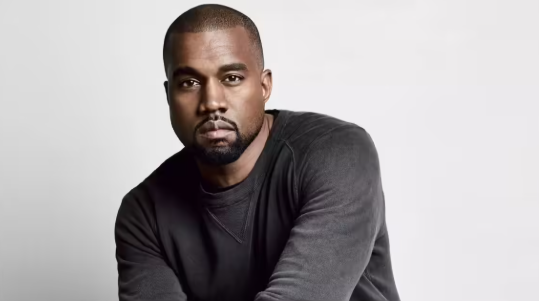
The cautionary element is not that West owned IP—he did, and still does own the Yeezy designs themselves. Rather, the vulnerability was that the IP’s commercial value depended on a corporate partnership West did not control. In practice, the catalog multiplier works best when the IP can be exploited through multiple channels independently. Swift’s masters generate value whether she partners with Universal, Spotify, Apple, or licenses directly. West’s Yeezy designs required Adidas’s manufacturing and distribution infrastructure. Similarly, the lesson for catalog construction is diversification of exploitation pathways, not just ownership of the underlying IP.
How the Catalog Multiplier Applies at Every Wealth Level
IP ownership is not a billionaire strategy. It operates at every scale, from the emerging creator protecting their first content library to the dynasty architect managing exploitation across multiple channels. Meanwhile, the mistake most creators make is treating IP decisions as legal technicalities rather than wealth architecture.
Tier 1: Emerging ($1M–$10M)
Never sign away your masters, your likeness rights, or your content library. At this tier, specifically, the IP you create today will determine your wealth ceiling for the next three decades. Chappell Roan’s independence from major label control preserves her future catalog value. She may earn less upfront than artists who sign traditional deals, but she retains 100% of an asset that could be worth $100M+ if her career continues its trajectory. The discipline is refusing short-term advances that permanently forfeit long-term ownership.
Tier 2: Established ($10M–$100M)
Build a content library across platforms with retained participation. Adam Sandler’s Netflix deal created more sustained wealth than most theatrical film careers because he retained significant backend participation in content that Netflix continues to exploit. At this tier, furthermore, the goal is accumulating IP volume while maintaining ownership or meaningful participation. Every piece of content you create should contribute to a catalog that compounds, not a portfolio of one-time payments that fund lifestyle instead of legacy.
Tier 3: Mogul ($100M–$500M)
Acquire adjacent IP beyond what you create personally. Brad Pitt’s Plan B Productions does not just produce films—it owns them, creating a catalog that appreciates as streaming demand for quality content intensifies. At this tier, the catalog multiplier extends beyond personal creative output. You become an IP acquirer, identifying undervalued catalogs, funding development of new IP, and building a portfolio that generates returns regardless of your personal creative participation. According to McKinsey’s private equity research, entertainment IP portfolios have outperformed most alternative asset classes over the past decade.
Tier 4: Dynasty ($500M–$5B+)
The IP portfolio generates returns across multiple exploitation windows simultaneously. Spielberg’s catalog feeds theatrical releases, streaming licensing, theme park attractions, merchandise, and international distribution—each window generating revenue that funds acquisition of additional IP. At this tier, meanwhile, the catalog multiplier has become self-sustaining. The ownership inflection point that started the climb is now embedded in infrastructure that compounds IP value automatically across generations. The dynasty question becomes governance: how do you structure IP holdings for intergenerational transfer while maintaining exploitation efficiency?
Why Catalog Value Is Accelerating in 2026
Three forces are driving IP valuations higher, making catalog ownership more valuable—and its absence more costly—than ever before.
First, streaming platforms are competing aggressively for catalog content. Netflix, Apple, Amazon, and emerging platforms all need libraries to retain subscribers, and consequently they are paying premium prices for proven IP. According to Bain & Company’s music industry analysis, catalog acquisition prices have increased 40–60% since 2020, with major publishers paying 15–20x annual royalty revenue for proven catalogs. The streaming wars have made IP ownership a seller’s market.
Second, the PE premium now applies to IP portfolios as well as consumer brands. Private equity firms have entered the catalog acquisition space, competing with traditional publishers and driving multiples higher. Hipgnosis, Primary Wave, and institutional investors have deployed billions acquiring music catalogs, creating exit opportunities for IP owners who built holdings when valuations were lower.
Third, AI and synthetic media are creating new exploitation windows that did not exist five years ago. Specifically, catalog owners can license their IP for AI training, voice synthesis, and generative applications. Artists who do not own their masters cannot participate in these emerging revenue streams. As a result, the gap between catalog owners and performers will widen as AI exploitation generates new value that flows exclusively to IP holders.
What This Means for Your Next Move
Every creative decision you make either builds your catalog or depletes your time without residual value. There is no neutral ground. The song you write today, the content you produce tomorrow, the IP you develop next year—each either becomes an asset that compounds for decades or a transaction that funds this quarter’s expenses.
Consider the people who operate in the Hamptons ecosystem, who read Social Life Magazine and attend Polo Hamptons. They understand the catalog multiplier because they have watched it operate across generations. In contrast, the families whose wealth persists are not the ones who earned the largest salaries. They are the ones who converted earnings into owned IP that compounds. The Further Lane estates were not built on performance fees. They were built on royalties, residuals, and exploitation rights that generate income regardless of whether the original creator is still working.
Up next in The Chronicles: the physical positioning that creates access to IP deals and investment opportunities. The geography of wealth reveals why address selection is a capital allocation decision, not a lifestyle choice, and how the wealthiest celebrities position themselves in deal flow corridors where proximity to capital converts casual encounters into business opportunities.
Continue Reading The Chronicles
→ Taylor Swift Net Worth: How Re-Recording Masters Built a $1.6 Billion Fortune
→ The Geography of Wealth: How Physical Positioning Creates Deal Flow
The brands featured in Social Life Magazine understand the catalog multiplier. They build IP that compounds. For features, advertising, and strategic collaborations: sociallifemagazine.com/contact
Polo Hamptons is where IP deals begin. The conversations that fund catalogs happen poolside before they happen in boardrooms. Tickets and sponsorships: polohamptons.com
The best deals in the Hamptons happen before they are announced. Our list hears first. Subscribe to the Social Life insider briefing.
25,000 copies per summer issue reach every boutique from Westhampton to Montauk. 15,000 fall/winter editions land in Upper East Side doorman buildings. Print subscription →
Independent media tracking catalog ownership, IP strategy, and the economics of fame. Support The Chronicles — $5 keeps it free for everyone.
Author

Written by
Recent Posts
4th Annual Catwalk Furbaby

Thomas J. Henry and Dr. Elena Alvarez-Henry Join Forces for Cancer Care
How an Emergency 24/7 Plumber Resolves Sudden Drain Backups Fast
Best Free Location Tracking Apps for Everyday Family Safety: iSharing and HeyPolo Compared
How Disney Channel Stars Become Pop Powerhouses: The Sabrina Carpenter Blueprint
Categories
- Art
- Articles
- Business of Luxury
- Celebrities
- Culture
- Entertainment
- Events
- Faces of Summer 2026
- Fashion
- Fashion & Style
- Featured
- Finance
- Food, Spirits, Wine
- Hamptons
- Hamptons Celebrities
- Health
- Health & Beauty
- Lifestyle
- Luxury Lifestyle
- Press
- Profiles
- Real Estate
- Technology
- The Chronicles
- Travel
- Uncategorized
- Weddings