
Why Disappearing Increases Your Price
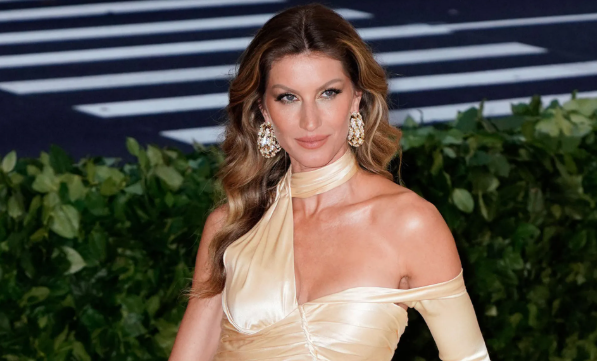
Gisèle Bündchen retired from runway modeling at 34. Her net worth subsequently tripled. The paradox only confuses people who do not understand scarcity economics. While contemporaries collected diminishing endorsement fees by maximizing visibility, Gisèle’s reduced presence increased her per-appearance value. Each campaign became rarer. Each association became more valuable. The market pays a premium for what it cannot easily access.
This is the scarcity inversion that separates celebrities who fade into declining fees from those who grow wealthier by becoming harder to reach. The data across The Chronicles proves the pattern repeatedly: Iman built a $200M fortune while most people forgot she was still working. Jay Leno never spent his Tonight Show salary, living entirely off standup income, because financial scarcity created the same structural advantage as visibility scarcity—optionality. According to Harvard Business Review’s analysis of luxury market dynamics, perceived scarcity increases willingness to pay by 30–50% across consumer categories. The same principle applies to celebrity attention: less availability commands higher prices.
What follows is a breakdown of how scarcity inversion actually works, who has executed it most effectively, and how to apply the principle at every wealth level—from the emerging creator learning to say no, to the dynasty that has made invisibility a competitive advantage.
How Disappearing Increases Your Price
Gisèle Bündchen: $400M Through Strategic Withdrawal
Gisèle Bündchen’s wealth trajectory inverts conventional celebrity economics. During her peak runway years, she earned approximately $25–30M annually through modeling fees and endorsements. After retiring from runway work in 2015, her net worth accelerated from approximately $150M to over $400M.
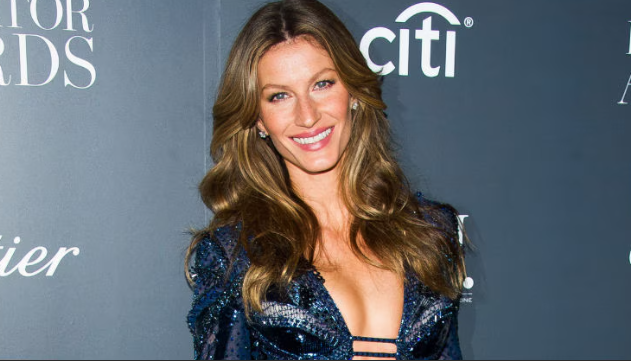
The math reveals the mechanism. Fewer appearances meant each appearance commanded a premium. Brand partnerships became exclusive rather than ubiquitous. Her equity stakes in companies like Under Armour and Ipanema continued compounding without requiring her active participation. Furthermore, her environmental and wellness positioning attracted brand categories—sustainable fashion, organic beauty, conscious luxury—that pay premiums for authentic association rather than volume exposure. The attention arbitrage flipped: instead of converting attention into brand deals, scarcity converted reduced attention into higher-value brand deals.
Supermodel Legacy Icons: Iman’s $200M Invisible Empire
The supermodel legacy data reveals Iman as the clearest scarcity inversion case study. While her contemporaries cycled through diminishing runway and catalog work into their fifties, Iman stepped back from modeling visibility and built a cosmetics empire that addressed a market the beauty industry had ignored: products designed for women of color.
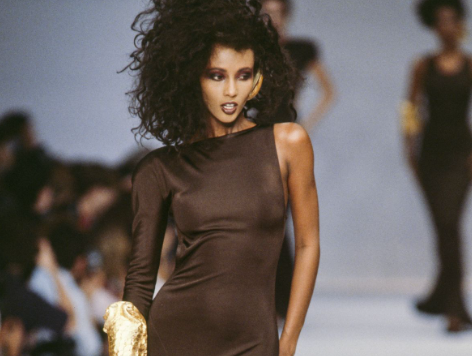
Iman Cosmetics succeeded precisely because Iman’s reduced runway presence made each brand association more valuable. She was not a working model licensing her name. She was a legendary figure whose rare appearances signaled prestige. According to McKinsey’s beauty industry analysis, founder-led beauty brands with authentic personal investment outperform licensed celebrity brands by 2–3x on customer lifetime value. Iman’s operational involvement plus her scarcity created the optimal combination: credibility without overexposure. Her $200M fortune was built while most people assumed she had simply retired.
Jay Leno: $450M Through Financial Scarcity Discipline
Jay Leno’s wealth strategy demonstrates that scarcity inversion applies to spending, not just visibility. Throughout his decades hosting The Tonight Show, Leno famously never spent his NBC salary. He lived entirely on standup income, banking every dollar from television.

The structural advantage was optionality. While other hosts accumulated lifestyle expenses that required continued high income, Leno’s financial scarcity created freedom. He did not need to accept every opportunity because he had no financial pressure to do so. Consequently, when he did accept opportunities, he could negotiate from strength rather than necessity. His $450M fortune now funds a car collection that generates its own media attention through Jay Leno’s Garage, creating a visibility-to-passion-asset pipeline that operates on his terms rather than network terms. The scarcity was financial discipline. The result was the same as visibility scarcity: increased optionality that commands premium positioning.
Ellen DeGeneres: $500M and Post-Show Wealth Preservation
Ellen DeGeneres’s trajectory illustrates scarcity inversion applied to reputation management. After her daytime show ended amid controversy in 2022, conventional wisdom suggested her earning power would collapse. Instead, her withdrawal from daily visibility allowed reputation rehabilitation while her business interests—real estate, production company assets, and investment portfolios—continued compounding.

The mechanism is counterintuitive but consistent with scarcity economics. Daily visibility creates daily opportunities for negative press. Reduced visibility reduces attack surface while allowing time for narrative recalibration. DeGeneres’s $500M fortune has remained largely intact because the assets that comprise it do not require her daily public presence. In other words, the scarcity was involuntary initially but strategically maintained thereafter. The result demonstrates that visibility reduction can preserve wealth even when the reduction was not originally chosen.
Quiet Luxury in the Hamptons: Stealth Wealth as Strategy
The quiet luxury phenomenon in the Hamptons demonstrates scarcity inversion at the community level. The wealthiest families on Further Lane and Meadow Lane are invisible to tabloids. Their homes lack the ostentatious signaling that attracts press coverage, their social calendars are private, and their wealth compounds undisturbed by public attention.
The competitive advantage is structural. According to Bain & Company’s luxury market research, ultra-high-net-worth individuals increasingly prefer discretion over display, with 70% of family offices reporting that public visibility creates more problems than benefits for wealth preservation. The Hamptons families who have maintained wealth across generations understood this before it became a consulting insight. Similarly, their invisibility is not modesty. It is strategy. The loudest house on the beach rarely belongs to the most interesting person. Real wealth whispers because volume attracts friction—tax attention, litigation attention, social attention—that erodes the compounding advantage.
How Scarcity Inversion Applies at Every Wealth Level
Scarcity economics operates at every scale. The difference is which type of scarcity—visibility, availability, financial, or selectivity—provides the highest leverage at your current position. Meanwhile, the common mistake is assuming that more visibility always produces more value. The data consistently shows otherwise.
Tier 1: Emerging ($1M–$10M)
Say no to at least 30% of opportunities. At this tier, specifically, the opportunities you decline define your brand as much as the ones you accept. Chappell Roan declined a White House performance to protect brand integrity. This decision generated more valuable press than the performance would have, while establishing her as an artist who cannot be easily accessed. Here, the scarcity was selectivity, and the result was increased perceived value and differentiated positioning in a crowded market.
Tier 2: Established ($10M–$100M)
Reduce public-facing volume while increasing per-engagement value: fewer interviews at higher fees, fewer social posts with deeper engagement, fewer brand deals at larger equity stakes. At this tier, furthermore, the math always favors scarcity. Ten appearances at $100K each generates the same revenue as one appearance at $1M, but the single high-value appearance preserves brand equity that the ten diluted appearances would erode. The brand extension ladder climbs faster when each rung is premium rather than commoditized.
Tier 3: Mogul ($100M–$500M)
Let the brands carry visibility while you step back. Rihanna has not released an album since 2016. Her fortune quadrupled because Fenty Beauty and Savage X Fenty do the marketing work while she provides strategic direction and occasional appearances that generate outsized attention precisely because they are rare. At this tier, the owned businesses should generate visibility that you no longer need to personally provide. If your wealth still requires your constant presence, you have not completed the ownership inflection—you are still trading time for money at a higher price point.
Tier 4: Dynasty ($500M–$5B+)
European family office model: discretion over display. The wealthiest families in the Hamptons are invisible to tabloids because visibility creates friction that erodes compounding advantage. At this tier, consequently, scarcity inversion is not a tactic but a permanent operating principle. The dynasty compounds wealth precisely because it does not attract the attention that creates regulatory scrutiny, litigation exposure, or social pressure to deploy capital in suboptimal ways. Invisibility is not an aesthetic preference. It is a wealth preservation strategy with measurable returns.
Why Scarcity Value Is Increasing
Three forces are making scarcity more valuable and overexposure more costly than ever before.
First, content saturation has devalued ubiquitous visibility. When every creator posts daily across multiple platforms, constant presence becomes noise rather than signal. According to McKinsey’s marketing research, consumer attention spans for individual creators have declined 40% since 2020. The creators who cut through are increasingly the ones who appear rarely but memorably. Scarcity has become a differentiation strategy in an attention-saturated market.
Second, cancel culture has increased the cost of constant visibility. Every public statement creates potential controversy. Every appearance creates potential criticism. The celebrities who maintain wealth most effectively are increasingly the ones who minimize attack surface by minimizing public exposure. Ellen DeGeneres’s trajectory demonstrates both the cost of overexposure and the value of strategic withdrawal.
Third, the PE premium rewards scarcity positioning. Private equity firms pay higher multiples for brands associated with exclusive, scarce celebrity positioning than for brands associated with ubiquitous celebrity endorsement. The Gisèle model—rare, premium, selective—commands acquisition valuations that the volume model cannot match.
What This Means for Your Next Move
Every visibility decision either increases or decreases your scarcity value. There is no neutral ground. The interview you give, the post you publish, the event you attend—each either enhances your premium positioning or dilutes it through overexposure.
Consider the people who operate in the Hamptons ecosystem, who read Social Life Magazine and attend Polo Hamptons. They understand scarcity inversion instinctively. In contrast to the volume-visibility model that dominates social media, the Hamptons social calendar rewards selectivity. Invitations that matter go to people who decline most invitations. Conversations that generate deal flow happen with people who are not easily accessible. This paradox resolves when you understand the underlying economics: scarcity signals value, and the market pays accordingly.
Up next in The Chronicles: the partnership structures that multiply scarcity value. The power couple premium reveals why strategic marriages function as joint ventures, combining audiences and deal flow access in ways that generate returns neither partner could achieve independently.
Continue Reading The Chronicles
→ Gisèle Bündchen Net Worth: How Retiring at 34 Tripled Her Fortune
→ The Power Couple Premium: Why Strategic Marriages Function as Joint Ventures
The brands featured in Social Life Magazine understand scarcity positioning. They appear selectively because exclusivity commands premium value. For features, advertising, and strategic collaborations: sociallifemagazine.com/contact
Polo Hamptons is selective by design. The value of the room depends on who is not in it. Tickets and sponsorships: polohamptons.com
The best deals in the Hamptons happen before they are announced. Our list hears first. Subscribe to the Social Life insider briefing.
25,000 copies per summer issue reach every boutique from Westhampton to Montauk. 15,000 fall/winter editions land in Upper East Side doorman buildings. Print subscription →
Independent media tracking scarcity economics, quiet luxury, and the value of invisibility. Support The Chronicles — $5 keeps it free for everyone.
Author

Written by
Recent Posts

Red, White & Bordeaux: A Founding Fathers’ Guide to Raising a Glass

Youmetalks Reviews Show Why This Platform Is a Game-Changer for Safety
Creating Behind-the-Scenes Content Without Recording New Footage
The Invisible Essential: How Smart Travelers Stay Connected from the Moment They Land in Japan
The Hamptons Longevity Protocol: How to Stay Sharp Through Late Dinners, Early Tee Times, and Beach Weekends
Categories
- Art
- Articles
- Business of Luxury
- Celebrities
- Entertainment
- Events
- Faces of Summer 2026
- Fashion
- Fashion & Style
- Featured
- Finance
- Food, Spirits, Wine
- Hamptons
- Hamptons Celebrities
- Health
- Health & Beauty
- Lifestyle
- Luxury Lifestyle
- Press
- Profiles
- Real Estate
- Technology
- The Chronicles
- Travel
- Uncategorized
- Weddings