
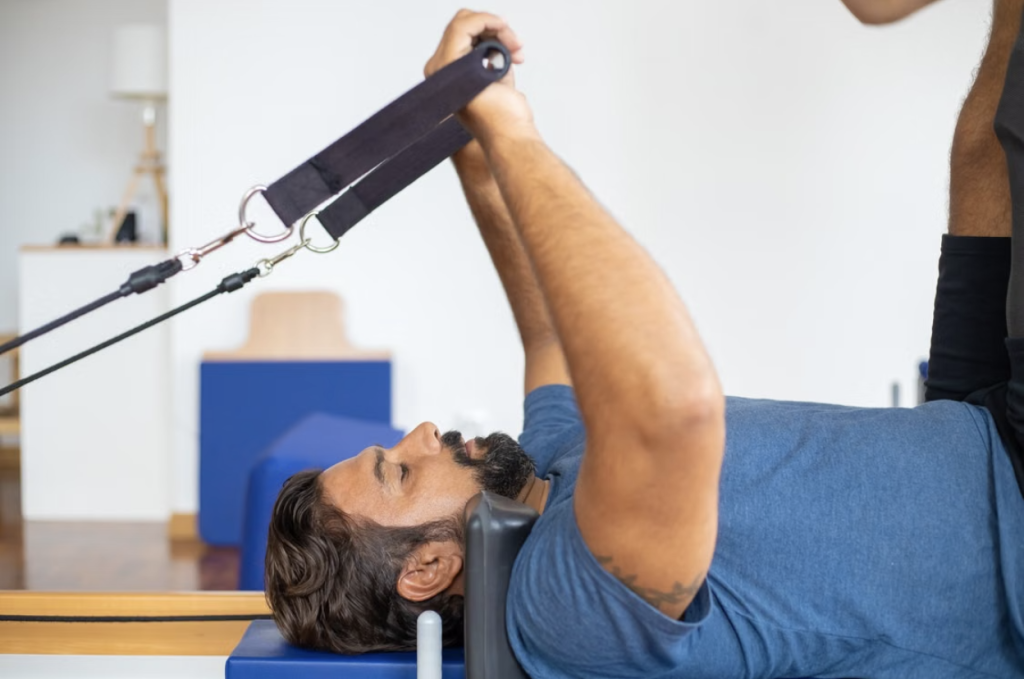
Most home equipment is bought for the person we plan to be next year. The rowing machine, the rack of kettlebells, the bike that arrives in a very large box: each one is a small bet on a future self with more time and a better attitude.
A reformer is a bigger bet than most. It’s long. It sits in a room people see. It’s easy to walk past. It asks for a lot of floor and gives you nothing to look at while it waits.
I’d choose around the ordinary weeks instead, because those are most of them: a late meeting, a dinner that runs long, an evening when you’d rather just sit down. If a machine is easy to use, then it’ll do.
The Cue Does the Work
One study is worth knowing about. Researchers at University College London asked 96 volunteers to pick a small daily habit and tie it to a setting, after breakfast, say, then keep it up for 12 weeks.
It took a median of 66 days to feel close to automatic, with individual estimates running from 18 days to 254. Missing a day made little difference. What helped was doing it in the same place. The surroundings took over from conscious effort.
One catch: the volunteers did their habit every day. A reformer is more likely to be a twice-a-week thing, so the numbers won’t transfer neatly. The direction holds, though. The more settled the setting, the less effort the habit takes.
A reformer that’s already out in the room does the nudging for you. One folded away in a cupboard has to be fetched. Fetching is exactly what a tired evening won’t do.
Two Days Is the Bar
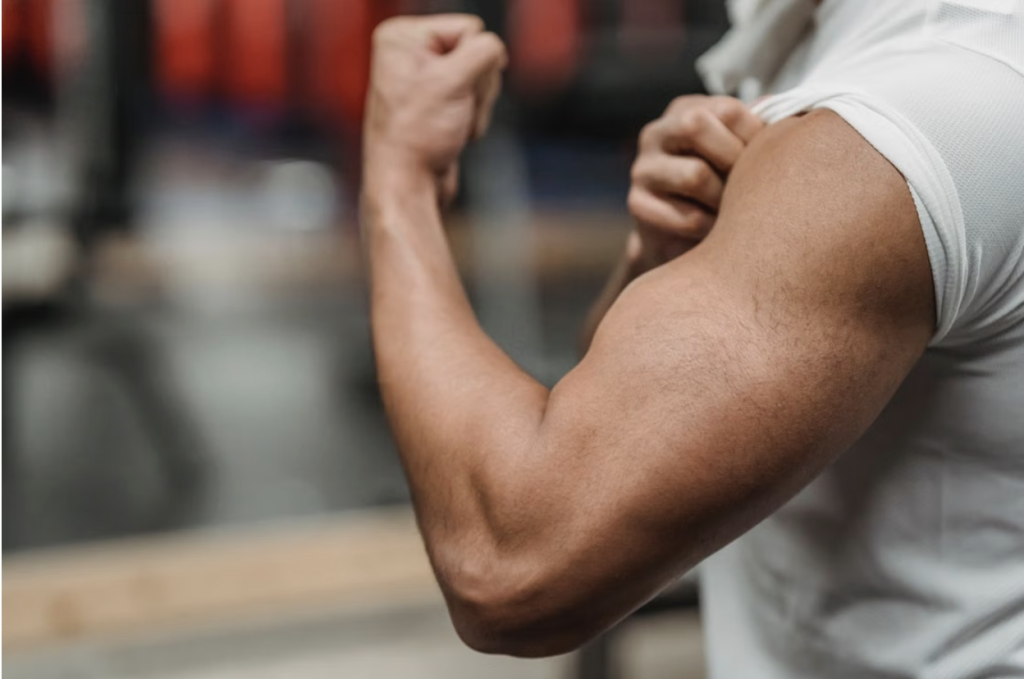
The Physical Activity Guidelines put the minimum for muscle-strengthening activity (lifting weights or doing push-ups, for instance) at two days a week.
That’s a lower bar than most people set themselves, which is good news. It’s also a reason to be honest about how much effort the set-up takes. A machine that needs ten minutes of preparation before every session is competing with everything else that wants the evening.
You don’t need a grand plan for that. Two sessions that slot into a normal week will do it. The machine’s only job is to make them easy to start.
Pin the sessions to the same slots each week, say after the school run. The study’s idea of a consistent setting is then easy to copy.
A Machine With an Address
Where the machine lives decides more than which machine it is. The Foldable Eco is listed at 250 by 79 cm at its widest point. Its page says it goes under most beds or into a closet.
The Queen Studio is listed at 242 cm long and 67 kg, a different proposition to shift about. A folding frame suits a guest room that has to remain a guest room. A fixed frame suits a space that can be given over.
A guest room that doubles as a gym needs a plan for the arrival of guests. If the machine folds under the bed, the room is ready in minutes. If it doesn’t, there’s a very long piece of equipment in somebody’s bedroom.
Second homes need their own thinking. If the routine only exists at one address, I’d put the machine at that address. Carrying a reformer between houses means the cue keeps disappearing.
A machine in a house you visit twice a month will see about as many sessions as you do.
When the House Is Shared
Both of those models list users from 150 to 192 cm, up to 150 kg. That’s two models out of a collection. The line on each page is worth reading. Two people sharing a machine will adjust the footbar and ropes between sessions (somebody at 150 cm and somebody at 190 need very different settings).
The Foldable Eco’s page describes a cushioned footbar that’s easy to adjust mid-workout. The Queen Studio lists a removable pulley riser, a loop rope system, and a three-position headrest.
The longer the set-up takes, the likelier you are to sit down instead. If you’re new to reformer work, a few sessions with a qualified instructor will show you which settings suit you.
The Look of the Thing
You’ll be looking at it daily, so it’s fair to care what it looks like. The Foldable Eco’s frame is FSC-certified oak with powder-coated steel, upholstered in grey or beige.
A custom-colour option exists too, though it’s worth asking what that involves before you fall for a shade. The Queen Studio is built on aluminium, in grey or black.
None of that affects how a session feels, but it does affect how you feel about the thing when you walk past.
The Shop Window
When you’re ready to buy a Pilates reformer, The Core Collab’s Pilates reformers sit together in one collection from an Australian brand.
Folding and fixed frames are side by side, along with a few trapeze and tower models and some accessories that aren’t reformers at all. That page shows you the range. The figures, including what comes in the box, are on each product’s own page.
The Foldable Eco and the Queen Studio both list a box, a jumpboard, and a standing platform. All three have to be stored somewhere.
Pick the model whose page leaves the fewest questions about who’ll use it, where it’ll go, and how long it takes to get ready.
The Evening Test
Before ordering, I’d go through one imagined evening. You got home late, there are guests in the house, and there’s no energy left. Can you be on the machine within a few minutes, or would something have to be moved first?
If you can, the fit is good. If you can’t, the trouble is the room or the model. That’s a lot easier to discover before it arrives.
Then imagine a quiet morning with nowhere to be. Almost any machine passes that one. That’s why the evening is the real test. A reformer that suits the week you have is the one still in use next year.
Author

Written by
Recent Posts
How Family Property Disputes Can Affect Relationships and Long-Term Plans
Choosing a Reformer for the Life You Already Have
Artful Living: Unique Gifts With A Creative Edge
Best Bellevue Kitchen Remodelers in 2026
How to Get Frozen Donor Eggs in Santa Monica: A Step-by-Step Guide
Categories
- Art
- Articles
- Business of Luxury
- Celebrities
- Culture
- Entertainment
- Events
- Faces of Summer 2026
- Fashion
- Fashion & Style
- Featured
- Finance
- Food, Spirits, Wine
- Hamptons
- Hamptons Celebrities
- Health
- Health & Beauty
- Lifestyle
- Luxury Lifestyle
- Press
- Profiles
- Real Estate
- Technology
- The Chronicles
- Travel
- Uncategorized
- Weddings