

In 1994, a seventeen-year-old from Villa Kennedy attended a tryout for the Seattle Mariners. He was a promising baseball player — good enough to be there, possibly good enough to be signed. Daddy Yankee net worth was not a concept that existed yet. Ramón Luis Ayala Rodríguez was a kid from a San Juan housing project trying to get out through baseball. A stray bullet from a nearby drive-by struck him in the leg during the tryout. The baseball career ended that afternoon. He went home to Villa Kennedy and turned full-time to music. Ten years later he released Gasolina, the song that introduced reggaeton to the world. He did not become Daddy Yankee despite being shot. He became Daddy Yankee because of it. The wound is the origin.
Villa Kennedy and the Underground That Built Reggaeton
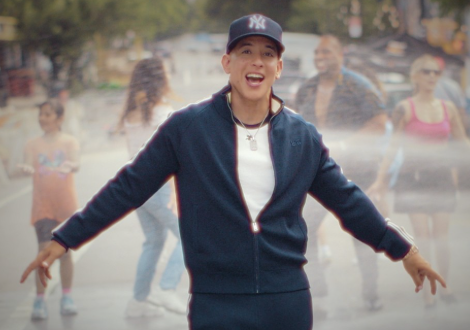
Ramón Luis Ayala Rodríguez was born on February 3, 1977, in the Santurce district of San Juan, Puerto Rico. He was raised in Villa Kennedy — a caserío, a public housing project, working class and dense. His father, Ramón Ayala Sr., was a percussionist who played in salsa bands. Notably, music was present in the household before it became a career option. Villa Kennedy sits in Santurce, one of San Juan’s oldest and most culturally dense neighborhoods.
The caserío system — Puerto Rico’s public housing projects — produced an outsized share of the island’s most significant musicians across multiple genres. Indeed, reggaeton was born in buildings like these. The percussion in Ramón Ayala Sr.’s hands moved through the walls of a caserío in Santurce and into his son’s early understanding of what music was supposed to feel like. By his early teens he was absorbed in the reggaeton underground. In Puerto Rico it was called simply “underground” — circulating through San Juan on mixtapes and at block parties. Daddy Yankee net worth in this period did not exist in any trackable form. He was building the genre before the genre had a name anyone outside Puerto Rico recognized.
The bullet in 1994 accelerated a path that was forming regardless. Baseball was a clear way out. Music was already the calling. When the first path closed, the second was there. He began recording with DJ Playero through the mid-1990s, working the underground circuit as the genre developed. Meanwhile, mixtapes circulated. Consequently, the reputation built slowly. Barrio Fino en Directo arrived in 2002. The full studio album Barrio Fino followed in 2004. On it was a single that did not just chart — it restructured what the global music market thought was possible for a Caribbean genre recorded in Spanish.
Daddy Yankee Net Worth and the Gasolina Effect

No single song in reggaeton history did more work than Gasolina. It was not merely a hit. It was commercial proof of concept for an entire genre — evidence delivered simultaneously to radio programmers, label executives, and mass audiences in North America and Europe that a Puerto Rican underground sound could dominate global charts. Billboard has documented Gasolina’s place in the architecture of twenty-first century popular music. The song reached number one in multiple countries. Furthermore, top ten positions across dozens of markets followed. Additionally, a Grammy nomination arrived in 2005. It remains one of the most-streamed songs of its era, still accumulating plays two decades after its release.
The years between the 1994 injury and the 2004 release of Barrio Fino were not wasted years. They were the years in which the genre was assembled. DJ Playero’s mixtapes, DJ Nelson’s circuit, the block party infrastructure of San Juan’s housing projects — these were the recording studios and radio stations of an underground scene with no label relationships and no radio play. Daddy Yankee worked within that system for nearly a decade before Gasolina gave the system a face the rest of the world could recognize. Before 2004, reggaeton was a regional underground genre. After 2004, it was a global commercial category — with infrastructure, labels, promoters, radio formats, and proof that the path from San Juan to international markets was navigable.
The Catalog Gasolina Built and What It Still Pays
J Balvin, Bad Bunny, Maluma, and Ozuna built careers on a runway Gasolina helped establish. Daddy Yankee net worth reflects decades of royalties from a song that became foundational text for the genre it helped create. The catalog does not stop generating income. Gasolina is permanent infrastructure — the kind of asset that pays regardless of what its creator does next. It pays when he tours. It pays when he does not tour. Whether he is in Puerto Rico attending to his faith or not in the industry at all — the royalties continue regardless. The economics of a catalog hit at that scale do not require the artist to remain active. They require only that the song keep getting played. Gasolina keeps getting played.
What Daddy Yankee Built: Despacito and the Second Explosion
Thirteen years after Gasolina, he did it again. Despacito, recorded with Luis Fonsi, arrived in January 2017. Over eight billion YouTube views accumulated — among the most-watched videos in the platform’s history. A remix featuring Justin Bieber dropped in April 2017. It reached number one in forty-seven countries simultaneously. On the Billboard Hot 100, the song spent sixteen weeks at number one — the longest run by a predominantly Spanish-language song in the chart’s history at that point. Four Latin Grammy Awards followed. Rolling Stone assessed Despacito’s structural impact on American radio as confirmation that the mainstream and Latin markets were the same market.
Two songs, thirteen years apart, each reorienting the global music landscape from a different mechanism. Gasolina moved by rhythmic force from below. Despacito moved through a streaming-era distribution system that did not exist in 2004. Notably, most artists get one song that changes the conversation. Daddy Yankee got two, in different decades. Daddy Yankee net worth absorbed the commercial return of both catalogs. Forbes has tracked Daddy Yankee net worth as catalog-driven income supplemented by touring revenue from some of the highest-grossing Latin tours on record. For full competitive context, Social Life Magazine’s Celebrity Net Worth Rankings 2026 places Daddy Yankee net worth against every major figure active today.
Where Daddy Yankee Is Now: The Retirement, the Faith, and Villa Kennedy’s Return
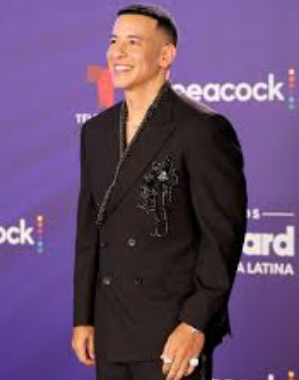
In 2022, Daddy Yankee announced his retirement from music. Importantly, the announcement did not come from commercial decline. It arrived at full commercial power — Despacito still accumulating streams globally, the catalog generating perpetual income, tours still selling out arenas. He cited his Christian faith as the reason. He framed the retirement as a choice to redirect his life toward religious commitments rather than commercial ones. El Último Tour del Mundo — the farewell tour — ran through 2022 and into 2023. Arenas across North America and Latin America sold out. Then he stopped.
Gasolina, Despacito, and the retirement-on-top decision are part of the Latin music argument mapped in Latin Music Moguls: How Bad Bunny, Shakira, and Daddy Yankee Built $390M — an examination of how three artists from Puerto Rico and Colombia built global wealth without crossing over to English, and why the market came to them instead.
Daddy Yankee Net Worth: What the Catalog Pays After the Exit
The retirement also separated two categories that are often conflated: commercial success and artistic continuation. Most artists treat those two things as inseparable. Specifically, stopping means the income stops. Daddy Yankee retired with the catalog already generating what it will generate indefinitely, regardless of whether he records another song. That financial architecture — built on two songs that no longer need promotion — made the retirement structurally possible in a way it would not have been for most artists at his level.
Daddy Yankee net worth in 2026 is largely a catalog story now. Gasolina and Despacito generate streaming royalties that require no touring and no further decisions. The New York Times covered the retirement as the deliberate close of a defining chapter in Latin music — an exit by the artist who started the genre. The stray bullet in a San Juan housing project in 1994 was not the tragedy. It was the beginning. Daddy Yankee net worth is what the beginning compounded into over thirty years.
Feature your brand in the Hamptons: Contact Social Life Magazine — we connect luxury brands with the audiences that close.
The East End’s premier sporting event: Polo Hamptons — sponsorships, VIP access, and brand activations where the Hamptons actually convenes.
Get the Hamptons insider list: Subscribe to Social Life Magazine — 23 years of the East End, delivered to your door.
Support independent Hamptons journalism: Donate $5
Part of these collections:
→ Celebrity Net Worth Rankings 2026
→ Latin Music Moguls: Bad Bunny, Shakira & Daddy Yankee — $390M
Related reading:
→ Bad Bunny Net Worth 2026: Three Records, Zero English Songs
→ Shakira Net Worth 2026: From Barranquilla to $300 Million
Author

Written by
Recent Posts
7 Mindful Meal Prep Tips for Stop Food Waste Day

Rebecca Ferguson Net Worth: The Advantage of Not Being the Lead
What Makes a Dinner Party Truly Unforgettable (Hint: It’s Not the Food)
Tips for Managing Grease and Oil in Everyday Dishwashing

Austin Butler Net Worth: The Method Actor in a Post-Method World
Categories
- Art
- Articles
- Beauty & Skincare
- Celebrities
- Celebrities|Entertainment
- Celebrities|Television
- Celebrities|The Chronicles
- celebrities|the-archive
- Chronicles
- Entertainment|Culture
- Event Photos
- Events
- Fashion
- Fashion & Style
- Featured
- Food & Beverage
- Food, Spirits, Wine
- Hamptons
- Hamptons Celebrities
- Hamptons Celebrities|Celebrities|The Chronicles
- Health
- Health & Beauty
- Lifestyle
- Luxury Lifestyle
- Movies
- Press
- Profiles
- Real Estate
- Technology
- The Chronicles
- Travel
- Uncategorized
- Weddings