
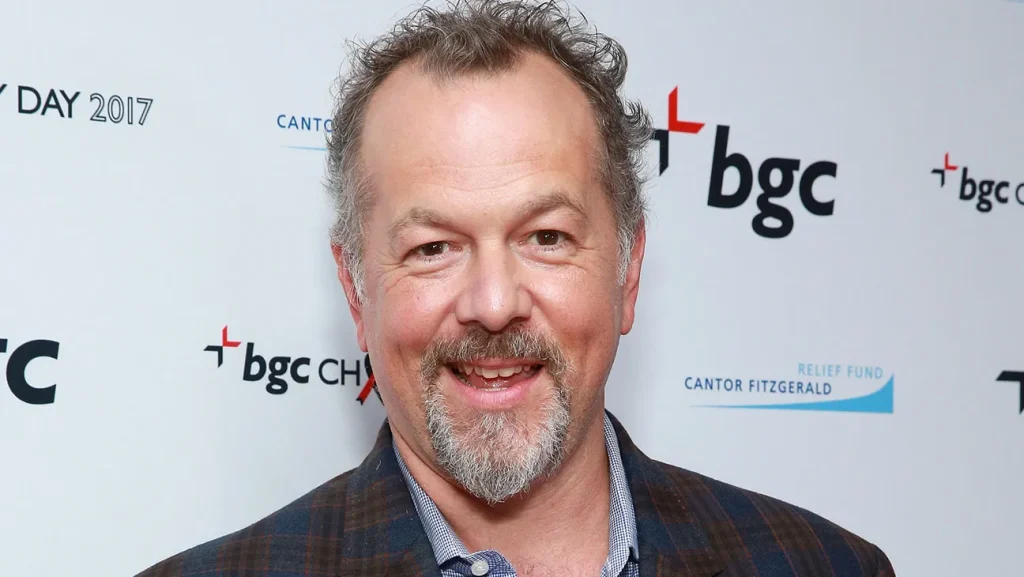
Here’s a test. Name the actor who appeared in The Wire, Breaking Bad, Better Call Saul, Damages, Flight of the Conchords, and Billions. Six shows that collectively represent the most important era in television history. One actor threaded through all of them. If you can’t name him, that’s the point. The David Costabile net worth of $6 million belongs to the most consistently employed character actor in prestige TV who still walks through Park Slope without being recognized.

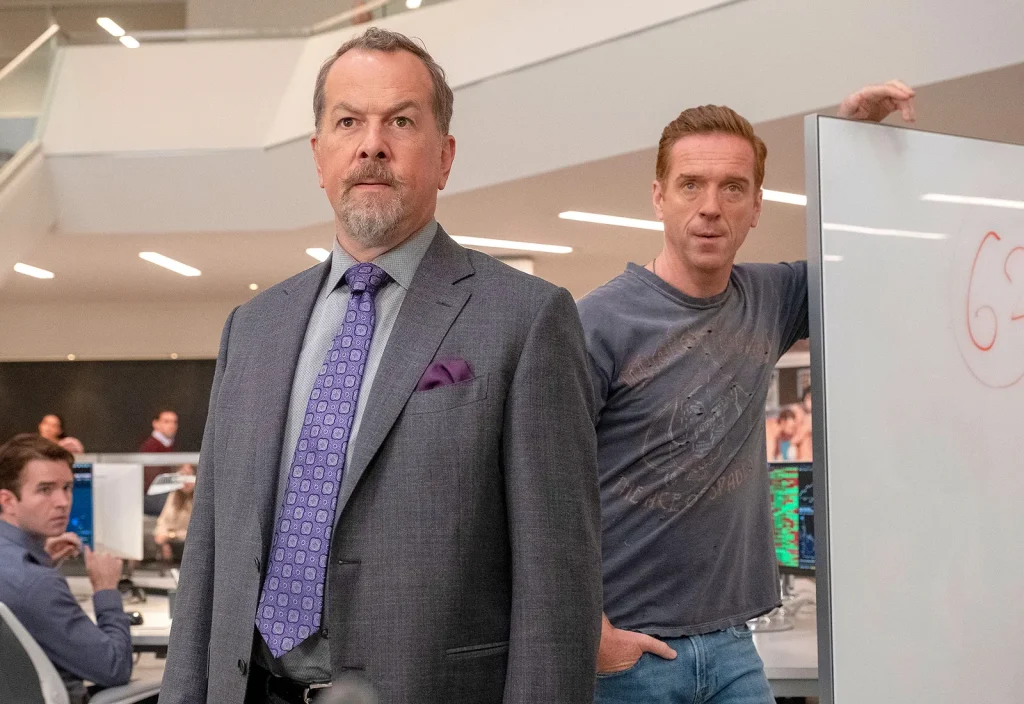
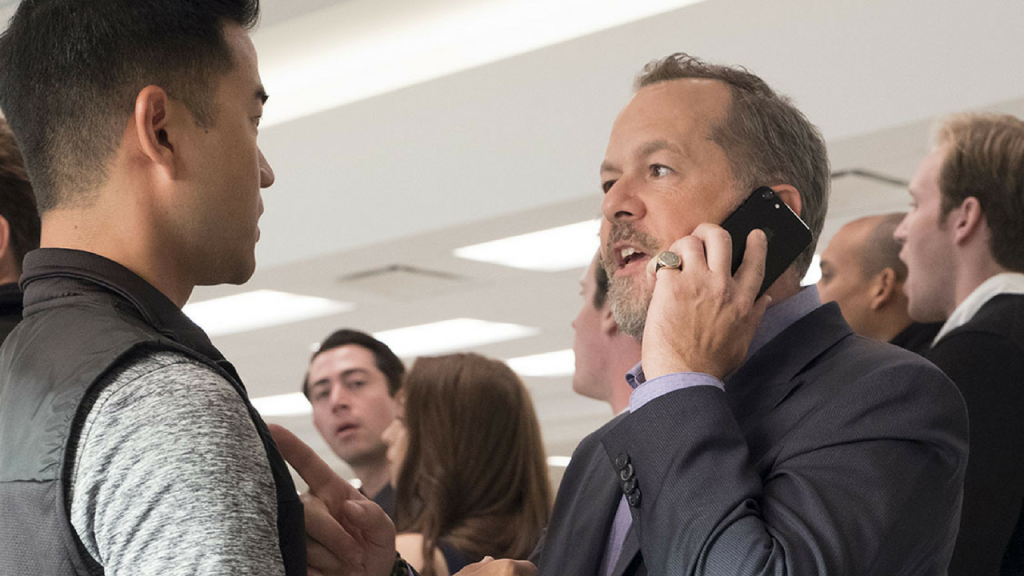
Costabile played Mike “Wags” Wagner on Billions for seven seasons. The character became the most quoted figure in hedge fund culture. Cocaine at dawn. Six-figure donations dropped like loose change. One-liners so sharp they could sever a trading relationship at forty paces. Wags was the id of Wall Street excess, and Costabile played him with the unhinged precision of someone who goes home every night to a Brooklyn walkup, two daughters, and a wife named Eliza.
The David Costabile net worth story is the opposite of every other profile in the Billions cast net worth breakdown. No tragedy. Not a hint of frustrated ambition. Zero cautionary tale energy about timing or gender pay gaps. Just a man who figured out the one career strategy that Hollywood can’t disrupt: be so good at your job that every showrunner in the industry keeps your number on speed dial.
The Before: Washington, Tufts, and the Long Anonymous Middle
David Costabile was born on January 9, 1967, in Washington, D.C. He is of Italian ancestry. Beyond those biographical coordinates, his early life is remarkably absent from public record. No family dynasty. Famous parents were absent from the equation. Not even an origin story that screenwriters could dramatize. Nevertheless, he grew up, went to school, and decided to act. The end.
Costabile attended Tufts University for his undergraduate degree. Tufts is a respected institution that rarely appears in celebrity profiles because it produces competent professionals rather than household names. In contrast, after graduating, he pursued a Master of Fine Arts at New York University. The MFA provided training and connections. Notably, it also placed him in the same academic ecosystem that produced half the serious actors working in New York theater during the 1990s.
The early years were theater. Exclusively theater. Costabile appeared in a 1995 production of Shakespeare’s The Tempest on Broadway. In 1997, he performed in the musical Titanic. Not the James Cameron film. The Broadway musical about the sinking ship. A show that won the Tony Award for Best Musical and then largely vanished from cultural memory. Furthermore, Costabile appeared in Tony Kushner and Jeanine Tesori’s award-winning musical Caroline, or Change in the early 2000s, followed by a Shakespeare in the Park production of The Two Gentlemen of Verona. In 2007, he returned to Broadway for a revival of Translations.
This is a theater résumé that most working actors would frame and hang. Shakespeare. Kushner. Sondheim-adjacent musicals. Award-winning revivals. None of it translated into name recognition outside a twelve-block radius of Times Square. Costabile spent a decade building the kind of craft that casting directors worship and audiences never see.
The Chip: FedEx Commercials and the Indignity of Invisibility
Before The Wire and Breaking Bad and Billions, Costabile appeared in television commercials. FedEx. Microsoft. The kind of work that pays the mortgage and kills a small piece of your artistic self-respect with each take. Every character actor in New York has a commercial reel they’d prefer you didn’t find. Costabile’s simply preceded one of the most remarkable television careers of the 21st century.
His first significant screen credit arrived in 1998. A small part in Edward Zwick’s The Siege, starring Denzel Washington, Annette Bening, and Bruce Willis. The role was minor. The film grossed $116 million globally. Costabile’s contribution was invisible to audiences and visible to casting directors. That distinction defines the character actor’s existence. Additionally, it explains why the path from commercial work to prestige television is measured in years rather than months.
The commercial-to-prestige pipeline is a journey that most actors don’t survive with their ambitions intact. You start by selling shipping services on camera. You end by playing a meth lab executive for Vince Gilligan. In fact, the middle section involves a decade of obscurity, hundreds of auditions, and the quiet discipline of someone who knows they’re talented enough for the work that hasn’t arrived yet. Costabile walked that pipeline without complaint, without public struggle, and without the kind of dramatic career narrative that generates profiles. Consequently, by the time prestige television found him, he was the most prepared actor in every room he entered.
The Rise: Four Shows That Built a Secret Empire
In 2007, David Costabile landed two recurring television roles that changed everything. He played Detective Rick Messer on the legal thriller Damages and Doug on the HBO comedy Flight of the Conchords. Additionally, the contrast is instructive. A gritty legal procedural and a deadpan comedy about two New Zealand musicians trying to make it in New York. Same actor. Same year. Completely different registers. Nevertheless, both performances were excellent.
Then came The Wire. Costabile played Thomas Klebanow, the managing editor of the Baltimore Sun, in the show’s fifth and final season. The Wire is regularly cited as the greatest television drama ever produced. Appearing in its final season placed Costabile inside a creative ecosystem that included David Simon, one of the most important writers in American television history. Notably, the role was small. The credential was enormous.
Breaking Bad and the Reputation Compound

Breaking Bad followed. Costabile appeared as Gale Boetticher, a mild-mannered chemist who becomes a pivotal figure in Walter White’s meth empire. The character’s death scene in Season 3 remains one of the most discussed moments in the series. He later reprised the role in Better Call Saul. Two shows. One shared universe. Both ranked among the greatest dramas in television history. Furthermore, Costabile’s ability to make Gale simultaneously sympathetic, brilliant, and doomed demonstrated the precise skill that separates character actors from background players.
The David Costabile net worth accumulated steadily through this period. None of these roles made him rich. However, each one made him more employable. The Wire led to Breaking Bad. Breaking Bad led to a reputation. In addition, the reputation led to Billions. The compounding wasn’t financial. It was professional. Ultimately, every showrunner who hired him told the next showrunner that Costabile would deliver something beyond what the script required.
The Billions Chapter: Becoming Wags
In 2016, Costabile was cast as Mike “Wags” Wagner, the Chief Operating Officer of Axe Capital, on Showtime’s Billions. The role would consume seven years of his career and produce the character that defined how America imagines the lifestyle side of hedge fund culture.
Wags was excess personified. Cocaine binges at 4am. Wine collections that required dedicated storage facilities. Women. Watches. A $500,000 charitable donation dropped so casually in Season 1 that it barely registered on his fictional balance sheet. The character’s estimated net worth within the show’s universe was approximately $200 million, accumulated through decades of serving as Bobby Axelrod’s most trusted lieutenant and earning bonuses that would qualify as most people’s retirement funds.
What Costabile brought to Wags transcended the writing. He found the loneliness underneath the hedonism. Therefore, the emptiness that no amount of cocaine could fill. The particular sadness of a man whose entire identity was subordinate to someone else’s genius. Wags without Axelrod was nothing, and Costabile played that dependency with a vulnerability that the show’s most devoted fans recognized even when the scripts didn’t explicitly address it. Additionally, his one-liners became social currency in actual finance circles. Hedge fund analysts quoted Wags at steakhouse dinners from Midtown to Montauk. The character became a permission structure for Wall Street’s most indulgent impulses.
Costabile’s per-episode salary on Billions has not been publicly confirmed. As a series regular on a premium cable drama without top billing, industry standards suggest a range between $50,000 and $125,000 per episode. Consequently, over 84 episodes across seven seasons, that translates to gross earnings between $4.2 million and $10.5 million. Given the David Costabile net worth of $6 million, the lower end of that estimate appears more likely after accounting for taxes and representation fees.
The Film Résumé Nobody Discusses
Costabile’s film career operates in the same register as his television work: quietly excellent, commercially invisible. In 2008, he played a high school teacher in the psychological drama Afterschool. In 2012, Steven Spielberg cast him as James Ashley, the American politician and abolitionist, in Lincoln. Notably, that credit alone would be a career highlight for most actors. Costabile barely mentions it.
He appeared in Steven Soderbergh’s Side Effects in 2013, the Brad Furman thriller Runner Runner the same year, and Spielberg’s The Post in 2017, where he played humorist Art Buchwald. The Mötley Crüe biopic The Dirt in 2019 featured him as music manager Doc McGhee. Notably, each role placed him alongside directors and actors who represent the highest tier of the industry: Spielberg twice, Soderbergh, Fincher-adjacent projects through House of Cards connections.
In late 2025, Costabile was cast in Season 3 of Disney+‘s Percy Jackson & the Olympians. The role represents his first major franchise television credit outside the adult drama space. From Wags’s cocaine-fueled trading floor to Greek mythology for teenagers. Furthermore, the casting demonstrates something that the David Costabile net worth figure confirms: he remains in constant demand across every genre, every platform, and every audience demographic. The industry doesn’t give him fame. It gives him work. For a character actor, that’s the better deal.
The Tell: Park Slope, Two Daughters, and the Anti-Wags Life
Costabile married Eliza Baldi in 2012. They have two daughters, Lucy and Julia. Ultimately, the family lives in the Park Slope neighborhood of Brooklyn, a community defined by brownstones, independent bookshops, organic grocery co-ops, and parents who discuss school zoning with the intensity that Wags reserves for vintage Burgundy.
The contrast between Costabile’s real life and his most famous character is so complete that it functions as its own performance. Wags lives alone in a penthouse filled with expensive mistakes. Costabile walks his daughters to school on tree-lined streets. Wags’s morning involves controlled substances and regret. Costabile’s morning presumably involves oatmeal and school drop-off logistics. The gap isn’t ironic. It’s the source material. Actors who play excess convincingly are almost always disciplined people. Additionally, the ones who play chaos need order at home the way distance runners need hydration. It’s structural, not coincidental.
Costabile has no public social media presence of any significance. Lifestyle interviews hold no appeal. Personal brand curation is equally absent. Instead, he shows up, delivers performances that elevate every project he touches, and returns to a life that has absolutely nothing in common with the characters he plays. The David Costabile net worth of $6 million supports that life comfortably without enabling the kind of excess that made Wags famous. Apparently, the universe has a sense of humor.
The Hamptons Chapter: Wags as the East End’s Guilty Conscience
Wags was the character that said what every hedge fund COO thinks at 2am but would never say at the charity polo match. He was the unfiltered version of a social type that populates the East End every summer: the loyal number two who enables the alpha’s worst instincts while maintaining just enough self-awareness to know he’s complicit.
For readers of Social Life Magazine, Wags is simultaneously a caricature and a documentary subject. The wine obsession. Additionally, all that compulsive name-dropping. An ability to produce a restaurant reservation that doesn’t exist for anyone else. The casual generosity that functions as a dominance display rather than philanthropy. In contrast, every element of the character maps onto behaviors that our readers observe at events from Memorial Day through Labor Day. Notably, Costabile played this archetype without a single note of condescension. He didn’t judge Wags. He inhabited him. Meanwhile, the character felt like satire and ethnography at the same time.
The genius of the performance was in what Costabile didn’t do. He never winked at the camera. Not once did he signal that he was above the material. Instead, he played a man who genuinely believes that the ability to secure a table at Rao’s is a meaningful life accomplishment, and he did it with such commitment that the audience couldn’t tell if they were laughing at Wags or with him. Consequently, hedge fund professionals adopted Wags as a mascot because the character validated their lifestyle without asking them to examine it. Costabile gave them that gift. Then he went home to Park Slope and helped with homework.
The East End Verdict
David Costabile net worth of $6 million represents the cleanest career story in the Billions cast net worth portfolio. No tragedy. Zero frustrated potential. Not a single timing failure or gender pay gap to lament. Just a man who spent a decade doing FedEx commercials and Shakespeare, then spent another decade appearing in The Wire, Breaking Bad, and Billions, and somehow arrived at 59 years old as the most in-demand character actor in television without a single headline to show for it.
Wags’s fictional net worth was $200 million. Costabile’s real net worth is $6 million. A 33x gap between character and performer that Wags himself would find unacceptable. Wags would want to fix it. Leverage would be his first suggestion. A side deal would follow immediately. And he’d insist that the number doesn’t reflect the value.
He’d be right. The David Costabile net worth doesn’t reflect the value. It reflects the price. And in the character actor’s economy, those two numbers were never supposed to match. The value is in the reel. Four of the greatest television shows ever produced. Spielberg twice. A character that an entire industry adopted as its spirit animal. Six million dollars and a brownstone in Park Slope. Wags would be horrified. Costabile, one suspects, is fine. And that might be the most subversive thing about him — that the man who played television’s greatest monument to excess went home every night and chose the opposite. Not as protest. Not as performance. Just as preference. Which, when you think about it, is the one luxury Wags could never afford.
Related Reading
Billions Cast Net Worth 2026: What the Stars of Wall Street’s Favorite Show Actually Earned
Damian Lewis Net Worth 2026: From Bobby Axelrod to Sweet Chaos
Corey Stoll Net Worth 2026: The $3M Man in a Billionaire’s Suit
The Ultimate Hamptons Dining Guide 2026
There are people who watch shows about wealth. Then there are people who build it, manage it, and summer alongside it. If you’re reading this, you already know which category you belong to.
Social Life Magazine has been the Hamptons’ definitive luxury publication for over two decades. To feature your brand, business, or personal story in our pages, reach out to our editorial team.
Looking for maximum visibility among the East End’s most affluent audience? Submit a Paid Feature and position yourself where 25,000 readers per issue are already looking.
Our email list reaches 82,000 subscribers who care about luxury lifestyle, real estate, and social capital. Join the list and stay ahead of the conversation.
Polo Hamptons returns summer 2026 with the most exclusive brand activation opportunity on the East End. VIP cabanas, sponsor tents, and access to a guest demographic averaging $3.62 million in net worth. Explore sponsorship at polohamptons.com.
Want Social Life Magazine delivered to your door? Five summer issues plus fall and winter editions. Subscribe here.
If this article taught you the name of the actor behind Wags — or confirmed what you already knew — consider supporting independent luxury journalism. Donate $5 here.
Author

Written by
Recent Posts
David Costabile Net Worth: Television’s Most Valuable Player You Can’t Name

Asia Kate Dillon Net Worth: The Pioneer Who Rewrote Television’s Rules

Corey Stoll Net Worth: The Actor Who Inherited a Throne Nobody Wanted

Maggie Siff Net Worth: The Woman Who Worked at a Hedge Fund Before Playing One on TV

Paul Giamatti Net Worth: The Institutional Man Who Played Power From the Inside
Categories
- Art
- Articles
- Beauty & Skincare
- Celebrities
- Celebrities|The Chronicles
- Chronicles
- Entertainment|Culture
- Event Photos
- Events
- Fashion
- Fashion & Style
- Featured
- Food & Beverage
- Food, Spirits, Wine
- Hamptons
- Hamptons Celebrities
- Hamptons Celebrities|Celebrities|The Chronicles
- Health
- Health & Beauty
- Lifestyle
- Luxury Lifestyle
- Movies|Hamptons Lifestyle
- Press
- Profiles
- Real Estate
- Technology
- The Chronicles
- Travel
- Uncategorized
- Weddings