
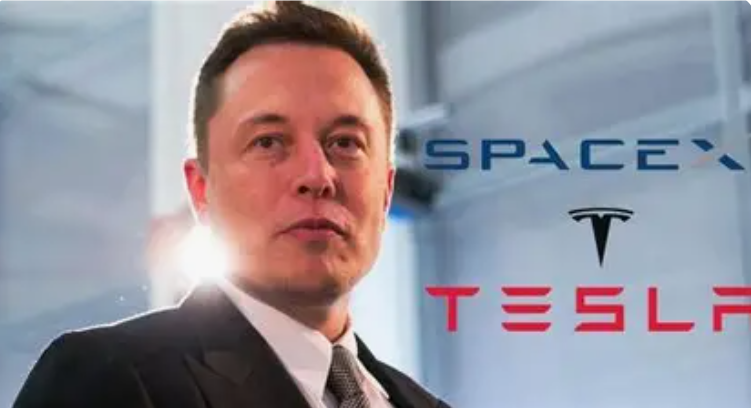
The boy couldn’t recognize his own face.
It was 1983 in Johannesburg, and twelve-year-old Elon Musk lay in a hospital bed at Sandton Clinic. His father, Errol, stood in the doorway but said he didn’t recognize his son. The bullies at Bryanston High had beaten him so severely that his features were unrecognizable. They had thrown him down a concrete staircase and kept kicking until other students pulled them away.
After two weeks in the hospital, neither the school nor the police pursued the matter.
Then, when Elon finally came home, still swollen and bruised, his father screamed at him for an hour. Errol took the bully’s side, called his son an idiot, and told him he was worthless.
Today, remarkably, that beaten child is worth approximately $750 billion according to Forbes. In fact, he became the first person in history to reach $300 billion, $400 billion, $500 billion, $600 billion, and $700 billion in net worth. Currently, he stands as the world’s richest man by a factor of nearly three.
But somewhere inside that $750 billion empire, there’s still a twelve-year-old boy trying to build a world where he finally feels safe.
The Wound: Growing Up in Violence
Elon Reeve Musk was born on June 28, 1971, in Pretoria, South Africa. His mother, Maye, was a stunning model and dietitian, while his father, Errol, was a brilliant electromechanical engineer. On paper, it looked like privilege.
The reality was different.
Maye Musk has spoken publicly about what happened behind closed doors. In a BBC interview, she described coming home from her honeymoon “bruised and pregnant.” She recalled five-year-old Elon wedging himself between her and Errol, hitting his father’s legs, trying to stop the violence while his younger siblings cried in the corner.
“My childhood was very violent,” Elon has confirmed in multiple interviews. Most of his youth, he said, was “punctuated with extreme violence” between the ages of six and sixteen.
At school, however, it was even worse. Elon was small for his age—awkward, intellectually precocious, and emotionally disconnected in ways that made friendship difficult. Later, he would identify these traits as symptoms of Asperger’s syndrome. Unfortunately, the other boys smelled weakness.
“The gangs at school would hunt me down,” Musk told Rolling Stone. “Literally hunt me down.”
In addition, he attended “veldskool,” a South African wilderness survival camp that Musk described as “a paramilitary Lord of the Flies” where “bullying was considered a virtue.” Children were given food rations and encouraged to fight over them. During his first camp at age twelve, Elon lost over four kilograms and was beaten twice.
So where did the boy go to escape?
Books.
The Escape: Ten Hours a Day in Another World
When the physical world offered only violence, Elon built a fortress out of pages.
Typically, he would read for ten hours a day—science fiction mostly. Isaac Asimov’s Foundation series. Robert Heinlein. Douglas Adams. These were stories about heroes who saved civilizations, who built new worlds, who escaped the brutal limitations of the present through technology and vision.
“I was raised by books,” Musk told Rolling Stone. “Books, and then my parents.”
By age nine, he had read the entire Encyclopedia Britannica. After exhausting the local library’s science fiction section, he moved to technical books—physics, engineering, rocket propulsion. His mother, Maye, would call him and quiz him on random topics. Remarkably, he always had an answer.
When his parents divorced in 1979, eight-year-old Elon made a choice that would haunt him. Because he felt sorry for his father alone in that big house, he chose to live with Errol.
“It was not a good idea,” Musk would later admit.
However, Errol had the Encyclopedia Britannica. Moreover, he had a computer. For a boy who needed to escape into information, those tools were worth the price of living with a man he would one day call “a terrible human being.”
At twelve, Elon taught himself to code. By thirteen, he had created a video game called Blastar and sold it to a computer magazine for approximately $500. While other kids played, Elon built.
Already, he was preparing for an escape that would take him around the world.
The Chip: Proving Everyone Wrong
The chip on Elon Musk’s shoulder is the size of a continent.
When he told his father he was leaving South Africa for Canada at seventeen, Errol predicted failure. According to Errol, his son would be back within months, tail between his legs. After all, the boy who was called an idiot, who was beaten at school and screamed at home, was supposed to be worthless.
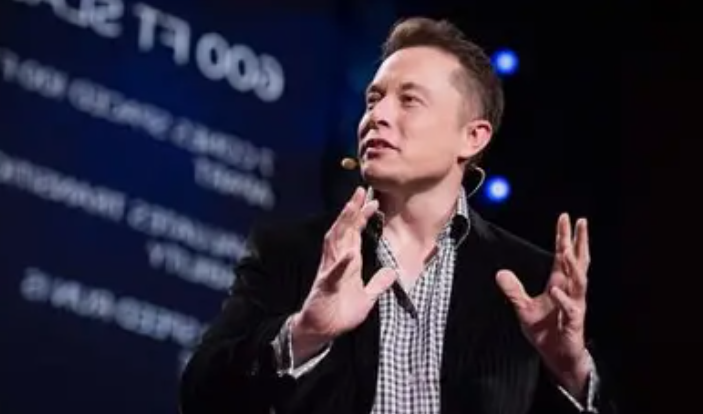
Elon left anyway. With just a suitcase and a backpack, he arrived in Canada carrying $2,000 and a dream of reaching America—the place he had read about in books. This was the land of opportunity. The place where someone could build a rocket, start a company, change the world.
First, he worked on a farm. Then he cleaned boilers at a lumber mill. For months, he survived on a dollar a day. Eventually, he enrolled at Queen’s University, then transferred to the University of Pennsylvania, where he earned degrees in physics and economics.
Stanford’s PhD program in physics accepted him. Yet he dropped out after just two days.
It was 1995. The internet was exploding. And Elon Musk wasn’t going to spend years in academia when he could be building.
The Rise: From Nothing to Three-Quarters of a Trillion
The success story is well documented. However, what’s less discussed is how every failure almost killed him.
In 1995, Elon and his brother Kimbal founded Zip2 in a tiny rented office in Palo Alto. Because they couldn’t afford an apartment, they slept on the couch and showered at the YMCA. When Compaq bought Zip2 in 1999 for $307 million, Elon walked away with $22 million.
Immediately, he poured $12 million into his next venture: X.com, an online bank that would eventually become PayPal. When eBay acquired PayPal in 2002 for $1.5 billion, Musk—the largest shareholder—received $175.8 million.
Most people would have retired at that point. They would have bought a yacht and played it safe.
Instead, Elon Musk invested almost everything into two companies that experts said would fail: SpaceX, his rocket company, and Tesla, the electric car startup where he became chairman and eventually CEO.
By 2008, however, both companies were dying.
The first three SpaceX rocket launches exploded. Meanwhile, Tesla was hemorrhaging $4 million per month. The financial crisis had frozen investment. Additionally, Musk was going through a divorce. At that point, he had $20 million left to his name—and $20 million in personal debt.
“That was definitely the worst year of my life,” Musk told 60 Minutes.
At that point, SpaceX had money for exactly one more launch. If the fourth Falcon 1 failed, the company would dissolve.
Then, on September 28, 2008, Falcon 1 reached orbit. It became the first privately-funded liquid-fuel rocket to do so.
Just three months later, on December 23, NASA awarded SpaceX a $1.6 billion contract to resupply the International Space Station. Two days after that, on Christmas Eve, Tesla’s investors finally agreed to provide emergency funding.
Ultimately, the boy everyone said would fail had survived by days. By hours.
Elon Musk Net Worth 2025: The Numbers
Today, Elon Musk’s net worth stands at approximately $638-754 billion, depending on the source. Bloomberg’s Billionaires Index pegs him at $638 billion. Forbes estimates $754 billion.
To put this in perspective:
- He is worth nearly three times as much as the second-richest person on Earth, Larry Page ($270 billion)
- His net worth increased by over $200 billion in 2025 alone
- He became the first person to reach $300 billion (2021), $400 billion (December 2024), $500 billion (October 2025), $600 billion (mid-December 2025), and $700 billion (late December 2025)
- He is on track to become the world’s first trillionaire
The wealth comes primarily from two sources. First, his approximately 12% stake in Tesla, the world’s most valuable automaker, accounts for roughly $150 billion. Second, his 42% stake in SpaceX, now valued at approximately $800 billion after recent share sales, represents over $300 billion more. When you add his ownership positions in xAI, X (formerly Twitter), Neuralink, and The Boring Company, the total becomes almost incomprehensible.
Furthermore, in November 2025, Tesla’s board approved a compensation package worth potentially $1 trillion over ten years if Musk hits specific performance targets. Even Pope Leo XIV felt compelled to comment on the implications for global wealth inequality.
The Tell: The Wound Still Shows
Watch any interview where someone asks Elon Musk about his father.
Instantly, the wall goes up. In his 2017 Rolling Stone interview, tears ran down his face when he spoke about Errol. “He was such a terrible human being,” Musk said. “You have no idea. My dad will have a carefully thought-out plan of evil. He will plan evil.”
Then he turned to his chief of staff and said, “I can’t remember the last time I cried.”
His staff confirmed they had never seen him cry. Yet there he was, the world’s richest man, weeping over his father’s cruelty.
When you look at Musk’s behavior through the lens of his childhood, patterns emerge:
The relentless work ethic—sleeping at the factory, working 120-hour weeks during production crises—mirrors a boy who learned that survival required constant effort. Similarly, his public combativeness on X, the willingness to fight anyone who challenges him, echoes advice he gave about dealing with bullies: “You punch the bully in the nose. He’s going to beat the shit out of you, but he’s actually not going to hit you again.”
His relationships follow patterns too. According to Musk’s biographer Walter Isaacson, his ex-partner Grimes explained: “It’s about his father and what he grew up with. He’s quick to fall back into being treated badly. He associates love with being mean or abusive.”
Meanwhile, his first wife, Justine, noted that during arguments he would call her “moron” and “idiot”—the same words Errol used on young Elon.
Even his mission to make humanity multiplanetary carries echoes of escape. As a beaten child in Pretoria, Elon dreamed of getting to America. Now, as the world’s richest man, he dreams of getting to Mars. Same impulse. Bigger scale.
The Vision: What $750 Billion Is Building
It would be easy to psychoanalyze Elon Musk as simply a wounded man throwing money at pain.
However, that would miss the point.
SpaceX has fundamentally changed the economics of space travel. For instance, their reusable Falcon 9 rockets have reduced launch costs by orders of magnitude. Additionally, Starlink, their satellite internet constellation, now has over 10,000 satellites in orbit and provides internet access to remote regions worldwide. Meanwhile, the Starship program aims to enable human settlement on Mars.
Tesla didn’t just make electric cars viable—it forced the entire automotive industry to pivot toward electrification. As a result, the company’s market cap exceeds every other automaker combined.
At the same time, xAI is racing to build artificial general intelligence. Neuralink is developing brain-computer interfaces that could help paralyzed patients communicate. And The Boring Company is experimenting with underground transit systems.
Whether you love Musk or despise him—and opinions run hot in both directions—the scope of his ambition is undeniable. Essentially, he’s attempting to solve climate change, extend human consciousness beyond Earth, and merge humans with artificial intelligence. All at once.
Clearly, that’s not the behavior of someone simply accumulating wealth. Instead, that’s the behavior of someone trying to build a future radically different from the past he escaped.
The Closing Reflection
In interviews, Musk often says that being bullied in South Africa “toughened him up” and probably helped motivate his success. Typically, it’s the kind of thing successful people say when they’ve processed trauma into fuel.
But watch him closely when he talks about his childhood. Notice his face when his father’s name comes up.
Somewhere inside the $750 billion empire, behind the rockets and the electric cars and the artificial intelligence, there’s still a twelve-year-old boy in a hospital bed. His face is swollen. His father is screaming that he’s worthless. And he’s making a promise to himself that he will build a world where no one can ever hurt him again.
After all, he read the entire Encyclopedia Britannica by age nine because books were safe when people weren’t. Subsequently, he escaped to America because South Africa was a place of violence. Now he’s trying to escape to Mars because, on some level, maybe he’s still running.
The world’s richest man. Worth three-quarters of a trillion dollars. And yet, somewhere inside, still that beaten kid from Pretoria.
Ultimately, success doesn’t erase childhood. Money doesn’t heal wounds. The empire is real. So is the pain that built it.
For more insights into the lives and fortunes of notable figures, explore our archive of celebrity profiles. Interested in exclusive Hamptons events and luxury lifestyle coverage? Visit Polo Hamptons for tickets and sponsorship opportunities.
Want stories like this delivered to your inbox? Subscribe to our newsletter for insider access to the people and places that define luxury living. Support independent journalism—donate $5 to keep these stories coming.
Related Articles
Author

Written by
Recent Posts
Behind the Scenes of Weddings Involving Long-Distance Relationships
Why Karaoke Is the Ultimate Entertainment Choice for a Hen Party
Easy Recipes That Feed A Crowd Without The Stress
The Influence Of Social Media On Interior Style Trends
Where Can You Find the Best Made-to-Measure Bespoke Suits in NYC
Categories
- Art
- Articles
- Beauty & Skincare
- Celebrities
- Celebrities|Movies
- Celebrities|The Chronicles
- Chronicles
- Entertainment|Culture
- Event Photos
- Events
- Fashion
- Fashion & Style
- Featured
- Food & Beverage
- Food, Spirits, Wine
- Hamptons
- Hamptons Celebrities
- Hamptons Celebrities|Celebrities|The Chronicles
- Health
- Health & Beauty
- Lifestyle
- Luxury Lifestyle
- Movies|Culture
- Movies|Hamptons Lifestyle
- Press
- Profiles
- Real Estate
- Technology
- The Chronicles
- Travel
- Uncategorized
- Weddings