
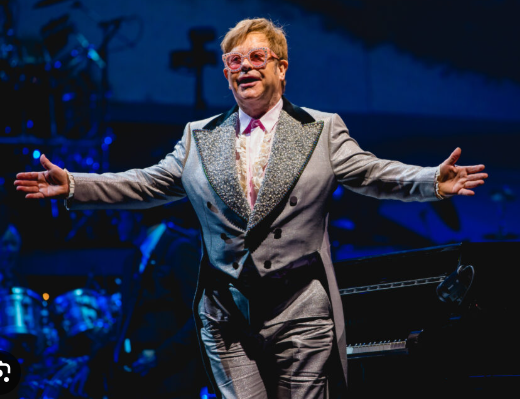
In the spring of 1967, a twenty-year-old pianist from Pinner answered a classified ad. Liberty Records was looking for songwriting talent. The ad connected him with a lyricist from Lincolnshire named Bernie Taupin, who was seventeen at the time. They were paid ten pounds a week to write songs for other artists. Most of those songs went nowhere. What emerged instead was one of the most commercially durable partnerships in the history of popular music. Elton John net worth now exceeds five hundred fifty million dollars. It traces back to that classified ad and a method most people would consider too strange to work. Taupin writes lyrics and sends them. Elton sets them to music without Taupin in the room. Indeed, they have rarely created in the same physical space. The distance is the method. They have been doing it for nearly sixty years.
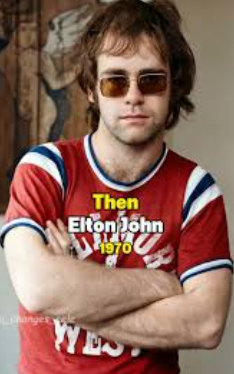
Reginald Kenneth Dwight was born on March 25, 1947, in Pinner, Middlesex. His father was an RAF officer who disapproved of a professional music career. Meanwhile, his mother filled the house with records. By age three he was playing piano by ear. By four he was formally trained. At eleven, he received a junior scholarship to the Royal Academy of Music. He attended on weekends while continuing school during the week. By his late teens, he was playing pub gigs and session work under his birth name. When the Liberty Records arrangement began, he needed a stage name. He combined Elton Dean’s first name with Long John Baldry’s last. Reginald Dwight became Elton John, permanently. His Royal Academy foundation and the pub circuit gave him technical precision and commercial instincts at the same time. That name gave him a persona the performance could inhabit.
The Correspondence Method: Distance as Creative Strategy
The correspondence method deserves a moment. Most successful songwriting partnerships involve two people in the same room, working through ideas together. Lennon and McCartney, Jagger and Richards — the friction of proximity is usually part of the process. Taupin and Elton inverted this entirely. Taupin writes in solitude, sends finished lyrics, and often does not hear the resulting song until it is recorded. Elton has said he reads the lyrics once and sets them to music in twenty minutes or less. The speed and the distance have produced Rocket Man, Tiny Dancer, and Someone Saved My Life Tonight. Proximity was never required.
August 25, 1970: the Troubadour in Los Angeles. Elton John’s first American performance. He walked on stage in spectacles and platform boots. He played the opening notes of Your Song. Before the set was over, the crowd was on its feet. Robert Hilburn reviewed it in the Los Angeles Times as one of the most exciting debuts he had witnessed. Within weeks, every major American rock critic was writing about him. From 1970 to 1976, he placed seven consecutive albums at number one on the Billboard 200. Notably, that record stood for decades. Elton John net worth was still modest in absolute terms. The commercial trajectory was not.
Elton John Net Worth and the Decade That Built the Catalog
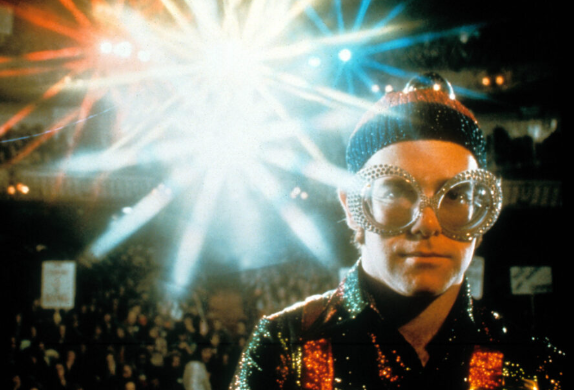
Goodbye Yellow Brick Road, released in 1973, is the center of the argument. A double album, it has sold over thirty-five million copies worldwide. It contains Bennie and the Jets, Candle in the Wind, Saturday Night’s Alright for Fighting, and the title track. Rolling Stone placed it among the five hundred greatest albums. It remains in active commercial circulation more than fifty years after its release. Meanwhile, Crocodile Rock came in 1972. Don’t Let the Sun Go Down on Me and The Bitch is Back followed in 1974 and 1975. For a sustained run in the early 1970s, Elton John was the most commercially dominant rock act on the planet. Consequently, he outsold the Beatles catalog and the Rolling Stones simultaneously.
Stadium tours on both sides of the Atlantic sold out at the same time. Rolling Stone has assessed Goodbye Yellow Brick Road as one of the essential documents of the era — not merely a hit record but an argument about what popular music could contain.
The commercial dominance came with the consumption patterns of the era. By the late 1970s, his drug and alcohol use was extensive and documented. His voice changed significantly after throat surgery in 1987 — partial damage from sustained substance abuse, by his own account. A 1988 Sotheby’s auction of his personal belongings — furniture, art, costumes, memorabilia — generated over forty million dollars. It was widely read as evidence of financial disorganization as much as aesthetic purge. The 1980s were commercially diminished relative to the 1970s peak. On July 29, 1990, he got sober. The Guardian has covered Elton John’s sobriety as one of the defining pivots of the career — the second half proved commercially and artistically distinct from the first.
What Elton John Built: Lion King, the AIDS Foundation, and the Second Act
Sobriety produced The Lion King. The 1994 Disney film required four original songs. Elton wrote Can You Feel the Love Tonight, Circle of Life, I Just Can’t Wait to Be King, and Hakuna Matata with Tim Rice. Notably, Can You Feel the Love Tonight won the Academy Award for Best Original Song. It also won the Grammy for Best Male Pop Vocal Performance. The Lion King soundtrack remains one of the best-selling animated film soundtracks in history. Furthermore, Aida opened on Broadway in 2000 and won the Tony for Best Original Score. Billy Elliot opened in 2005 and won the Tony for Best Musical. Eleven years after getting sober, Elton John had won an Oscar and two Tonys. Pre-sobriety output, for all its commercial magnitude, did not match that creative record.
His AIDS Foundation was established in 1992 — two years into sobriety, the same year he headlined Freddie Mercury’s tribute concert at Wembley Stadium. Since its founding, it has raised over six hundred million dollars for HIV/AIDS prevention, treatment, and advocacy. Operations span fifty-five countries. The Elton John AIDS Foundation ranks among the most effective non-governmental HIV organizations in operation. Additionally, he was knighted by Queen Elizabeth II in 1998. Elton John net worth and its philanthropic deployment represent two parallel strategies running simultaneously for over thirty years. For full comparative context, Social Life Magazine’s Celebrity Net Worth Rankings 2026 places Elton John net worth among the highest-accumulated figures in the music catalog.
Where Elton John Is Now: The Farewell, David Furnish, and What the Tour Settled
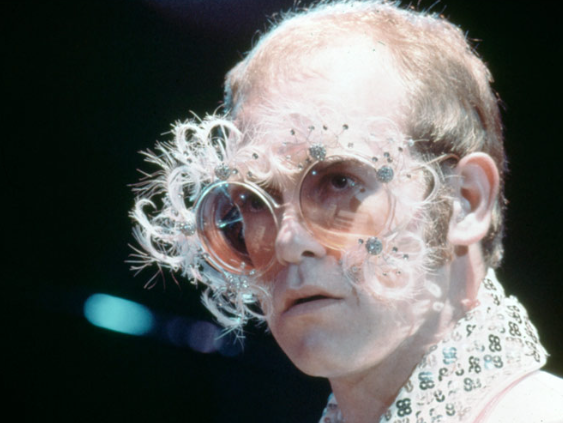
In January 2018, Elton John announced the Farewell Yellow Brick Road Tour. He cited his sons as the reason — Zachary, born in 2010, and Elijah, born in 2013, both with his husband David Furnish, married in 2014 after a civil partnership begun in 2005. He wanted to be present for them in a way touring life had not previously allowed. The tour began in September 2018. It ran until July 2023. Three hundred thirty stops across North America, Europe, and Australia. Total gross revenue exceeded nine hundred million dollars — one of the highest-grossing concert tours in recorded history. Ultimately, the goodbye was the largest commercial chapter of his career.
What the Classified Ad Eventually Settled
The sixty-year catalog and the Farewell Tour gross are the anchoring evidence in Legacy Icons: Elton John and the 60-Year Catalog — an examination of why legacy music wealth does not peak at commercial prime but compounds across decades, with Elton John’s career as the clearest case study available.
Elton John net worth in 2026 reflects the catalog, the tour proceeds, the publishing rights, and the Taupin partnership now approaching sixty years of operation. Rocketman, the 2019 biopic starring Taron Egerton, renewed mainstream attention to the full arc of the career.
He lives primarily in Windsor and Nice. The classified ad that connected him with a teenager from Lincolnshire produced Your Song, Goodbye Yellow Brick Road, and the Farewell Tour — in that sequence, across that timeline. Taupin sent the words. Billboard’s coverage of the Farewell Tour documented it as a genuine cultural event — audiences who saw him in the 1970s brought children and grandchildren, the catalog playing across five decades of living memory in a single arena. Elton John net worth is the financial record of what happens when the method is correct and the partnership holds. The distance was always the point.
Feature your brand in the Hamptons: Contact Social Life Magazine — we connect luxury brands with the audiences that close.
The East End’s premier sporting event: Polo Hamptons — sponsorships, VIP access, and brand activations where the Hamptons actually convenes.
Get the Hamptons insider list: Subscribe to Social Life Magazine — 23 years of the East End, delivered to your door.
Support independent Hamptons journalism: Donate $5
Part of these collections:
→ Celebrity Net Worth Rankings 2026
→ Legacy Icons: Elton John and the 60-Year Catalog
Related reading:
→ Dave Chappelle Net Worth 2026: The $50M He Walked Away From
→ Shakira Net Worth 2026: From Barranquilla to $300 Million
Author

Written by
Recent Posts
7 Mindful Meal Prep Tips for Stop Food Waste Day

Rebecca Ferguson Net Worth: The Advantage of Not Being the Lead
What Makes a Dinner Party Truly Unforgettable (Hint: It’s Not the Food)
Tips for Managing Grease and Oil in Everyday Dishwashing
Austin Butler Net Worth: The Method Actor in a Post-Method World
Categories
- Art
- Articles
- Beauty & Skincare
- Celebrities
- Celebrities|Entertainment
- Celebrities|Television
- Celebrities|The Chronicles
- celebrities|the-archive
- Chronicles
- Entertainment|Culture
- Event Photos
- Events
- Fashion
- Fashion & Style
- Featured
- Food & Beverage
- Food, Spirits, Wine
- Hamptons
- Hamptons Celebrities
- Hamptons Celebrities|Celebrities|The Chronicles
- Health
- Health & Beauty
- Lifestyle
- Luxury Lifestyle
- Movies
- Press
- Profiles
- Real Estate
- Technology
- The Chronicles
- Travel
- Uncategorized
- Weddings