
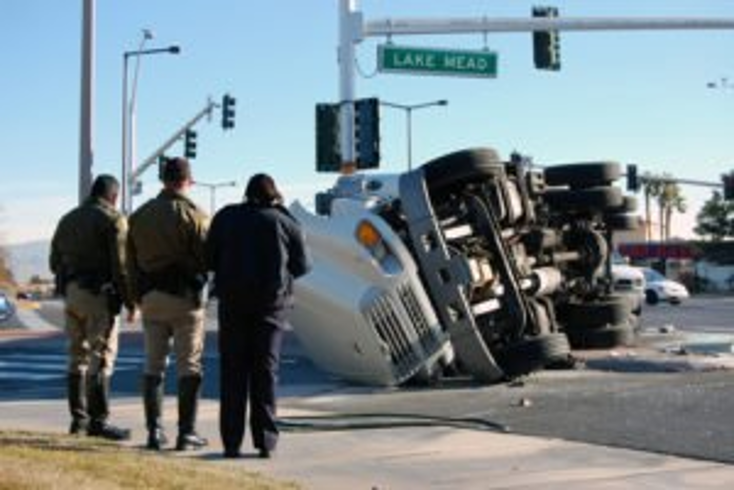
It is common for the vehicles in a truck accident to be towed before investigators or attorneys can get on site and conduct an investigation. However, the positioning of a truck immediately after an impact may also offer valuable clues as to how a crash occurred. The final resting area can provide clues to the point of contact, direction of travel and agreement of physical evidence with the accounts from those involved.
The truck’s position may be one of the many elements in a comprehensive analysis of the circumstances of a collision for Fort Lauderdale Truck Accident Lawyers. Attorneys can review photographs, markings on the road, truck damage, witness statements and the available video footage as well as the location of the truck. Taken together, these details can assist in answering questions that might be unanswerable from a police report or a driver’s statement.
How Truck Location Can Clarify a Collision
The end position of a truck can help with determining the chain of events leading up to a collision. A position alone may not create the exact details of what happened, but it can be used to help create a timeline when compared to other physical evidence.
For instance, lawyers may be asking themselves what a driver did, or didn’t do, in this case, with regard to the truck:
- In the correct lane of the roadway
- Divided by part of a lane divider
- On a shoulder/roadside
- Turning towards something in an unusual way.
- Close to an intersection or turning point
- Close proximity to another vehicle post collision
These facts may be more impactful when combined with photographs and evidence from the roadways.
Assume a truck is located at an angle across several lanes after an accident. That would lead people to ask themselves if the truck turned before or during impact, or if it was hit from the side by another vehicle, or if the truck was pushed after impact. There will be more evidence needed to answer the answers but the final location of the truck can be used as a starting point for the answers.
Post-Collision Movement and Its Impact on Evidence
It is important to remember that victims of a truck accident may not be in the same area as the accident.
A truck can travel due to:
- Applying the brakes just before or after contact.
- Steering reactions
- A secondary collision
- Bumping into a barrier, curb or object
- A vehicle’s movement after a crash.
This difference can avoid a wrong “reading” of the situation. A truck that makes it several feet away from the apparent impact site could have been pushed by another truck. Or, the truck driver may have not stopped at all, but may have accelerated on his way after that. An attorney analyzing this case might then ask not only, “Where was the truck located?” but also, “What transpired between the time of impact and where the truck finally came to rest?”
In many multi-vehicle collisions, this question may be important when piecing together the facts of the case.
Truck Position Can Help Clarify Lane Changes and Turns
The location of the truck may also be relevant if the truck participates in a lane change, turn, merge or otherwise.
Large commercial vehicles need more room for turning than cars. The final position of a truck can thus raise questions as to what action was being performed in front of the accident.
Attorneys can determine:
- The vehicle in the truck was changing lanes.
- The truck was coming in and out of the roadway.
- The truck was turning around in a wide swinging motion.
- The truck was coming to an intersection where vehicles were merging.
- The truck was located outside of the lane.
- Another car was standing either next to or behind the truck.
The above situations can be important, as the collision might appear to be different if the vehicles were in different positions just prior to the collision.
For instance, if a truck collides with a smaller vehicle on the side, it could be necessary to review the location of the vehicle in relation to the truck blind spots, lane markings, and direction of travel. The final positions of the photographs might be a part of the reconstruction.
Frequently Asked Questions
Can the final location of a truck help determine who was at fault in an accident?
Not by itself. Last position is one piece of evidence. Attorneys can compare it with the damage to vehicles, road markings, witness statements, photographs, video, and other information available.
What is the difference between the point of impact and the stopping position of the truck?
Momentum, braking, steering, or vehicles or objects can keep a vehicle moving after the collision. This can mean that the site of a truck stop may not be the same as the site of the collision.
What are the reasons to consider lane positions in truck accidents?
Lane positions can be used to help determine the actions of vehicles prior to an accident. These can be important if the incident occurs on a lane change, merge, turn or pass.
Should the accident scene be photographed prior to the movement of vehicles?
Photographs of the vehicles and roadway surrounding the incident can capture information about the scene, if it is safe and feasible to take the photos. But, safety and response for emergencies always outweighs after a collision.
Conclusion
The location of a truck following a crash could seem like an insignificant detail, but could assist in offering context along with other evidence. The positioning of the truck may lead to questions regarding the sequence of events, movement of vehicles, lane positioning and a relationship between point of impact and ultimate stopping point.
The final position of a truck cannot be used as evidence alone because of the way its position may change during or after a crash. Attorneys, however, can utilize that position in comparison with physical evidence, photos, roadway markings, witness statements, and other information to gain a better understanding of the crash. If you have been involved in a truck accident, The Levin Firm can help you explore the situation and determine what types of evidence might apply to your case.
Author

Written by
Recent Posts

Nino’s Beach Brings Generations of Italian Hospitality to the Port Washington Waterfront

The Self-Made Man Who’s One Phone Call From Ruin

Everyone Out Here Is Loaded. Nobody Feels Rich.

What to Do When Illness Threatens a Trip You Already Paid For
How Independent Watch Brands Are Challenging Traditional Luxury
Categories
- Art
- Articles
- Business of Luxury
- Celebrities
- Culture
- Entertainment
- Events
- Faces of Summer 2026
- Fashion
- Fashion & Style
- Featured
- Finance
- Food, Spirits, Wine
- Hamptons
- Hamptons Celebrities
- Health
- Health & Beauty
- Lifestyle
- Luxury Lifestyle
- Press
- Profiles
- Real Estate
- Technology
- The Chronicles
- Travel
- Uncategorized
- Weddings