

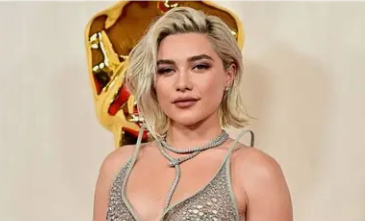
By twenty-eight, that voice commands $2 million per Marvel film. Her estimated net worth sits at $8 million, the smallest of her Next-Gen A-List peers but perhaps the most hard-won. Every dollar traces back to a little girl in Spain, learning to breathe, not knowing she was developing the instrument that would carry her to Hollywood.
The Wound: A Body That Wouldn’t Cooperate
Florence Pugh was born on January 3, 1996, in Oxford, England. Her father, Clinton Pugh, owned a restaurant; her mother, Deborah, was a dancer and dance teacher. The family was artistic, theatrical, comfortable but not wealthy. They lived in a converted barn in the village of Shrivenham, Oxfordshire.
But before the converted barn, before the private schools, there was the hospital. Tracheomalacia meant Florence’s windpipe was soft and floppy, collapsing inward when she tried to breathe. The condition typically improves as children grow, but in the meantime, it meant constant vigilance, frequent doctors’ visits, and parents who watched their daughter struggle with something as fundamental as air.
The Spanish Exile
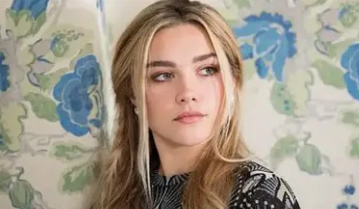
When Florence was three, the Pughs made a drastic decision. They moved to Spain, to a town in Andalusia where the warm air might help their daughter’s airways. Clinton shut down his restaurant. Deborah packed up the children. For three years, the family lived in exile, hoping geography could accomplish what medicine couldn’t.
It worked, more or less. Florence’s breathing improved. The family returned to England when she was six. Yet the experience left its mark. The voice that emerged from those compromised airways was deeper, richer, more textured than expected. Years later, Florence would recognize it as a gift disguised as a flaw.
The Performing Family
The Pugh household was built for performance. Florence’s older brother Toby Sebastian appeared in Game of Thrones as Trystane Martell. Her older sister Arabella Gibbins works as a voice coach. Their mother taught dance. Creativity wasn’t encouraged; it was assumed.
“We’re a very musical and singing household,” Florence told The Guardian. “We would be singing in the car, and we’d be doing harmonies, and we would make up songs about everything and anything.” The girl with breathing problems learned to use her breath as an instrument, turning limitation into expression.
The Chip: The Schools That Didn’t Believe
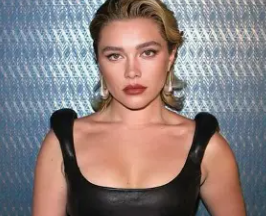
Florence attended Wychwood School and later St. Edward’s School in Oxford, both private institutions with solid academic reputations. Neither, she has said, supported her acting ambitions. In an interview with The Evening Standard, she recalled feeling dismissed by educators who saw acting as frivolous, impractical, a distraction from proper career paths.
The rejection stung but also clarified. If the institutions wouldn’t support her dreams, she would support them herself. At seventeen, with no formal drama school training, she auditioned for her first film role. She got it.
The Falling Breakthrough
Carol Morley’s The Falling (2014) wasn’t a blockbuster. It was a small British drama about a mysterious fainting epidemic at a 1960s girls’ school. Florence played Abbie Mortimer, a complex role requiring her to convey adolescent sexuality, grief, and psychological unraveling. She was seventeen and completely untrained.
“I didn’t know the difference between film and stage,” she admitted to Interview Magazine. “I was overacting within the first few takes.” Yet something in her rawness worked. The producers saw past the inexperience to the presence beneath. The girl who had spent her childhood learning to breathe had developed a stillness, an intensity, that translated to screen.

The Rise: Lady Macbeth Changes Everything
If The Falling was a footnote, Lady Macbeth (2016) was a declaration. Florence played Katherine, a young bride sold into a loveless marriage in rural Victorian England, who embarks on an affair that leads to murder. The role required her to be sympathetic and monstrous, victimized and victimizer. She was nineteen.
Critics were stunned. The Hollywood Reporter praised her “remarkable screen presence.” Variety called it “a stunning breakthrough.” The British Independent Film Awards nominated her for Best Actress. Hollywood started paying attention to the Oxford girl with the unusual voice.
2019: The Year of Four Films
What happened next was a career sprint that would define Florence’s trajectory. In 2019, she appeared in four significant films. Fighting with My Family, where she played real-life wrestler Paige, showed her physical range. Midsommar, Ari Aster’s folk horror masterpiece, showcased her emotional depth, though she has said the role left her depressed for six months afterward.
Then came Little Women. Greta Gerwig’s adaptation cast Florence as Amy March, traditionally the least sympathetic of the March sisters. Florence made Amy not just palatable but profound, delivering a monologue about women’s economic vulnerability that resonated across generations. The Academy Award nomination for Best Supporting Actress followed.
The Marvel Chapter
Black Widow (2021) brought Florence into the superhero industrial complex as Yelena Belova, Natasha Romanoff’s surrogate sister. According to Business Insider, she earned “hundreds of thousands of dollars” for the initial role. By Thunderbolts (2025), where Yelena reportedly leads the team, her per-film salary has climbed to an estimated $2 million.
The Marvel work isn’t her most artistically ambitious. She knows this. In 2022, during a dispute with the studio over Black Widow’s simultaneous theatrical and streaming release, she notably remained silent while co-star Scarlett Johansson sued Disney. Florence plays the game strategically, banking franchise money while pursuing passion projects elsewhere.
The Tell: Embracing Imperfection Publicly
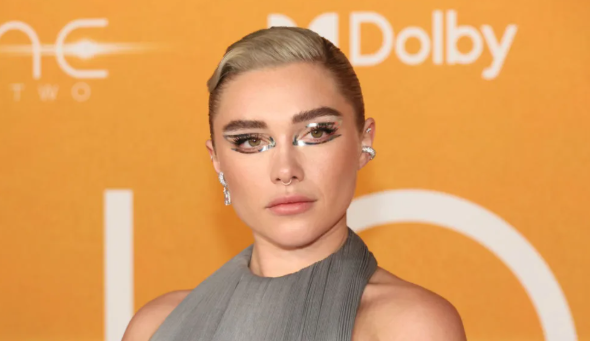
Florence Pugh has made a career of refusing to be ashamed. When she wore a sheer Valentino gown to a 2022 fashion show, revealing her breasts beneath pink tulle, the internet erupted in criticism. Her response, posted to Instagram, was characteristically direct: “Grow up. Respect people, bodies, and all women.”
The incident crystallized something essential about her public persona. The girl who spent her childhood with a malfunctioning body has grown into a woman who refuses to apologize for that body’s visibility. Every appearance, every outfit choice, every unfiltered interview carries the same message: imperfection isn’t just acceptable; it’s the point.
The Voice as Signature
That deep voice, the product of a collapsed windpipe and warm Spanish air, has become her most distinctive feature. It’s there in Amy March’s devastating explanation of why she must marry well, in Yelena’s deadpan humor, in every interview and red carpet moment—immediately recognizable.
Other actresses might have tried to soften it, to conform to expectations of feminine pitch. Florence leaned in. The thing that made her different as a child became the thing that makes her unforgettable now. The wound became the weapon.
The Location Connection: From Oxford to Los Angeles
Florence maintains a home in Los Angeles, necessary for her Hollywood career, but speaks often of her connection to England. She returns regularly to visit family, cooks elaborate meals for friends—her cooking videos became a pandemic sensation on Instagram—and maintains the grounded quality of someone who remembers where she came from.
Her $8 million net worth is the smallest among the Next-Gen A-List, but also the most recent. Unlike Margot Robbie, who has been building her empire since 2013, or Zendaya, who started on Disney at fourteen, Florence’s Hollywood career is barely a decade old. The trajectory suggests significantly larger numbers to come. Thunderbolts alone could push her well above current estimates.
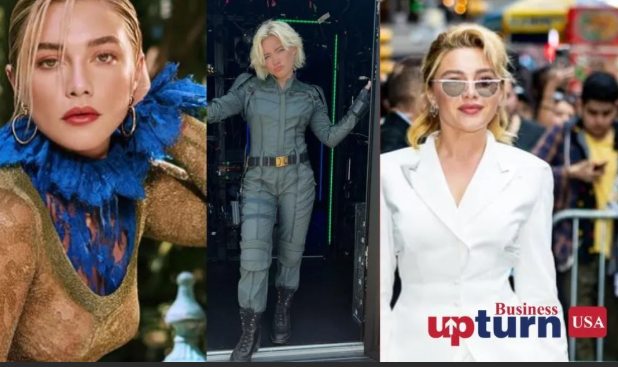
The Girl Who Learned to Breathe
There’s a through-line from the hospital in Oxford to the Marvel red carpets. The child who couldn’t breathe became the woman who commands every room. The voice that emerged from a collapsed windpipe became the instrument that won her an Oscar nomination. The body that wouldn’t cooperate became the body she refuses to hide.
At $8 million and climbing, Florence Pugh represents something specific about success: sometimes the obstacle is the path. The thing that makes you different isn’t something to overcome; it’s something to weaponize. Every role she takes carries the echo of that little girl in Spain, learning to breathe, not knowing she was preparing for a life that would take everyone’s breath away.
That’s the origin story beneath the net worth. Not just talent, though she has that. Not just luck, though she’s had that too. But a willingness to turn limitation into signature, to make the flaw the feature. The Oxford girl who couldn’t breathe built an empire on the voice that struggle gave her.
For exclusive coverage of Hollywood’s next generation of power players
Author

Written by
Recent Posts
Sectional Sofa vs. Regular Sofa: Which One is Best for You?

Sober and Injured: How to Manage Pain Treatment After a Massachusetts Slip and Fall
Flexible Liquidity Options Are Reshaping How Modern Professionals Handle Unexpected Expenses
5 Best At-Home Teeth Whitening Kits for a Brighter Smile in 2026

From Spa Retreats to Aesthetic Care, the Luxury Travel Itinerary Is Changing
Categories
- Art
- Articles
- Business of Luxury
- Celebrities
- Culture
- Entertainment
- Events
- Faces of Summer 2026
- Fashion
- Fashion & Style
- Featured
- Finance
- Food, Spirits, Wine
- Hamptons
- Hamptons Celebrities
- Health
- Health & Beauty
- Lifestyle
- Luxury Lifestyle
- Press
- Profiles
- Real Estate
- Technology
- The Chronicles
- Travel
- Uncategorized
- Weddings