
A Pop Star’s Legal Battle That Changed Wealth Conversations
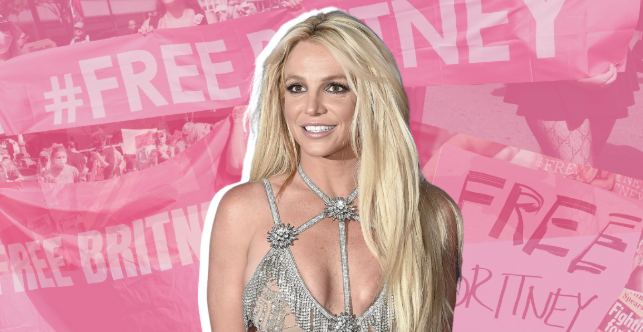
The #FreeBritney movement started as a fan campaign with a hashtag. It ended as one of the most significant wealth autonomy cases in modern American legal history. When Britney Spears stood before a Los Angeles Superior Court judge in June 2021 and called her conservatorship “abusive,” she wasn’t just describing her personal experience. She was exposing a legal framework that can trap high-earning individuals inside systems designed to extract their wealth. For anyone managing substantial assets, whether through trusts, conservatorships, or family governance structures, the #FreeBritney movement contains lessons that go far beyond celebrity gossip.
The facts are now extensively documented. Britney earned an estimated $150 million to $200 million during her 13-year conservatorship. She exited it with approximately $60 million, according to court filings analyzed by Social Life Magazine. The gap between those numbers, roughly $90 million to $140 million, represents what the conservatorship apparatus consumed. Some went to legitimate expenses. A substantial portion went to people who had financial incentives to keep the arrangement in place.

How the Conservatorship Economy Worked
Understanding the financial structure of Britney’s conservatorship reveals how legal protection can become economic exploitation. Her father, Jamie Spears, served as conservator of her estate from 2008 until his removal in 2021. He paid himself $16,000 per month plus $2,000 monthly for office space. Additionally, he received a percentage of his daughter’s business deals, including 1.5% of gross revenues from her Las Vegas residency, which earned a reported $138 million over four years.
However, Jamie’s compensation was the smaller cost. Rolling Stone reported that the legal infrastructure surrounding the conservatorship billed over $30 million in fees. Britney’s court-appointed attorney, Samuel Ingham III, charged $520,000 annually. Simultaneously, the management company Tri Star Sports and Entertainment collected fees estimated at 5% of gross earnings. The conservatorship created an entire economy of professionals whose income depended on its continuation.
The Structural Incentive Problem
This is the insight that makes the #FreeBritney movement relevant beyond Britney herself. Conservatorships create a structural misalignment of incentives. The professionals managing the conservatee’s finances are paid from the conservatee’s estate. Therefore, the longer the conservatorship continues and the more complex it becomes, the more money those professionals earn. The system rewards perpetuation rather than resolution.
Furthermore, the conservatee often lacks independent legal representation during the early stages. Britney was not permitted to hire her own attorney until July 2021, nearly 13 years into the arrangement. Before that, her court-appointed lawyer was paid from her own estate to represent interests she herself did not direct. For wealth management professionals, this should be deeply concerning. As Harvard Business Review’s analysis of family wealth governance has shown, misaligned incentives are the primary driver of intergenerational wealth destruction.
What #FreeBritney Exposed About Trust Structures
Conservatorships are essentially court-supervised trusts with the added element of personal control. The parallels to private trust structures used by affluent families are uncomfortably close. In both cases, a third party manages assets on behalf of a beneficiary. In both cases, the manager has access to the principal. And in both cases, the beneficiary’s ability to challenge the manager’s decisions can be limited by legal structures that are expensive and time-consuming to modify.
The #FreeBritney movement forced a national conversation about these dynamics. Before Britney’s case became public, conservatorship abuse was discussed primarily in elder law circles. Bain research on family office governance has since noted increased interest in governance transparency among high-net-worth clients, partially driven by the cultural impact of Britney’s case.

The California Reform Response
In 2025, California implemented the “Free Britney Act,” creating stricter oversight for conservatorships and mandating regular reviews of existing arrangements. The legislation directly addresses several issues highlighted during Britney’s case: the difficulty of terminating conservatorships once established, the lack of independent legal counsel for conservatees, and the insufficient financial transparency requirements for conservators.
Nevertheless, critics argue the reforms don’t go far enough. The National Association to Stop Guardian Abuse estimates that conservatorship abuse affects tens of thousands of Americans, most of whom lack the public profile and fan base that ultimately secured Britney’s freedom. Without a hashtag and millions of supporters, challenging an established conservatorship remains extraordinarily difficult.
The Wealth Autonomy Paradox
Britney’s case illuminated a paradox that affects many wealthy individuals. The more money you have, the more people have incentives to control your financial decisions. Managers, advisors, family members, attorneys, and business partners all benefit from proximity to significant wealth. In Britney’s extreme case, the legal system itself became the mechanism of control.
This dynamic isn’t limited to conservatorships. Family trusts, prenuptial agreements, corporate governance structures, and estate plans all represent frameworks through which others can exert control over someone’s wealth. The difference between a well-functioning trust and a conservatorship-like trap often comes down to governance design and the beneficiary’s ability to exercise independent judgment.
Lessons for Wealth Preservation
The #FreeBritney movement offers several concrete takeaways for anyone managing significant assets. First, governance structures should include built-in sunset provisions. Britney’s conservatorship was made permanent with no automatic review process. Any trust or management arrangement without periodic reassessment mechanisms risks becoming a permanent extraction vehicle.
Second, independent representation matters. Britney’s fortunes changed dramatically when she was finally allowed to hire her own attorney, Mathew Rosengart, in 2021. The conservatorship was terminated within months. McKinsey’s research on organizational governance confirms that independent oversight is the single most effective safeguard against management entrenchment.
The Broader Implications
Third, transparency requirements should be non-negotiable. Court filings revealed that Jamie Spears’s financial reporting during the conservatorship contained gaps and inconsistencies that took forensic investigation to uncover. Any wealth management structure that lacks clear, regular, and independently audited financial reporting creates opportunities for abuse.
Fourth, the #FreeBritney movement demonstrated that public accountability can be a powerful governance mechanism. Britney’s fans functioned as an external audit committee, demanding transparency that the legal system had failed to require. For family offices and trust structures, the equivalent is independent board oversight and beneficiary advocacy rights.
The Financial Resolution
As of 2026, Britney’s financial story continues to evolve. Her $200 million catalog sale to Primary Wave in February 2026 provided a significant capital infusion. A California court ruled in her favor regarding legal fees, ordering Jamie Spears to cover his own expenses rather than drawing from her estate. Nevertheless, concerns about spending habits and long-term financial stability remain, as detailed in the analysis of her current net worth.
The #FreeBritney movement achieved its stated goal. Britney is free. Yet the questions the movement raised about wealth, autonomy, and control remain unresolved for the thousands of Americans currently living under similar arrangements without a hashtag to amplify their voices. For the affluent readers considering how to structure their own wealth governance, Britney’s story is the most expensive case study available. The lesson costs nothing to absorb.
Related Reading: Britney vs. Beyoncé: Two Paths Through the Same Machine | Britney Spears Net Worth 2026: Conservatorship to $200M Cash-Out
Want to feature your brand alongside stories like this? Contact Social Life Magazine about partnership opportunities. Join us at Polo Hamptons this summer. Subscribe to the print edition or join our email list for exclusive content. Support independent luxury journalism with a $5 contribution.
Author

Written by
Recent Posts

Inside Out 2, Wicked, and the Emotional Blockbuster That Ate 2024
7 Mindful Meal Prep Tips for Stop Food Waste Day

Rebecca Ferguson Net Worth: The Advantage of Not Being the Lead
What Makes a Dinner Party Truly Unforgettable (Hint: It’s Not the Food)
Tips for Managing Grease and Oil in Everyday Dishwashing
Categories
- Art
- Articles
- Beauty & Skincare
- Celebrities
- Celebrities|Entertainment
- Celebrities|Television
- Celebrities|The Chronicles
- celebrities|the-archive
- Chronicles
- Entertainment|Culture
- Event Photos
- Events
- Fashion
- Fashion & Style
- Featured
- Food & Beverage
- Food, Spirits, Wine
- Hamptons
- Hamptons Celebrities
- Hamptons Celebrities|Celebrities|The Chronicles
- Health
- Health & Beauty
- Lifestyle
- Luxury Lifestyle
- Movies
- Press
- Profiles
- Real Estate
- Technology
- The Chronicles
- Travel
- Uncategorized
- Weddings