
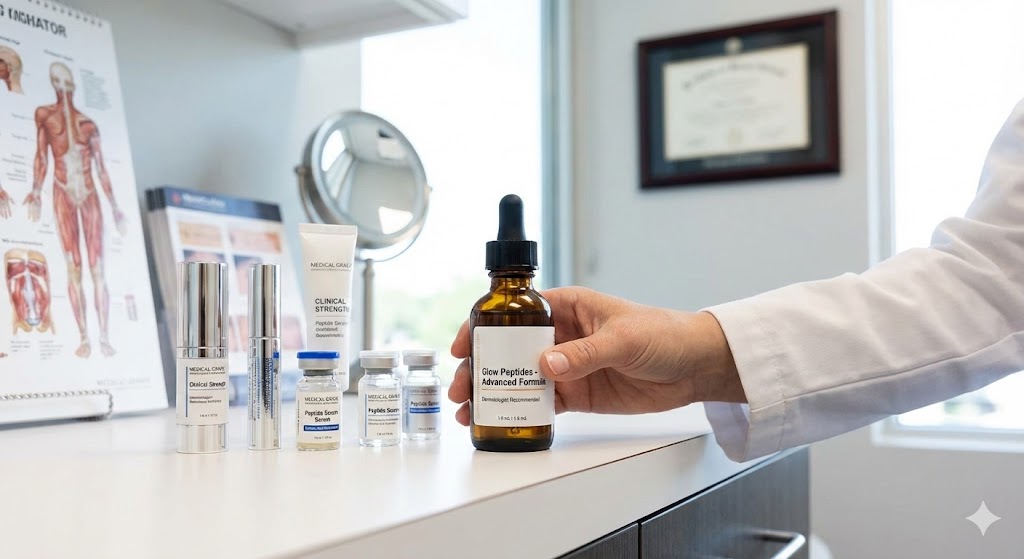
The term glow peptide gets thrown around loosely in beauty marketing. Brands slap it on products ranging from $20 drugstore creams to $400 clinical serums. The actual science behind peptide-driven radiance deserves better than vague promises and influencer endorsements.
Peptides work on skin through specific biological mechanisms. They signal cells to produce more collagen, reduce inflammation, or accelerate repair. The glow everyone chases comes from measurable changes in skin structure—not wishful thinking or clever lighting.
This guide cuts through the noise. We explain which peptides deliver visible results, how they compare to alternatives like retinol, and what the aestheticians behind the best skin in the Hamptons actually recommend to their clients.
What Is a Glow Peptide and How Does It Work?
A glow peptide refers to short-chain amino acids that improve skin luminosity by boosting collagen production, enhancing hydration, or reducing pigmentation. Copper peptides, matrixyl, and argireline rank among the most research-backed options. Results typically appear within 4-8 weeks of consistent use.
The mechanism varies by peptide type. Signal peptides tell fibroblasts to ramp up collagen and elastin production. Carrier peptides deliver trace minerals like copper to skin cells. Neurotransmitter peptides relax facial muscles to soften expression lines. Each approach targets different aspects of skin aging.
Understanding these categories helps you match products to your actual concerns. Someone with dull, dehydrated skin needs different peptides than someone fighting fine lines. The glow comes from addressing your specific issues rather than applying generic solutions.
Research published in the Journal of Cosmetic Dermatology confirms that topical peptides penetrate the epidermis and trigger measurable collagen synthesis. Unlike some skincare ingredients that work only on the surface, peptides communicate with living cells below.
Which Glow Peptides Actually Work?
Not all peptides perform equally. Clinical evidence supports certain compounds far more strongly than others. Focusing on proven performers protects you from expensive disappointments.
Copper Peptides: The Regeneration Specialists
Copper peptides (GHK-Cu) rank among the most thoroughly researched options for skin rejuvenation. They stimulate collagen production, promote wound healing, and demonstrate antioxidant properties. Multiple studies show improvements in skin thickness, elasticity, and clarity.
The compound works by delivering copper ions to skin cells. Copper plays essential roles in enzyme functions that build connective tissue. Supplementing this mineral topically accelerates natural repair processes that slow with age.
According to research cited by the British Journal of Dermatology, copper peptides increased collagen synthesis by 70% in controlled studies. Participants also showed improved skin density and reduced fine lines after 12 weeks of application.
Most dermatologists recommend copper peptide concentrations between 0.5% and 1%. Higher isn’t necessarily better—excessive copper can irritate sensitive skin. Quality formulations matter more than maximum potency.
Matrixyl: The Collagen Booster
Matrixyl (palmitoyl pentapeptide-4) signals skin to increase collagen and hyaluronic acid production. Studies demonstrate wrinkle reduction comparable to retinol but without the irritation. This makes it ideal for sensitive skin types or retinol-intolerant users.
The peptide mimics collagen fragments that appear when skin breaks down. Your cells interpret this signal as damage and respond by producing fresh collagen. Essentially, you trick your skin into repair mode without actual injury.
Clinical trials published in the International Journal of Cosmetic Science showed Matrixyl reduced wrinkle depth by up to 45% over four months. Participants reported smoother texture and improved radiance alongside the measurable changes.
Argireline: The Expression Line Softener
Argireline (acetyl hexapeptide-3) takes a different approach. Rather than building collagen, it relaxes facial muscles to soften dynamic wrinkles. Think of it as topical muscle relaxation—similar concept to injectables but far gentler.
Results appear most dramatically around the eyes and forehead where expression lines concentrate. The peptide won’t freeze your face or eliminate all movement. Instead, it reduces the depth of lines that form when you smile, squint, or frown.
This peptide works best as part of a comprehensive routine rather than a standalone solution. Combining Argireline with collagen-boosting peptides addresses both the muscle tension and structural degradation that create visible aging.
Glow Peptides vs. Retinol: Which Should You Choose?
Retinol dominates anti-aging conversations for good reason. Decades of research confirm its effectiveness for wrinkles, texture, and pigmentation. Yet peptides offer compelling advantages for certain users and situations.
Retinol works by accelerating cell turnover and stimulating collagen. The tradeoff involves irritation, sun sensitivity, and an adjustment period that can last weeks. Many people abandon retinol before seeing benefits because they can’t tolerate the initial side effects.
Peptides deliver gentler results without the harsh transition. They suit sensitive skin, rosacea-prone complexions, and anyone who reacts poorly to retinoids. Pregnant or nursing women who can’t use retinol find peptides offer a meaningful alternative.
The smartest approach often combines both. Use retinol at night when your skin tolerates it. Apply peptide serums in the morning or on off-nights. This layered strategy maximizes benefits while managing irritation.
Business of Fashion reported that peptide skincare sales grew 34% year-over-year as consumers sought gentler alternatives to aggressive actives. The trend reflects broader movement toward skin barrier health over harsh exfoliation.
How to Choose a Peptide Product That Works
Product selection determines whether you see results or waste money. The market floods with peptide products ranging from legitimate clinical formulations to marketing-driven nonsense. Several factors separate effective options from expensive moisturizers.
Concentration matters significantly. Products listing peptides last in their ingredient list contain negligible amounts. Look for formulations where peptides appear in the top third of ingredients. Some brands disclose exact percentages—prefer these over vague “peptide complex” claims.
Formulation stability affects whether peptides remain active. These compounds degrade with heat, light, and air exposure. Airless pumps and opaque packaging protect potency. Jars that you dip fingers into expose product to contamination and oxidation repeatedly.
Multiple peptides often outperform single-peptide products. Different peptides work through different mechanisms. Combining signal peptides with carrier peptides and neurotransmitter peptides addresses aging from multiple angles simultaneously.
Price correlates loosely with quality but not perfectly. Some expensive products rely on marketing rather than formulation. Some affordable options deliver genuine results. Research specific products rather than assuming cost indicates effectiveness.
What Hamptons Aestheticians Recommend
The facialists serving Southampton and East Hampton’s most discerning clients see what works across thousands of faces. Their recommendations reflect real-world results rather than theoretical benefits or sponsored opinions.
Most emphasize consistency over intensity. A moderate peptide serum used daily outperforms a potent product applied sporadically. Building peptides into sustainable routines matters more than chasing the strongest formulation available.
Layering peptides with hydrating ingredients amplifies results. Hyaluronic acid, ceramides, and niacinamide all complement peptide activity. Barrier-healthy skin absorbs actives more effectively and shows improvements faster.
Professional treatments enhance topical products. Many aestheticians combine peptide serums with microneedling, LED therapy, or ultrasound devices. These modalities increase penetration and cellular response. Home care maintains results between professional sessions.
The consensus avoids extremes. Skip products making dramatic claims. Ignore influencers showing overnight transformations. Real skin improvement happens gradually through consistent, intelligent care. The glow builds over months, not days.
Building a Peptide Skincare Routine
Effective routines integrate peptides at the right step in the right concentration. Applying expensive serums incorrectly wastes both product and potential. Sequencing matters more than most people realize.
Cleanse first with a gentle, pH-balanced formula. Harsh cleansers strip the barrier and create inflammation that counteracts peptide benefits. Your skin should feel clean but not tight or dry afterward.
Apply peptide serums to slightly damp skin. This enhances absorption compared to fully dry application. Use enough product to cover your face without rubbing aggressively. Patting motions work better than dragging.
Follow with moisturizer to seal in the peptides and support barrier function. Choose formulas containing ceramides or fatty acids that reinforce skin structure. This layer prevents transepidermal water loss and keeps actives working longer.
Finish with sunscreen every morning regardless of weather. Peptides don’t cause sun sensitivity like retinol, but UV exposure undermines everything else you’re doing. Protection preserves the collagen you’re working to build.
The Bottom Line on Glow Peptides
Glow peptide products work when they contain effective compounds at meaningful concentrations in stable formulations. They offer genuine anti-aging benefits backed by peer-reviewed research. The radiance they create comes from structural skin improvements, not temporary effects.
Copper peptides, Matrixyl, and Argireline lead the evidence-backed options. Each addresses different aspects of skin aging through distinct mechanisms. Combining multiple peptides often produces better results than relying on any single compound.
These ingredients suit nearly everyone, including sensitive skin types who struggle with retinol. They layer well with other actives and integrate easily into existing routines. The gentle approach delivers meaningful results without harsh adjustment periods.
Consistency determines outcomes more than any other factor. Choose products you’ll actually use daily. Build sustainable habits rather than chasing dramatic interventions. The luminous skin you want develops through months of intelligent care, and peptides offer a proven path to get there.
Aestheticians and skincare brands: Interested in editorial features? Contact our beauty desk.
Join us at Polo Hamptons for our Beauty & Wellness Pavilion featuring leading skincare innovators.
Subscribe to our newsletter for Hamptons beauty intel delivered weekly.
Prefer print? Get Social Life Magazine delivered to your door.
Support independent beauty journalism. Donate $5 to keep our coverage unsponsored.
Related Articles
How Peptides Actually Work for Weight Loss
The Hamptons Guide to Finding Your Perfect Facialist
Sources
Journal of Cosmetic Dermatology: Peptide Research
British Journal of Dermatology: Copper Peptide Studies
Author

Written by
Recent Posts
4 Clever Ways to Personalize Luxury Gifting

David Costabile Net Worth: Television’s Most Valuable Player You Can’t Name

Asia Kate Dillon Net Worth: The Pioneer Who Rewrote Television’s Rules

Corey Stoll Net Worth: The Actor Who Inherited a Throne Nobody Wanted

Maggie Siff Net Worth: The Woman Who Worked at a Hedge Fund Before Playing One on TV
Categories
- Art
- Articles
- Beauty & Skincare
- Celebrities
- Celebrities|The Chronicles
- Chronicles
- Entertainment|Culture
- Event Photos
- Events
- Fashion
- Fashion & Style
- Featured
- Food & Beverage
- Food, Spirits, Wine
- Hamptons
- Hamptons Celebrities
- Hamptons Celebrities|Celebrities|The Chronicles
- Health
- Health & Beauty
- Lifestyle
- Luxury Lifestyle
- Movies|Hamptons Lifestyle
- Press
- Profiles
- Real Estate
- Technology
- The Chronicles
- Travel
- Uncategorized
- Weddings