
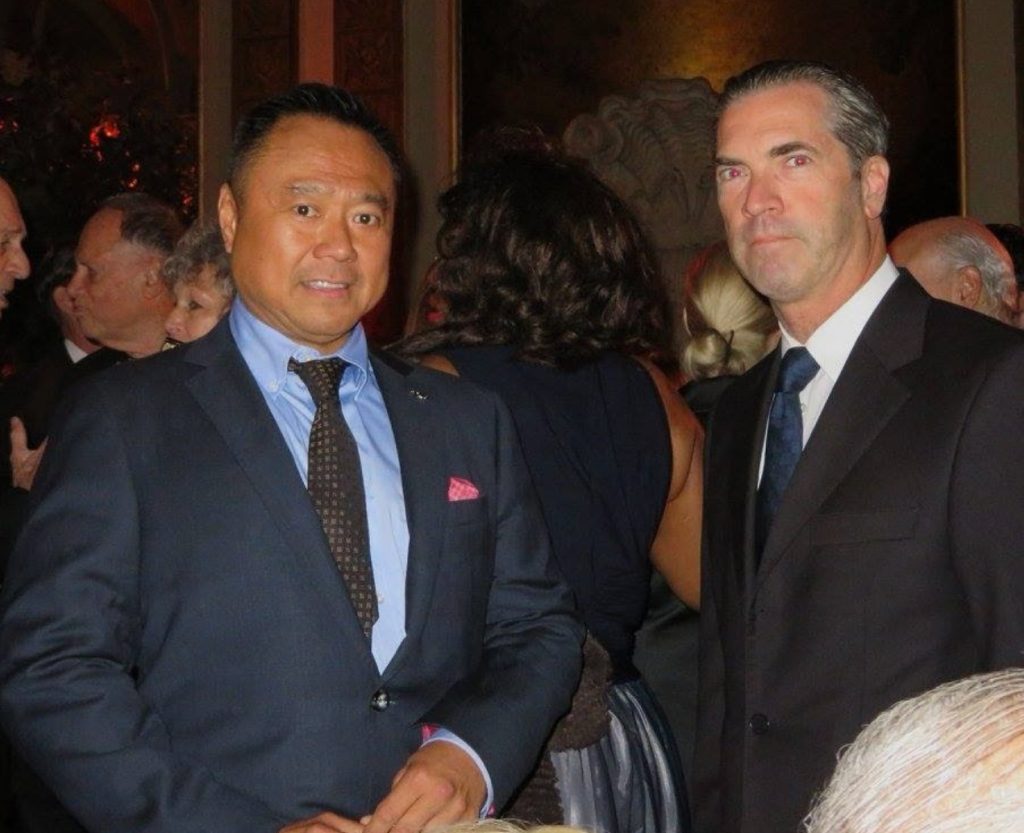
The share house had eight bedrooms and a rotating cast of people who all believed, that particular summer, that they were on the verge of something. This is not unusual in the Hamptons. What was unusual is that one of them was right.
That’s where this story starts. Not with the polo field or the magazine. Not with the 500,000 monthly readers who find Social Life Magazine through a Google search they didn’t know they were running. It starts in 1997 with a finance guy who bought a share house in the Hamptons because he understood something the rest of the Street had not yet understood. The Street was chasing IPOs. He was buying proximity. The right room matters more than the right trade. Proximity isn’t just power. It’s the architecture of what happens next.
The house was called CassWorld. Not a mansion. Not a legacy. A social experiment that didn’t know it was one yet.
How Two Operators Found Each Other
Around 2000, another man was running his own experiment on the East End. His name was Justin Mitchell. Ambitious people find each other in small places through mutual recognition. You clock someone building something before they’ve announced it, and you make a note. Both of us believed we were building something bigger than weekend parties. We were both right. We were both smart enough not to say it too loudly, which is a form of intelligence the Hamptons rewards more than most places.
In 2002, Justin launched Social Life Magazine. Glossy, beautiful, intentional. It wasn’t just documenting the Hamptons. It was deciding who mattered in it. Then putting them on a page where 25,000 people would encounter them between Memorial Day and Labor Day. What happened next wasn’t strategy. It was friendship becoming infrastructure — the slow version of the story, and the only version that actually holds.
Research from Harvard Business Review consistently shows that the highest-performing partnerships are built on trust accumulated over time, not contracts signed at the peak of optimism. We didn’t read the study. We were too busy running the experiment.
What Showing Up Looks Like Over Twenty-Five Years
Since 2016, we’ve fixed and flipped eight houses together in the Hamptons. Buy right. Renovate boldly. Sell into desire. Each deal was less a transaction and more a trust exercise. You learn a lot about someone when permits stall, contractors ghost, and the market moves sideways for four months. Carrying costs accumulate. A normal business partner reconsiders the premise. Justin never reconsidered the premise. Neither did I. This turns out to be rarer than either of us understood when we started.
That same year, we launched Polo Hamptons — a summer event that looks like a party and functions like a signal. Corporate cabanas. Luxury brand flags planted in the grass. A crowd that looks like a hedge fund and a fashion week decided to throw a picnic together. It sells out every summer because status loves a tradition. Traditions require people who show up before anyone can verify the tradition will hold.
I was best man at Justin’s wedding in 2019. I’m putting that here, between the real estate metrics and the media numbers, because it belongs here. Not as sentiment. As data. The kind the balance sheet doesn’t capture but the actual story requires.
When the Long Game Meets Modern Media
Last year, we transformed Social Life Magazine into something neither of us could have fully articulated back in 2002. Partly because the technology didn’t exist. Partly because the ambition was there before the vocabulary was. AI-assisted content strategy. Search-optimized storytelling built around wealth, culture, and the specific psychology of prestige — what it means, who wants it, how they go looking for it online at 11pm on a Tuesday when nobody’s watching.
According to McKinsey’s research on digital media growth, legacy brands that successfully integrate AI content workflows see compounding organic reach advantages over pure digital-native competitors. We felt that shift in real time. The numbers went from interesting to genuinely surprising over about eighteen months.
Five hundred thousand-plus organic monthly visitors. Over one hundred thousand unique readers. Domain Authority 45. Thousands of number-one Google rankings. PR agencies calling not for favors but to pay for placement. The same establishment that once ignored digital magazines now treats Social Life Magazine like infrastructure — something they cannot easily replicate and have stopped trying to. For more on how Hamptons luxury culture and real business intersect, read our deep dive on what makes Polo Hamptons the East End’s most strategic summer event.
What the Long Game Actually Teaches You
Here’s what twenty-five years on the East End clarifies. The Hamptons pretends to be about sand and sunsets and the social grammar of who gets invited to what. It is not, or not only that. According to Bain and Company’s analysis of long-term business partnerships, sustained value creation correlates more strongly with partner alignment and trust than with initial capital or market timing. We didn’t read the study. We were already living the conclusion.
A share house in 1997. A friendship in 2000. A magazine in 2002. Eight houses flipped in the years since. A polo field that sells out because the right people came the first year and told the right people. A print brand turned into a search engine that a hedge fund manager’s assistant finds at midnight researching what the Hamptons costs. Not luck. Compounding. The slow, unglamorous, deeply human kind that doesn’t make a clean origin story because it doesn’t have a single origin.
What the Numbers Don’t Capture
None of the business analyses get at this part: none of it would have held without the friendship. The houses could have been flipped with a different partner. The magazine could probably have been built by someone else. The polo event exists because someone had the credibility to make a first phone call, and someone else had the platform to make the second one. They happened to be the same two people who had been in rooms together for years before either call was necessary.
The next chapter won’t be written in ink. It will be built the same way all the others were — not from a plan, but from a standard of partnership established in a share house in 1997 that has never actually been tested. Because it never needed to be.
That is, if you want the honest version, what the Hamptons long game looks like from the inside.
Want your brand or story featured in Social Life Magazine? Connect with our editorial team. Subscribe to our print edition or join us this summer at Polo Hamptons. If this story moved you, support independent luxury journalism for $5.
Author

Written by
Recent Posts

2026 Oscars Net Worth: Every Nominee Ranked

Michael B. Jordan’s $50M Net Worth: The Newark Origin Story

Jessie Buckley Net Worth: The $3M Number Nobody Talks About
6 Tips To Turn Your Dog’s Nap Time Into A Chic, Comfort-Filled Experience
Casual Fashion Tips To Elevate Your Everyday Style
Categories
- 2025 Social Life Events
- Access to Digital + Physical Magazine
- Art
- Articles
- Beauty & Skincare
- Beauty & Wellness
- Business Strategy
- Celebrities
- Celebrities|The Chronicles
- Chronicles
- Design History
- Design History|Design Trends
- Design History|Hamptons
- Design Process
- Design Process|Luxury Living
- Design Trends
- Design Trends|Hamptons
- Event Photos
- Events
- Family
- Fashion
- Fashion & Style
- Featured
- Food & Beverage
- Food, Spirits, Wine
- Hamptons
- Hamptons Celebrities
- Hamptons Design
- Hamptons Design|Design Process
- Hamptons Design|Luxury Living
- Hamptons|Luxury Living
- Health
- Health & Beauty
- Home & Design
- Home & Living
- Lifestyle
- Luxury Home Design|Design Process
- Luxury Home Design|Design Trends
- Luxury Home Design|Hamptons Design
- Luxury Home Design|Interior Design
- Luxury Lifestyle
- Luxury Living
- Luxury Living|Design Process
- Luxury Living|Hamptons
- Luxury Living|Hamptons Design
- Press
- Profiles
- Real Estate
- Technology
- The Chronicles
- Travel
- Trending
- Uncategorized
- Weddings
- Wellness