
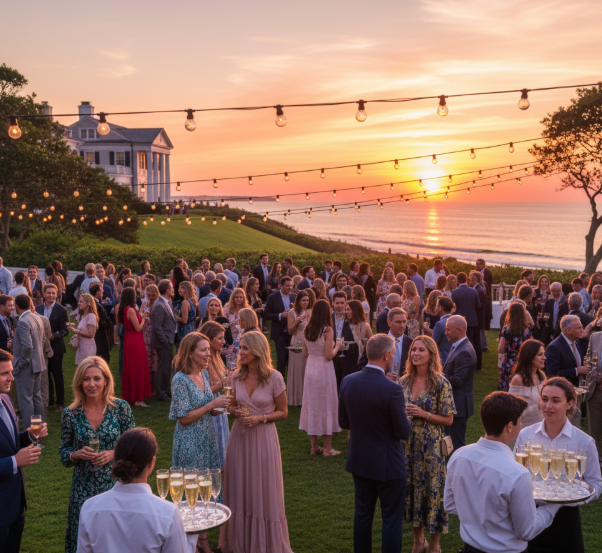
The helicopter landed at 4:47 PM on the Friday before Memorial Day. By 5:15, the passenger was standing on his Georgica Pond porch, watching the same sunset he’d watched from the same spot for seventeen years.
His net worth had changed by two commas since his first summer here. The sunset hadn’t changed at all.
Between Memorial Day and Labor Day, one of America’s least populated regions becomes one of its most consequential. The Hamptons transform from a cluster of quiet villages into a temporary capital city where decisions that reshape industries happen over lunch, where partnerships that last decades begin with introductions at benefit galas, where geography compresses schedules that Manhattan keeps permanently misaligned.
Fewer people. Higher leverage. That’s the math.

The Compression Phenomenon
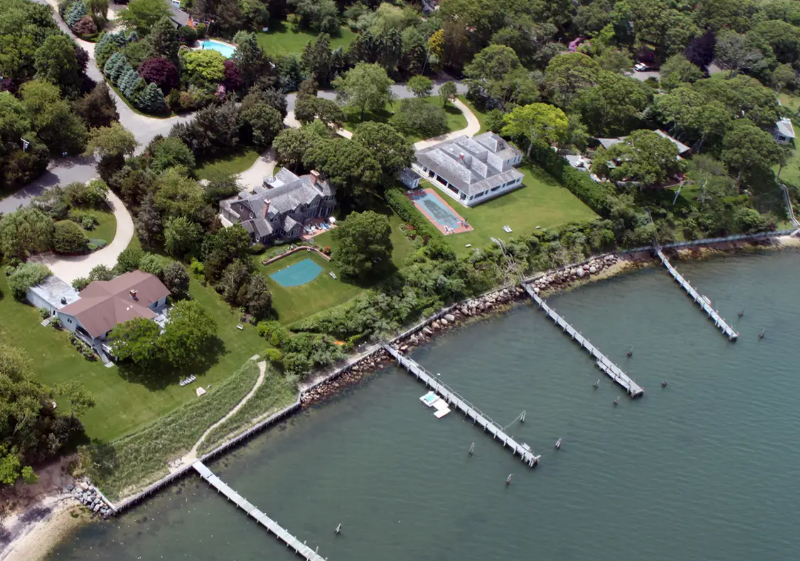
The numbers tell one story. The East End’s year-round population hovers around 60,000. Between Memorial Day and Labor Day, that figure swells to approximately 262,000. A 2,700% increase that transforms infrastructure, economics, and possibility itself.
But raw population numbers miss the signal. This isn’t tourism. It’s wealth migration at a scale and concentration found nowhere else in America.
Meadow Lane’s five oceanfront miles contain more deployable capital per linear foot than any financial district on Earth. Ken Griffin. Leon Black. Chase Coleman. James Tisch. Each name represents billions in assets under management. Each driveway leads to a principal whose calendar Manhattan cannot access for months at a time.
The compression changes the math. Principals who require six-week scheduling windows in the city become accessible within hours when they’re already at the same polo match, the same benefit dinner, the same farmers market on Saturday morning.
Why Capital Concentrates Here
Geography is strategy. The Hamptons occupy a specific position in relation to New York that no other location can replicate.
Proximity to capital concentration: Manhattan remains the financial capital of the Western world. The Hamptons sit close enough for weekend access yet far enough to create separation from daily business rhythm. This positioning enables the mixing of professional and social contexts that pure business settings prevent.
Historical establishment: Generations of wealth selected this geography. The institutions, the social patterns, the relationship networks developed over decades. New money can purchase property. It cannot purchase the infrastructure that time created.
Scarcity constraints: Oceanfront cannot be manufactured. Premium addresses cannot expand. The permanently limited supply ensures that those who achieve presence share certain baseline characteristics simply by virtue of being there.
Seasonal compression: The Memorial Day to Labor Day window creates urgency that year-round locations lack. Decisions that drift elsewhere find resolution here because everyone knows the clock runs out in September.
The Research Confirms the Pattern
Bain & Company’s analysis of family office behavior documents what Hamptons regulars have always known: deal velocity increases during periods of social proximity. The phenomenon isn’t unique to finance. It appears wherever consequential relationships drive consequential decisions.
McKinsey’s research on social capital demonstrates that strong relationships function as organizational grease—deals move faster, teams coordinate better, learning accelerates. The Hamptons create conditions where social capital accumulates at rates impossible in dispersed geographies.
The mechanism is signal density. A video call creates one signal: words. An afternoon at a shared event creates hundreds: body language, reactions under pressure, humor, generosity, treatment of service staff, handling of an unexpected situation. Trust requires signal density. Geography provides it.
The Calendar as Strategy
The fourteen-week season subdivides into phases that sophisticated operators navigate differently:
Pre-season (May): Positioning period. Committee spots fill. Event calendars crystallize. Relationships initiated now develop through peak season. Those who wait for Memorial Day arrive to find the game already in progress.
Peak season (June-July): Maximum density. The Ross School Gala. Parrish Art Museum Midsummer. Polo Hamptons. Private gatherings concentrate decision-makers into shared spaces. Deal velocity peaks. New relationships form fastest during these weeks.
Late season (August): Consolidation phase. New introductions matter less than deepening existing connections. The strategic play shifts from acquisition to cultivation. June acquaintances become August confidants.
Post-season (September): The 48-72 hour window after Labor Day determines which summer relationships persist. Follow-up during this period distinguishes intentional networkers from social tourists.
Evidence From the Celebrity Archive
The origin stories we’ve documented reveal the pattern consistently. Relationships preceded deals. Geography created relationships. The sequence matters.
George Clooney’s billion-dollar exit from Casamigos began as friendship, not business. He and Rande Gerber were building vacation homes next to each other. They drank tequila together. They decided to make their own. The billion-dollar sale to Diageo emerged from a relationship that geography made possible.
Brian Grazer’s forty-year Hollywood career started with a summer job delivering documents. He insisted on handing papers directly to executives. The man asked questions. This individual learned the business one conversation at a time. Geography—being physically present where decisions happened—created every opportunity that followed.
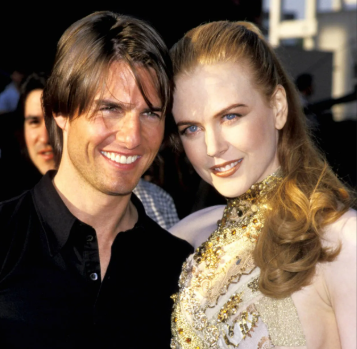
Hollywood’s $1.4 billion power couples share the pattern. Clooney’s Lake Como. Pitt’s Miraval. Roberts’s Malibu. Kidman’s Nashville. Each chose geography strategically, not decoratively. The locations serve relationship purposes that pure real estate analysis misses.
The Off-Market Reality
Off-market transactions dominate Hamptons celebrity real estate precisely because relationships precede transactions. The $115 million Semel-to-Blavatnik sale. Barry Rosenstein’s $147 million Further Lane purchase. Ken Griffin’s multiple acquisitions.
Major brokerages maintain dedicated teams for clients requiring confidentiality over marketing exposure. The deals that reshape the landscape happen between people who already know each other. The geography that creates knowing becomes the geography where transactions close.
Privacy concerns drive both buyers and sellers toward discrete arrangements. But discretion serves another purpose: it signals insider status. The ability to transact off-market proves you belong to networks where such transactions occur. The transaction itself becomes credential.
The Remote Work Paradox
Remote work didn’t diminish the Hamptons. It intensified concentration there.
When daily office presence became optional, those with means exercised that option by extending Hamptons seasons. Memorial Day arrivals moved earlier. Labor Day departures pushed later. What was once weekend retreat became seasonal headquarters.
The professionals who can work from anywhere increasingly choose to work from here during summer months. Their presence during weekdays, not just weekends, creates networking density that previous patterns never achieved.
Technology freed people to optimize for what offices never provided: physical presence with the right people in the right contexts. The Hamptons deliver exactly that. This zoom-capable infrastructure meets the relationship-building geography. That combination compounds.
What the Concentration Creates
Temporary capital cities emerge where power concentrates. Washington during legislative sessions. Davos during the World Economic Forum. The Hamptons during summer.
Each temporary capital creates conditions for decisions that dispersed geography prevents:
Reduced transaction costs: The scheduling friction that delays Manhattan meetings disappears when principals are already proximate. What takes weeks to arrange in the city happens in hours when both parties attended the same Saturday lunch.
Social proof acceleration: Being seen in the right contexts with the right people accelerates reputation formation. A summer of consistent presence accomplishes what years of city networking cannot.
Trust formation environment: Informal settings reveal character that formal settings conceal. The Hamptons provide infrastructure for the informal observation that trust requires.
Our research on celebrity success patterns identified the mechanism: adversity creates drive, but opportunity requires proximity. This Hamptons manufacture proximity for those who understand how to use it.
The Return
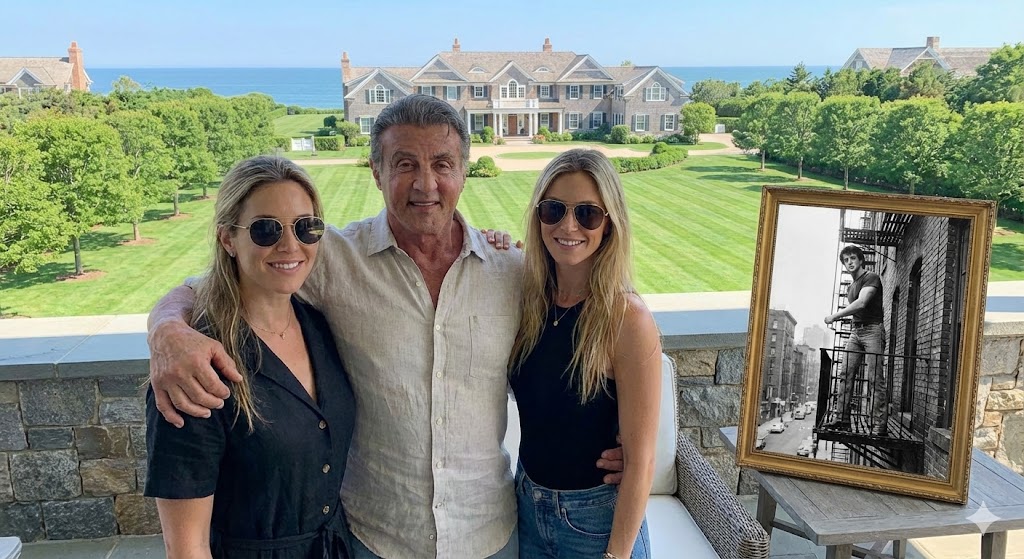
Every May, the helicopters begin their Friday rhythm. That same families return to the same houses. That same conversations resume where they paused in September.
This isn’t vacation. This is return. To a place where relationships compound across years. Where deals close because trust already exists. Where geography concentrates power that dispersed living dilutes.
The Hamptons become a temporary capital city every summer because capital—of every form—requires concentration to convert. Economic capital needs social capital to unlock opportunity. Social capital needs cultural capital to gain legitimacy. Cultural capital needs symbolic capital to sustain itself.
The geography provides infrastructure for all four conversions simultaneously. Fourteen weeks. Sixty square miles. Leverage that no digital connection can replicate.
Around and around, and back home again.
Part of the Polo Hamptons Series
For the complete strategic framework, read: How Polo Hamptons Became a Meeting Point for Capital, Culture, and Luxury Brands
Continue the 3 Series:
- What Happens When New York’s Most Powerful People Leave the City Together
- Why Deals, Partnerships, and Brand Loyalty Start Socially
Related: The Capital Structure Behind Celebrity Empires
For features, advertising, and partnership opportunities with Social Life Magazine, visit sociallifemagazine.com/contact. Experience where capital meets culture at Polo Hamptons. Subscribe to our print edition or support independent luxury journalism with a $5 donation.
Author

Written by
Recent Posts
Aaron Paul Net Worth — His Character Was Supposed to Die in Season One. Instead He Made $30 Million.
Bryan Cranston Net Worth. He Played a Sitcom Dad for Seven Years. Then He Became the Most Dangerous Man on Television.
Breaking Bad Cast Net Worth. $130 Million Cooked in Five Seasons of Perfect Television

Cailee Spaeny Net Worth — From Springfield, Missouri to A24 and Alien in Three Years Flat

Wagner Moura Net Worth — He Learned Spanish to Play Escobar. Then He Learned English to Take Hollywood.
Categories
- Art
- Articles
- Beauty & Skincare
- Celebrities
- Celebrities|Movies
- Celebrities|The Chronicles
- Chronicles
- Entertainment|Culture
- Event Photos
- Events
- Fashion
- Fashion & Style
- Featured
- Food & Beverage
- Food, Spirits, Wine
- Hamptons
- Hamptons Celebrities
- Hamptons Celebrities|Celebrities|The Chronicles
- Health
- Health & Beauty
- Lifestyle
- Luxury Lifestyle
- Movies|Culture
- Movies|Hamptons Lifestyle
- Press
- Profiles
- Real Estate
- Technology
- The Chronicles
- Travel
- TV
- Uncategorized
- Weddings