
The Fundamental Asymmetry of Wealthy Attention
When McKinsey’s State of Fashion report examined luxury consumer behavior, one pattern emerged with uncomfortable clarity. High-net-worth individuals have systematically trained themselves to filter advertising. They employ assistants to manage email. They skip television commercials or don’t watch television at all. They’ve developed what researchers call “affluent ad blindness” with remarkable precision.
Advertising assumes attention can be purchased. But attention cannot be purchased from people who have already purchased everything. The currency has been devalued by oversupply. Every brand wants their eyeballs. Every publication promises access to their wallets. The wealthy have heard it all before.
Hosting operates on entirely different economics. Instead of chasing attention, hosting attracts it. Instead of interrupting someone’s experience, hosting becomes the experience. The brand transforms from message to medium.
Why Cabana-Style Presence Feels Natural
Consider what happens when a luxury automotive brand purchases a billboard on the Long Island Expressway. A driver glances up, registers the message, and returns to the road. The interaction lasts perhaps three seconds. No relationship forms. No conversation occurs. The brand remains abstract, distant, an interruption rather than an invitation.
Consider what happens when that same brand hosts a cabana at a polo match. Guests arrive and discover comfortable seating, attentive service, and a curated environment. They spend three hours in a space the brand has thoughtfully designed. Food the brand selected gets consumed. Champagne the brand poured flows freely. Other guests the brand invited become conversation partners.
The brand never makes a pitch. It doesn’t need to. By the time guests leave, they’ve formed associations that no advertisement could manufacture. The brand feels familiar because they experienced it directly. According to Harvard Business Review research on experiential value, remembered experiences create stronger brand associations than any message exposure, regardless of frequency.

The Gravity Principle in Luxury Marketing
Physics offers a useful metaphor. Large objects create gravitational fields that attract smaller objects. No chasing required. No pursuit necessary. Simply existing with enough mass that other things naturally orbit toward them.
Advertising is pursuit. Hosting is gravity.
When a brand hosts well, it creates a gravitational field. Interesting people want to attend. Their presence attracts other interesting people. The environment generates its own momentum. Each successful gathering makes the next one more magnetic.
This explains why certain events become essential calendar fixtures while others struggle to fill seats. The gravitational brands have accumulated social mass over time. They’ve hosted consistently enough that attendance has become a form of insider signaling. Missing the event means missing the conversation.
The Compounding Effect of Consistent Presence
Advertising resets to zero every campaign. Each media buy requires new creative, new placement, new spend. There is no compound interest. The work you did last year doesn’t make this year easier.
Hosting compounds. Events build relationships that carry forward. Positive experiences create ambassadors who recruit future guests. Conversations plant seeds that may not bloom for years but eventually bear fruit.
George Clooney’s approach to business networking illustrates this perfectly. Clooney didn’t advertise Casamigos tequila to wealthy buyers. He hosted consistently. Friends received invitations to his homes. Environments emerged where the product existed naturally within relationships. By the time Diageo paid a billion dollars for the brand, its value had compounded through years of hosted experiences rather than purchased impressions.
What Wealthy Consumers Actually Remember
Memory operates counterintuitively. People remember how experiences made them feel long after they’ve forgotten specific details. They recall emotional textures and interpersonal dynamics with far greater fidelity than they recall marketing messages.
Advertising aims for recall. Did the consumer remember our brand name? Did they associate it with the right attributes? This approach treats memory like a filing cabinet where messages get stored and retrieved.
Hosting aims for feeling. Did the guest feel welcomed? Were conversations meaningful? Did they leave better than they arrived? This approach treats memory like an emotional landscape where experiences leave permanent impressions.
The distinction matters because purchase decisions in high-net-worth circles rarely follow the advertising model. Wealthy consumers don’t need to be informed about products. Awareness of what exists is already complete. Feeling aligned with brands matters more. Sensing that a company understands their world, shares their values, inhabits their social universe.

The Trust Velocity Differential
Advertising builds trust slowly if at all. Each exposure adds fractionally to familiarity, but familiarity alone doesn’t generate trust. People can be familiar with brands they don’t trust. They can recognize logos while harboring suspicions about the companies behind them.
Hosting builds trust rapidly. A single three-hour experience can accomplish what years of advertising never achieves. When someone sits in your space, drinks your champagne, and converses with guests you’ve curated, they form trust judgments based on direct experience rather than manufactured claims.
According to Bain & Company’s luxury research, trust velocity has become a competitive advantage in premium markets. Brands that can establish trust faster gain disproportionate access to high-value relationships. Hosting accelerates trust in ways advertising cannot match.
The Strategic Shift From Message to Environment
Traditional marketing asks: what should we say? Hosting asks: what should we create?
The questions lead to entirely different outcomes. Message-based thinking produces campaigns, content, and communications. Environment-based thinking produces experiences, gatherings, and spaces. The former requires persuasion. The latter enables discovery.
When LVMH brands activate at exclusive events, they rarely make explicit claims. They don’t need to argue for their value. They simply create environments where their value becomes obvious through experience. Guests discover quality by touching fabrics, tasting champagne, and inhabiting spaces that reflect the brand’s standards.
Environment as Competitive Moat
Anyone can buy advertising. The barrier to entry is purely financial. If you have budget, you can place messages alongside competitors who also have budget. The wealthy are accustomed to this competition for their attention. They’ve learned to tune it out.
Creating compelling environments requires more than money. It demands taste, relationships, and operational capability. Knowing the right people to invite is essential. Spaces worthy of their attendance matter. Staff who understand hospitality at the highest levels. You need the judgment to curate experiences that feel effortless despite meticulous planning.
These capabilities create genuine competitive moats. Competitors can copy your advertising creative within weeks. They cannot replicate relationships built over years. They cannot manufacture the social proof that comes from consistently excellent hosting.
The Polo Field as Perfect Canvas
Not all hosting environments are created equal. Some spaces amplify brand positioning. Others muddy it. The choice of where to host matters as much as the decision to host at all.
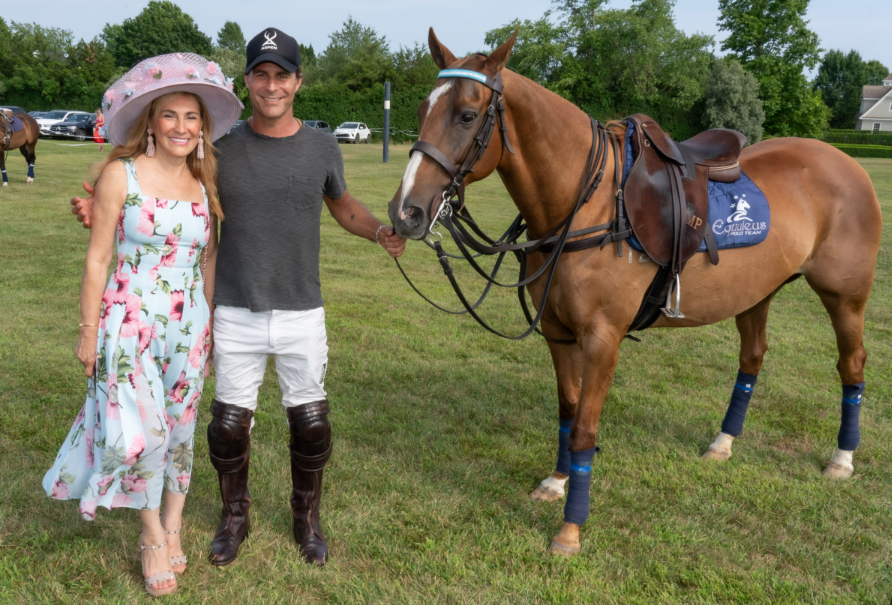
Polo fields work because they carry centuries of aristocratic association without the stuffiness of formal galas. This sport provides natural structure and conversation topics. Outdoor settings permit relaxed dress codes while maintaining elegance. Cadence of chukkers creates rhythm without demands.
At Polo Hamptons in Bridgehampton, brands have discovered that the polo aesthetic does half the positioning work. That environment signals wealth, taste, and leisure without requiring explicit communication. Guests understand intuitively what kind of brand would host here and what kind of people would attend.

Why Adjacency Matters
Brand environments don’t exist in isolation. They exist adjacent to other brands, other guests, other experiences. Smart hosts understand that adjacency creates association. The company you keep becomes part of your brand identity.
Polo events concentrate precisely the audience most brands struggle to reach. This fields naturally filter for wealth and taste. That social protocols naturally filter for discretion and sophistication. By hosting within this environment, brands borrow adjacency with both the sport’s heritage and the community’s quality.
From Impression to Invitation
The fundamental shift is philosophical. Advertising treats consumers as targets to be reached. Hosting treats them as guests to be welcomed. The posture is entirely different, and wealthy consumers can sense the difference instantly.
Targets are pursued. Guests are invited.
Targets receive messages. Guests receive experiences.
Targets get counted in impressions. Guests? They get valued as relationships.
The language itself reveals the underlying orientation. Marketing departments that speak in terms of “targeting” and “capturing” and “reaching” have already limited their effectiveness with high-net-worth audiences. These audiences have been targeted their entire lives. They’ve developed antibodies.
Departments that speak in terms of “hosting” and “welcoming” and “curating” operate from abundance rather than scarcity. They assume the brand has value worth sharing rather than messages requiring persuasion. This confidence reads as authenticity, which is itself the most valuable currency in luxury markets.
The Mathematics of Relationship Conversion
Advertising measures cost per impression. Hosting measures cost per relationship. The metrics reflect entirely different theories of value creation.
A single deeply converted relationship often exceeds the value of millions of impressions. When successful entrepreneurs build their networks, they don’t count how many people know their name. They count how many people would take their call. The distinction matters enormously.
One afternoon of excellent hosting might generate only fifty interactions. But if twenty of those interactions lead to follow-up conversations, and five of those conversations lead to substantive relationships, and two of those relationships lead to significant transactions, the mathematics work beautifully. The investment in hosting compounds through relationship conversion in ways that impression-based advertising never can.
Related Articles
- Hosting, Not Advertising: The Executive Psychology Behind Luxury Brand Presence
- The Decline of the Logo, the Rise of the Experience
- What Executives Actually Remember After a Great Afternoon
Ready to shift from advertising to hosting? Contact us at sociallifemagazine.com/contact for cabana sponsorship opportunities, brand activation partnerships, and VIP hospitality packages.
Experience the power of presence at Polo Hamptons, where relationship conversion happens between chukkers.
Join our email list for exclusive invitations to Social Life events and luxury brand activations.
Subscribe to our print edition delivered to your Hamptons residence or Manhattan pied-à-terre.
Part of the Polo Hamptons Series
For the complete strategic framework, read: How Polo Hamptons Became a Meeting Point for Capital, Culture, and Luxury Brands
Continue the 5 Series:
- The Decline of the Logo, the Rise of the Experience
- What Executives Actually Remember After a Great Afternoon
Related: The Capital Structure Behind Celebrity Empires
For features, advertising, and partnership opportunities with Social Life Magazine, visit sociallifemagazine.com/contact. Experience where capital meets culture at Polo Hamptons. Subscribe to our print edition or support independent luxury journalism with a $5 donation.
Author

Written by
Recent Posts

Sofia Vergara Net Worth: The $180M Parallel Construction
Mel Gibson Net Worth: The $425M Architecture Lesson

Mariah Carey Net Worth: The $350M Renegotiation
Kevin Federline Net Worth: The $1M Cautionary Tale

Jennifer Aniston Net Worth: The $300M Post-Divorce Blueprint
Categories
- Art
- Articles
- Beauty & Skincare
- Celebrities
- Celebrities|The Chronicles
- Chronicles
- Event Photos
- Events
- Fashion
- Fashion & Style
- Featured
- Food & Beverage
- Food, Spirits, Wine
- Hamptons
- Hamptons Celebrities
- Hamptons Celebrities|Celebrities|The Chronicles
- Health
- Health & Beauty
- Lifestyle
- Luxury Lifestyle
- Press
- Profiles
- Real Estate
- Technology
- The Chronicles
- Travel
- Uncategorized
- Weddings