
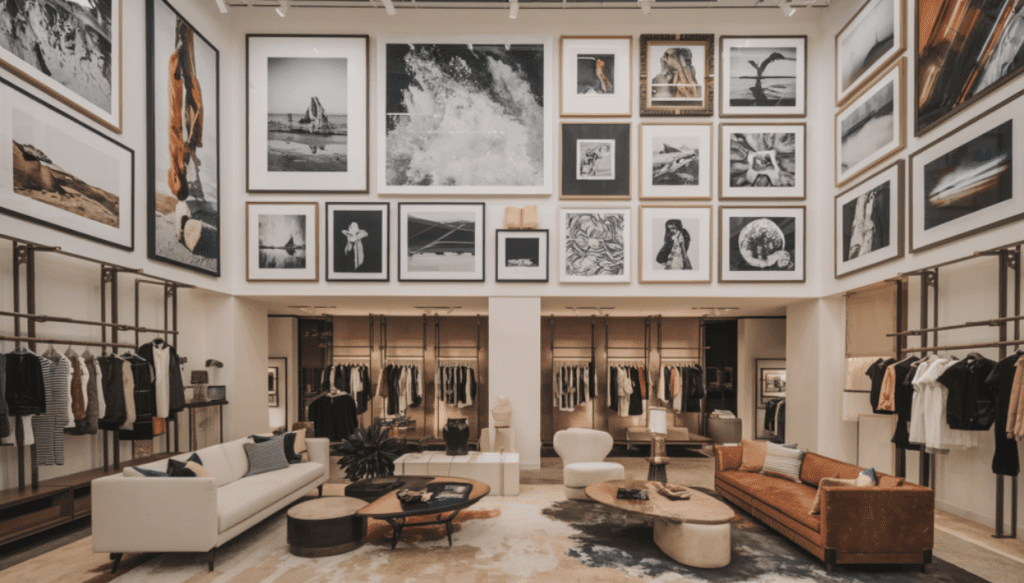
In high-end fashion retail, every surface tells a story. The fixtures, the lighting, the materials—each element contributes to an atmosphere that either elevates or diminishes the brand. Among these, luxury wall art stands apart as one of the most powerful tools for creating environments that resonate emotionally with customers and reinforce a retailer’s positioning in the market.
Unlike generic decoration, carefully curated wall art in upscale retail spaces serves multiple functions simultaneously. It establishes visual hierarchy, creates moments of pause that slow the shopping pace, and communicates brand values without words. When a customer enters a boutique and encounters a striking photograph or an abstract canvas that complements the merchandise, they’re experiencing design that goes beyond aesthetics—they’re being invited into a world the brand has constructed.
From Aristocratic Walls to Modern Retail
The relationship between art and commerce has deep historical roots. For centuries, art ownership signaled wealth and cultural sophistication, with paintings and sculptures adorning the estates of European nobility. As retail evolved from simple mercantile exchanges to experiential destinations, the role of art shifted from private collection to public statement.
Today’s luxury wall art encompasses far more than traditional oil paintings. The category now includes large-format photography, mixed media installations, limited-edition prints, and digital art pieces—all selected to create cohesive narratives within retail environments. The psychological impact of art in spaces directly influences both mood and behavior, making it a strategic investment rather than mere decoration.
This evolution reflects broader changes in how consumers interact with retail spaces. As e-commerce has claimed an increasing share of transactions, physical stores have had to justify their existence by offering something online shopping cannot: immersive, sensory experiences that create emotional connections.
Selecting Art That Serves the Space
Choosing wall art for upscale fashion retail requires a fundamentally different approach than decorating residential spaces. The art must work harder—supporting brand identity, complementing merchandise, and creating Instagram-worthy moments that extend the store’s reach beyond its physical walls.
Several key considerations guide effective selection:
- Scale and Proportion: Large retail spaces demand bold, oversized pieces that command attention from across the room. Smaller boutiques benefit from curated collections of medium-sized works that create intimacy without overwhelming the merchandise.
- Color Relationships: Art should either harmonize with or deliberately contrast against the store’s color palette. A monochromatic fashion collection might call for vibrant art that adds energy, while a colorful merchandise mix often benefits from neutral, textural pieces.
- Brand Alignment: The style, subject matter, and execution of the art must reflect the brand’s core values. A heritage luxury brand might choose classical photography or representational art, while an avant-garde fashion house could opt for provocative contemporary pieces.
- Lighting Considerations: Art in retail environments must perform under specific lighting conditions, often including both natural daylight and artificial illumination that changes throughout the day.
- Rotation Potential: Unlike residential installations, retail art often benefits from periodic rotation to keep the environment fresh for repeat customers and staff.
Industry experts emphasize the importance of viewing art selection as part of a holistic design strategy.
The Psychology of Art in Commercial Environments
The impact of wall art on customer behavior extends far beyond aesthetics. Research in environmental psychology has demonstrated that visual elements in retail spaces directly influence dwell time, perceived value, and purchase decisions.
Art creates what retail designers call “decompression zones”—areas where customers naturally slow down and transition from the outside world into the store’s atmosphere. A striking piece near the entrance serves this function, giving shoppers a moment to adjust and begin engaging with the space on the brand’s terms.
The emotional resonance of art also affects how customers perceive pricing. Studies have shown that environments incorporating fine art lead customers to assign higher value to merchandise, even when the products themselves are identical to those in less artfully designed spaces. This phenomenon, known as the “halo effect,” makes luxury wall art not just a design choice but a strategic business decision.
For fashion retailers specifically, art can reinforce seasonal themes and merchandise stories. A collection inspired by coastal living gains credibility when surrounded by seascape photography. Urban streetwear feels more authentic in a space featuring contemporary urban art. These connections operate largely at a subconscious level, creating coherence that customers feel rather than consciously recognize.
Designing Zone-Specific Installations
Different areas within upscale retail environments call for distinct approaches to wall art. Understanding these nuances allows retailers to create varied experiences as customers move through the space.
In main retail areas, art should complement rather than compete with merchandise. These pieces often work best when they establish mood and reinforce brand identity without demanding so much attention that they distract from the products. Large-scale abstract works, subtle photography, or minimalist compositions typically succeed in these high-traffic zones.
Fitting rooms present unique opportunities for more intimate, engaging art. Since customers spend focused time in these spaces, often alone or with a small group, the art can be more detailed, narrative, or provocative. Many luxury retailers use fitting rooms to showcase emerging artists or limited-edition pieces that create talking points and social media moments.
Even utilitarian spaces like restrooms benefit from thoughtful art selection. These areas, often overlooked in retail design, offer chances to surprise and delight customers with unexpected sophistication. A well-chosen piece in a restroom reinforces the brand’s attention to detail and commitment to creating a complete luxury experience.
Sourcing Strategies for Retail Art Programs
The economics of outfitting retail spaces with luxury wall art require careful consideration. While individual statement pieces from established artists can command significant investment, retailers have multiple sourcing options that balance quality with budget realities.
Limited-edition prints offer an accessible entry point to the luxury art market. These pieces, produced in controlled quantities and often signed by the artist, provide authenticity and exclusivity at a fraction of the cost of original works. High-quality printing technologies now allow for reproductions that capture the texture and depth of original paintings or the tonal range of fine art photography.
Wholesale art programs have evolved significantly in recent years, moving beyond generic hotel art to offer curated collections suitable for upscale retail environments. Leisure Piece, Artsy, and Saatchi Art each operate wholesale-friendly programs that give retailers access to curated inventories spanning photography, illustration, and fine art prints suitable for upscale installations. These programs allow retailers to access diverse inventories, often with flexible terms that support seasonal rotations or multi-location consistency.
Framing quality deserves particular attention in retail installations. Premium frames not only protect the artwork but also signal quality to customers. The frame becomes part of the overall design statement, and cutting corners here can undermine even the finest art. Museum-quality framing with UV-protective glazing ensures longevity in retail environments where lighting and handling present ongoing challenges.
Some retailers have found success partnering directly with artists or galleries, creating exclusive installations that generate publicity and differentiate the brand. These collaborations can extend to limited-edition merchandise, artist appearances, or rotating exhibitions that give customers reasons to return.
Measuring Impact and ROI
While the effects of luxury wall art on retail performance can be difficult to isolate, several metrics help assess its contribution to business outcomes. Customer dwell time—how long shoppers remain in the store—often increases in well-designed environments featuring quality art. Since dwell time correlates strongly with purchase probability, this represents a meaningful business impact.
Social media engagement provides another measurable indicator. Distinctive art installations frequently appear in customer photos and posts, extending the brand’s reach and creating organic marketing content. Some retailers track hashtags and geotags to quantify this effect.
Staff satisfaction and retention, while harder to attribute directly to art, often improve in aesthetically pleasing environments. In competitive retail labor markets, creating workplaces that employees feel proud to inhabit contributes to lower turnover and better customer service.
Customer feedback, both formal and informal, offers qualitative insights into how art contributes to brand perception. Comments about the store’s atmosphere, sophistication, or attention to detail often reference visual elements, including wall art.
Author

Written by
Recent Posts
How Luxury Wall Art Transforms Upscale Fashion Retail Spaces
How Chattanooga Property Managers Increase Rental Incomes?
The Role of Structured Care in Stabilizing Individuals During Early Addiction Recovery
6 Key Benefits of ABA Therapy in Riverview for Autism Support
Can Lifestyle Changes Help Reduce Allergy Issues in Frisco?
Categories
- Art
- Articles
- Beauty & Skincare
- Celebrities
- Celebrities|The Chronicles
- Chronicles
- Event Photos
- Events
- Fashion
- Fashion & Style
- Featured
- Food & Beverage
- Food, Spirits, Wine
- Hamptons
- Hamptons Celebrities
- Health
- Health & Beauty
- Lifestyle
- Luxury Lifestyle
- Press
- Profiles
- Real Estate
- Technology
- The Chronicles
- Travel
- Uncategorized
- Weddings