
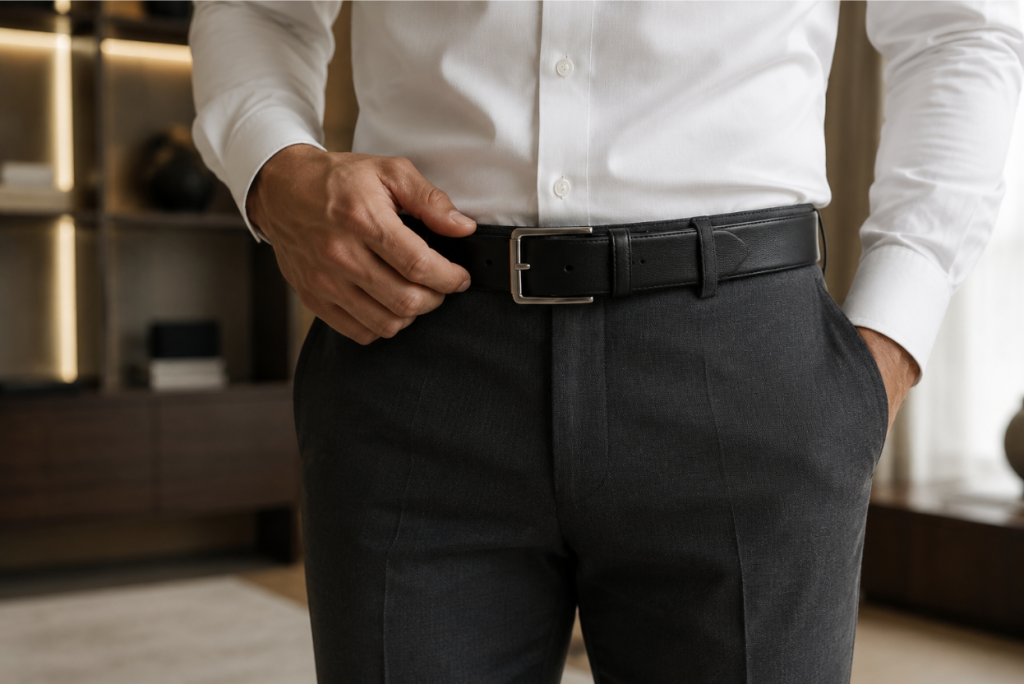
A belt is one of the few accessories a man wears every day, yet it rarely gets the attention it deserves. Whether it is holding up a pair of tailored trousers or finishing off a casual denim look, the right belt says as much about your attention to detail as your shoes or watch do. In recent years, vegan belts have moved from niche alternative to genuine wardrobe staple, and understanding what separates a good one from a disappointing one is worth the five minutes it takes to read this guide.
Synthetic Leather Versus Premium Microfiber Vegan Leather
Not all vegan leather is created equal, and this is where most buying mistakes happen. Basic PVC or PU synthetic materials are inexpensive to produce, which is why they show up so often in budget accessories. The trade-off is that they tend to feel stiff out of the box, crack or peel with repeated flexing, and rarely develop any visual character over time. They also often carry an obvious plastic sheen that reads as cheap even from a distance.
Premium microfiber vegan leather is a different category altogether. Built from a fine polyurethane coating bonded to a woven or non-woven fiber base, it is engineered to mimic the grain, flexibility and hand-feel of animal leather far more closely than older synthetic alternatives. Its fine-fiber backing gives the material greater flexibility and structural strength than many basic coated synthetics, helping it withstand the repeated flexing that occurs around the buckle and belt loops. When shopping, look for product descriptions that specify microfiber or polyurethane-on-fiber construction rather than a generic “faux leather” label, since the latter can mean almost anything.
How to Evaluate Belt Quality and Durability
A few practical checks will tell you more than any marketing copy. Flex the belt gently near the buckle end. It should bend smoothly without any whitening, cracking or a plasticky crease forming. Check the edges: a well-finished belt has clean, sealed or stitched edges rather than raw, fraying material. Look at the stitching itself for even spacing and no loose threads, and check that the keeper loop is securely attached, since this is a common weak point on lower-cost belts.
It is worth being cautious of any brand that promises a belt will “last forever” or is “indestructible.” No material, animal or vegan, is immune to wear, and reasonable buyers should expect a well-made belt to perform reliably for years with normal care, not to defy the laws of physics.
Choosing the Correct Belt Width and Size
Belt width should match the context. A dress belt typically runs between 1 and 1.25 inches wide, keeping a slim profile that pairs well with suit trousers and tailored pieces. Casual belts generally run between 1.25 and 1.5 inches wide, giving a sturdier look suited to denim and chinos.
For sizing, most belts are labeled to align with pant waist size, but the more reliable method is to measure an existing well-fitting belt from the buckle’s base to the hole you use most often. Add a couple of inches of adjustment room on either side so the belt still functions if your size fluctuates slightly. If you are between sizes, consult the brand’s sizing guide before sizing up, as adjustability and trim-to-fit construction vary between belt designs.
Dress Belts Versus Casual Belts
Dress belts are built for restraint. Smooth, matte or lightly grained finishes in black or dark brown, narrow width, and a simple, low-profile buckle are the hallmarks of a belt meant to disappear into a formal outfit rather than draw attention to itself. Casual belts have more room to express personality. Textured finishes, contrast stitching, and slightly heavier hardware all read as intentional in a relaxed context but out of place with a suit.
A practical wardrobe rarely needs more than two or three belts: one slim dress belt in black or dark brown, one wider casual belt, and possibly a third in a lighter tan or cognac shade for warmer-weather outfits.
Selecting an Appropriate Buckle and Hardware
The buckle is the first thing people notice, so proportion matters. A slim dress belt should carry a slim, understated buckle, typically a simple frame or prong style in brushed or polished silver-tone hardware. A wider casual belt can support a chunkier buckle without looking heavy-handed.
Hardware finish should generally match your other metal accessories. Silver-tone hardware pairs naturally with a stainless steel watch or silver jewelry, while gold-tone or brushed brass hardware complements gold accessories. Mixing metals deliberately can work in a fashion-forward outfit, but for everyday dressing, consistency reads as more polished.
Matching a Belt With Shoes and Different Outfits
The old rule of matching belt and shoe color exactly still holds up reasonably well, particularly for formal and business settings. A black belt with black shoes, or a brown belt with brown shoes, creates a clean, coordinated line from waist to foot. That said, the rule has loosened over the past decade. A slightly lighter or darker shade of brown belt with brown shoes reads as intentional rather than mismatched, and many stylish men now treat “same color family” as the real standard rather than an exact match.
For casual outfits, there is more flexibility. A textured tan belt can work well with white sneakers, while a black casual belt suits darker denim and boots. The main thing to avoid is a stark, jarring contrast, such as a bright black belt with warm cognac loafers, which tends to pull the eye in two directions at once.
The Benefits of Reversible Belts for Work and Travel
A reversible belt, typically black on one side and brown on the other, solves a practical problem: needing two belt colors without packing two belts. This is particularly useful for business travel, where luggage space is limited and outfits often shift between meetings and dinners. A single reversible belt with a simple, flippable buckle mechanism can cover both a black-shoe and brown-shoe outfit across a multi-day trip, making it one of the more efficient pieces in a capsule travel wardrobe.
Why Some Men Are Choosing Vegan Alternatives to Animal Leather
The shift toward vegan belts is driven by a mix of factors. Some men are moving away from animal leather for ethical reasons, preferring not to wear animal-derived materials at all. Others are drawn to the practical side: many microfiber vegan leathers offer useful resistance to light moisture, require relatively straightforward care, and tend to be more consistent in texture because they are not subject to the natural variation of animal hide.
Brands like Doshi, a PETA-Approved Vegan accessories brand, have built their offering specifically around this shift, producing men’s vegan belts alongside wallets and bags using microfiber vegan leather construction. For a buyer weighing the switch, trying a single well-made vegan belt is a low-risk way to judge the material for yourself before deciding whether it fits the rest of your accessory collection.
The Bottom Line
Choosing a belt is a small decision with an outsized effect on how put-together an outfit looks. A thoughtfully selected vegan belt can now deliver the polish, versatility and everyday practicality expected from a wardrobe essential. Focus on construction, fit and proportion, and it becomes the kind of accessory that quietly improves everything worn with it.
Author

Written by
Recent Posts

Nino’s Beach Brings Generations of Italian Hospitality to the Port Washington Waterfront

The Self-Made Man Who’s One Phone Call From Ruin

Everyone Out Here Is Loaded. Nobody Feels Rich.

What to Do When Illness Threatens a Trip You Already Paid For
How Independent Watch Brands Are Challenging Traditional Luxury
Categories
- Art
- Articles
- Business of Luxury
- Celebrities
- Culture
- Entertainment
- Events
- Faces of Summer 2026
- Fashion
- Fashion & Style
- Featured
- Finance
- Food, Spirits, Wine
- Hamptons
- Hamptons Celebrities
- Health
- Health & Beauty
- Lifestyle
- Luxury Lifestyle
- Press
- Profiles
- Real Estate
- Technology
- The Chronicles
- Travel
- Uncategorized
- Weddings