
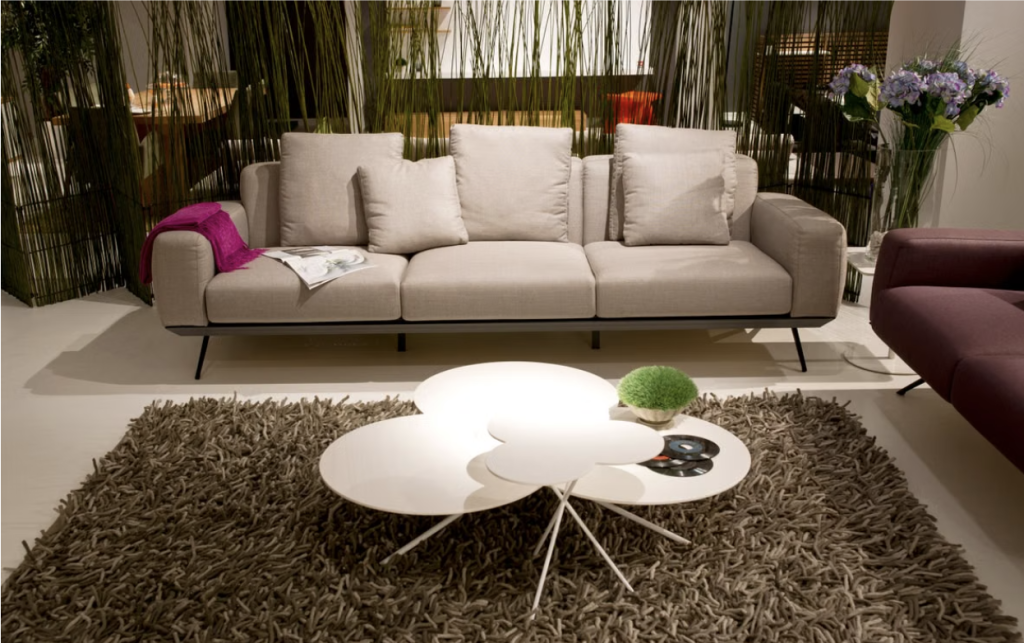
A rug can make your furniture look beautifully connected, or make an otherwise polished room feel strangely disjointed. The difference usually comes down to three things: color relationships, visual weight, and scale.
You do not need an exact color match to create harmony. Instead, you need a rug that understands what your sofa, wood finishes, walls, lighting, and accents are already doing.
Start With What You Already Own
Before you shop these days, look around your room and pick three visual anchors (or those that immediately catch your eye): your main furniture piece, flooring or wood finish, and wall color.
Let the strongest element set the direction for styling comfortable and functional interiors. A bold sofa pairs well with a quieter rug, while neutral furniture gives you room to make the rug the star. You need not match everything that much; just keep warm tones stay with warm tones, and cool shades with cool shades. You do not really need an exact match. It’s just a matter of aiming for colors that feel connected and natural; you need not strain yourself looking for something identical.
Let Traditional Rugs Add Depth Without Taking Over
When your furniture has already seen the best of days and feels a little plain, a patterned rug might just bring in that certain detail your room needs. It can work especially well with simple sofas, clean-lined chairs, and solid curtains; you can even try it with understated decor.
Some of today’s intricate traditional rugs, like those from Rug Source, might just be what you need to add layered colors, detailed motifs, and more visual depth to your modern spaces. It’s like a refreshing touch that can spice up today’s furniture styles and make it feel more deliberate and connected to life, like ageless pieces.
The key, most of the time, is balance. If your sofa has a bold print, choose a quieter rug. If your furniture is mostly solid, a detailed pattern can become the room’s focal point.
Pull Colors Instead of Matching Them
Once you find a rug you like, identify two or three colors inside its design. You can repeat those colors through smaller items such as pillows, artwork, throws, lamps, or decorative objects.
For example, you really like that cream rug with muted blue and rust details in one shop. You might find it can be quite pretty when thrown in with a cream sofa to keep your room calm, while blue cushions and a small rust-accent chair can create a subtle yet quite impressive blend. This approach gives you cohesion without making the room look like you purchased everything from one showroom.
Current rug styling guidance and today’s more modern trends often recommend using related color families and motifs rather than forcing exact matches across every furnishing.
Match Pattern Scale to Furniture Weight
Some designs, like a pattern scale, can change how large or busy your room feels. A large geometric design usually has more visual presence, while a small intricate pattern creates a denser impression.
If you have a substantial sectional sofa, oversized coffee table, or several large chairs, keeping a tiny repetitive rug pattern may struggle to hold your entire room together. Getting large-patterned rugs can better match this obvious furniture visual weight. In the same manner, delicate furniture can work beautifully with a refined pattern.
If your room already contains patterned curtains, wallpaper, or artwork, consider giving the rug a simpler role. Your goal is not to eliminate pattern. Your goal is to prevent competing focal points.
Get the Rug Size Right Before You Judge the Color
A beautiful rug can still look wrong if it is too small. In living rooms, the rug should generally connect the major seating pieces instead of floating underneath only the coffee table.
For a more compact arrangement, placing your sofa’s and chair’s front legs on the rug can create a connected seating zone. Usually, larger rooms can easily benefit from placing all major furniture on the rug. Also, before ordering, use painter’s tape to mark the proposed rug dimensions on your floor. This simple step lets you judge proportion before you spend money.
Check the Rug Under Your Actual Lighting
A rug’s color can look different under daylight, warm bulbs, and cool overhead lighting. That matters because your room’s lighting changes how its colors relate to your furniture.
If possible, examine a physical sample in the room at different times of day. Rugs Direct also recommends comparing colors with your home’s actual lighting rather than relying entirely on store lighting. This final tab can save you from choosing a rug that looks perfect online but feels too yellow, gray, dark, or bright at home.
Make Your Rug the Connection Point
The easiest way to match a rug successfully is to stop thinking about matching and start thinking about relationships. Your rug should connect colors, furniture, patterns, textures, and proportions into one readable composition.
So, before buying, step back and ask one helpful question. Can the rug you want to buy make your home furniture, fixtures, and decor look more intentional and cohesive when thrown together? If the answer is yes, you have probably found the right foundation. Choose the size carefully, repeat a few colors naturally, and let one element lead instead of making everything compete for attention.
Author

Written by
Recent Posts
How to Measure Whether a Hair Loss Treatment Is Working
Is Online Psychiatry Covered by Insurance? What to Know Before Booking
Four Habits of Quietly Successful Entrepreneurs

The Most Common Preventable Health Concerns Doctors See Today
What Affects a Rideshare Injury Settlement?
Categories
- Art
- Articles
- Business of Luxury
- Celebrities
- Culture
- Entertainment
- Events
- Faces of Summer 2026
- Fashion
- Fashion & Style
- Featured
- Finance
- Food, Spirits, Wine
- Hamptons
- Hamptons Celebrities
- Health
- Health & Beauty
- Lifestyle
- Luxury Lifestyle
- Press
- Profiles
- Real Estate
- Technology
- The Chronicles
- Travel
- Uncategorized
- Weddings