
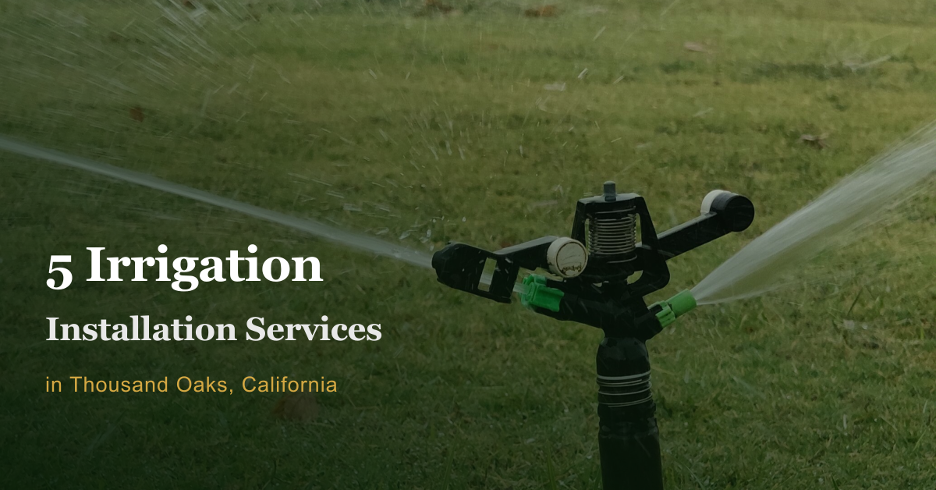
Thousand Oaks summers are dry. Six weeks without rain, sometimes more, and the hillside soil doesn’t hold moisture the way coastal landscapes do. The Ventura County Waterworks District has enforced tiered water rates long enough that most homeowners have already seen the overage charge on a July bill. Irrigation installation in Thousand Oaks isn’t a luxury upgrade. It’s the system that determines whether your landscape holds or quietly racks up costs because the coverage was wrong from day one.
The five services below cover what’s actually available in the Thousand Oaks area. Who each one makes sense for. What the installer actually does, from the first walkthrough of the property to the last controller adjustment.
1. Drip Irrigation System Installation
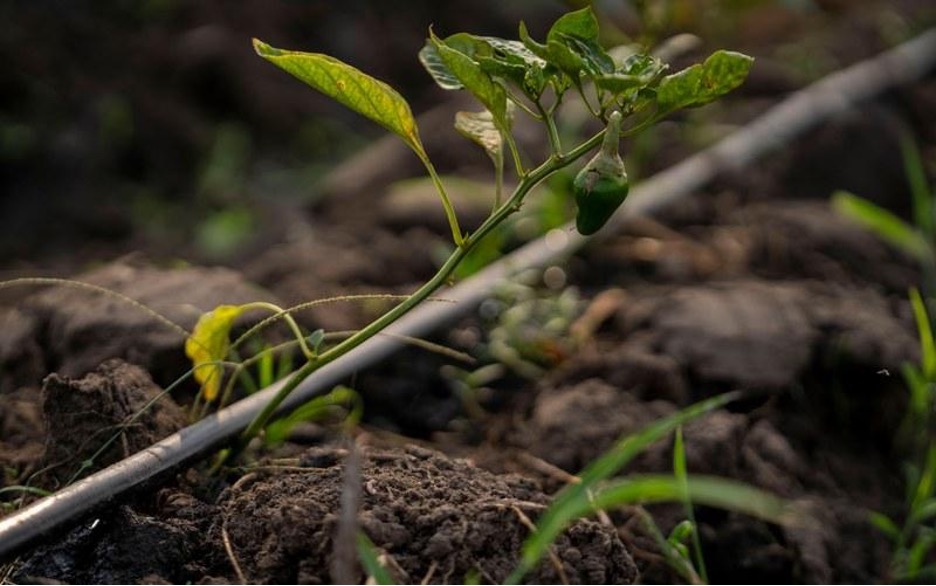
Drip irrigation delivers water straight to the root zone. Not via spray. Through emitters, tubing, and pressure regulators that move water at rates measured in gallons per hour, not per minute. No evaporation off leaves. No water sheeting down the driveway.
In Thousand Oaks and the Conejo Valley, drip is the default choice for garden beds, ornamentals, fruit trees, and any slope planting where runoff is a problem. And the Ventura County Waterworks District backs this up with rebates for conversions from traditional spray to drip, specifically because drip systems reduce outdoor water use by 30 to 50 percent over overhead spray covering the same square footage. That’s not a small number.
What Professional Drip Installation Includes
The difference between a drip system that lasts and one that fails inside two seasons almost always comes down to one question: did the installer do an actual site assessment, or did they just run tubing from the valve box and call it done? Most of the time, you can tell within a year.
A proper installation starts with plant inventory and soil type review. Clay content in Thousand Oaks varies significantly by neighborhood, and it directly affects emitter flow rate selection. From there, installation covers pressure regulators at each zone, inline filters sized for Ventura County’s mineral content, emitter spacing matched to plant spacing, and zone separation so shrubs and deep-root trees aren’t running on the same schedule.
2. Sprinkler System Installation
Sprinkler systems are still right for turf areas, large flat zones, and athletic grass. Rotary heads provide wide-arc coverage at low precipitation rates, which works well for Bermuda and fescue lawns common in Thousand Oaks and Westlake Village. Fixed spray heads work better for smaller zones where precision matters more than distance.
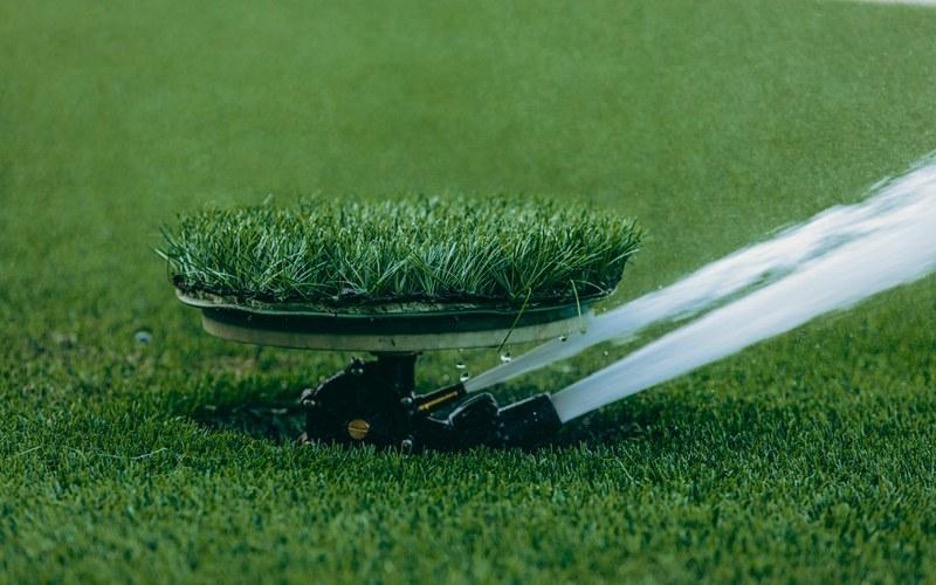
Here’s the thing: what determines whether a sprinkler system performs correctly isn’t the brand of head you use. It’s the spacing. Coverage overlap has to be right, meaning each head’s spray pattern reaches the next head in every direction. Miss that and you get brown patches during dry spells. Overdo it and you get soggy areas that damage turf root structure. Neither one is obvious until the system has been running for a season.
Pressure and Backflow Requirements in Thousand Oaks
Ventura County requires a backflow preventer on all irrigation connections to a potable water supply. Not optional. A licensed irrigation contractor handles this as part of the installation, properly sized to the system’s flow demand. Static pressure in Thousand Oaks and Newbury Park can vary enough between winter and peak summer demand that pressure-compensating heads are worth specifying during design. It costs less to spec them in at installation than to troubleshoot coverage failures two summers later when the pressure drops and you can’t figure out why half the heads aren’t reaching.
3. Smart Irrigation Controller Installation
A smart controller replaces a standard timer clock. No more set-it-in-spring-and-forget-it scheduling. The controller connects to a weather station or internet feed and adjusts frequency and duration based on actual conditions: rainfall, evapotranspiration rate, soil temperature. In a dry Thousand Oaks summer, the system runs more. In a wet El Nino winter, it backs off without anyone touching a dial.
And honestly, the biggest value isn’t the water savings. It’s the removal of a task that almost nobody does correctly on a standard timer: adjusting the schedule twice a year as seasons change. Most homeowners set the timer in spring and forget it. The system runs the same schedule in October as it did in July. Smart controllers fix that automatically.
VCWPD includes EPA WaterSense certified smart controllers in its rebate program. The EPA WaterSense certification is specific: controllers have to meet documented efficiency thresholds, not just claim water savings. That makes it easy to identify which models qualify before you spend anything.
What Smart Controller Installation Covers
Installation means replacing the existing controller, wiring the new unit to each zone valve, and setting zone-by-zone parameters: plant type, soil type, slope, sun exposure, and emitter or head type. Getting those settings right at installation is where the efficiency comes from. A controller wired correctly but programmed with generic defaults performs no differently from a standard timer. The programming isn’t an afterthought you figure out yourself later. It’s the work.
4. Irrigation System Retrofit and Repair
Most irrigation systems in Thousand Oaks are somewhere between 10 and 20 years old. They work. Until they don’t. And the breakdown is almost never sudden. It’s a zone that won’t fully open anymore. Heads that have drifted out of position after years of soil movement. A valve leaking just enough to kill pressure at the far end of the run. Or a controller still on the same schedule from the day it was installed, running a July watering program in November because nobody changed it.
A retrofit starts with a system audit. Every zone gets tested for coverage, pressure, and flow. Misaligned heads get replaced. Sticking or leaking valves get rebuilt or swapped. If the controller is outdated, the swap to a smart unit typically happens in the same visit.
For systems where the original design had gaps, or where the landscape has changed enough that the old zone map no longer matches what’s planted, additional zones can be added and tied into the existing manifold. No full reinstall. Just an extension of what’s already there.
The Irrigation Association recommends a full system audit every three to five years. That guideline is specifically for regions with hard water or seasonal pressure swings. Thousand Oaks. Both apply.
5. Multi-Zone Custom Irrigation Design and Installation
For new construction, major landscape redesigns, or properties with multiple distinct planting areas that need completely different water schedules, a custom multi-zone design is the starting point. Everything else starts here.
This is a full installation from scratch. Hydraulic calculations size the supply line and valve manifold. Zone mapping groups plants by water need and sun exposure rather than by convenience. Controller programming treats each zone as its own independent schedule rather than a variation of the same one.
A Thousand Oaks property with native drought-tolerant plants on a south-facing slope, a turf area in the back, and fruit trees along the property line can’t run on a single schedule. Trees need deep, infrequent watering. Natives may need nothing at all once established. Turf needs regular coverage at low precipitation rates. Getting that separation built into the design from the start prevents the compromises that come from retrofitting a system that was never built around the actual planting plan.
Right. One schedule for all of it doesn’t work. A $30 timer set in April can’t know what September drought conditions in the Conejo Valley actually need.
What to Expect From Irrigation Installation in Thousand Oaks
Professional irrigation installation in Thousand Oaks starts with a site visit. Before any quote. Before any design work. The contractor walks the property, checks supply lines and current pressure, and confirms which water district applies. In most of Thousand Oaks and Newbury Park, that’s VCWPD. From there they identify which rebate programs the project qualifies for, including smart controller and drip conversion rebates.
Installation timelines vary. Most residential drip and sprinkler installs complete in one to two days. Multi-zone designs for larger properties take longer, especially when trenching or main line work is part of the job. After installation, the contractor programs the controller zone by zone, walks you through coverage, and confirms everything before closing out.
Irrigation is one piece of the full outdoor plan. For the lighting side of your Thousand Oaks property, our landscape lighting ideas covers approaches that work across properties of every size and style. And for a full picture of what professional installation looks like across the Thousand Oaks area, our irrigation installation services in Thousand Oaks covers everything from drip systems to multi-zone custom design.
Water rates in Ventura County aren’t going down. Dry years in Southern California are becoming more frequent. Irrigation installation that’s designed correctly from the start, or retrofitted to perform the way the original system never quite did, pays back in lower bills, healthier plants, and a landscape that holds through the summers that expose every system that wasn’t planned with the actual climate in mind.
Author

Written by
Recent Posts
How to Pick a Homecoming Dress for Your Body Type and Feel Amazing in It
How to Prepare a Home for Sale When Major Repairs Are Not Affordable
From Everyday Comfort to Personal Style: My SHEIN Slipper Habit
5 Best Mitsubishi Heat Pump Companies in Seattle
Tech Gadgets as Modern Corporate Gifts: Useful Ideas for Employees and Clients
Categories
- Art
- Articles
- Business of Luxury
- Celebrities
- Culture
- Entertainment
- Events
- Faces of Summer 2026
- Fashion
- Fashion & Style
- Featured
- Finance
- Food, Spirits, Wine
- Hamptons
- Hamptons Celebrities
- Health
- Health & Beauty
- Lifestyle
- Luxury Lifestyle
- Press
- Profiles
- Real Estate
- Technology
- The Chronicles
- Travel
- Uncategorized
- Weddings