
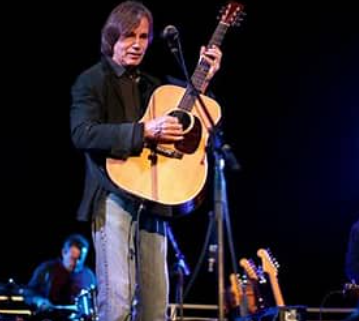
The cop found chains in his pockets. Also a straight-edged German razor that belonged to his father. Jackson Browne was twelve years old, caught smoking a block from his grandfather’s hand-built abbey in Highland Park. His father drove by at exactly the wrong moment. Within weeks, the family fled to Orange County, leaving behind the only home Jackson had ever known.
That departure would haunt him for decades. Consequently, Jackson Browne net worth in 2025 stands at approximately $50 million, according to Celebrity Net Worth. Yet the man who wrote “Running on Empty” has spent a lifetime circling back to what was lost. The abbey. The wife. The version of himself that existed before grief became his muse.
Indeed, his fortune tells a particular story about what happens when you transform devastation into art. More than 30 million albums sold. Royalties still flowing from songs the Eagles made famous. A 100-acre compound on the California coast worth somewhere between $10 and $20 million. However, none of it exists without the fractures that came first.
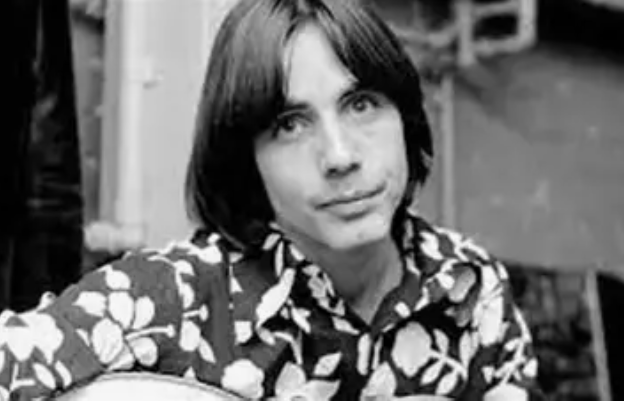
Jackson Browne Net Worth 2025: The Bohemian Inheritance
Abbey San Encino rises from the hills of Highland Park like something from another century. Jackson’s grandfather, Clyde Browne, built it starting in 1915, hauling rocks from the Arroyo Seco, salvaging materials from demolished buildings. The PBS documentary on the property describes him as an adherent of the Arts and Crafts movement who operated a fine printing press from a chapel outfitted with a 14-pipe organ.
Clyde Browne died in 1942, never meeting his grandson. Nevertheless, their spirits seemed to merge within those stone walls. Jackson arrived at age three, fresh from Heidelberg, Germany, where his father had been stationed writing for Stars and Stripes. The family moved into the abbey like inheritors of an aesthetic legacy they didn’t fully understand.
The Chains and the Razor
By twelve, Jackson was already showing signs of the restlessness that would define his art. “We were starting to become delinquents,” he later admitted in a Rolling Stone interview. The neighborhood was changing. His parents saw trouble coming and chose flight over confrontation.
Moving to Orange County felt like exile. The abbey represented something pure, something inherited, something lost. Meanwhile, other kids his age were forming surf bands and chasing girls. Jackson started teaching himself piano because he wanted to play it, not because anyone asked him to. The wound was already forming: the sense of being displaced from where he belonged.
Furthermore, his grandfather’s obsessive craftsmanship became a template. Clyde Browne laid out the abbey’s plans in picas, the measurement used in typesetting. Similarly, Jackson would spend hours on single verses, agonizing over each syllable. His upstairs neighbor Glenn Frey once described hearing Jackson’s teapot whistling at all hours while he worked through songs at the piano.
How Grief Became Fuel: The Making of a Songwriter
At sixteen, Jackson wrote “These Days.” Read that again: sixteen. The lyrics contain lines about being confronted with failures and refusing to forget them. What teenager writes with that kind of clarity about regret? Only one who has already decided that loss is the price of living fully.
By seventeen, he was in New York, backing Nico of the Velvet Underground. They became lovers briefly. She recorded his songs. Subsequently, he returned to Los Angeles, formed folk bands with friends, and caught the attention of David Geffen. The debut album arrived in 1972, featuring “Doctor My Eyes” and “Rock Me on the Water.” Both became Top 40 hits.
The Woman at the Troubadour
Then came Phyllis Major. According to legend, Jackson spotted her at the Troubadour and got into a fistfight with an unemployed actor who was also pursuing her. Jackson lost the fight. However, he won the girl. The incident later inspired “Ready or Not,” a song that reads like a warning he failed to heed.
They had a son, Ethan, in 1973. Jackson and the baby appeared together on the cover of Rolling Stone in 1974. The family moved into Abbey San Encino, returning to his grandfather’s creation. “That house,” Jackson told Cameron Crowe, “I’ve always known I’d live there again someday.”
Phyllis and Jackson married in December 1975. Four months later, on March 25, 1976, she was found dead in their Hollywood Hills home. Barbiturate overdose. Apparent suicide. She was thirty years old. Their son was two and a half.
The Pretender: Transmuting Devastation Into Art
Jackson was in the studio recording his fourth album when his wife died. Rather than abandoning the project, he channeled the devastation directly into the work. The result was The Pretender, an album that critic Marc Coleman said “eerily predicted the rise of the Yuppie.”
Actually, it predicted something more specific: the way success can become its own kind of prison. The title track describes a man who works all day, comes home, goes to sleep, and does it again. “Say a prayer for the pretender,” Browne sings, “who started out so young and strong, only to surrender.”
Co-Writing With His Mother-in-Law
One song stands apart from the rest. “Here Come Those Tears Again” carries a co-writing credit with Nancy Farnsworth, Phyllis’s mother. Think about that: a man and his dead wife’s mother sitting together, crafting lyrics about recurring grief. The song hit #23 on the charts exactly one year after Phyllis died.
Meanwhile, “Sleep’s Dark and Silent Gate” remains the only track Jackson has identified as directly inspired by the suicide. “I found my love too late,” he sings, suggesting he discovered her body after the overdose. The line “the only thing that makes me cry is the kindness in my baby’s eye” refers to infant Ethan, suddenly motherless.
Consequently, The Pretender reached #5 on the Billboard album chart and sold over a million copies. Tragedy, properly alchemized, became commercial success. Furthermore, it established a template Jackson would follow for the next five decades: mine the wound, shape it into music, release it to the world.
Running on Empty: The Road as Escape
Just eighteen months after Phyllis died, Jackson released Running on Empty. The entire album was recorded on tour: onstage, backstage, in hotel rooms, on the tour bus. It became his best-selling record, eventually going seven-times platinum.
The title track came from a literal experience. While commuting to the studio during The Pretender sessions, Jackson never bothered filling his gas tank. “How far was it anyway?” he later asked. “Just a few blocks.” Therefore, the metaphor wrote itself: a man so consumed by work that he forgot basic self-maintenance.
The Ages Match
Here’s a detail that reveals everything: the timeline in “Running on Empty” is autobiographically accurate. “In ’65 I was seventeen and running up 101,” Browne sings. He was indeed seventeen in 1965. “In ’69 I was twenty-one and I called the road my own.” Also true. Unlike many songwriters who fabricate details, Jackson built his art from the raw materials of his actual life.
Additionally, the album’s concept served a practical purpose. Recording on tour meant he didn’t have to write entirely new material in the studio. After the emotional excavation of The Pretender, the road offered respite. Keep moving. Don’t stop long enough to feel.
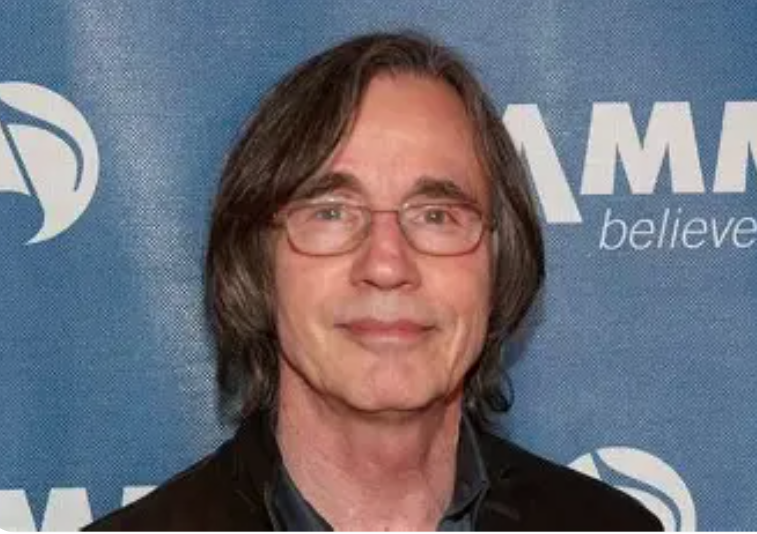
The Tell: How Loss Still Shows Up
In 1986, a full decade after Phyllis’s death, Jackson released “In the Shape of a Heart” on his album Lives in the Balance. The song explicitly addresses her suicide, proving the wound remained unhealed. “When you’ve found another soul who sees into your own,” he later wrote, “take good care of each other, and remember to be kind.”
Indeed, his entire catalog reads like extended therapy notes. “Don’t confront me with my failures,” he wrote at sixteen. “I had not forgotten them.” Fifty years later, those lines still resonate because Jackson never stopped living them.
The Pattern in Relationships
After Phyllis, he married model Lynne Sweeney in 1981. They had a son, Ryan. The marriage ended in 1983 when Jackson began dating Daryl Hannah. That relationship lasted until 1992 and ended badly enough to inspire Joni Mitchell’s brutal takedown song “Not To Blame.”
Subsequently, he was with environmental activist Dianna Cohen through the mid-2000s. Each relationship seems to follow a pattern: passionate beginning, creative collaboration, eventual dissolution. “Very often it’s really inconvenient, who you fall in love with,” Jackson once admitted. “You can’t really control it.”
Moreover, his activism suggests someone trying to control what he cannot. He co-founded Musicians United for Safe Energy (MUSE) after Three Mile Island in 1979 and was arrested protesting at Diablo Canyon Power Plant. According to activist Ed Begley Jr., Jackson’s ranch runs entirely on renewable energy. When you cannot prevent personal tragedy, perhaps you channel that energy into preventing planetary disaster.
The Hollister Ranch: Where the Wound Rests
Jackson Browne net worth in 2025 is anchored by a 100-acre property in the Hollister Ranch community outside Santa Barbara. He built the home around 1980 and has owned the land since the 1970s, according to The Santa Barbara Independent.
Hollister Ranch is not a place you stumble upon. The 14,500-acre property sits behind a guarded gate, down an unmarked road off Highway 101. Only 136 parcels exist, each roughly 100 acres. Fellow owners include Patagonia founder Yvon Chouinard and filmmaker James Cameron. Cell service is spotty. Water comes from shared wells. Many roads remain unpaved.
The Psychological Geography
Consider why this specific location makes sense. The ranch combines coastal beauty with deliberate isolation. It represents everything Abbey San Encino promised: connection to the land, distance from the world, a place to create without interruption. Yet unlike his grandfather’s hand-built compound, this property requires no construction. The work is already done.
Furthermore, Hollister Ranch exists outside normal real estate logic. Development is limited to two percent of any parcel. The remaining land must stay unfenced and undisturbed. In other words, Jackson bought his way into enforced preservation. Nothing here will change. Nothing can be lost because nothing can be substantially altered.
Additionally, the property’s estimated value of $10-20 million represents roughly 20-40% of his total net worth. This is not diversified investing. This is a man placing a massive bet on permanence.
The Fortune: A Final Accounting
Jackson Browne net worth in 2025 breaks down into predictable categories: album sales (30+ million worldwide), publishing royalties (including the Eagles’ “Take It Easy”), touring revenue, and real estate. The combination has proven remarkably durable. Fifty years after his debut, the income streams continue flowing.
Notably, he was inducted into the Rock and Roll Hall of Fame in 2004. Bruce Springsteen gave the induction speech, noting that although the Eagles were inducted first, “You wrote the songs they wished they had written.” The comment captures Jackson’s peculiar position: perpetually underrated by the mainstream, perpetually revered by other artists.

The Work Continues
His most recent studio album, Downhill from Everywhere, arrived in 2021. Rolling Stone ranked him 37th among the 100 greatest songwriters of all time. Three of his albums appear on the magazine’s list of the 500 best albums ever made.
Meanwhile, tragedy struck again in November 2025 when his son Ethan died at age 52. The same child whose kindness once made Jackson cry. The same baby who appeared on that Rolling Stone cover fifty years earlier. The wound, it seems, never fully heals. It simply finds new expressions.
The Paradox of the Pretender
Jackson Browne built a $50 million fortune by excavating his own grief. Every album represents another layer removed, another scar exposed, another attempt to make sense of what cannot be understood. The abbey is gone now, occupied by his brother Severin. Phyllis is gone. Ethan is gone. The boy with chains in his pockets grew into a man who owns 100 acres of protected coastline.
Yet the songs suggest someone still searching. “I don’t know where I’m running now,” he wrote in 1977. “I’m just running on.” Fifty years later, that line still applies. Jackson Browne net worth 2025 tells the story of a man who turned devastation into an empire, then used that empire to build a fortress against further loss.
The ranch runs on wind power. The songs run on something else entirely.
For more insights into the private lives and hidden stories behind celebrity wealth, contact our editorial team or explore our archive of exclusive profiles. Join us at Polo Hamptons for conversations with the collectors, creators, and connectors who shape the cultural landscape.
Subscribe to our print edition for stories that go beyond the headlines, or support our independent journalism with a $5 contribution.
Related Reading:
Author

Written by
Recent Posts
Behind the Scenes of Weddings Involving Long-Distance Relationships
Why Karaoke Is the Ultimate Entertainment Choice for a Hen Party
Easy Recipes That Feed A Crowd Without The Stress
The Influence Of Social Media On Interior Style Trends
Where Can You Find the Best Made-to-Measure Bespoke Suits in NYC
Categories
- Art
- Articles
- Beauty & Skincare
- Celebrities
- Celebrities|Movies
- Celebrities|The Chronicles
- Chronicles
- Entertainment|Culture
- Event Photos
- Events
- Fashion
- Fashion & Style
- Featured
- Food & Beverage
- Food, Spirits, Wine
- Hamptons
- Hamptons Celebrities
- Hamptons Celebrities|Celebrities|The Chronicles
- Health
- Health & Beauty
- Lifestyle
- Luxury Lifestyle
- Movies|Culture
- Movies|Hamptons Lifestyle
- Press
- Profiles
- Real Estate
- Technology
- The Chronicles
- Travel
- Uncategorized
- Weddings