
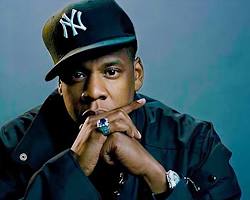
He sold Tidal for $300 million. It was his smallest exit.
Shawn Carter, known professionally as Jay-Z, accumulated $2.5 billion in net worth by 2026 through a strategy that has almost nothing to do with making music. His fortune emerged from a single insight that separates wealthy celebrities from celebrity billionaires: talent arbitrage scales infinitely, while personal performance does not.
Jay-Z isn’t a rapper who makes smart investments. He’s a holding company that happens to have originated in hip-hop. Roc Nation isn’t a record label. It’s a 10% tax on excellence across music, sports, and entertainment. Understanding this distinction explains everything about his wealth trajectory and provides a template for building business empires from cultural capital.
The Empire Architecture: A Portfolio View
Jay-Z’s wealth breakdown requires examining each entity within his portfolio. Unlike artists whose net worth reflects accumulated earnings, his fortune consists of appreciating businesses, strategic stakes, and assets that compound independently of his personal activity.
| Entity | Category | Estimated Value | Strategic Function |
|---|---|---|---|
| Roc Nation | Talent Management/Sports | $500M+ | 10% of client earnings across 200+ talents |
| Armand de Brignac | Champagne (50% to LVMH) | $300M+ remaining stake | Luxury goods equity with conglomerate partnership |
| D’Ussé | Cognac (Bacardi partnership) | $200M+ stake | Spirits portfolio diversification |
| Tidal (Exited) | Streaming (sold to Square) | $300M exit | Tech sector liquidity event completed |
| Art Collection | Alternative Assets | $100M+ | Appreciation plus cultural capital signaling |
| Real Estate | Hard Assets | $150M+ | Non-entertainment diversification |
| Marcy Venture Partners | VC Fund | $85M fund | Deal flow access and startup equity |
This portfolio structure explains why Jay-Z’s net worth continues growing despite minimal new music releases. Each entity generates returns independently. Several entities cross-pollinate, with Roc Nation clients becoming Armand de Brignac ambassadors and investment targets for Marcy Venture Partners.
The Roc Nation Model: Talent Arbitrage at Scale
Most people misunderstand Roc Nation as Jay-Z’s record label. The actual business model is far more valuable: talent management and representation across entertainment and professional sports.
Roc Nation currently represents over 200 artists, athletes, and entertainers including:
- Rihanna (management during Fenty Beauty rise)
- DJ Khaled
- Meek Mill
- Kevin Durant
- Kyrie Irving
- Numerous NFL, NBA, and MLB athletes
The economics create extraordinary leverage. Management companies typically collect 10-15% of client earnings. When Rihanna sold a stake in Fenty Beauty at a $3 billion valuation, Roc Nation participated in that upside through their management relationship. When Kevin Durant signs endorsement deals, Roc Nation captures a percentage.
According to Forbes, this structure means Jay-Z effectively earns from hundreds of careers simultaneously. His personal output could cease entirely without significantly affecting his income trajectory. The portfolio approach to talent creates returns that no individual career could match.
The Armand de Brignac Play: Financial Jiu-Jitsu
In 2006, Jay-Z made headlines by publicly rejecting Cristal champagne after the managing director made dismissive comments about hip-hop culture. He removed Cristal from his clubs, videos, and lifestyle. The story typically gets told as a principled stand against disrespect.
The financial story reveals different dimensions. By 2014, Jay-Z acquired a controlling stake in Armand de Brignac, known as “Ace of Spades.” The brand occupied exactly the premium positioning that Cristal had vacated in hip-hop and nightlife culture. Jay-Z didn’t just reject a brand that offended him. He identified a market gap, created narrative momentum to widen it, then acquired the brand positioned to fill it.
In 2021, LVMH acquired 50% of Armand de Brignac for an undisclosed sum that industry analysts estimate between $300-600 million. The man who criticized a luxury brand ended up selling one to the world’s largest luxury conglomerate.
According to Financial Times reporting on celebrity brand acquisitions, this sequence represents sophisticated strategic execution. Creating the narrative, acquiring the asset, building the brand, then selling to institutional buyers at premium multiples. Few celebrity investors demonstrate this level of strategic patience.
The Wound: Marcy Projects to Boardrooms
Understanding Shawn Carter’s net worth requires understanding Shawn Carter’s origin. The Marcy Projects in Brooklyn during the 1980s provided an education in economics that no business school could match.
Jay-Z has been remarkably candid about his involvement in the crack trade during his youth. He’s discussed it in lyrics, interviews, and his memoir “Decoded.” The experience taught him lessons about supply chains, customer psychology, risk management, and cash flow that informed every subsequent business decision.
His father abandoned the family when Shawn was eleven years old. This early disruption created both motivation and wariness about depending on others for financial security. The lyrics “I’m not a businessman, I’m a business, man” reflect this philosophy: treat yourself as an enterprise to be optimized rather than an employee to be compensated.
Early music industry experiences reinforced these instincts. Jay-Z founded Roc-A-Fella Records partly because major labels initially passed on signing him. Rather than accepting rejection, he created his own distribution. The pattern of building infrastructure when denied access repeated throughout his career.
The D’Ussé and Spirits Portfolio Strategy
Armand de Brignac wasn’t Jay-Z’s only spirits investment. His partnership with Bacardi on D’Ussé cognac demonstrates portfolio thinking within a single sector.
The structure differs from Armand de Brignac. D’Ussé is a joint venture with Bacardi where Jay-Z holds a minority stake but provides brand association and marketing direction. The arrangement offers lower risk than sole ownership while still capturing equity upside.
According to Bloomberg coverage of celebrity alcohol brands, spirits represent an ideal celebrity investment category. The products have long shelf lives, premium positioning justifies high margins, and brand association translates directly to consumer behavior. Jay-Z’s spirits portfolio likely generates eight-figure annual returns independent of any active involvement.
Tidal: The Tech Exit
Jay-Z acquired Tidal in 2015 for approximately $56 million, positioning it as an artist-owned streaming alternative to Spotify and Apple Music. The acquisition attracted criticism as quixotic, with skeptics questioning whether Jay-Z could compete with tech giants in a capital-intensive streaming war.
In 2021, Square (now Block) acquired a majority stake in Tidal for $300 million, with Jay-Z joining Block’s board. The transaction represented roughly 5x return on invested capital over six years.
More importantly, it demonstrated Jay-Z’s ability to execute tech sector exits. Celebrity involvement in startups often ends in losses and embarrassment. Delivering a successful exit to a major fintech company established credibility that subsequent Jay-Z investments would leverage.
Alternative Assets: Art and Real Estate
Jay-Z’s art collection includes works by Jean-Michel Basquiat, valued in aggregate at over $100 million. These holdings serve dual functions: appreciating financial assets and cultural capital signaling.
The Basquiat acquisitions carry particular significance. Basquiat, a Black artist who rose from the New York underground to command record auction prices, represents a template Jay-Z has explicitly referenced. The art appreciates financially while reinforcing narrative positioning around Black excellence and cultural legitimacy.
Real estate holdings span multiple markets including Manhattan, Los Angeles, and the Hamptons. Combined with wife Beyoncé’s properties, the Knowles-Carter real estate portfolio exceeds $150 million. These assets provide non-entertainment wealth that survives any volatility in music or sports management.
Marcy Venture Partners: The VC Play
Jay-Z’s venture capital fund, Marcy Venture Partners, manages approximately $85 million. The fund invests in startups seeking celebrity association alongside traditional investment criteria.
Portfolio companies benefit from potential endorsement relationships with Roc Nation clients and access to Jay-Z’s network. The fund benefits from deal flow that typical VCs cannot access. Founders who want Jay-Z’s involvement will accept terms they might reject from purely financial investors.
This structure creates information advantages. Jay-Z sees startup pitches across consumer products, media, and entertainment before traditional investors. Promising companies can receive capital, strategic guidance, and celebrity endorsement from a single relationship.
The Combined Empire: Knowles-Carter Family Wealth
Jay-Z’s individual net worth cannot be fully understood without considering his partnership with Beyoncé. Their combined fortune exceeds $3.5 billion, placing the Knowles-Carter family among the wealthiest in entertainment history.
The marriage creates both financial and strategic synergies. Shared real estate holdings, coordinated business ventures like joint tours, and unified family office management generate efficiencies unavailable to individual operators. Their children will inherit portfolios structured for generational preservation.
According to analysis of celebrity versus dynasty wealth, the Knowles-Carters are actively transitioning from celebrity wealth to dynastic structures. Trust arrangements, holding companies, and diversified assets suggest preparation for multi-generational management.
The Patterns: What Jay-Z’s Model Reveals
Extracting principles from Jay-Z’s business empire reveals transferable patterns for readers managing their own wealth:
Acquire, elevate, exit. Jay-Z rarely builds businesses from scratch. He identifies undervalued assets, applies brand equity and strategic attention to increase value, then sells to institutional buyers at premium multiples. Armand de Brignac, Tidal, and potential future exits follow this pattern.
Talent arbitrage scales infinitely. Personal performance has natural limits. Managing other people’s talent scales without limit. Roc Nation’s 200+ clients generate returns no individual artist could match through personal output alone.
Luxury goods reward patience. Building premium positioning requires time that most investors lack. Jay-Z’s willingness to hold Armand de Brignac for seven years before the LVMH exit enabled multiples that quicker flips could not achieve.
Diversification across uncorrelated assets. Music, sports management, spirits, tech, art, and real estate respond to different economic forces. This diversification provides resilience against sector-specific downturns.
The 2026 Trajectory
Projecting Jay-Z’s net worth in 2026 requires accounting for multiple growth vectors:
| Asset Category | Current Estimate | 2026 Factors |
|---|---|---|
| Roc Nation | $500M+ | Client roster expansion, sports division growth |
| Spirits Portfolio | $500M+ | Armand de Brignac appreciation, D’Ussé growth |
| Alternative Assets | $250M+ | Art appreciation, real estate market conditions |
| VC and Investments | $200M+ | Startup exits, portfolio appreciation |
| Catalog and Royalties | $150M+ | Music IP appreciation, ongoing streaming |
These projections suggest Jay-Z’s wealth will continue compounding regardless of any new music releases or personal appearances. The empire operates independently of the emperor’s daily activities.
The Bottom Line
Jay-Z’s $2.5 billion fortune represents the most sophisticated application of celebrity capital in entertainment history. From Marcy Projects to LVMH boardrooms, the trajectory demonstrates that fame is an asset to be leveraged, not a reward to be enjoyed.
Roc Nation isn’t a label. It’s a 10% tax on excellence. Armand de Brignac wasn’t a passion project. It was a seven-year exit strategy. Tidal wasn’t a streaming service. It was a tech sector credential. Every visible entity serves invisible strategic functions.
For readers building their own empires, the model offers clear principles. Arbitrage talent rather than relying solely on personal output. Acquire undervalued assets and add value before exit. Diversify across uncorrelated categories. Think in decades, not quarters.
Men lie. Women lie. Numbers don’t. And Jay-Z’s numbers tell the story of an architect, not an artist.
Related Articles
- Billboard to Billions: How Music’s Biggest Names Built Empires
- Beyoncé Net Worth 2026: The Renaissance Reckoning
- Taylor Swift Net Worth 2026: The Eras Excess
- The Role of Private Equity in Modern Celebrity Fortunes
For features on empire building, strategic exits, and celebrity deal structures, contact Social Life Magazine. For luxury brand activation and event sponsorship opportunities, visit Polo Hamptons.
Subscribe to our print edition for exclusive coverage of how billionaires think about wealth. Support independent luxury journalism with a $5 contribution.
Author

Written by
Recent Posts

How to Choose Useful Tech Gifts for Employees and Clients in 2026
The Garage Question: Which Car Goes South for the Season?

VandS Clinic Review Treatment: How Seoul Injectable and Laser Options Compare for US Patients
Before Buying a View Home: What a Sloped Lot Means for the Purchase

Powerful Strategies to Stay Ahead in a Fast-Moving Real Estate Market
Categories
- Art
- Articles
- Business of Luxury
- Celebrities
- Culture
- Entertainment
- Events
- Faces of Summer 2026
- Fashion
- Fashion & Style
- Featured
- Finance
- Food, Spirits, Wine
- Hamptons
- Hamptons Celebrities
- Health
- Health & Beauty
- Lifestyle
- Luxury Lifestyle
- Press
- Profiles
- Real Estate
- Technology
- The Chronicles
- Travel
- Uncategorized
- Weddings