
The Portfolio That Rewrites Investment Theory
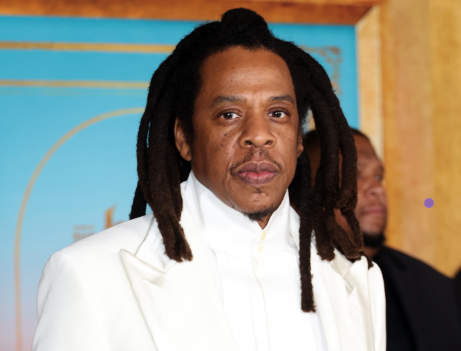
Jay-Z’s net worth hit $2.5 billion in 2026 without releasing a solo album since 2017. That fact alone should make every financial advisor pause. Most wealth management frameworks assume that income drives asset accumulation. Jay-Z’s portfolio proves something different entirely. Cultural capital, when properly converted into financial instruments, compounds faster than traditional investment vehicles. His portfolio isn’t a celebrity vanity project. It’s a masterclass in taste arbitrage that family offices should be studying.
The standard biography is well known. Marcy Projects. Roc-A-Fella Records. Reasonable Doubt. However, the real story of Jay-Z’s $2.5 billion has almost nothing to do with rapping. It’s a story about a man who recognized that owning the infrastructure of culture is infinitely more valuable than performing within it.
Taste Arbitrage: The Strategy Nobody Teaches
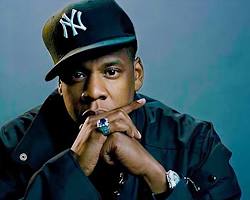
In traditional finance, arbitrage means exploiting price differences between markets. Jay-Z practices a different form. He identifies cultural assets that the financial establishment undervalues, acquires them at a discount, and then uses his personal brand to increase their market value. This is taste arbitrage. It requires two things that most investors lack: cultural fluency and the credibility to reshape consumer behavior.
The Armand de Brignac acquisition is the canonical example. In 2006, Frédéric Rouzaud of Cristal’s parent company made dismissive comments about hip-hop consumers. Jay-Z responded by boycotting Cristal and promoting Armand de Brignac, then an obscure champagne. He took full ownership in 2014. By 2021, he sold a 50% stake to LVMH’s Moët Hennessy division for approximately $640 million, according to Forbes. The champagne hadn’t fundamentally changed. Jay-Z’s endorsement had transformed its market position entirely.
Replicating the Model
Financial advisors typically categorize investments by asset class: equities, fixed income, real estate, alternatives. Jay-Z’s portfolio demands a different taxonomy. His holdings break down by function: brand vehicles (Armand de Brignac, D’Ussé), platform businesses (Roc Nation), venture positions (Marcy Venture Partners), and real estate as both asset and status signal.
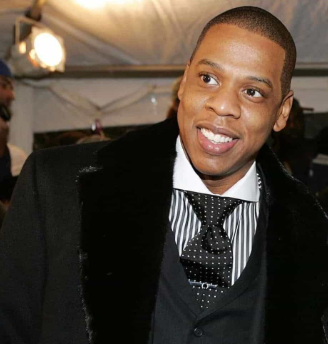
Furthermore, every entity cross-pollinates. Roc Nation clients become Armand de Brignac ambassadors. Investment targets from Marcy Venture Partners gain distribution through Roc Nation’s network. Consequently, the portfolio generates synergies that a diversified mutual fund portfolio simply cannot replicate. McKinsey’s research on strategic portfolios supports this approach, finding that concentrated, synergistic holdings outperform pure diversification over long time horizons.
The Roc Nation Tax: A 10% Levy on Excellence
Most people misunderstand Roc Nation as Jay-Z’s record label. In reality, it’s something far more sophisticated. Roc Nation manages over 200 artists, athletes, and entertainers. Management companies typically collect 10-15% of client earnings. When Rihanna sold a stake in Fenty Beauty at a $3 billion valuation, Roc Nation participated in that upside. When Kevin Durant signs endorsement deals, Roc Nation captures a percentage.
This model functions as a diversified tax on excellence. Rather than betting on individual outcomes, Jay-Z built a platform that earns from every successful person it touches. As a result, Roc Nation’s revenue stream is less volatile than any individual artist’s career. It’s closer to a management fee structure at a private equity firm than to a traditional entertainment company. For financial advisors accustomed to recommending index funds as the safest bet, Roc Nation represents the same principle: own the platform, not the player.
The Uber Lesson in Early Conviction
Jay-Z invested $2 million in Uber when the company was still focused on black cars. He attempted to wire an additional $3 million, but founder Travis Kalanick returned the funds because he wanted to retain equity. By the time Uber went public in 2019, Jay-Z’s stake had grown to approximately $70 million. That single investment tipped his net worth past the billion-dollar threshold.
The lesson isn’t simply about early-stage investing. It’s about information flow. Jay-Z moves through cultural spaces that generate proprietary deal flow. He sees consumer behavior shifts before they register in market data. His Uber investment wasn’t based on financial projections. It was based on watching how his peers actually moved through cities. This is pattern recognition that traditional portfolio managers cannot access from behind Bloomberg terminals.
Marcy Venture Partners: Institutionalizing Cultural Intelligence
In 2019, Jay-Z formalized this approach by co-founding Marcy Venture Partners, a venture capital firm that recently merged with Pendulum Holdings to form MarcyPen Capital Partners. The combined entity now manages over $1 billion in assets. The fund has backed companies including Savage X Fenty, Impossible Foods, and a portfolio of consumer brands that benefit from cultural credibility.
For family offices evaluating alternative investments, Bain’s Global Private Equity Report notes that sector-specific expertise increasingly drives venture returns. Marcy Venture Partners offers something no other fund can: the ability to make a portfolio company culturally relevant through association with the Jay-Z brand. That’s not a marketing expense. It’s a structural advantage embedded in the fund’s DNA.
Real Estate as Power Projection
The Carters’ real estate portfolio exceeds $350 million. This includes an $88 million Bel Air compound, a $200 million Malibu mansion designed by Tadao Ando (California’s most expensive residential sale), a Tribeca penthouse, and a New Orleans mansion. These aren’t investments in the traditional sense. They’re demonstrations of wealth that reinforce brand positioning across every other portfolio entity.
When Jay-Z shows up to a business meeting, the implicit message is that he lives at an address that costs more than most companies are worth. That positioning generates deal flow, better negotiating leverage, and preferential access to opportunities. Financial advisors who categorize celebrity real estate as “lifestyle spending” are missing the strategic function entirely.
The Ownership Theology
Jay-Z’s most quoted business line, “I’m not a businessman, I’m a business, man,” is often treated as a clever lyric. It’s actually a precise description of his operating philosophy. He treats himself as a holding company. Every personal appearance, every cultural association, every public statement either increases or decreases the equity value of Jay-Z as a brand. This discipline explains why his net worth continues growing despite minimal new music output.
Additionally, his partnership with Beyoncé creates financial synergies that Harvard Business Review would recognize as a merger of complementary assets. Their combined fortune exceeding $3 billion places the Knowles-Carter family among the wealthiest in entertainment history. Their children will inherit portfolios structured for generational preservation, not celebrity spending.
Lessons for Your Portfolio
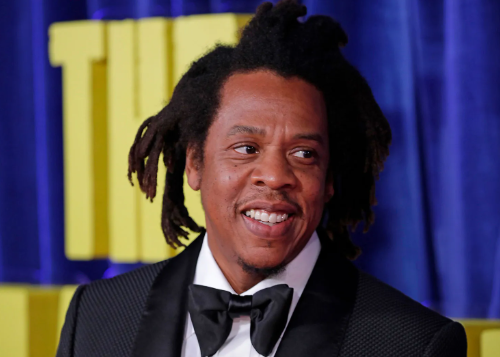
Financial advisors should study Jay-Z’s portfolio not to replicate his specific holdings but to absorb his structural principles. First, ownership beats income. Second, platform businesses that tax the success of others are more resilient than individual bets. Third, cultural intelligence is an investment edge that traditional analysis cannot replicate. Fourth, portfolio entities should cross-pollinate rather than simply diversify.
The 90s produced dozens of artists who earned hundreds of millions. Most of them are worth a fraction of their lifetime earnings today. Jay-Z converted culture into capital at a ratio nobody else has achieved. That’s not luck. It’s a portfolio strategy that deserves serious institutional attention.
Related Reading: 90s Music Icons Net Worth 2026: The Biggest Stars of the Decade | The 90s Invented Modern Fame. Nobody Was Prepared.
Want to feature your brand alongside stories like this? Contact Social Life Magazine about partnership opportunities. Join us at Polo Hamptons this summer. Subscribe to the print edition or join our email list for exclusive content. Support independent luxury journalism with a $5 contribution.
Author

Written by
Recent Posts
Cynthia Erivo Net Worth: The Voice That Was Always There
Inside Out 2, Wicked, and the Emotional Blockbuster That Ate 2024
7 Mindful Meal Prep Tips for Stop Food Waste Day
Rebecca Ferguson Net Worth: The Advantage of Not Being the Lead
What Makes a Dinner Party Truly Unforgettable (Hint: It’s Not the Food)
Categories
- Art
- Articles
- Beauty & Skincare
- Celebrities
- Celebrities|Entertainment
- Celebrities|Television
- Celebrities|The Chronicles
- celebrities|the-archive
- Chronicles
- Entertainment|Culture
- Event Photos
- Events
- Fashion
- Fashion & Style
- Featured
- Food & Beverage
- Food, Spirits, Wine
- Hamptons
- Hamptons Celebrities
- Hamptons Celebrities|Celebrities|The Chronicles
- Health
- Health & Beauty
- Lifestyle
- Luxury Lifestyle
- Movies
- Press
- Profiles
- Real Estate
- Technology
- The Chronicles
- Travel
- Uncategorized
- Weddings