
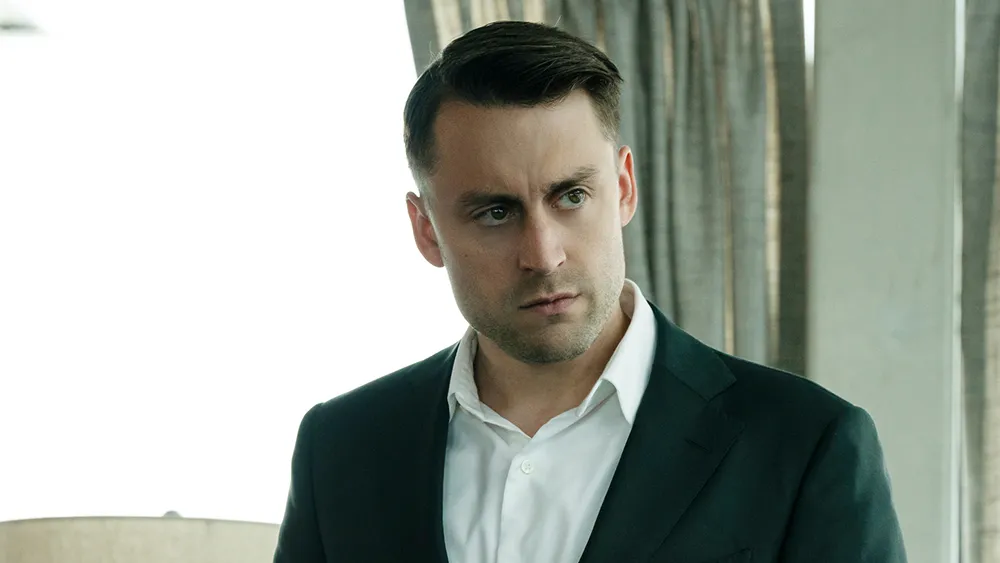
Kieran Culkin net worth sits at an estimated $10 million. Notably, that number would be higher if the industry had taken him seriously a decade earlier. Consequently, the story of how he built it is really the story of a man who spent twenty years being excellent in rooms that weren’t paying attention — and then walked into one that was. Furthermore, what happened next was not a breakthrough. It was a reckoning. Succession did not discover Kieran Culkin. It finally gave the industry permission to acknowledge what was already there. Roman Roy is the character audiences loved most in a show full of characters nobody was supposed to love. That is not an accident. It is the result of forty years of a life lived, somewhat defiantly, in the shadow of one of the most famous names in Hollywood — and the specific freedom that shadow, counterintuitively, provided.
Before Roman: New York City, 1982
The Before
Kieran Kyle Culkin was born September 30, 1982, in New York City — the fourth of seven children born to Patricia Brentrup and Kit Culkin, a former actor turned stage father of considerable intensity. Additionally, he was born two years after Macaulay, whose career would become the defining context of Kieran’s early life whether he chose it or not. By 1990, Macaulay Culkin was the most famous child actor in the world. Meanwhile, Kieran was eight years old, watching from the wings.
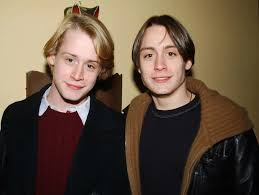
He appeared in Home Alone (1990) as Fuller, the bed-wetting cousin — a small role, unremarkable on its own, consequential in retrospect. It gave him early proximity to a film set, to the mechanics of performance, to the specific atmosphere of a production organized around his brother’s remarkable natural talent. Notably, what he absorbed there was not jealousy. By multiple accounts, it was curiosity. The set interested him more than the attention did.
The Shadow and What It Taught Him
Growing up as Macaulay Culkin’s younger brother in 1990s New York provided Kieran with something most child actors never get: a firsthand education in what fame costs. He watched his brother become a global phenomenon at ten, navigate the machinery of extreme celebrity through adolescence, and emerge from it changed in ways that were visible to anyone paying attention. Consequently, Kieran arrived at his own career with a specific immunity to the things that most damage young actors — the need for recognition, the confusion of visibility with value, the inability to separate the performance from the performer.
This is the Gladwell insight the conventional narrative misses. The shadow was not an obstacle. It was, in a specific and underappreciated way, the best possible preparation for a serious acting career. Furthermore, it produced in Culkin a relationship to the work that is genuinely unusual: he does it because he likes it, not because he needs it to confirm something about himself. That psychological freedom is audible in every Roman Roy scene.
The Climb: Twenty Years of Almost-Famous
The Early Roles

Culkin’s film career began properly in the mid-1990s, when he appeared in Father of the Bride Part II (1995) and Igby Goes Down (2002). That second credit matters. Igby Goes Down — a darkly comic coming-of-age film directed by Burr Steers — gave Culkin the lead role and the chance to demonstrate something the industry had not yet organized its attention around: he was a genuinely gifted comic actor with serious dramatic range underneath. Moreover, the performance earned him a Golden Globe nomination. The industry noticed briefly, then moved on.
Subsequently, he accumulated a resume that rewards examination: Scott Pilgrim vs. the World (2010), Wiener-Dog (2016), stage work in New York. None of it produced celebrity. All of it produced craft. By contrast with peers who chased franchise work and visibility, Culkin pursued roles that interested him — a pattern that looked, from the outside, like a career failing to launch, and was, from the inside, a performer steadily becoming very good at something.
What the Stage Added
Culkin’s theatrical work during this period is underreported in the standard career narrative. However, it is arguably the most important part of it. Stage performance — particularly comedy — requires a physical and temporal precision that screen work doesn’t demand in the same way. Timing on stage is unforgiving. Additionally, the audience is present and live, which means the actor receives immediate feedback on whether something is landing. Culkin trained his instincts in this environment for years before Succession formalized them.
That training is what makes Roman Roy’s comedy feel effortless. Effortlessness in performance is always a product of invisible effort. Furthermore, in Culkin’s case, the effort ran for two decades before anyone outside theater circles was watching.
Kieran Culkin Net Worth: What Roman Roy Paid
The Numbers
Kieran Culkin net worth of approximately $10 million reflects his Succession salary — reportedly in line with the principal cast’s equalized structure, reaching several hundred thousand dollars per episode by the final seasons — alongside decades of film and stage work. By the standards of his co-stars, the figure sits in the middle range. However, by the standards of his pre-Succession career trajectory, it represents a significant financial inflection point that arrived later than his talent warranted.

The 2024 Emmy win for Outstanding Supporting Actor in a Drama Series — awarded for Season 4 — was the formal acknowledgment of something audiences had understood since Season 1. Culkin’s Roman Roy was the most watchable character in the ensemble. Notably, he was also the most technically demanding to execute. Roman requires the actor to play comedy and devastation in the same scene, sometimes in the same line, without the tonal whiplash that would collapse either register. Culkin manages this with a consistency that makes it look structural when it is, in fact, the result of exceptional control.
The Eulogy and What It Settled
Season 4, Episode 9 — the episode containing Logan Roy’s funeral and Roman’s attempted eulogy — produced the single most discussed scene of the show’s final season. Roman approaches the podium to deliver remarks about his father. He cannot do it. The grief and the relief and the lifelong accumulation of not-quite-approval collapse simultaneously, in public, in front of his father’s casket. Culkin plays this without dialogue for extended stretches. Moreover, he plays it without the kind of telegraphed emotional preparation that most actors use to signal to the audience that something important is about to happen.
The scene arrives without warning because Roman Roy would not have allowed it to arrive with warning. Culkin understood this. Consequently, the performance is precise in the way that surgical instruments are precise — not beautiful, exactly, but exactly right. Subsequently, the Emmy committee gave him the award. The debate about whether it was overdue or perfectly timed is, ultimately, semantic. The performance earned it. The only question was when.
The Controversy That Wasn’t
The New Yorker Profile and Culkin’s Role In It
Culkin’s public comments about Jeremy Strong‘s method approach — made in the context of Michael Schulman’s 2021 New Yorker profile — generated more attention than Culkin likely anticipated. He described Strong’s between-takes character maintenance with a bemused directness that the internet interpreted as shade and that Culkin has since characterized as simply honest observation. The distinction matters. Culkin’s working method is the inverse of Strong’s: he arrives, performs at an exceptional level, and does not appear to carry the character home. The results are equally excellent. By contrast, the processes could not be more different.
This comparison is worth dwelling on because it clarifies something about craft that the method-versus-instinct debate tends to obscure. There is no single path to a great performance. Additionally, there is no moral hierarchy between the actor who suffers for the role and the actor who doesn’t. The audience receives the performance, not the process. Roman Roy and Kendall Roy are both extraordinary. Furthermore, the fact that they were produced by radically different methods suggests that both methods work — and that the one which costs less is not, therefore, inferior.
The Hamptons Chapter: Roman Roy at the Table
The Character That Cuts Deepest
Kieran Culkin himself does not appear in the Hamptons social landscape with any regularity. He is a New Yorker by origin and temperament, married to actress Jazz Charton since 2013, and has spoken about his preference for a domestic life that the Hamptons circuit is not, in practice, designed to support. However, Roman Roy is east of the bridge every summer without exception.
Specifically, Roman is the person at the table who sees everything clearly and says it sideways — the family member dismissed as the difficult one who turns out to carry the most accurate read in the room. In Hamptons social geometry, this person is not rare. Moreover, they are consistently underestimated until the moment they aren’t. Social Life Magazine has covered this world for 23 years. Roman Roy is a recurring character at tables we recognize. Culkin made him specific enough that people stopped seeing the character and started seeing their brother, their colleague, themselves on a bad day when the truth came out sideways.
What Kieran Culkin Built: The Freedom of Not Needing It
The Soft Landing
At 42, Culkin occupies an unusual position in the industry. He has the Emmy, the recognition, and the post-Succession premium. Additionally, he has a psychological relationship to his career that most of his peers, who wanted fame earlier and worked harder to get it, do not have. He did not need Succession to validate him. Consequently, Succession could not damage him when it ended.
Post-Succession, Culkin has been selective in a way that suggests continued application of the same principle that governed his pre-Succession career: take the work that interests you, do it well, don’t organize your life around the outcome. Furthermore, this approach produced Roman Roy. There is no obvious reason to abandon it now.
Kieran Culkin net worth of $10 million is the financial record of a career built on that principle. It will grow — the post-Emmy trajectory for performers of his caliber tends to accelerate. Moreover, it will grow in the direction he chooses, which is the rarer and more interesting outcome. Roman Roy never got to choose. By contrast, the actor who played him has spent forty years quietly ensuring that he did. That asymmetry is the whole story.
Related Reading
- Succession: The Show That Knew Your Family — Full Character Hub
- Brian Cox: Net Worth, Origin Story, and Where He Is Now
- Jeremy Strong: Net Worth, Origin Story, and Where He Is Now
- Sarah Snook: Net Worth, Origin Story, and Where She Is Now
- Matthew Macfadyen: Net Worth, Origin Story, and Where He Is Now
- Hamptons Hedge Fund Billionaires: Net Worth and the Philosophy Behind It
You already know which room this is about. The question Social Life Magazine has been asking for 23 years — in the Hamptons, in the rooms that matter, at the tables where things actually get decided — is not who’s in it. It’s what they’re really saying.
If your brand, business, or story belongs in those rooms, we’d like to talk. Editorial features, partnerships, and press inquiries start here.
To place your brand directly in front of the audience that recognizes this world from the inside, paid feature placements are available here.
82,000 readers receive the Social Life Magazine email — people who summer east of the bridge, own the homes, attend the events, and make the decisions. Join that list here.
Polo Hamptons is where the real version of this world shows up in person — sponsors, guests, and brand activations for the audience the Roys would have killed to reach. See what’s available at polohamptons.com.
Five issues a summer, 25,000 copies each, distributed between Westhampton and Montauk to the people who make the Hamptons the Hamptons. Print subscriptions here.
If this piece named something you recognized and couldn’t quite articulate, consider supporting independent luxury media. $5 keeps the lights on and the table set.
Author

Written by
Recent Posts

Cailee Spaeny Net Worth — From Springfield, Missouri to A24 and Alien in Three Years Flat

Wagner Moura Net Worth — He Learned Spanish to Play Escobar. Then He Learned English to Take Hollywood.

Robert Eggers Net Worth — He Made a $3.5 Million Film in Puritan English and Hollywood Listened

Brie Larson Net Worth — A $6 Million Indie Film Won Her an Oscar. Marvel Paid Her the Rest.

Jacob Tremblay Net Worth — He Was Nine Years Old and Already Better Than Most Adults in the Room
Categories
- Art
- Articles
- Beauty & Skincare
- Celebrities
- Celebrities|Movies
- Celebrities|The Chronicles
- Chronicles
- Entertainment|Culture
- Event Photos
- Events
- Fashion
- Fashion & Style
- Featured
- Food & Beverage
- Food, Spirits, Wine
- Hamptons
- Hamptons Celebrities
- Hamptons Celebrities|Celebrities|The Chronicles
- Health
- Health & Beauty
- Lifestyle
- Luxury Lifestyle
- Movies|Culture
- Movies|Hamptons Lifestyle
- Press
- Profiles
- Real Estate
- Technology
- The Chronicles
- Travel
- Uncategorized
- Weddings