
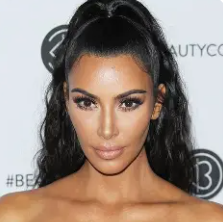
What she actually understood about attention, leverage, and long-term brand equity that Wall Street is still modeling.
Every profile of Kim Kardashian’s net worth starts with the sex tape. That is the correct starting point — not because it is the most interesting fact, but because everything that followed was a direct consequence of how she chose to respond to it. The response generated $1.9 billion. In November 2025, Goldman Sachs Alternatives led a $225 million funding round that valued her shapewear company SKIMS at $5 billion. Her 35% stake alone is worth $1.67 billion on paper. However, the Goldman Sachs number is not the story. The story is the twenty-two years between a Los Angeles courthouse in 2003 and a boardroom in 2025 — and the specific strategic intelligence that ran the entire distance without a single wasted move.

The Hamptons understood the play early. The East End has always respected the conversion of humiliation into leverage. It is, historically speaking, one of the neighborhood’s most practiced arts.
The Before: Encino, a Famous Father, and the Trial That Split Everything
Kimberly Noel Kardashian was born on October 21, 1980, in Los Angeles. Her father, Robert Kardashian, was a prominent Los Angeles attorney. Her mother, Kris, was a homemaker who would later become the most effective celebrity manager in American entertainment history. The family lived in Encino and later in Beverly Hills. By any objective measure, it was a privileged upbringing — private schools, social connections, the ambient confidence that comes from watching your parents move through the world as if it belongs to them.
Then, in 1994, O.J. Simpson was charged with murder. Robert Kardashian was one of his defense attorneys. The trial split America and split the Kardashian household simultaneously. Kim was thirteen. Her parents had divorced in 1991, and her mother had remarried Bruce Jenner. Robert pulled Kim and Kourtney out of school to witness the verdict. The jury acquitted Simpson. Robert Kardashian died of esophageal cancer in September 2003 — nine years later, his youngest son Conrad not yet ten years old. Kim was twenty-two.
Paris Hilton’s Assistant and What That Job Actually Was
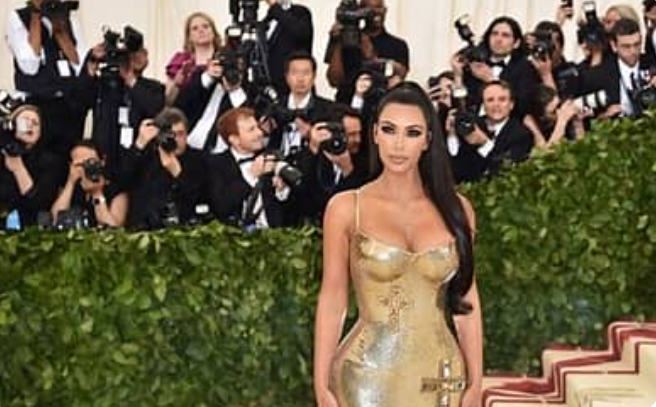
In the mid-2000s, Kim Kardashian was Paris Hilton’s stylist and assistant. The tabloid press covered this arrangement as a footnote — the hanger-on, the sidekick, the background figure. However, that reading was precisely wrong. Working in Paris Hilton’s orbit in 2003, 2004, and 2005 was an intensive education in the specific mechanics of celebrity-as-commerce. Kim watched how attention was generated, how it was converted into product revenue, and — critically — how it dissipated when the conversion was handled poorly. She was not adjacent to the machine. She was studying it, from inside, before anyone including Paris understood that it was a machine worth studying.
The Pivot Moment: 2007, the Tape, and the Decision That Changed Everything
In 2007, Vivid Entertainment released a tape featuring Kim Kardashian and rapper Ray J. The coverage was total and the framing was deliberate: humiliation as entertainment. The cultural expectation — informed by every previous celebrity scandal of that era — was that her public life would effectively end. Lindsay Lohan was in the middle of her tabloid implosion. Britney Spears was months away from her breakdown. The paparazzi industrial complex was at full operational capacity. The conventional play was to disappear, manage the damage, and hope the news cycle moved on.
Instead, in October 2007, Keeping Up With the Kardashians premiered on E!. The show launched fourteen million viewers in its second season. It ran twenty seasons, until 2021. The tape did not end her public life. It became the event horizon that every subsequent business decision orbited.
The Specific Intelligence Most Profiles Miss
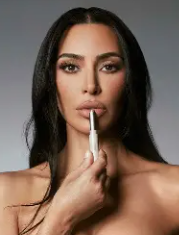
What Kim Kardashian understood in 2007 — and what makes her trajectory genuinely worth analyzing rather than merely noting — is this: attention is a commodity with a conversion window. Most people who acquire it involuntarily spend their energy resisting the attention itself. She spent her energy converting it. Consequently, within the first eighteen months of Keeping Up With the Kardashians, she had launched a clothing boutique, a perfume, a workout DVD, and multiple endorsement deals. None of those products were exceptional. However, each one demonstrated the operational intelligence of someone who understood that the window was open and that windows close.
By 2014, she released Kim Kardashian: Hollywood, a mobile game that became one of the highest-grossing apps of the year. By 2017, she launched KKW Beauty. In 2020, Coty paid $200 million for a 20% stake, valuing the brand at $1 billion. In 2019, she launched SKIMS. According to Fortune’s November 2025 reporting on the Goldman Sachs funding round, SKIMS generated $500 million in revenue in 2022, $750 million in 2023, and surpassed $1 billion in net sales by 2025. That trajectory — zero to $1 billion in six years — is not a celebrity vanity project. It is a compounding asset.
The Climb: From Boutique Owner to Goldman Sachs Portfolio Company
The critical strategic distinction in Kim Kardashian’s climb is one that most celebrity business narratives get wrong: she did not license her name. She took equity. The difference is the difference between $300,000 per sponsored post and $1.67 billion in paper wealth. Licensing generates income. Equity generates wealth. The two are not interchangeable, and most celebrities — including, for a decade, Paris Hilton — chose the faster cash of licensing over the slower build of ownership. Kim chose ownership.
The SKIMS Architecture and What Goldman Saw
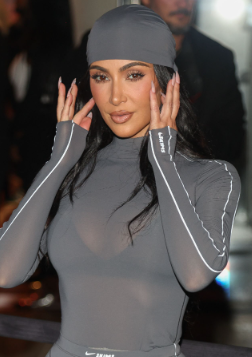
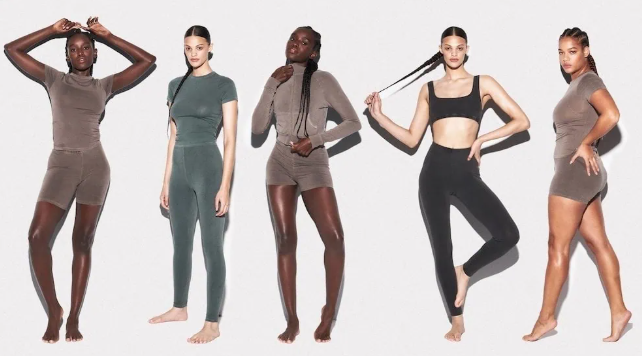
SKIMS launched in 2019 with a specific market thesis: the shapewear and apparel market had a fit and inclusivity problem. The product ran from XXS to 5XL. The brand’s aesthetic was minimal, body-positive, and photographed almost exclusively in neutral tones that read as luxury-adjacent without requiring luxury pricing on entry products. The early customer base was Kim’s existing audience. However, the retention data told a different story. Nearly 70% of SKIMS customers are millennials or Gen Z — a demographic whose brand loyalty was not inherited from KUWTK but earned through product quality and fit.
By contrast, most celebrity fashion businesses plateau when the celebrity’s core audience ages out. SKIMS acquired new customers independently of Kim’s personal celebrity because the product worked. That structural characteristic — customer acquisition driven by product rather than founder fame — is what Goldman Sachs Alternatives, BDT & MSD Partners, and investors including Stephen Mandel and Josh Kushner were buying in November 2025. Furthermore, the NikeSkims collaboration announced in early 2026 extends the brand into athletic wear — a category where Nike has been losing ground with female consumers — with the specific demographic overlap that makes the partnership strategically coherent rather than cosmetically attractive.
The Hamptons Chapter: What the East End Recognized
Kim Kardashian’s relationship with the Hamptons is more recent than most of the women in this series. Her early fame was a Los Angeles phenomenon — the clubs, the paparazzi, the specific geography of the pre-Instagram celebrity ecosystem. However, as SKIMS scaled and her business identity separated from her reality TV identity, her presence on the East End evolved accordingly. The Hamptons does not particularly reward tabloid celebrity. It rewards operational success — the person who built something durable rather than the person who generated coverage.
The East End as Market Mirror
SKIMS’ Upper East Side flagship and its Fifth Avenue presence in New York place the brand squarely within the geographic orbit of the Hamptons consumer. The women buying $68 SKIMS bodysuits in Manhattan summer on the East End. The brand’s neutral palette, its inclusive sizing, and its studied avoidance of obvious logoism all speak the language of East End purchasing behavior — quality over ostentation, fit over flash, brand credibility earned rather than assumed. At Polo Hamptons and its surrounding social circuit, the SKIMS customer is identifiable not by a logo but by a specific register of confident, unfussy dressing. Kim built that customer deliberately. The East End is part of the market she was targeting, whether she named it that or not.
The 2016 Paris Robbery and What Changed After
In October 2016, Kim Kardashian was robbed at gunpoint in Paris. Jewelry worth approximately $10 million was taken. She feared for her life. The incident forced a strategic reset that most coverage treated as a wellness story. However, the more important consequence was commercial: she went off social media for four months. Her return — quieter, more deliberate, less performative — coincided with the SKIMS conception period. Meanwhile, the robbery trial concluded in Paris in May 2025, with Kim testifying about the experience. The testimony, delivered nine years after the event, demonstrated something the East End finds particularly legible: the ability to hold difficult material with composure and deploy it on your own timeline.
What Kim Kardashian Built: The Wealth Audit
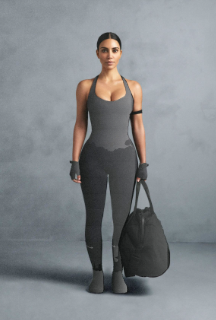
According to Forbes’ 2025 estimate, Kim Kardashian’s net worth stands at approximately $1.9 billion. That figure is driven primarily by one asset. However, understanding the full architecture requires mapping every income category that fed into the position she holds today.
Keeping Up and the Television Foundation
KUWTK aired twenty seasons from 2007 to 2021 on E!. Early per-episode fees started around $15,000. By the show’s final seasons, Kim’s salary had scaled to approximately $500,000 per episode — placing her total television income from the franchise in the range of $30–50 million over fourteen years. The Hulu deal signed in 2021 for The Kardashians is worth over $100 million for the family, with Kim’s individual share estimated at $7.5–8.3 million per season. Television was never the wealth generator. It was the audience-building infrastructure that made every subsequent business possible.
KKW Beauty and the Coty Validation
KKW Beauty launched in 2017 and generated $100 million in revenue in its first year. In June 2020, Coty Inc. paid $200 million for a 20% stake — a transaction that valued the brand at $1 billion and provided Kim with capital to deploy into SKIMS. The brand was later rebranded SKKN by Kim and consolidated under the SKIMS umbrella in 2025, when SKIMS repurchased Coty’s stake. That consolidation signals an intention to build a single brand architecture rather than a fragmented portfolio — a structurally more valuable position for any future liquidity event.
SKIMS: The Asset That Explains Everything
SKIMS raised capital at $1.6 billion in 2021, $3.2 billion in 2022, $4 billion in 2023, and $5 billion in November 2025. Each round validated the previous at a premium. Kim holds approximately 35% of the company. At the $5 billion valuation, that stake is worth $1.67 billion — by itself enough to make her a billionaire regardless of every other asset she owns. The NikeSkims collaboration, announced in early 2026, extends the brand into activewear with Nike’s technical infrastructure and distribution network. According to Bloomberg’s analysis of the Nike partnership, the collaboration targets the specific gap in Nike’s female consumer acquisition that the company has been unable to close through its own design pipeline. SKIMS brings the audience. Nike brings the supply chain. The resulting brand has an addressable market that neither could access independently.
Social Media, Endorsements, and the Attention Premium
Kim earns between $300,000 and $1 million per sponsored Instagram post. Her annual income from social media promotions alone runs $50–80 million across all endeavors in a given year. However, this income stream is the least interesting component of her wealth because it is the most linear — it scales with her following and declines if her following declines. By contrast, her equity positions compound independent of her social media activity. That distinction — between attention-dependent income and attention-independent wealth — is the precise lesson that most celebrities have failed to learn from her example.
Where Kim Kardashian Is Now
The Boardroom, the Bar Exam, and the Life After Reality TV
On a morning in early 2026, Kim Kardashian is studying for the California bar exam between SKIMS board meetings. The California Law Office Study Program — an apprenticeship-based route to bar eligibility that does not require law school — is the specific path she has chosen. She has not yet passed the exam. She has stated publicly that she will keep trying. The decision to pursue law while running a $5 billion company and raising four children is not a PR exercise. It is a continuation of the criminal justice reform work she began in 2018 when she successfully lobbied the Trump administration for the commutation of Alice Marie Johnson’s sentence — a woman serving life in prison for a first-time nonviolent drug offense.
The $60 million Los Angeles mansion — designed with Belgian architect Axel Vervoordt in the same neutral, monastic aesthetic as the SKIMS brand — is as close as the public gets to understanding how Kim Kardashian actually lives. The house looks like the brand. The brand looks like the house. That is not a coincidence. It is the same integrated design intelligence applied at two different scales.
What Wall Street Is Still Modeling
The Goldman Sachs investment in SKIMS is the most precise external validation of what Kim Kardashian has built. Goldman does not invest in celebrity nostalgia. Goldman invests in addressable market, customer retention data, and growth trajectory. The fact that it led a $225 million round into a company founded by a reality television star based on an attention event that was supposed to end her career is the single most counterintuitive data point in contemporary celebrity finance. That is not luck. That is the twenty-year consequence of understanding attention as an asset rather than a liability — and converting it, systematically, into equity before anyone else understood the trade. For more on the women who defined this era, explore our It Girls of the Early 2000s hub. For the luxury landscape her business inhabits, read our Hamptons Real Estate Guide and our East End Dining Guide.
Feature your brand: Contact Social Life Magazine — we connect luxury properties with the audiences that close.
The East End’s premier sporting event: Polo Hamptons — sponsorships, VIP access, and brand activations where the Hamptons actually convenes.
Get the Hamptons insider list: Subscribe to Social Life Magazine — 23 years of the East End, delivered to your door.
Support independent Hamptons journalism: Donate $10
Related:
Paris Hilton Net Worth: Dubai Fixed What Hollywood Broke
Nicole Richie Net Worth: How a Tabloid Disaster Became a Fashion Empire
Author

Written by
Recent Posts
Zendaya and Tom Holland: They Got Married. You Weren’t Invited.
Britney Spears Cashed Out. Then Came the DUI.
Michael B. Jordan. No Toll Money. One Oscar.
Netflix Dropped Meghan. She Swears It’s Fine.
Taylor Swift: $2 Billion. A Ring. 89 Days.
Categories
- Art
- Articles
- Beauty & Skincare
- Celebrities
- Chronicles
- Event Photos
- Events
- Fashion
- Fashion & Style
- Featured
- Food & Beverage
- Food, Spirits, Wine
- Hamptons
- Hamptons Celebrities
- Health
- Health & Beauty
- Lifestyle
- Luxury Lifestyle
- Press
- Profiles
- Real Estate
- Technology
- The Chronicles
- Travel
- Uncategorized
- Weddings