
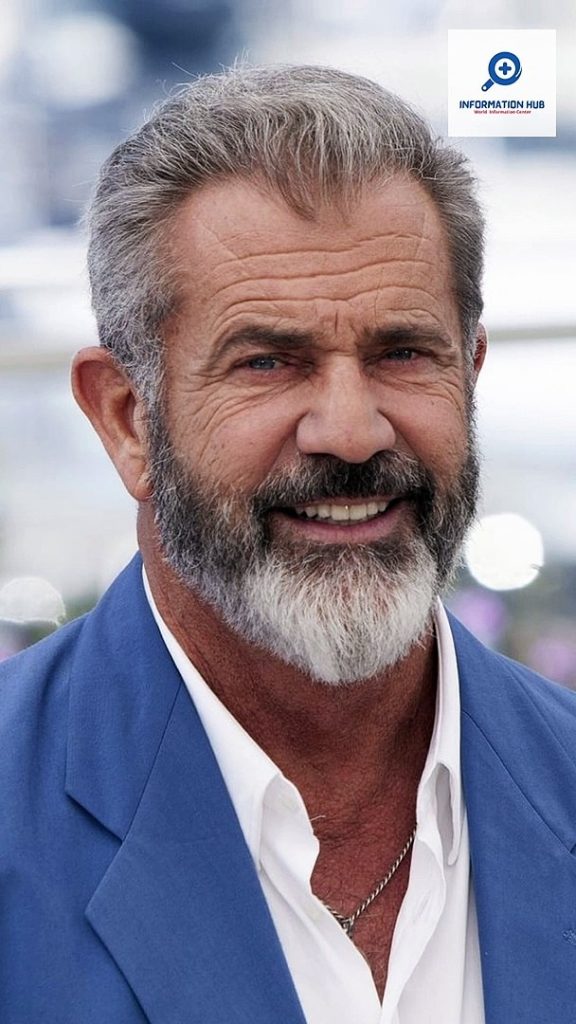
Mel Gibson net worth sits at approximately $425 million. That figure exists after one of the largest celebrity divorce settlements in Hollywood history. The payment to his first wife, Robyn Moore, is estimated between $400 and $425 million. However, the number that matters is not the settlement. It is what was left. Ultimately, what remained is the entire lesson.
This is not a story about a man who lost everything. Instead, it is a story about what happens when extraordinary wealth gets built inside a single marital estate without the legal architecture to protect it. The divorce did not break Mel Gibson, however. The absence of a prenuptial agreement nearly halved him. Specifically, those are different problems with different solutions — and only one of them arrives before the wedding.
The Before: Blue-Collar Origins, an Unlikely Move, and the Career Nobody Predicted
Mel Columcille Gerard Gibson was born on January 3, 1956, in Peekskill, New York. His father, Hutton Gibson, moved the family to Australia when Mel was twelve — a relocation driven in part by a workers’ compensation settlement and a desire to avoid the Vietnam draft. Consequently, Gibson grew up in New South Wales and attended the National Institute of Dramatic Art in Sydney. He entered the Australian film industry at a moment when it was producing some of its most distinctive work.
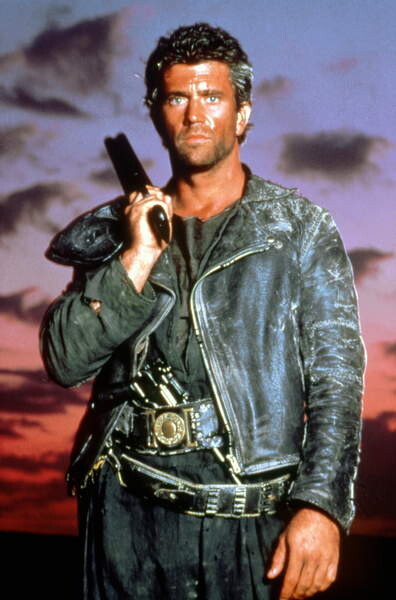
Mad Max in 1979 made him an international name on a budget of approximately $350,000. Notably, Gallipoli followed in 1981. By his mid-twenties, Gibson was the most commercially significant actor to emerge from the Australian film renaissance. That position transferred directly to Hollywood when the American market came calling in the early 1980s.
The Lethal Weapon Years and the Wealth Foundation
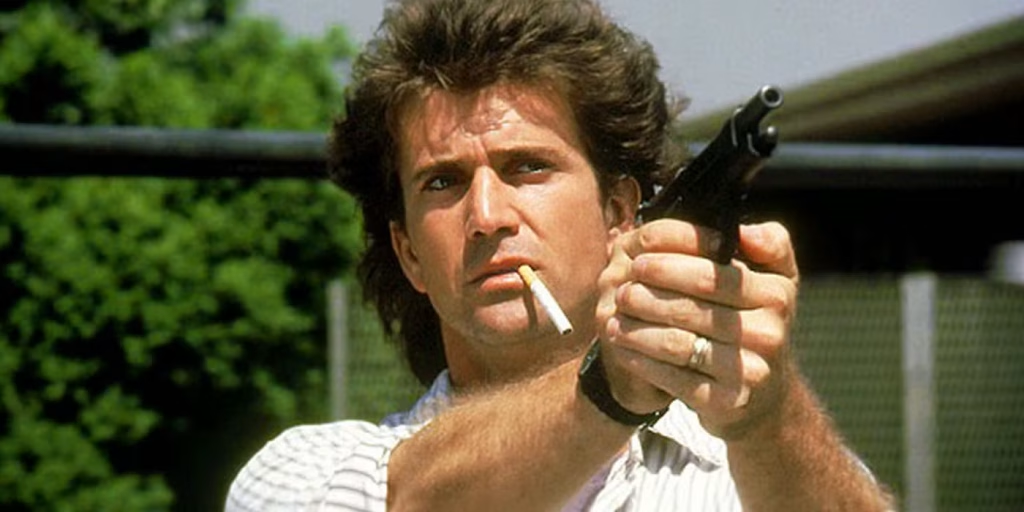
Notably, the Lethal Weapon franchise built the financial foundation that would eventually become the subject of the largest divorce settlement in Hollywood history. The four films, released between 1987 and 1998, generated over $950 million in global box office revenue. Gibson’s compensation moved from flat fees in the early installments to back-end participation in the later ones. Consequently, that structural shift compounded his per-film earnings significantly.
Furthermore, his production company, Icon Productions, added an ownership layer that most actors at his level had not built. Icon gave Gibson creative control over the projects he chose and a participation in their commercial outcomes rather than a simple talent fee. The company would eventually produce The Passion of the Christ — a film that changed his financial position more than any single acting performance.
The Pivot Moment: The Passion of the Christ and the Wealthiest Gamble in Film History
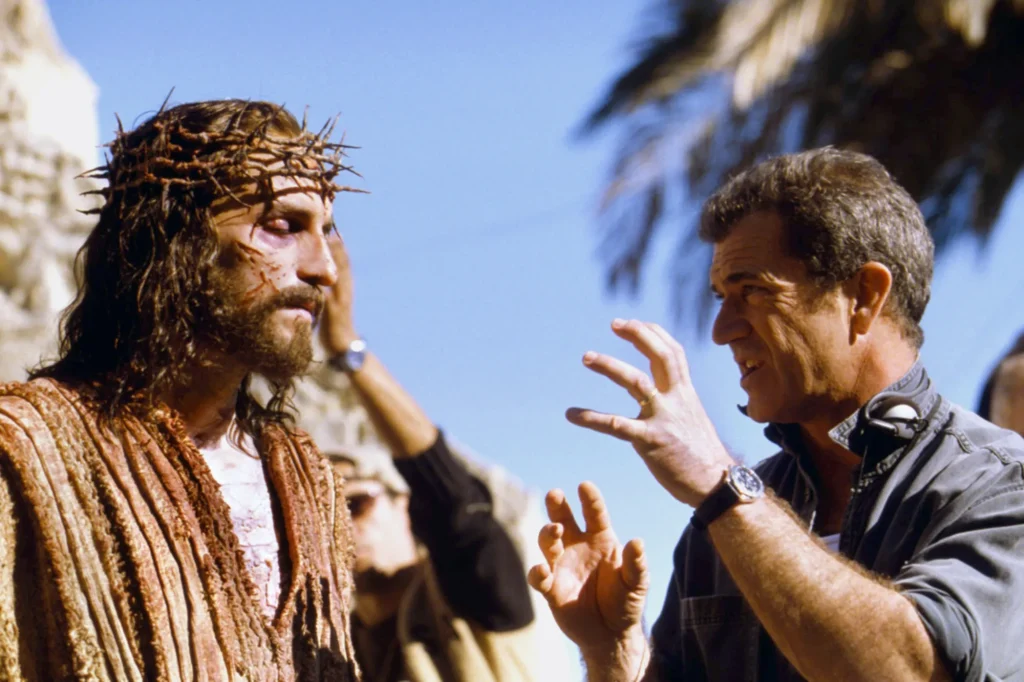
Gibson financed The Passion of the Christ independently, putting approximately $30 million of his own money into a film that no studio would touch. The subject matter was considered uncommercial. Indeed, every conventional Hollywood calculation said the film would fail. Nevertheless, Gibson made it anyway.
It grossed $611 million worldwide on a $30 million investment. Subsequently, the return on that single production decision was approximately 20 to 1. Icon Productions, as the production and distribution entity, captured a significant share of that upside directly — not as talent fees, but as ownership returns. The Passion of the Christ made Gibson, conservatively, $300 million richer. Acting in someone else’s film that year would have produced a fraction of that return.
What Icon Productions Actually Built
Specifically, Icon Productions represented a structural departure from how most actors of Gibson’s generation managed their careers. Rather than collecting talent fees and investing the proceeds elsewhere, Icon placed Gibson at the ownership level of the content itself. Consequently, the upside on a commercial success was not a percentage negotiated with a studio — it was the commercial success, less distribution costs.
Additionally, the company produced Braveheart in 1995, which Gibson directed and starred in, winning five Academy Awards including Best Picture and Best Director. The film grossed $210 million globally on a $72 million budget. Icon’s participation in that outcome added another significant layer to a net worth that was already substantial by the mid-1990s.
The Climb: What $800 Million Looks Like Without a Prenuptial Agreement
Gibson and Robyn Moore married in 1980, shortly before Mad Max transformed his career. They were together for twenty-six years and had seven children. The marriage predated every significant wealth creation event in his professional life. That list includes the Lethal Weapon franchise, Braveheart, Icon Productions, and The Passion of the Christ. Consequently, every dollar earned during those decades was community property under California law.
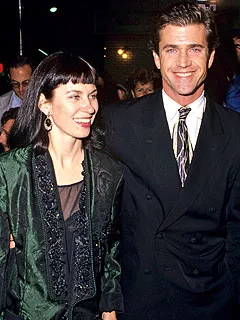
That legal reality is the core of the Mel Gibson net worth cautionary tale. The absence of a prenuptial agreement meant the entire appreciation of his wealth during the marriage was subject to equal division upon divorce. Notably, that included the Icon Productions ownership stake. He had concentrated an estimated $800 million inside a single marital estate with no structural protection on any of it.
The Settlement Architecture Nobody Planned For
Gibson’s divorce from Robyn Moore finalized in 2011. That same year, his public reputation had collapsed following a series of widely covered personal scandals. A DUI arrest in 2006, recordings of abusive behavior toward his then-partner, and multiple subsequent incidents had made studio executives reluctant to attach his name to major productions. Notably, the financial blow landed on a career that could no longer generate replacement income at the same velocity it once had.
The settlement itself transferred roughly half of his accumulated wealth to Moore in a single transaction. Nevertheless, what remained — estimated at between $350 and $425 million — still represented a level of financial security beyond any reasonable measure. Gibson did not end up poor. Architecture matters before the event, not during it — that is the lesson.
The Hamptons Chapter: What Mel Gibson Net Worth Reveals About the East End
The Mel Gibson story resonates specifically with the Hamptons demographic that Social Life Magazine reaches. The issue is not career scandals. It is wealth concentration risk. The family office, the private equity principal, the business owner approaching exit — each faces a version of the same structural question Gibson failed to answer before his 1980 wedding.
Indeed, East End real estate and estate planning conversations return repeatedly to the same principle. The time to build legal architecture around accumulated wealth is before the wealth needs protecting. Not after. Specifically, a prenuptial agreement signed in 1980 would have cost Gibson an uncomfortable conversation. The absence of one cost him approximately $400 million.
The Real Estate Footprint and the Surviving Portfolio
Gibson’s real estate holdings have been substantial and globally distributed — properties in Malibu, Connecticut, Costa Rica, and Australia, among others. Notably, his Malibu compound has been listed at over $14 million in recent years. His private island in Fiji, purchased for approximately $15 million, has been widely reported as one of his signature holdings. Meanwhile, real estate of that geographic diversity represents portfolio protection his marital estate structure did not provide. Assets distributed across jurisdictions are not subject to a single legal framework.
For more on how the ultra-wealthy structure real estate holdings in the East End, explore the Hamptons luxury real estate guide at Social Life Magazine.
What He Built: The Mel Gibson Net Worth Breakdown
The current Mel Gibson net worth figure sits at approximately $425 million. That number reflects significant recovery from the post-divorce and post-scandal low point of the early 2010s. His professional rehabilitation has been gradual but commercially significant. Hacksaw Ridge in 2016 grossed $180 million globally and earned him an Academy Award nomination for Best Director — his first major awards recognition in two decades.
Specifically, Icon Productions continues to operate and generate revenue from the content it controls. His acting career, while no longer at the Lethal Weapon-era velocity, has produced consistent work. His real estate portfolio is distributed globally and held largely in his own name. It represents a more architecturally sound version of the wealth concentration that existed before 2011.
The Lesson the Settlement Actually Teaches
Additionally, the comparison to others in the celebrity divorce net worth settlement literature is instructive. Jennifer Aniston built $300 million without a significant settlement working against her. Mariah Carey converted every romantic exit into a leverage event. Gibson had the largest financial base of any of them and the least structural protection around it. Consequently, a single legal document — or rather, the absence of one — transferred more wealth than most people will accumulate in a lifetime.
The Mel Gibson net worth story is therefore not about the scandal or the career damage or even the settlement amount. It is about the period before the 1980 wedding when no attorney explained what California community property law would do to every dollar earned in the following twenty-six years. That conversation never happened. The settlement, however, did.
The Soft Landing: What the Gibson Case Actually Teaches
The useful thing about studying the Mel Gibson net worth story is not the number on either side of the settlement. Instead, it is the structural principle the case illustrates with unusual clarity: legal architecture is not pessimistic. It is professional.
A prenuptial agreement is not a prediction of divorce. Specifically, it is a recognition that wealth and marriage are two separate systems. They interact according to legal rules that, if unaddressed, default to an outcome neither party may have intended. Furthermore, the Gibson case illustrates that the cost of not addressing those rules scales directly with the wealth involved. A $50,000 legal engagement produces a very different outcome than a $400 million one.
The Architecture Principle
Specifically, the people who avoid the Gibson outcome are not more cynical about love or more pessimistic about marriage. They are more organized about money. Indeed, the Hamptons family office demographic understands this intuitively. The family office exists to ensure accumulated wealth does not disappear in a single legal event. Whether that event is a divorce, a death, a lawsuit, or a regulatory action, the architecture is designed to survive it.
Consequently, the Gibson lesson is the same one that drives estate planning, trust structures, and entity separation across every level of serious wealth management. Build the architecture before you need it. The lawyers who could have protected Gibson’s wealth in 1979 charged less per hour than the ones who divided it in 2011. That arithmetic is the only lesson that matters.
The balance sheet, as always, does not lie.
For the full hub on celebrity divorce net worth settlements, read the celebrity divorce net worth settlement hub. For more profiles, explore the celebrity net worth hub and the Hamptons dining guide at Social Life Magazine.
Here is the thing nobody mentions: the people who read this far are, almost without exception, the people who were always going to read this far. That is the water. The fact that you are already in the room — already the kind of person whose attention lands here rather than somewhere else — goes unexamined because it is so thoroughly present it becomes invisible. The way the fish cannot see the water. The way the hedge fund principal cannot see that the party he is at is not a party but a meeting that nobody has called a meeting because calling it a meeting would make it less effective as one.
Social Life Magazine has been operating inside that room for twenty-three years — five summer issues from Westhampton to Montauk, fall delivery to Upper East Side doorman buildings, 25,000 readers who are the demographic every luxury brand is trying to reach by doing things significantly less effective than simply being in the magazine. The brands here are not buying exposure. They are being introduced to people who have already decided to trust the publication that introduced them. If your brand belongs in that introduction: sociallifemagazine.com/contact.
The email list is the year-round version of the same room — 82,000 readers, same zip codes, the winter conversation. Free. Eleven seconds. Join it here.
Polo Hamptons is the event version of the same insight. There are gatherings people attend and gatherings where something actually happens — where the introduction that required six months of mutual adjacency becomes, on a July afternoon, simply a handshake between two people who were always going to meet. Category-exclusive sponsorships from $14,000. Private cabanas from $6,500. One sponsor per category. Most are already claimed. polohamptons.com.
The print subscription is the physical object on the coffee table in the house on Further Lane, handed by the family office principal to the person he is trying to introduce to the concept of your brand before the introduction has technically happened yet. Five summer issues. sociallifemagazine.com/subscription.
And then this, which is the most honest sentence here and therefore the one most likely to be skimmed: independent luxury media with no advertiser leverage and no engagement algorithm is genuinely rare, which is why the judgment, when present, is worth something. You have already formed an opinion about whether it was present here. If yes: paypal.com/donate. The amount is whatever you think that judgment is worth, which is the only honest way to price it.
Author

Written by
Recent Posts

Vanessa Hudgens Net Worth — The Firefighter’s Daughter Who Escaped Disney With $18M

James Franco Net Worth — The $30 Million Left After the Career Burned Down

Selena Gomez Net Worth — The Coin-Counting Kid Who Became a $1.3 Billion Billionaire
Spring Breakers A24 Cast Net Worth — Disney Kids With Guns and $800M Between Them
Behind the Scenes of Weddings Involving Long-Distance Relationships
Categories
- Art
- Articles
- Beauty & Skincare
- Celebrities
- Celebrities|Movies
- Celebrities|The Chronicles
- Chronicles
- Entertainment|Culture
- Event Photos
- Events
- Fashion
- Fashion & Style
- Featured
- Food & Beverage
- Food, Spirits, Wine
- Hamptons
- Hamptons Celebrities
- Hamptons Celebrities|Celebrities|The Chronicles
- Health
- Health & Beauty
- Lifestyle
- Luxury Lifestyle
- Movies|Culture
- Movies|Hamptons Lifestyle
- Press
- Profiles
- Real Estate
- Technology
- The Chronicles
- Travel
- Uncategorized
- Weddings