
His middle name, Bakari, means “noble promise” in Swahili. His friends in Newark were selling drugs and stealing cars. Michael B. Jordan net worth in 2026 sits at an estimated $50 million — but the distance between those two facts is the entire story, and none of it was inevitable.
Newark Arts High School and the Mother Who Saw It First
Born in Santa Ana, California, on February 9, 1987, Jordan spent only two years there before his family relocated to Newark, New Jersey. His father, Michael A. Jordan, worked as a caterer. His mother, Donna, was a high school career counselor who would later teach at the same school her son attended. Not wealthy. Not connected. Present, though — and in Newark, that distinction mattered enormously.
Newark in the early 1990s was a city still working its way out of a decades-long economic crater. However, the Jordan household operated by a different set of rules than the street outside. Donna enrolled her son at Newark Arts High School, where discipline and performance were the same thing.

Toys “R” Us Ads and the Blueprint Taking Shape
Michael played basketball, studied drama, and started modeling at age twelve — Toys “R” Us ads, Modell’s Sporting Goods catalogues. Bread-and-butter work for a kid whose mother recognized something worth cultivating before the industry did.
The BMW, the Street, and What Newark Actually Taught Him
“Newark isn’t a playground,” Jordan told one interviewer. “I had friends that sold drugs, stole cars. Being African-American and driving a nicer car than cops thought I should — a BMW at sixteen — gave me problems.”
The BMW was his first signal to the street that the plan was working. Meanwhile, no one outside Newark was watching yet.
The Wire and the Weight of Wallace
In 2002, a fifteen-year-old Michael B. Jordan walked onto the set of HBO’s The Wire and played a teenage drug dealer named Wallace. He played him with a specific, devastating softness — a boy who understood what was happening to him and could not stop it. The role lasted twelve episodes. It would define the next twenty years of his career.
Wallace Dies. Jordan Keeps Working.
Wallace dies in season one. His friends pull the trigger. Jordan filmed the scene — and then had to keep working. Kept showing up. Modelling, auditioning, soap opera work on All My Children. The industry quietly filed him under “promising.” That holding category where talented people wait for someone to take the risk.
What made the Wallace performance remarkable wasn’t the emotionality. It was the restraint. Jordan understood, at fifteen, that the most powerful thing an actor can do is let the audience feel what the character is trying not to feel. That technical insight — learned not in an acting conservatory but in Newark, where showing too much was genuinely dangerous — became the signature of every major performance that followed.
The Coogler Call, the $0 Budget, and the Yes That Changed Everything
The pivot, however, came a decade later. In 2012, a then-unknown director named Ryan Coogler called Jordan about a small independent film. The project had no studio backing, no guaranteed distribution, and a budget that most Hollywood productions would classify as a rounding error. The subject was Oscar Grant, a twenty-two-year-old Black man shot by a BART officer on New Year’s Day 2009. Coogler wanted Jordan to play him.
Jordan said yes. Fruitvale Station premiered at Sundance in January 2013 and won both the Grand Jury Prize and the Audience Award. By that summer, Jordan was no longer “promising.” He was the argument.
From Killmonger to Creator: Building the $50M Architecture
The Coogler partnership became the most important financial relationship of Jordan’s career — not because it was lucrative, but because it was selective. After Fruitvale Station, they made Creed in 2015, which grossed $173.6 million worldwide and repositioned Jordan as a leading man capable of carrying a franchise. Black Panther followed in 2018. Jordan played the villain, Erik Killmonger, for $2 million upfront plus a percentage of the film’s backend profits.
When Black Panther crossed $1.3 billion at the worldwide box office, that backend percentage compounded into something considerably larger than the base salary. Jordan understood, in real time, what the Newark kid had always suspected. The kid who watched his friends not get their share of anything. The money is never in the fee. It’s in the ownership.
Outlier Society, Inclusion Riders, and the Amazon Deal
By 2018, he had founded Outlier Society Productions and publicly committed to inclusion riders — contractual clauses requiring diverse hiring across cast and crew on every project his company touched. The move was both principled and strategic. Outlier Society subsequently secured a first-look deal with Amazon. The production infrastructure Jordan was building was not a vanity project. It was the mechanism by which a $50 million actor becomes a $200 million producer.
Then came Sinners.
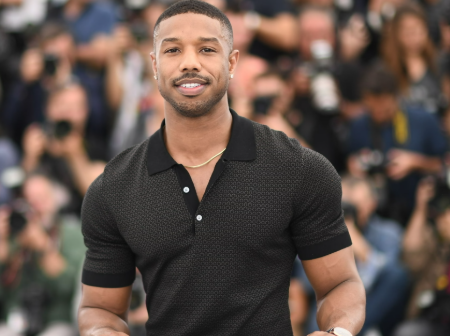
Michael B. Jordan Net Worth and the Human Ledger
There is a specific thing Jordan said in a GQ interview that most profiles quote once and then move past. He was talking about the fortune he was building and what he wanted it to do. “I want to make this thing so my family ain’t gotta worry about nothing,” he said. “My mom and dad, my brother and sister, my nieces, my future nieces and nephews, my future kids — everybody is going to be good. I want intergenerational wealth. I’m going to have fun writing my will.”
The Will, the Newark Kid, and What the Money Is Actually For
That last sentence — I’m going to have fun writing my will — is the most honest thing a very wealthy person has said about money in recent memory. Not that the money buys freedom, or access, or security in the abstract. It buys him the specific pleasure of sitting down and deciding who else gets to stop worrying. The Newark kid who watched his friends not inherit anything has spent his entire career engineering the opposite condition for everyone around him.
Why Killmonger Sent Him to Therapy
After filming Killmonger — a character who was right about everything and chose the wrong method — Jordan went to therapy. He said so publicly, without apology or elaboration. The character had cost him something he didn’t have a name for at the time. “I went to therapy, talked about it, found a way to kind of just decompress.” You spend eight months inside a man who is brilliant, furious, and ultimately alone. You come back changed, or you don’t come back at all. Jordan came back and immediately started building the infrastructure to ensure fewer people ended up like Killmonger — not just in movies, but in the actual industry that makes them.
Training for Sinners: Two Brothers, One Face, One Actor
By most accounts, Jordan is disciplined in a way that reads as almost unremarkable — until you consider the alternative. Killmonger’s physique required one training regimen. Creed demanded a different one. Sinners changed the approach entirely. Coogler asked him to play twin brothers — Smoke and Stack — who are not just physically distinct but emotionally opposite. One is control. One is want. Jordan played both simultaneously, and the camera had to believe, in every shared scene, that it was watching two different men who happened to share a face.
You don’t build that kind of craft by accident. You build it the same way you build a production company — one decision at a time, toward something larger than the next role.
Simplicity Was Never the Point
What the fortune hasn’t bought — and what he hasn’t pretended it has — is simplicity. Jordan’s life: the therapy, the discipline, the inclusion riders, the public commitment to stories the industry keeps declining to fund on its own. It reads less like the lifestyle of a $50 million man and more like a project. The project of someone who still remembers what it felt like to be in a room where nobody was saving a seat for him.
The Wealth Audit: Where the $50 Million Actually Lives
According to Celebrity Net Worth’s 2026 estimate, Michael B. Jordan’s net worth stands at approximately $50 million. However, that number requires some unpacking to be useful.
Breaking Down the $50 Million
The acting fees alone don’t build $50 million. Here is roughly how the architecture looks:
- Film salaries (career total): Approximately $20–25 million across Creed I, II, and III; Black Panther and its sequel; Fruitvale Station; Just Mercy; Without Remorse; and Sinners ($4 million for Sinners alone — double his Black Panther base rate)
- Backend participation: The Black Panther gross of $1.3 billion means his backend points on that film alone likely added $5–10 million beyond his base fee. Creed’s combined franchise gross of roughly $390 million across the first two films adds further backend value
Production, Endorsements, and the Equity That Compounds
- Outlier Society Productions: The Amazon first-look deal provides production fees and overhead coverage. As the company scales — with projects including the Thomas Crown Affair remake, an I Am Legend sequel with Will Smith, and a Creed universe series — the equity in those projects compounds separately from acting income
- Endorsements and brand partnerships: Calvin Klein campaigns, J’Ouvert rum (his Juneteenth-launched premium spirits brand), and various luxury brand relationships add an estimated $3–5 million annually
- Real estate: A Sherman Oaks property purchased around 2018, along with reported additional LA real estate holdings
The Number That Actually Matters
The number that matters most is not the $50 million. It is the trajectory. Jordan’s per-film fee doubled between Black Panther and Sinners in seven years. His production company is pre-revenue on several high-value projects simultaneously. According to Forbes’ analysis of the actor-to-producer wealth transition, the inflection point for entertainers who cross $100 million almost always involves production equity rather than performance fees. Jordan is structurally positioned for that crossing.
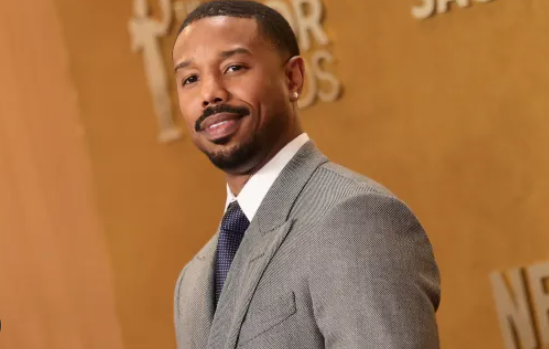
Where Michael B. Jordan Is Now — And Where the $50 Million Is Going
Sunday night, March 15, 2026, Michael B. Jordan is the Best Actor favorite at the 98th Academy Awards for his dual performance in Sinners. His SAG win earlier this cycle — a room described by Variety as sending “a bolt of electricity” when his name was called — shifted the race decisively. If he wins, his per-film fee moves. His production company’s development slate becomes immediately more fundable. The Thomas Crown Affair remake and the Creed universe expansion become greenlit conversations instead of promising pitches.
The Tyler Perry Blueprint — and Why the Coogler Partnership Changes Everything
Beyond Sunday night, the architecture Jordan is building looks less like a celebrity wealth portfolio and more like what Tyler Perry constructed in Atlanta. Vertically integrated, morally deliberate, designed to last past the moment when the camera stops finding his face interesting. The difference is that Jordan is doing it in collaboration with Ryan Coogler, whose own career arc has become inseparable from his. Together they have now made five films. Each one has been more ambitious than the last.
Newark to $50 Million: The Plan, and Why It’s Working
The kid who modeled for Toys “R” Us in Newark is 39 years old, worth $50 million, and going to have a lot of fun writing his will. That’s not a punchline. That’s the plan, and it’s working exactly the way plans do when the person making them understood from the beginning what the alternative looked like.
The Refusal to Leave Anything to Luck
Some fortunes are built on luck. Michael B. Jordan’s net worth was built on the specific, systematic refusal to leave anything to it.
Feature your brand: Contact Social Life Magazine — we connect luxury brands with the audiences that move markets.
The East End’s premier sporting event: Polo Hamptons — sponsorships, VIP access, and brand activations where the Hamptons actually convenes.
Get the Hamptons insider list: Subscribe to Social Life Magazine — 23 years of the East End, delivered to your door.
Support independent Hamptons journalism: Donate $5
Read next:
Leonardo DiCaprio Net Worth: How a Kid From “Scumsville” Built a $300 Million Empire
Celebrity Net Worth 2026: The Ultimate Guide to Hollywood Wealth
Author

Written by
Recent Posts

2026 Oscars Net Worth: Every Nominee Ranked
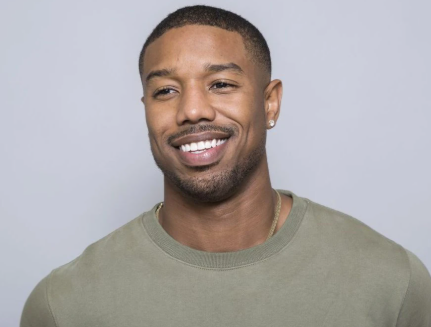
Michael B. Jordan’s $50M Net Worth: The Newark Origin Story

Jessie Buckley Net Worth: The $3M Number Nobody Talks About
6 Tips To Turn Your Dog’s Nap Time Into A Chic, Comfort-Filled Experience
Casual Fashion Tips To Elevate Your Everyday Style
Categories
- 2025 Social Life Events
- Access to Digital + Physical Magazine
- Art
- Articles
- Beauty & Skincare
- Beauty & Wellness
- Business Strategy
- Celebrities
- Celebrities|The Chronicles
- Chronicles
- Design History
- Design History|Design Trends
- Design History|Hamptons
- Design Process
- Design Process|Luxury Living
- Design Trends
- Design Trends|Hamptons
- Event Photos
- Events
- Family
- Fashion
- Fashion & Style
- Featured
- Food & Beverage
- Food, Spirits, Wine
- Hamptons
- Hamptons Celebrities
- Hamptons Design
- Hamptons Design|Design Process
- Hamptons Design|Luxury Living
- Hamptons|Luxury Living
- Health
- Health & Beauty
- Home & Design
- Home & Living
- Lifestyle
- Luxury Home Design|Design Process
- Luxury Home Design|Design Trends
- Luxury Home Design|Hamptons Design
- Luxury Home Design|Interior Design
- Luxury Lifestyle
- Luxury Living
- Luxury Living|Design Process
- Luxury Living|Hamptons
- Luxury Living|Hamptons Design
- Press
- Profiles
- Real Estate
- Technology
- The Chronicles
- Travel
- Trending
- Uncategorized
- Weddings
- Wellness